Add MobilityArena as a preferred source on Google
Whoever thought that the camera would become the sore spot on today’s beautiful phones? 2019 will go down as the year in which smartphone cameras got ugly, not to mention complicated to use.
Nokia, Apple, Samsung, and Huawei walked into a bar for drinks sometime in 2018 and talked about the future of smartphone cameras. Nokia went on about how it had something in the works that would shock the world, and the others listened with rapt attention. This had to be good. And then, Nokia pulled out a prototype of the Nokia 9 PureView with its weird Penta-camera setup.
Apple smiled knowingly and pulled out a prototype of the iPhone 11 Pro Max . Huawei smirked and produced a pre-sale copy of the Mate 30 Pro . Samsung laughed and dropped a prototype of the Galaxy 11 on the bar. And they all laughed and high-fived and downed the rest of their drinks.
And so it was that some of the world’s top mobile brands made sure that 2019 would be the year in which smartphone cameras got ugly.
Smartphone cameras got ugly
Just have a look at this leaked image of the upcoming Samsung Galaxy S11. It better be a fake:
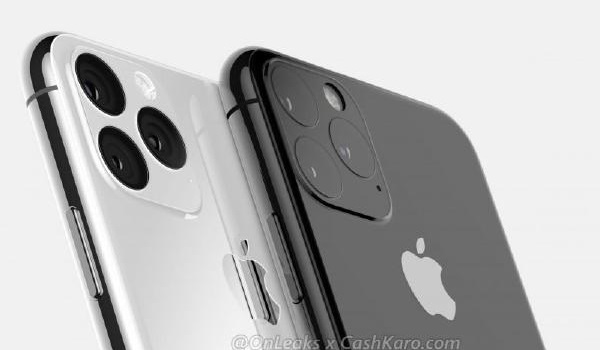
And here is the iPhone 11 Pro Max looking like this with only triple cameras. What will the iPhone with Penta cameras look like? This triple camera design from Apple was so ugly that it almost triggered a global war when it first appeared.

Huawei Mate 30 Pro camera
If you were one of those who thought that the Nokia 9 PureView’s Penta camera design was weird, it turns out it is one of the saner designs out there. Mad oh .
Smartphone cameras got complicated
Beyond the ugly and weird looks, using these cameras also got complicated. What you may not know is that when you use a phone with say a quad or penta camera setup, switching camera modes now mean switching from one of those lenses to another. And so, you get photos of differing image qualities from the same phone.
You might be priding yourself in the fact that you have a solid 48MP triple camera phone, but in reality, the phone does not always use that main lens, which is the one that has the best image quality. What a waste of resources.
Here is something just to illustrate. Let’s say you have a phone with a 48MP triple camera and one of the other lenses is an 8MP wide-angle sensor. In normal mode (the phone uses the main lens for that), pictures you take come out in 48 megapixel resolution, but when you switch to wide-angle mode in the camera, the phone drops the main 48MP lens and switches to the 8MP wide-angle lens. And when you switch to another mode, it picks another lens.
How it plays out on each phone depends on the implementation of the particular manufacturer. But it is a fact that each of those lens have separate megapixel counts, different colour reproduction, different light capture, different everything. And so you end up with photos from your smartphone camera looking like they were shot with 3 or 4 different phones, depending on the modes you used when shooting. Aargh!
It is a mess. How did we get to this point? Personally, if I buy a phone because of its 48MP camera, I want the capabilities of that 48MP lens reflecting in all photos taken with that camera. What is this kind of mishmash and hit-and-miss that is going on everywhere one turns?
Not only do we have a situation in which smartphone cameras got ugly, they also became more complicated to use.
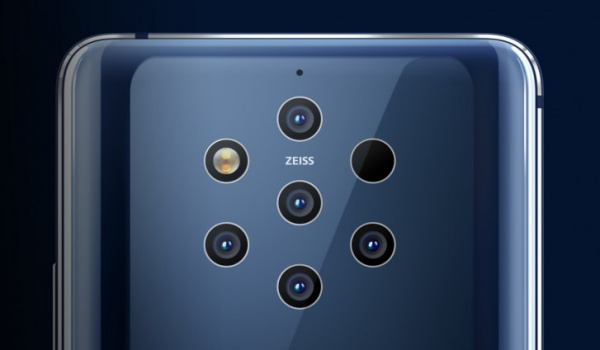
It is interesting though that the Nokia 9 PureView, which went all out in this crazy camera free-for-all, is actually the least complicated of the lot. It has five lenses, all of 12MP each. No wide angle, no portrait, no telephoto – no fancy lenses at all. The phone uses all 5 lenses together to deliver highly detailed images .
Unfortunately, that isn’t what the consumer market wants. We clearly love our cameras complicated. The jury is still out on whether we really like them ugly.
- Don’t miss our reviews .
- Join our WhatsApp Group , to be notified of the most important articles and deals,
- Follow us on Instagram , Facebook , Twitter , and YouTube .
Author:Mister Mobility
Digital Skills and Communication Coach | Mobile Phone Connoisseur since 2001 | Tech Blogging since 2004
Add MobilityArena as a preferred source on Google
Dear smartphone enthusiast, this is a public service announcement: it is time to upgrade your Android phone’s RAM. If you are not already informed about it, let me put you through. The first thing you need to know is that RAM is the memory allocated to launching and running apps. It is different from ROM or internal storage, which is used for storing your files – video, audio, text, etc.
If your phone regularly exhausts its RAM while you are using it, it slows down and becomes sluggish. Apps will also shut down in the backgroud, so when you go back to them, they actually have to start from a state of sleep. The summary is that RAM is essential to smooth running of apps and switching between apps. The more RAM you have, the more aps you can keep running at the same time.
Once upon a time, smartphones did not require as much resources as they do now. As a matter of fact, in the beginning, the earliest smartphones had their RAM sizes in MB and they ran smoothly. I remember that the Nokia E7 , a Symbian OS premium phone, had 256MB of RAM. That was back in 2011.
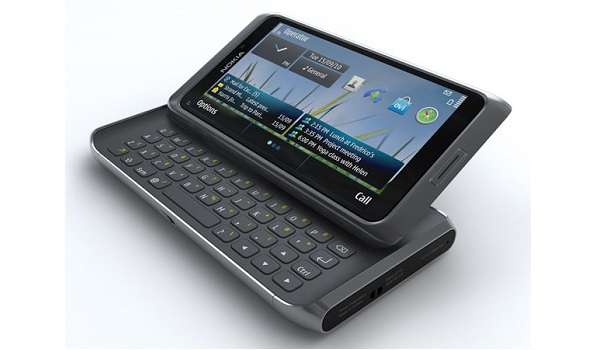
Nokia E7 Communicator was a 2011 flagship and had 256MB RAM. Hian!
Android phones proved to be even more resource hungry than anyone ever thought could be and they climbed higher up the RAM table. In 2012, Samsung’s flagship and the richest Android experience at the time, the Galaxy Note II , was equipped with 2GB RAM. That was a premium phone. Year after year, Android has needed more RAM. Of course, the same goes for iOS, though Apple’s mobile operating system is not as hungry as Android.
Until recently, if someone wanted to know the least amount of RAM that I would recommend for a smooth experience on Android, my answer was 3GB. But in the last few months of handling a number of Android phones, I have observed that even with 4GB RAM, I get some hiccups.
Note that I am a power user. That means I often have multiple task-intensive apps running at the same time. So, 3GB and 4GB RAM will still work for many everyday users who do not carry out image editing, video manipulation and all sorts on their phones.
If you just use your smartphone for phone calls, messaging and social media, you will be mostly good with 3GB and 4GB RAM. Don’t panic.
But power users like myself will have noticed how inadequate even 4GB of RAM is becoming. I reviewed the Huawei P30 during the year and found its 8GB RAM absolutely delightful to use. I also found 6GB RAM still very smooth to use on the Samsung Galaxy S9 Plus. But using a phone with 4GB RAM now is proving mildly annoying. I say mildly, because it isn’t a horrible experience at all. But every other day, I max it out and I feel the impact on performance.
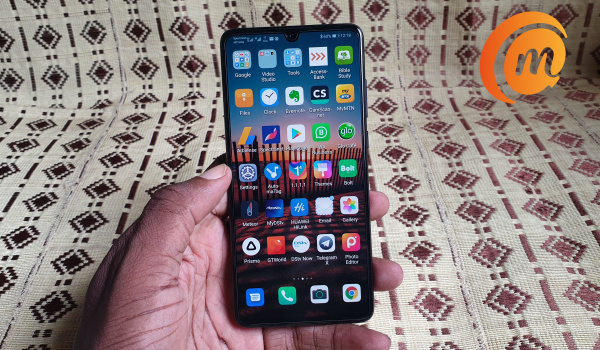
Huawei P30 is equipped with 8GB RAM
Perhaps it is this obvious to me because I have experienced more RAM. Once you have encountered better, anything less feels inadequate. So, maybe I am spoilt from having used more RAM on other devices. But then, that is really the only way to tell about these things. This is where experience matters: the person who has used two or more different standards is able to tell whether or not there is a valid difference.
Android apps are larger and hungrier
Android mobile apps keep getting larger and more resource-intensive. There are apps that used to be 3MB in size a year ago but are now ruuning into 25MB in size. Some are even much bigger. And more of those apps are connecting with the phone camera, with more sensors, and including more advanced capabilities than ever before. All of these have impacted RAM usage on today’s smartphones.

Which is why the current crop of high-performance Android smartphones are equipped with 12GB RAM . Today’s smartphones require a lot more resources to run smoothly than ever before. Have you noticed how many smartphone manufacturers now have mid-range devices with 6GB and 8GB RAM? Exactly. It is because Android apps need those resources. The OPPO A9 2020 is a case in point. During my review , I found its 8GB RAM a delight for multitasking.
Upgrade your Android Phone’s RAM
Having handled phones with 3GB, 4GB, 6GB, and 8GB RAM, I can tell you for sure that there is a world of a difference between having 4GB RAM and 6GB RAM. If you are wondering, the only way to upgrade your Android phone’s RAM is to buy a new model. Mobile technology is not yet at the point where you can have your RAM module swapped with a higher capacity one. So, you have to include more RAM in your smartphone shopping list.
If you can, go all the way and get a premium smartphone with 12GB RAM, because as Android mobile apps acquire new, more advanced capabilities, they will put more demand on your smartphone’s resources. By the end of 2020, we might be seeing flagships with 16GB RAM . Mad oh!
- Don’t miss our mobile phone reviews .
- Follow our news on Google News .
- Join our WhatsApp Group , to be notified of the most important articles and deals,
- Follow us on Instagram , Facebook , Twitter , and YouTube .
Author:Mister Mobility
Digital Skills and Communication Coach | Mobile Phone Connoisseur since 2001 | Tech Blogging since 2004
