Add MobilityArena as a preferred source on Google
Whatever model of mobile you use, it’s your responsibility to get educated about the security threats you face each day. iPhone owners are definitely better off with a basic understanding of modern risks under their belts. So let’s go over the most important info regarding spyware in particular so that you can steer clear of it where possible, and deal with infections when they do arise.
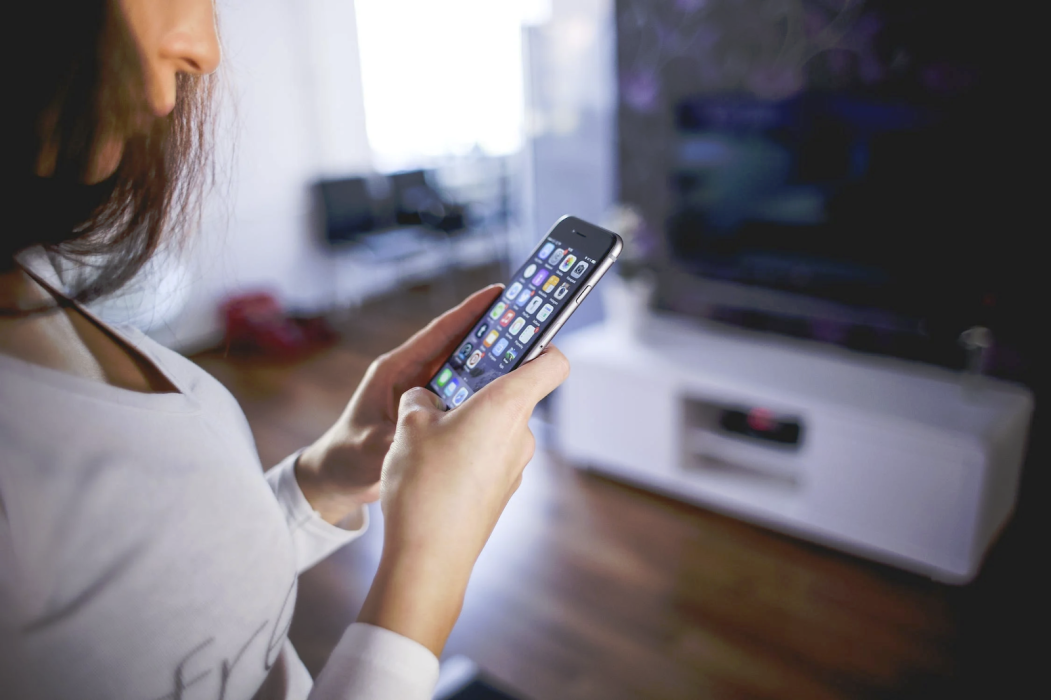
Spyware is everywhere
The issue of spyware is near universal, extending beyond smartphones to include every type of connected device.
However, since our handsets are so essential to modern life, they’re prime targets for cybercriminal groups who develop malicious software. And that makes them more likely to be targeted and successfully infected as a result.
As such it’s not a question of if your iPhone will encounter spyware, but when. Don’t feel smug just because Android is more frequently attacked in this manner; there are still plenty of underhanded campaigns tailored to Apple fans which you need to be clued up on.
Infections can occur in many ways
Hackers can wangle their way onto your iPhone through multiple avenues, including:
Text message
Malicious links sent via SMS are widely associated with identity theft , since unsuspecting mobile users are easily duped when messages they receive look legitimate.
Scammers can claim to represent a government body, a parcel delivery service, or anything in between to trick people into clicking links which end up downloading spyware onto their phone instead.
In much the same way as malicious texts, a scam email either containing spyware itself or linking to it elsewhere online is another tried and tested strategy.
Apps
Google has had to step in to remove apps for spying on users , and even with tighter measures put in place to prevent exploitation of the Play Store marketplace, there’s still a risk associated with downloading little-known software from legitimate platforms.
This also applies to Apple’s own digital store, so think twice before you download any app that doesn’t have many reviews.
Direct installation
This is another widespread way for spyware to end up on iPhones, and requires that a third party has physical access to your handset in order to install the malicious software of their choice.
As such, leaving your phone on show and unattended in public is always unwise. Even if it doesn’t get stolen, it could end up infected, and can then be used to monitor your every move, steal your data, eavesdrop on your conversations and much more.
Using a custom lock screen which is protected from unauthorized users and is still functional and fun for your own interactions makes sense.
Phishing website
Lastly, if you visit dodgy websites using your iPhone, this could be a backdoor by which spyware infections occur. So stick to well known, secure sites instead.
Checking your iPhone for spyware
Having an iPhone hacked with data-stealing spyware is not the end of the world, but the main obstacle to overcome is detecting the infection in the first place.
There are lots of telltale signs to keep in mind, such as:
Slow performance
An iPhone which isn’t as snappy to respond as usual could be a sign of spyware running in the background and monopolizing system resources without your knowledge.
High data use
Spyware typically relies on sending a lot of data to the cybercriminals that created it, and of course this shows up on your network usage statistics. So if you’ve noticed an inexplicable uptick in data usage, the culprit could be spyware.
Bad battery life
Sure, the average iPhone will see battery life degrade slowly over the years. But if this happens suddenly, and you’ve barely used it, spyware might be responsible. This is because of the aforementioned use of system resources, which of course requires more energy from your battery.
Audio oddities on calls
Keeping your ears open when you’re taking voice calls will let you pick up any aberrations in the audio that could indicate the call is being listened in on by spyware.
Of course even if you don’t detect any of these issues, the best option is to play it safe by assuming your iPhone will face off against spyware at some point. That means having a well regarded security app installed, and running regular scans with it to look for problematic software which is buried from view.
Again, it’s important to be proactive, rather than waiting until your device is infected before you bring security software into the mix.
The fallout from a compromised phone can be significant
So why should you care about spyware, and what makes it worth going to the trouble of changing your habits and using security software frequently?
Well the simple answer is that your private data could end up in the wrong hands, at which point your entire life hangs in the balance.
Data theft from an iPhone or any other device can allow crooks to spoof your identity for everything from taking out bank loans to going on e-commerce shopping sprees.
It’s not just about losing money in the short term, but also the long term impact that this type of fraud might have on things like your credit rating.
This information could also be used for far more nefarious means, such as tracking your location via GPS. And you can imagine what a criminal might choose to do with this data.
The bottom line
Spyware is not a threat iPhone owners can take lightly. It’s a real and present danger whenever and wherever you use your mobile, and so you need to respond proportionally to this threat.
One final thing to note is that Apple does a good job of securing its smartphones at an OS level, so installing the latest updates is another must for security-conscious iPhone fans. That way you won’t be exposing yourself to threats that have already been patched, and will also get the latest features as soon as possible.
- Don’t miss our mobile phone reviews .
- Follow our news on Google News .
- Join our WhatsApp Group , to be notified of the most important articles and deals,
- Follow us on Instagram , Facebook , Twitter , and YouTube .
Author:Content Partner
Add MobilityArena as a preferred source on Google
Cell phone specifications now list a wide range of charging speeds. These speed figures – 5W, 10W, 15W, 18W, 20W, 25W, 33W, 44W, 67W, 120W, 180W, etc. are power output values. They represent how much power the charger or power adapter in question is capable of delivering to the phone or tablet it is plugged into. The higher the power output figure, the faster the charger is capable of charging. Standard charging is a measly 5W. So, a 10W charger is faster than a 5W charger. An 18W charger is faster than both.
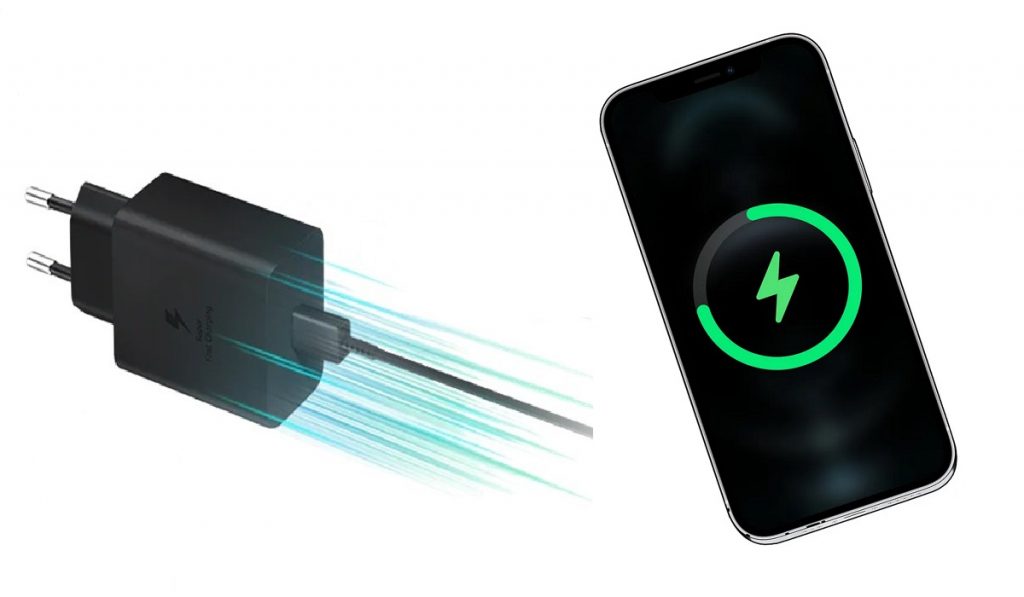
Note that when it comes to fast charge, the rating of both the power adapter and the device are important. If you plug a 33W charger to a phone that supports only 10W charging, it will deliver only a 10W charge to that phone. A device will not charge faster than it is capable of, no matter what kind of fast charger or power adapter you use with it.
The principle is that more power or current output will result in faster charging speeds and charge a battery faster. The higher the output, the faster the charging. Note, however, that the charger and the phone will work only at a mutual rate. When you plug in a phone to charge, the power adapter and the phone have a quick conversation to decide on a mutual voltage and a maximum current that may be drawn by the phone. This maximum current is dependent on the kind of charging standard or technology built into the phone.
By default, the decided power output or current is whatever standard the slower device is. If the power adapter has a lower rating, the maximum current drawn will be restricted to that. If the phone has a lower charging rating, the maximum current drawn will be limited to that. Today’s charging bricks come with intelligent chips that help make this mutual understanding possible. So, using a higher rated charger will not likely damage your phone.
- What is the Charging Speed of your Mobile Phone ?
- How fast is 20W fast charge?
- How fast is 25W fast charge?
- How fast is 33W fast charge?
- How fast is 44W fast charge?
- How fast is 67W fast charge?
- How fast is 120W fast charge?
- How fast is 180W fast charge?
- Can you use a non-fast charging power bank or power adapter for a fast charge phone?
What is the Charging Speed of your Mobile Phone ?
The charging speed of your mobile phone will be printed on the sales box or in the user manual. For example, if your phone has 33W listed as its charging speed and you have a compatible charger rated at that same 33W, your phone will charge at that speed. If the compatible charger is rated lower than 33W, your phone will charge at the lower rating of the charger. However, if the charger is rated higher, your phone will charge at no more than the 33W it is rated.
How fast is 20W fast charge?
20W fast charging will charge a compatible device from zero to 50% battery strength in 30 minutes.
How fast is 25W fast charge?
25W fast charging will charge a compatible device from zero to about 50% battery strength in 30 minutes.
How fast is 33W fast charge?
33W fast charging will charge a compatible device from zero to 60% battery strength in 30 minutes.
How fast is 44W fast charge?
44W fast charging will charge a compatible device from zero to 70% battery strength in 30 minutes.
How fast is 67W fast charge?
67W fast charging will charge a compatible device from zero to 50% battery strength in 15 minutes.
How fast is 120W fast charge?
120W fast charging will charge a compatible device from zero to 100% battery strength in 19 minutes.
How fast is 180W fast charge?
180W fast charging will charge a compatible device from zero to 100% battery strength in 17 minutes.
Note that all of the above charging times are approximates. The actual charging times may vary slightly depending on the implementation of each manufacturer. New, faster charging technologies and standards are being introduced all the time, so expect faster and faster standards, till we have instant charging. With instant charging, your phone will go from zero to 100% in a flash.
Can you use a non-fast charging power bank or power adapter for a fast charge phone?
Oh, yes; you can use a non-fast power adapter or power bank with a fast charging phone. What will happen if you do that is that the phone will charge at regular 5W charging speed. That means it will likely take up to 3 hours from zero.
Newer and speedier fast charging solutions are being developed. As at August 2024, 240W fast charging already exists in small handful of phones and 300W fast charging is on the way already. It can only get better.
Author:MobileChic
That motivated, gadget-loving geeky chic who tries to stay on top of things. Unapologetic iFan.
