Add MobilityArena as a preferred source on Google
There is no way for a person to be good at everything because everybody has weaknesses and strengths. One great thing you can do is to identify your weak points and try to improve them. It will help improve your work performance.
In this article, you will learn about the tips to improve your work performance and advance your career. Keep reading the article!

- Time Management
Whether you are a student or a worker, time management plays an important role in brightening your future. According to various studies, workers are interrupted after every 6 and 12 minutes. The distraction can have negative effects on the productivity of the employees.
Interruption can come in any form, and try to avoid it to enhance your productivity . There are many ways to manage your time while working at the workplace. One way is to set a schedule for time to minimize the distraction during your work.
Secondly, set your meeting hours. If you do your work best in the morning, make a schedule for meeting availability in the afternoon. Lastly, you can also update your working hours to improve your work performance and advance your career.
- Embrace Continuous Learning And Training
Change is happening all the time in every industry. Make sure that you are learning new tools and technologies to update your knowledge and skills. Additionally, if you require a training program to enhance soft and hard skills, you can go for it.
For instance, if you are a truck driver in a transportation company, you should have a truck license because it will be helpful for you in many ways. It can advance your career and also help improve your work performance.
If your company is in Victoria and you’re looking for license training, you can consider the license training institute over there.
To drive with authority, leading truck licence training in Victoria is available for you to enhance your career as a truck driver and also make sure you’re learning new skills to improve your work performance.
- Set Milestones For Your Professional Development
Another important tip to improve your work performance and advance your career is to set small and large goals to complete any type of project. One problem you can face while working in the workplace is that the large projects are so complex and overwhelming.
It will be difficult for you to handle such projects. However, with the setting of goals, you can complete your projects quickly and effectively. It will also improve the productivity of your work and ensure your contribution to the company.
- Improve Your Communication Skills
Whether you are a manager or not, make an ultimate goal to ensure open communication with your team members. Effective communication plays an important role in improving work performance and increasing the production of the company.
Keep in mind that communication is a two-way street; when you are not clear on certain things, you can ask your colleagues or managers. Open communication helps create a cooperative and collaborative environment at the workplace.
Author:Anna Makama
Gadget lover making my way through life one day at a time.
Add MobilityArena as a preferred source on Google
The only good thing that side-mounted fingerprint scanners have going for them is that they are affordable and so allow manufacturers to include a fingerprint reader in entry-level smartphones. That aside, side-mounted fingerprint scanners are a terrible idea and need to go away as fast as possible.
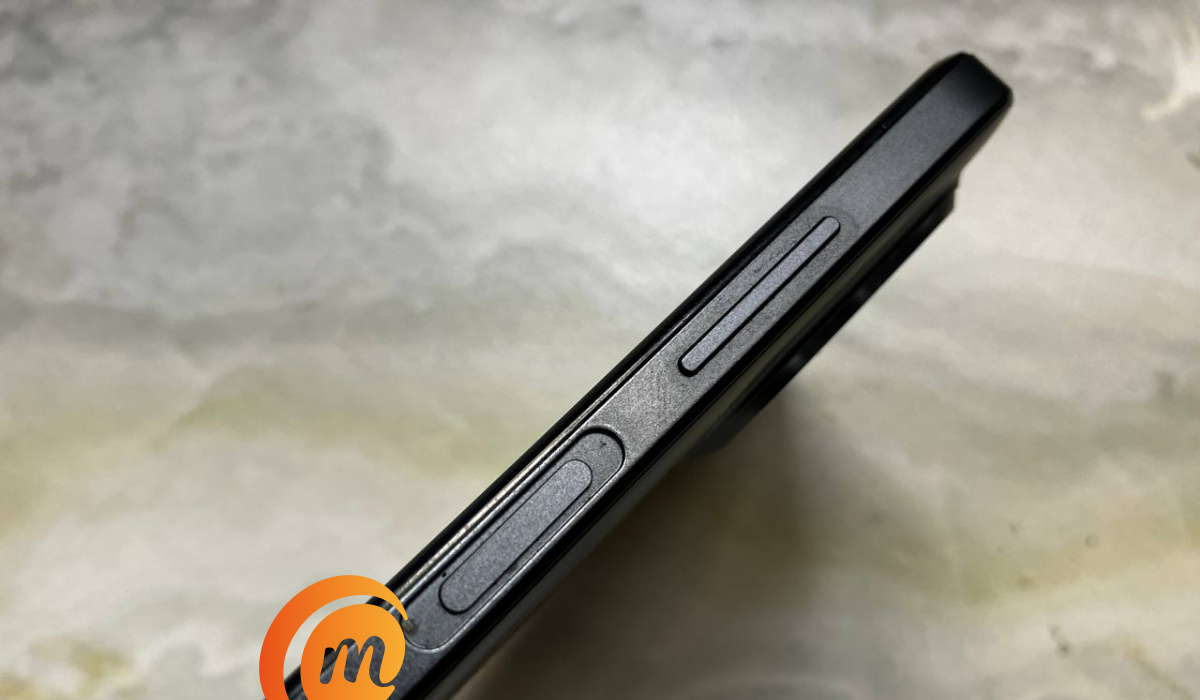
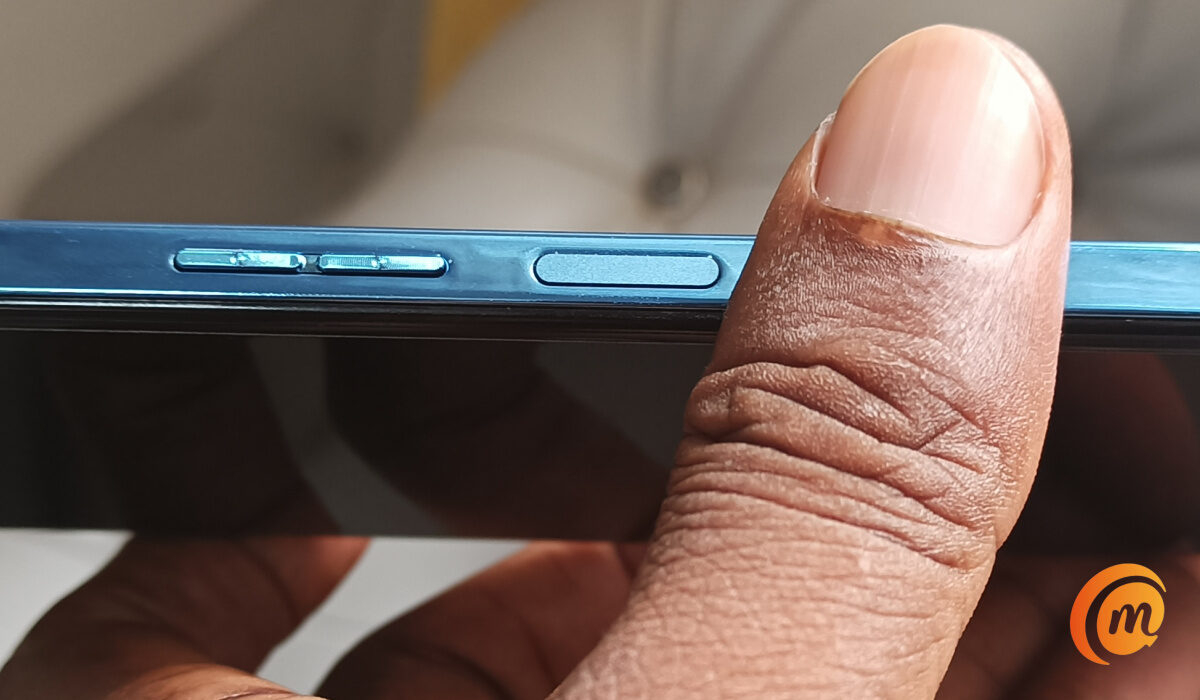
Side-mounted fingerprint scanners are a type of biometric security feature that are embedded in the power button of some smartphones. To unlock the device, you have to place your thumb or other finger on the power button.
- Side-mounted fingerprint scanners deliver poor usability
- Side-mounted fingerprint scanners inadvertantly do unintended things
- Not user-friendly for left-handed folks
- Side-mounted fingerprint scanners have a smaller surface area
- Why do foldable phones have side-mounted fingerprint scanners and not in-display scanners?
Side-mounted fingerprint scanners deliver poor usability
How many times have you held your smartphone in your hand and your thumb naturally rested on the edge of your phone? Never; right? Hovering over the screen is the natural position of our thumb when holding a phone, which is just perfect for in-display or under-display fingerprint scanners. Where your phone has a side-mounted scanner, every time you need to unlock it or unlock an app, your thumb has to leave its natural position on the screen and travel to the edge to do so. If you have to do that often, it gets tiring.
For example, if you have app lock enabled on your smartphone for a number of apps, each time you switch to that app, your thumb has to do that travelling to the side or edge where your phone’s power button is located. Every single time. If you have done that 10 times in 30 minutes, you already know how tedious it is. If you have to do it 30 times in 30 minutes….
Side-mounted fingerprint scanners inadvertantly do unintended things
Besides the issue of natural placement, as my buddy Muyiwa reiterated, side-mounted fingerprint scanners have a habit of inadvertently unlocking your phone when you either simply want to adjust it in your pocket, or check time/notifications without unlocking the phone. I know it, too, from experience. It is so annoying.
Not user-friendly for left-handed folks
Side-mounted fingerprint scanners tend to not be convenient for left-handed users or users who switch hands frequently, as they may have to adjust their grip or use a different finger to unlock the phone. In contrast, an in-display or rear scanner does not discriminate against whatever hand you are more comfortable using.
Side-mounted fingerprint scanners have a smaller surface area
Generally, side-mounted readers have a smaller surface area than in-display and rear-mounted readers. In day-to-day use, this often results in a reduction of the accuracy and security of the scan. Even when registering your fingerprint using a side-mounted scanner, you tend to need to do repeated imprints to have your fingerprint properly registered.
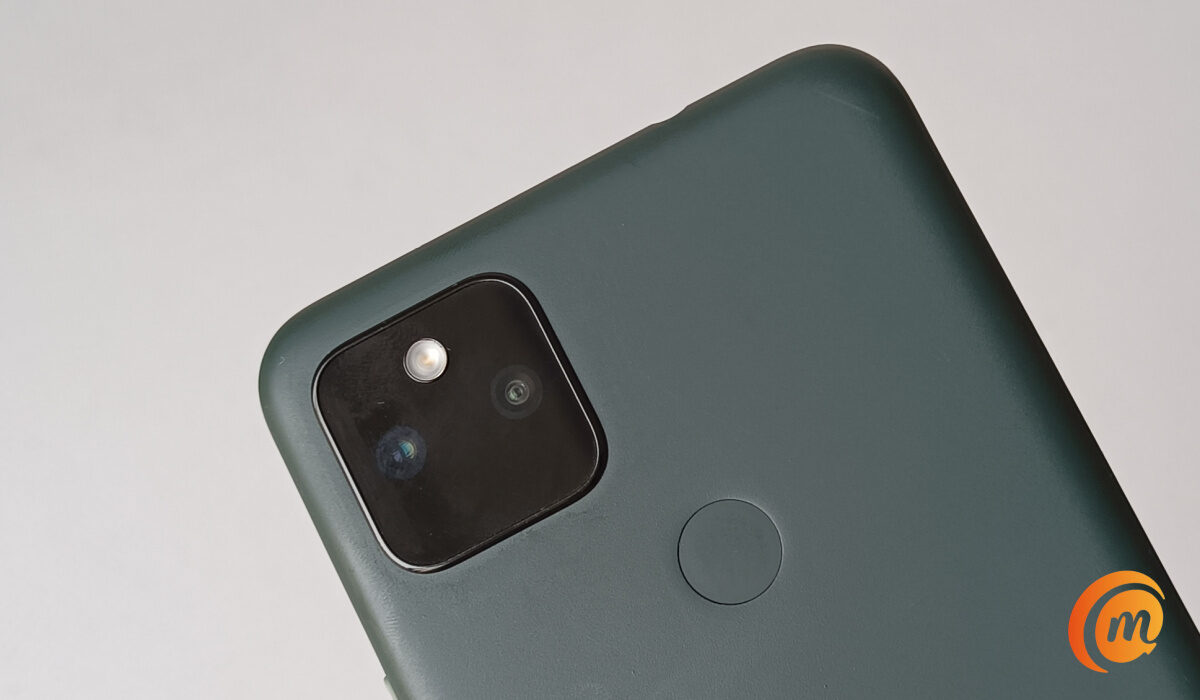
Am I saying that side-mounted fingerprint scanners are useless? Of course, they are not. They serve a purpose. Like I already pointed out, they are great for entry-level devices, because they are better than not having one at all. Personally, though, for entry-level phones, I would rather the scanner is on the back than on the side.
But smartphone companies have decided that they need the back area for bigger camera modules and other features, so that is likely wishful thinking. Budget smartphone will likely have make do with side-mointed fingerprint scanners for a long time. What I do not get is why anyone should have to out up with them on more premium devices.
Smartphone makers have said goodbye to rear fingerprint scanners
Why do foldable phones have side-mounted fingerprint scanners and not in-display scanners?
Why are there side-mounted scanners on premium, high-end phones? This is prevalent among foldable phones, to be more specific.
First, side-mounted scanners allow for folding phones to be unlocked in both closed and open states. A foldable phone would need two in-display scanners for that. The Vivo. X Fold2, with its dual under-display scanners, is an example of this. But this is an outlier; most manufacturers generally go with a side fingerprint scanner on their foldable devices.
Secondly, side-mounted scanners are generally more cost effective to implement. They are mature technology, compared to in-display scanners. As the prices of foldable phones drop, I expect that more manufacturers will also drop the side scanner arrangement.
The early days of in-display scanners were problematic. As with most new technology, it had its fair share of issues, including reliability issues. But those days are past now and in-display scanners have proven themselves to be as secure, as fast, and as reliable as older types of scanners. And they are perfect for usability because the scanner spot is right where your thumb naturally hovers over your phone screen.
Hopefully, side-mounted fingerprint scanners will disappear completely one day and in-display scanners, especially the ultrasonic type , rule the smartphone world. Or we might have to embrace something new entirely.
Author:Mister Mobility
Digital Skills and Communication Coach | Mobile Phone Connoisseur since 2001 | Tech Blogging since 2004
Add MobilityArena as a preferred source on Google
One careless action is enough to ruin the battery in your smartphone forever. Read and remember why your phone discharges quickly and what it is better to never do with your device.
Even the most expensive and high-quality smartphone at some point begins to charge more slowly and does not hold a charge well. No matter how carefully you use your phone, the battery has a limited service life that is almost impossible to influence. However, sometimes your phone may begin to discharge quickly not because of old age, but for completely different reasons.
- Why Does the Phone Discharge Quickly: The Main Reasons
- Old Battery
- Vibration and Constantly Running Communication Modules Ways to solve the problem:
- Extra Functions Ways to solve the problem:
- Too Many Notifications Ways to solve the problem:
- Background Applications Ways to solve the problem:
- Location Tracking Ways to solve the problem:
Why Does the Phone Discharge Quickly: The Main Reasons
Many modern smartphones are quite whimsical and “delicate”. One careless move can ruin their battery forever. There can be a lot of reasons why the phone began to discharge quickly – we will look at the most basic of them.
Old Battery
Smartphone batteries have an expiration date. On average, a battery is destined to last 2-3 years of active use. After which it begins to age: the phone quickly runs out in the cold, a full charge does not last even a day, and the case gradually swells. However, battery life can be significantly reduced if used incorrectly. For example, when overheated in the sun or when charging a smartphone with a low-quality device. Sometimes in such situations it’s really easier to get a new phone. But if you didn’t plan to do this, take your old one to the service center and ask to replace the battery.
To begin with, in order not to spend money on diagnostics at a service center, you can check the battery capacity yourself. To do this, download the AccuBattery for Android or Battery Life for iOS controller application to your device . Activate it while the phone is charging. If the actual battery capacity shown by the program is less than what is officially declared by the manufacturer, it’s time to change the battery.
This can be done by contacting the official service center of the manufacturer of your device. They will definitely supply you with an original battery that will serve you well for several years.
However, today this may be difficult. The official centers of Apple, Xiaomi and Samsung are currently operating intermittently in Russia. For this reason, you can try contacting any unofficial smartphone repair center. However, in this case, you should be very careful when choosing a company – it is important that they use only original parts or very high-quality copies.
In addition, try to use only original and proven chargers. Remember: the stingy pays twice, so too cheap chargers can play a cruel joke on you. Saving a few hundred rubles on a wire and plug can later turn into an overpayment for replacing the battery or buying a new phone. The fact is that low-quality chargers increase the load on the battery and quickly wear it out, which is why the phone begins to constantly discharge.
Vibration and Constantly Running Communication Modules
Vibration in silent mode consumes more energy than a regular ringtone, and, accordingly, the phone discharges faster because of this. In addition, turning on vibration feedback on the keyboard negatively affects the battery.
Another problem is that your smartphone constantly checks the quality of the connection and the availability of the network so that everything is perfect for incoming and outgoing calls. This also causes the battery to lose charge faster.
Ways to solve the problem:
Change the settings to stop your smartphone from vibrating when you type or receive message notifications. This will cause the battery to drain more slowly. Turn off the keyboard vibration response – this is an unnecessary feature that will only wear out your battery.
If you need your phone to not consume any energy at all, turn on airplane mode or standby mode – this way the charge will be consumed 5 times slower. If you cannot afford to leave the access zone, turn off mobile Internet and Wi-Fi, and turn them on only when necessary. By the way, when it is possible to safely connect to Wi-Fi, it is better to use it – this way the battery wears out more slowly than with a constant connection to the mobile Internet.
Extra Functions
Bluetooth, GPS, Wi-Fi, AirDrop, mobile Internet functions that work unnecessarily greatly reduce battery performance. When everything is activated at once, the battery life of the gadget is reduced and the phone begins to discharge faster. In addition, the battery is damaged by unnecessary decorations such as live wallpapers or animated widgets. They may look beautiful and interesting, but the battery drains much faster with them, and the phone may start to work slower or lag.
To ensure your smartphone’s battery life doesn’t drain like a high roller at a casino, consider closing unnecessary background apps and disabling location services when indulging in your favorite online sports betting activities.
Ways to solve the problem:
Disable all unnecessary and unnecessary features and decorations. The best thing for your device is to limit yourself to a regular screensaver image without a live clock or animation. Also, keep apps you rarely use in your smartphone’s menu—too many shortcuts on the home screen can significantly reduce battery life.
Try to turn off Bluetooth when you are not using it. Even if headphones or a speaker are not connected to the phone, the activated Bluetooth function noticeably eats up the charge.
Reduce screen time. Typically, by default, the screen turns off after 30 seconds or a minute of inactivity. However, manually this time can be reduced, for example, to 10 seconds – this will significantly save your battery.
Turn on power saving and night mode – excellent assistant functions that help save battery power and reduce background activity on the device.
Too Many Notifications
The more notifications you receive from various applications on your phone, the more your battery is consumed. By the way, charging is wasted not only because of this: we constantly check the screen, reacting to every sound. Over time, the habit becomes detrimental to the battery. Additionally, many of the apps can auto-update automatically even if you don’t need it.
Ways to solve the problem:
It often happens that we “automatically” agree to send notifications that are completely unnecessary to us – for example, calls to enter a particular game. Check in the settings to see if you have unnecessary notifications connected that are draining your phone. It’s better to leave notifications turned on only for those applications that you really use on a regular basis, for example, instant messengers.
In your smartphone settings, disable auto-update for all applications at once or leave only those you need. Such an “audit” of the application has one more advantage – at the moment when you configure their notifications and auto-updates, check whether you have any unnecessary programs installed and remove the unnecessary ones.
Background Applications
Background apps like VPN, antivirus, or health tracker don’t stop running even when you lock your phone, which means they negatively impact performance and cause your device to drain faster. Many of these programs remain running in the background to download updates or send you notifications or statistics.
Ways to solve the problem:
If you always need to be in touch and you are afraid of missing an important message, it is better not to turn off the background mode, for example, in instant messengers. However, in all other cases, to prevent your phone from draining so quickly, go to the settings, to the “Battery” (iOS) or “Battery” (Android) section, and try to optimize background activity.
Location Tracking
Constantly monitoring your geolocation requires a lot of battery life and quickly drains your phone. Stop apps from tracking your location to save battery. Besides, there is absolutely no point in having this feature active all the time.
Ways to solve the problem:
Disable permanent location tracking. Turn on GPS only when you are using a navigator, maps, taxi or other applications, for example, with information about public transport.
If you have not hesitated to allow the application to “constantly use your location”, it is also better to disable this function. You can find out which applications use GPS in the “Location” section of your phone settings.
