Add MobilityArena as a preferred source on Google
Finding ways to boost battery life on your iPhone has become of essence. This is because battery life on successive iPhone models has really been a nightmare. I vividly remember how I had to use the iPhone SE 2020 for a whole week just a few months ago and whenever I look back at my experience I recall how frustrated I was because of how poorly the battery performed. Well, like I said I used that device for a whole week, during that time I came across a few ways to optimize the battery life to make it last a bit longer.
Personally, I do not use iPhones as my daily device for a lot of reasons, but for this article I will focus on the battery issue surrounding these smartphones. If you take a closer look at older iPhones like the 6s, 7, 8, you will notice that on paper they pack a relatively small battery if compared to their Android counterparts.
The battery capacity a device packs does not ultimately tell if it will outperform other devices. Battery performance is the product of software optimisations baked into smartphones, and Apple has long neglected this.
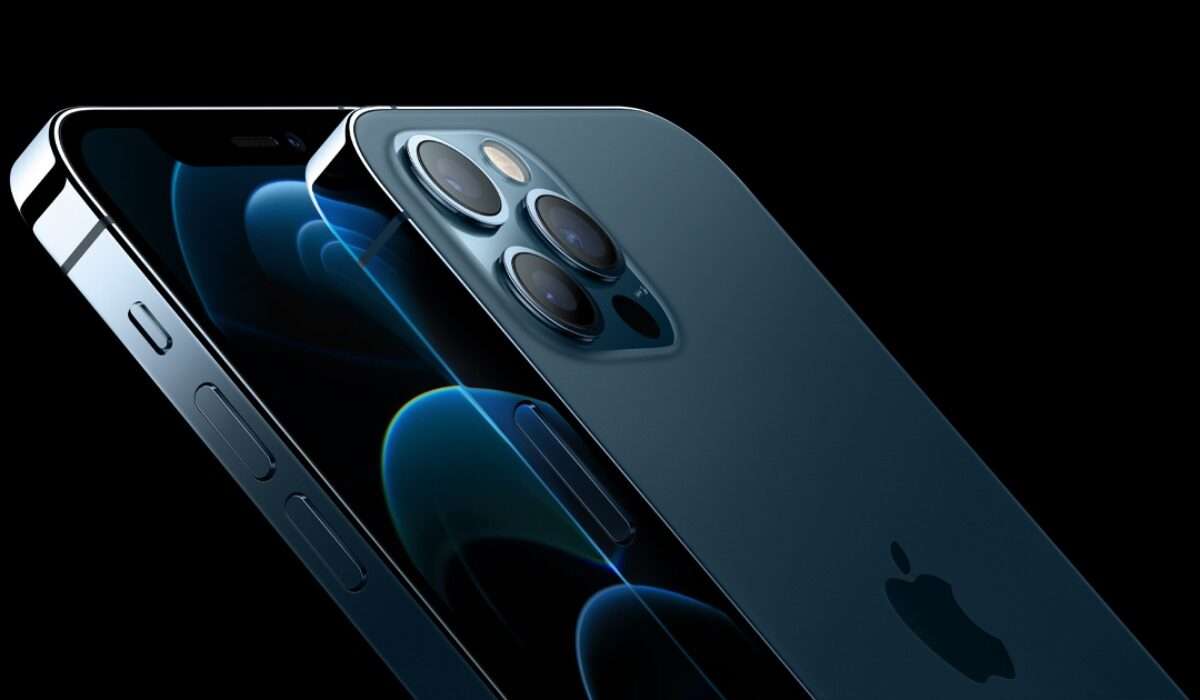
iPhone 12 pro.
Out of all the iPhones I have used over time, I have come to realize that the iPhone 11 Pro Max lasts the longest on a full day-to-day usage, even better than its more recent successor. Having stated this and also from personally experience, it is no news that iPhones batteries perform poorly, so how can we boost battery life and get our iPhones to survive a whole day on regular usage.
We recently looked at how we can Boost Battery Life on Pixel devices, so in case you need a run down on how to go about that, here is the article for you.
Practical Tips That Can Help To Boost Battery Life On Your iPhone.
Let us look at a few ways to boost battery life on your iPhone, hence enabling it to last even longer for your regular activities. It is also important to note that the tips that we are going to talk about can help extend battery life on a normal usage, so if you are into extensive playing of video games on your iPhone the simplest thing for you to do is to have a constant power supply because iPhone batteries are not the best for gaming.
The six tips mentioned below if followed will help you boost battery life on your iPhone. We will start off with the rather obvious battery drainers and then move over to the more subtle ones.
• Turn On Low Power Mode : This is the easiest option that a typical iPhone user will go for when trying to boost his/her battery life. Head off to your device settings and open the “Battery” tab, then turn on the Low Power Mode. For most people turning on Low Power Mode on an iPhone dulls productivity, well that is a personal discussion to make.
What this feature does is to reduce background activities like your downloads or fetching your mails up until your iPhone is back to 100%. On every iPhone, this feature automatically comes into play whenever your device is below 20%, but you can adjust the settings to suit your needs. Activating the auto lock feature also helps the battery, but I personally would not do that as I will want my device on for as long as I am using it.
• Mute Some Notifications: Your iPhones screen automatically turns on whenever you receive a notification, and this can be annoying and also battery sapping. It is funny just how many unnecessary notifications you can be hit with the moment you turn on your data. Swipe left on unnecessary notifications and block them or go to your settings to manage apps that you would like to receive notifications from, this will help your battery.
• Turn Off Data, Bluetooth and Airdrop If Not In Use: It is funny how people tend to leave these features on even when they are not in use. If you are done with using your data, turn it off; if you stop playing music wirelessly to your AirPods turn Bluetooth off; if you are not sharing anything to another iPhone user turn Airdrop off. These actions as little as they seem can save you more battery.
• Deactivate Automatic App Update: By deactivating this feature from your settings, you agree to update them locally by yourself and not depend on your device to update them whenever an update is available. This will not only save your battery, but also your hard-earned data. Head over to your settings, tap on App Store tab and deactivate Automatic App Update.
• Turn On Airplane/Flight Mode: Most people find this action very useless, but I tell you that it helps a lot. Personally, if I am in a class, a meeting or in a very important conversation and do not want to be disturbed I turn on my Airplane Mode (also known as Flight Mode).
This action not only cuts you some slack but also saves you some battery. Try to use it more often and not only when you are on an aeroplane. So open the control panel by scrolling up on your iPhone if you are using any iPhone below the iPhone X or from the right-hand side of the screen on the iPhone X and above, then activate your Airplane Mode.
• Use Still Wallpapers: Yes, of course, still wallpapers. If you use iPhones, you will notice that when choosing a custom wallpaper you have two options, still or dynamic wallpapers. Using a dynamic wallpaper uses up your battery by keeping the elements on your screen in constant motion.
So save yourself the extra battery by switching to still wallpapers if you are a fan of custom wallpapers. There are also a lot of apps available on the app store where you can get your still wallpapers from an example is this HD wallpaper app from StuckPixel, Inc. You can download it directly from this link on your iPhone or iPad, there is a rich collection of various categories that you can pick from, so be sure to give it a try.
There you have it, the above hold just some actions that can help you boost battery life on your iPhone you can also try turning off background app refresh, turning off location, turning off SIRI suggestions and turning off auto brightness in your settings.
- Don’t miss our reviews .
- Follow our news on Google News .
- Join our WhatsApp Group , to be notified of the most important articles and deals,
- Follow us on Instagram , Facebook , Twitter , and YouTube .
Author:KittysTech
Tech analyst, Collins Eshiet, writes about technology. Follow me on Twitter @KittysTech.
Add MobilityArena as a preferred source on Google
Innovative, premium, expensive, simple, walled-garden, and sheeple. These are some popular words and phrases typically associated with Apple’s iPhone and its users. Since the device’s introduction in 2007, it has continually impacted the way we think of technology in an everyday context; likewise, how work and play is materialised. It is a name synonymous with smartphones for most. If that is a bold claim, it is harder to deny its impact on Apple’s profitability; and controversies surrounding its production in China.
However, this article is instead about articulating some insights from personal reflection and observations on individuals’ (i.e., existing and prospective customers) varying perceptions of Apple’s iPhone. Hence, I draw on my background and experiences in technology retail consultancy, and undertaking scholarly research on technology acceptance.
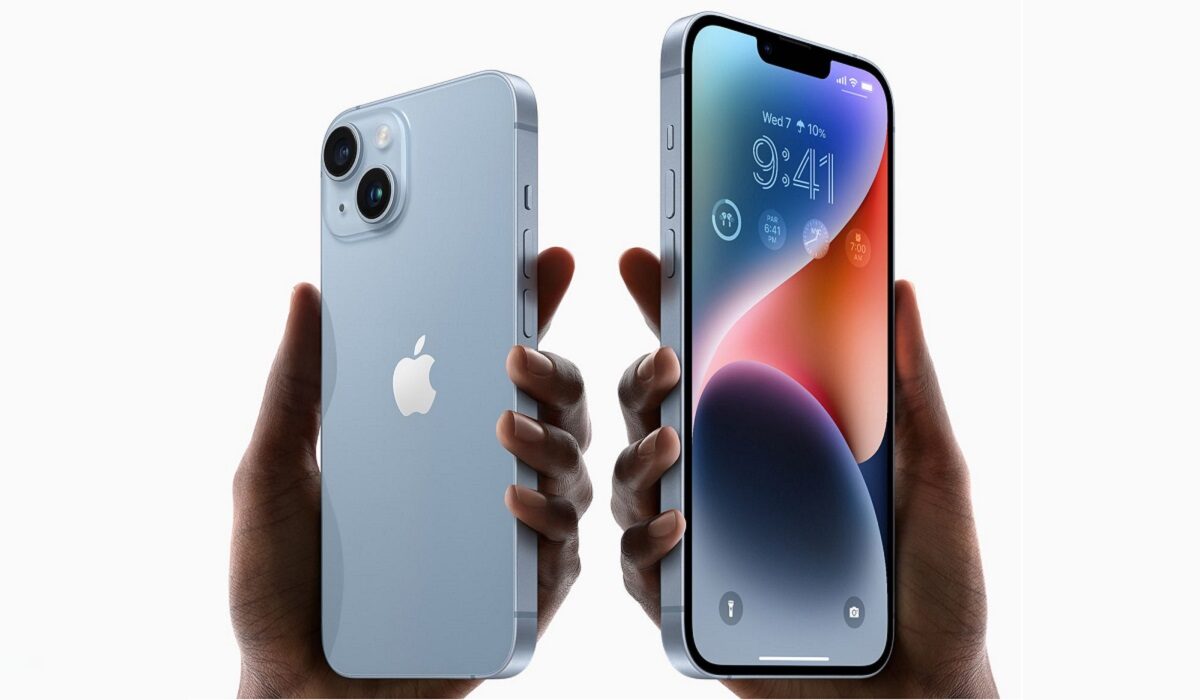
What are the varying perceptions that drive Apple iPhone ownership?
To engage the subject matter, imperative questions include: what is the nature of different clusters of various perceptions about iPhone? How do they materialise, and even differ? What might be some drivers underlying such variance?
The iPhone has unarguably impacted the mobile landscape, and has been visible in market publications and academic research. Though the typical claim of being the first smartphone is laughable, there is no denying that the Cupertino property significantly influenced our conception of the word ‘smartphone’. Towards its creation, amongst other efforts, Apple leveraged its design competencies and Steve Jobs unique approach to deliver quality user experience, which however inadvertently limited users’ freedom. A path that would become a serious bone of contention for mostly the Android-preference user. Understanding the views of such a cluster is hence important for iOS’ future, as Google’s mobile OS represents the only competition in the interim.
To further clarify, consider the iOS-preference user, who is committed to the platform and won’t consider switching. In such cases, typically, Apple’s lock-in, through the expanding ecosystem is mainly a key influence. Android-preference users on the other side, who won’t consider iPhones, are typically due to lack of user freedom to personalise, and price-to-value ratio due to a wider pool of devices to choose from. Interestingly, some in this cluster might have owned an iPhone previously.
In contrast to the above clusters, there are the existing Android users, who consider the iPhone due to the impact of social influences – still mostly driven by the ecosystem effect. For instance, Yomi might be influenced by the convenience of iMessaging contacts; or perhaps have acquired an iPad from work, which integrates better with an iPhone.
Besides the major influences of the varying perceptions submitted thus far, other rationalizations are apparently involved. Personally, while I find that the ecosystem lock-in effect is significantly at play in my case, other rather fringe justifications also constitute my reasoning.
On a related note, I find the justifications based solely on price-to-value ratio a bit myopic, as it neglects related intangibles. Consider the difference in amount that can be realized when selling your used iPhone; the guaranteed and useful future software update longevity enjoyed during use lifecycle; even the conveniences of a simpler and consistent user interface and experience in typical everyday use.
With the above in mind, I’ll attempt to be explicit in answering the questions posed earlier. Realistically, the nature of all the varying perceptions can’t be apprehended. However, three clusters can inform the idea. That is, the iOS-preference user, Android-preference user, and pragmatic user – like Yomi in the example above. These clusters reflect the segmentation within the dual arrangement of the current smartphone landscape.
Secondly, key themes can describe the materialization of the various perceptions, at least at a crude, yet intelligible level. Of these, ecosystem effect and social influences appear to have prominent explanatory powers. These constructs have also seen developments in information systems research in the past two decades, which are beyond the scope of this article.
Finally, good old value is additionally influential on the variations of perceptions. I opine however, that it is more of a subjective moderator, as opposed to an objectively definable entity in this case. Earlier, I have argued that solely price-to-value ratio justifications are myopic, due to mainly neglecting intangibles.
- Don’t miss our mobile phone reviews .
- Follow our news on Google News .
- Join our WhatsApp Group , to be notified of the most important articles and deals,
- Follow us on Instagram , Facebook , Twitter , and YouTube .
Author:IB Sam-Epelle
IB ‘Hi Beezle’ Sam-Epelle is passionate about smartphones and mobile technology; a solution provider; critical thinker; entrepreneur; the founder, Grand-Monumental Ink.
