Add MobilityArena as a preferred source on Google
Why would anyone be looking for a WhatsApp replacement? For one, the fact that WhatsApp is the most popular messaging app in the world does not imply that it is the best. Many users of the platform agree that, when compared to Facebook Messenger, several apps provide superior services in dealing with users’ data.
We understand how difficult it is to persuade those who have been using WhatsApp for years to switch to another messaging service, particularly if they have been using it for years and their contacts also use the same platform. However, recent changes in Facebook policy that resulted in the merger of the three platforms—Facebook, Instagram, and WhatsApp—and that will change the way user data is shared between the three platforms could be a reason users prefer other messaging apps.
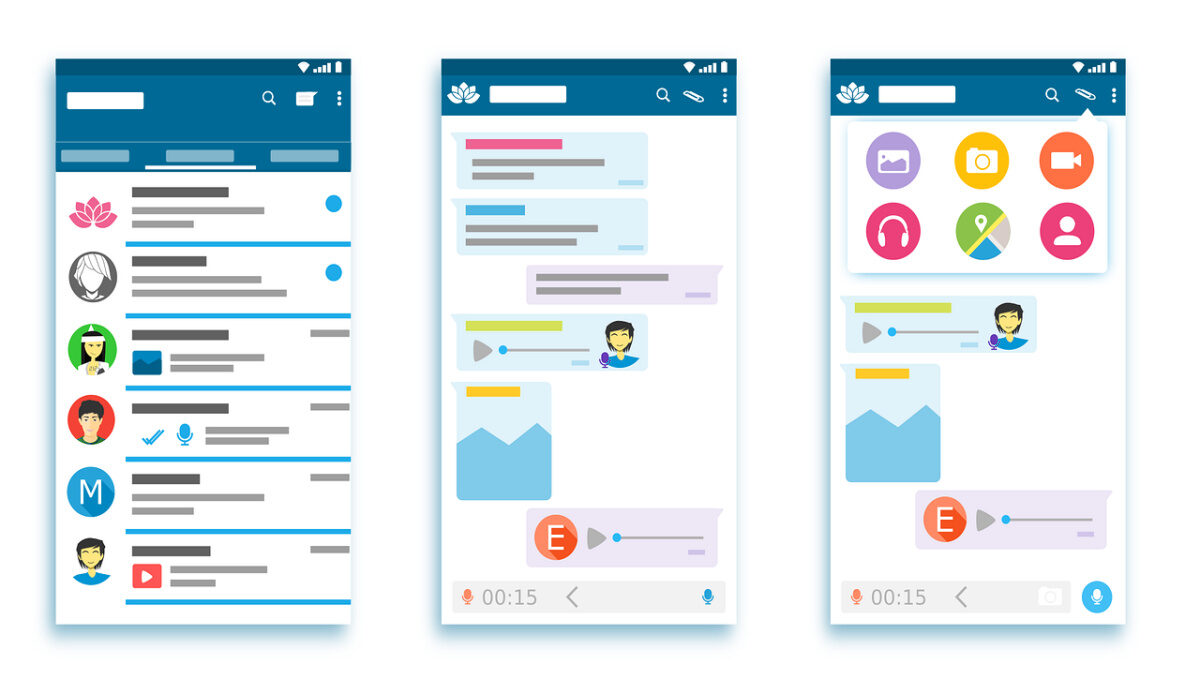
- List of WhatsApp Replacement Apps
List of WhatsApp Replacement Apps
There is life beyond WhatsApp. There are many other free messaging apps that can be downloaded and that, in many aspects, offer better service than WhatsApp. The list below contains 8 common messaging apps you can also use:
- T elegram
Telegram is one of the favorite messaging apps as popular as WhatsApp. It is probably one of the best alternatives to WhatsApp since its interface is quite similar to that of Facebook services. In this regard, it is easy to get familiar with it It incorporates dozens of features that do not exist in WhatsApp- such as custom themes, support for bots, supergroups, channels, and many more. In addition, its open-source philosophy means that developers can create alternatives to the original, and introduce new functions not included by default.
Based on security, while Telegram has been the subject of debate on several occasions due to an alleged lack of encryption, the truth is that the platform’s encryption method is similar to that used in Google Allo, Facebook Messenger, Line, and other platforms, so it is possible to chat safely without data breaches. More importantly, it should be noted that it is a fully multiplatform service, with native apps for Android, iOS, macOS, and Windows, as well as browser access.
- S ignal
Brian Acton, one of the creators of WhatsApp, decided to leave Facebook and finance the platform behind Signal, a private and ultra-secure messaging app used by people around the world who care about their privacy, and which has even been recommended by Edward Snowden, one of the great cybersecurity gurus. Like Telegram, Signal is open-source, so any expert with the necessary knowledge can perform security audits on the encryption protocols- which are also open – looking for holes. Signal itself ensures that its encryption algorithms are frequently reviewed by professional cryptographers to continue to improve the platform’s security.
- M essages
In most countries, the native Android messaging app is still that app that only serves to receive SMS. However, Google has repeatedly reiterated that it has big plans for this application, and its goal is to turn this platform into a kind of “iMessage for Android” based on the RCS protocol, known as the future of instant messaging.
RCS technology, in general, is a kind of WhatsApp without the need for an Internet connection, allowing people from all over the world to communicate regardless of which telephone operator they use, as the vast majority has committed to adopting a universal system. We don’t know when this technology will be widely adopted, but we do know that Google’s messaging app is one of the few that already supports it.
- L ine
Line was one of WhatsApp’s main competitors at first, and today, with more than 200 million active users worldwide – a figure comparable to Telegram – it remains a fantastic alternative to Facebook’s messaging service. True, the service is primarily used in China and other Eastern countries, and its main selling point is free voice calls. Line, on the other hand, is a free messaging app with unique features that you won’t find anywhere else.
- F acebook Messenger
It is not necessary to leave Facebook to find a messaging application that is much more complete than the queen of this sector, and that probably in the future will allow you to chat with WhatsApp users without having to have the app installed on your mobile. Messenger is not perfect, and in fact, in some aspects, it is worse than WhatsApp itself –such as the appearance of ads in chats–, but after its latest update it has an infinitely better design, and there is no doubt that the number of features and functions is unsurpassed by most of its rivals.
- W eChat
Another app that is successful in Asia, but has not yet found its place in the rest of the world’s regions, is WeChat. According to data from Statista, by the end of 2018, more than 1,000 million people from around the world have already used the appt, which shows that it is not exactly a weak rival for WhatsApp. WeChat has the typical functions that we can find in most similar platforms- such as free calls and video calls, the possibility of sending a location in real-time, and stories.
- V iber
Viber has just received the biggest update in its history, with a much cleaner and more polished design, and unique features like the ability to make group calls with up to 5 people. After just over 8 years of life, this multiplatform messaging application created by the Israeli Talmor Marco continues to be one of the most popular alternatives to WhatsApp, even though it has sometimes remained at the center of the hurricane due to controversies related to the treatment of user data.
- S kype
Microsoft’s cross-platform communication tool could not be missing either. Skype, despite being a complete communication tool more than a messaging app, has evolved over the years to become a worthy rival to WhatsApp and the rest of the free messaging services.
It allows us to chat or talk on the phone with our contacts from any device, as well as send documents, multimedia files, GIFs, and much more. In addition, the Android application has been recently refurbished to work better even on less powerful mobiles.
- Don’t miss our mobile phone reviews .
- Follow our news on Google News .
- Join our WhatsApp Group , to be notified of the most important articles and deals,
- Follow us on Instagram , Facebook , Twitter , and YouTube .
Author:Moses Udah
Creative, teacher, web content writer, copywriter, and student.
Add MobilityArena as a preferred source on Google
Connecting your USB device with your computer essentially helps you to carry out useful activities such as transferring files, data backup, and recovery, among others. However, it’s also possible to run into issues when attempting to connect your computer with a USB device.
If you ever experience such an issue, for instance seeing an error message that reads “Unknown USB Device (Device Descriptor Request Failed),” it’s easy to get confused. However, there’s no need to be since we’ve provided all the instructions you need to get past this error message and fix connectivity issues between your Windows 10 computer and USB device.
So, make sure to pay attention to all the helpful tips, suggestions, and instructions we’ve provided in this guide.
What is USB Device Descriptor Failure?
When using a USB device on a computer and connecting it, Windows 10 Home users might sometimes run into problems. The “Unknown USB Device (Device Descriptor Request Failed)” error message that appears in Device Manager is one of these frequent problems.
You are essentially being informed by this error message that the attached USB device cannot be used by the computer. This is a problem if you want to use anything that connects to your USB port, such as a memory card, Android smartphone, game controller, or USB flash drive.
Hardware or system-specific issues may be to blame for the current situation. No matter what caused it, the goal of this guide is to help you quickly fix the Device Descriptor Request Failed (Unknown USB device) problem.
Different Methods of Fixing Device Descriptor Failure – Unknown USB Device (Device Descriptor Request Failed)
If you’re ever faced with a device descriptor failure issue when attempting to connect your Windows computer with a USB device, you can try one or more of the troubleshooting options we’ve provided below.
Examine your Computer for Hardware Issues
It’s possible that you can’t use your USB device because of a hardware issue, in which case the issue is with your computer’s hardware rather than the operating system. Here are two quick tests to see if this is the case, which can quickly establish whether you should consider having your computer restored or whether you can continue using the techniques listed below to resolve system-related problems.
- Use a different USB port to connect : Try using the USB ports on your back. If the device suddenly starts functioning, the USB port you were using before is probably damaged. It is advised to either flag this port as broken or to start looking into replacing it right away.
- Connect to a separate laptop : See if the hardware itself has any problems by attempting to use the same hardware on a different computer. If it functions properly on another machine, you’re probably dealing with a system problem alone. However, it is very possible that the gadget is broken if it still doesn’t function. Look for a replacement or a repair.
You can decide whether or not to continue with the steps below after testing these two items. Each of the new methods tries to resolve software problems, which are difficulties specific to the operating system of your computer.
Unplug your computer from the Power Supply
It’s only when you’re using a portable device, like a laptop that you should try this method. Connecting the problematic equipment to your computer after briefly unplugging your power source may resolve the Unknown USB device problem on Windows 10.
Simply unplug all of your laptop’s charging wires until it is powered solely by its internal battery. The USB device should be plugged in at this point to see if your system can detect it.
If using this approach doesn’t resolve the USB device problem, the power supply can be ruled out as the cause. If the USB does begin to function, try looking into getting a new charger.
Remove the USB Driver in Device Manager
Follow these instructions to get it done:
- On your keyboard, simultaneously press the Windows + R keys to launch the Run application.
- Without using quotation marks, type “devmgmt.msc,” then press OK. The Device Manager will open in a different window as a result.
- The Unknown USB Device (Device Descriptor Request Failed) can be found by expanding the area for Universal Serial Bus controllers and choosing it from the list.
- Select Uninstall from the context menu by performing a right-click on the selected USB device. To remove the gadget, adhere to any on-screen directions.
- Restart your PC after the removal process is finished. It will correctly replace the drive automatically, which might help you stop getting the error you’ve been getting.
Disconnect USB and Scan for Hardware Changes
Take note of the following instructions:
- Using the procedures in Method 1, remove the faulty USB device.
- Remain within the Device Manager.
- Click Action from the header menu, and then from the menu choose Scan for Hardware Changes.
- When the system has had a chance to register all hardware modifications, plug your USB in once more to see if it now functions.
Disable Fast Startup Option
You can disable the fast startup option with the instructions below:
- On your keyboard, simultaneously press the Windows + R keys to launch the Run application.
- Without using quotation marks, type “control,” then click OK. This will open the traditional Control Panel in a new window. (The new Settings should not be confused with this app.)
- In the window’s right-hand corner, switch your view mode to Large Icons, then pick Power Options from the list of options.
- Choose the “Choose what the power buttons do” link on the window’s left side.
- Choose the “Change settings that are currently unavailable” link. You’ll need to grant administrator permission for this, which might entail providing your admin password.
- Take a look at the Shutdown settings area. Check to make sure the box labeled “Turn on fast startup (recommended)” is not ticked. Delete the checkmark by clicking on the box if it is.
- As soon as you’ve clicked on the “Save changes” option, restart your device.
In summary , the fixes we’ve suggested in this article will help you correct USB descriptor device failure if you ever run into the error message when you try connecting your Windows device with a USB device. If you know anyone who might benefit from this article, also make sure to recommend this article to them.
- Don’t miss our mobile phone reviews .
- Follow our news on Google News .
- Join our WhatsApp Group , to be notified of the most important articles and deals,
- Follow us on Instagram , Facebook , Twitter , and YouTube .
