Add MobilityArena as a preferred source on Google
AGM X6 Phantom is a budget rugged smartphone that is designed to withstand drops, shocks, water, and dust, and the official IP68/IP69K and MIL-STD-810H ratings are guarantees of that. Design-wise, this is one of the slimmest rugged/industrial smartphones around, and it has a translucent back cover that gives it a distinct look. That slim profile makes it one of the most attractive rugged cell phones in the market today.
AGM X6 Phantom does not support eSIM or have an IR blaster, and there is no support for wireless charging. There is no support for aptX Bluetooth codecs, either.
AGM X6 Phantom in brief:
- Price Range: Below $500
- OS: Android 13
- Release Date: 2024
- Network Type: 2G/3G/4G/5G
- eSIM: No
- Display: 6.78-inch, 1080 x 2460 pixels resolution
- Chipset: Unisoc Tiger T750 (6 nm)
- Selfie Camera: 16MP
- Rear camera: 50MP
- RAM: 8 GB
- ROM: 256 GB
- Fingerprint Sensor: Yes
- Headphone Jack: Yes
- Infrared/IR Blaster: No.
- Battery: 5000 mAh
- Fast Charging: 18W
- Wireless Charging: No.
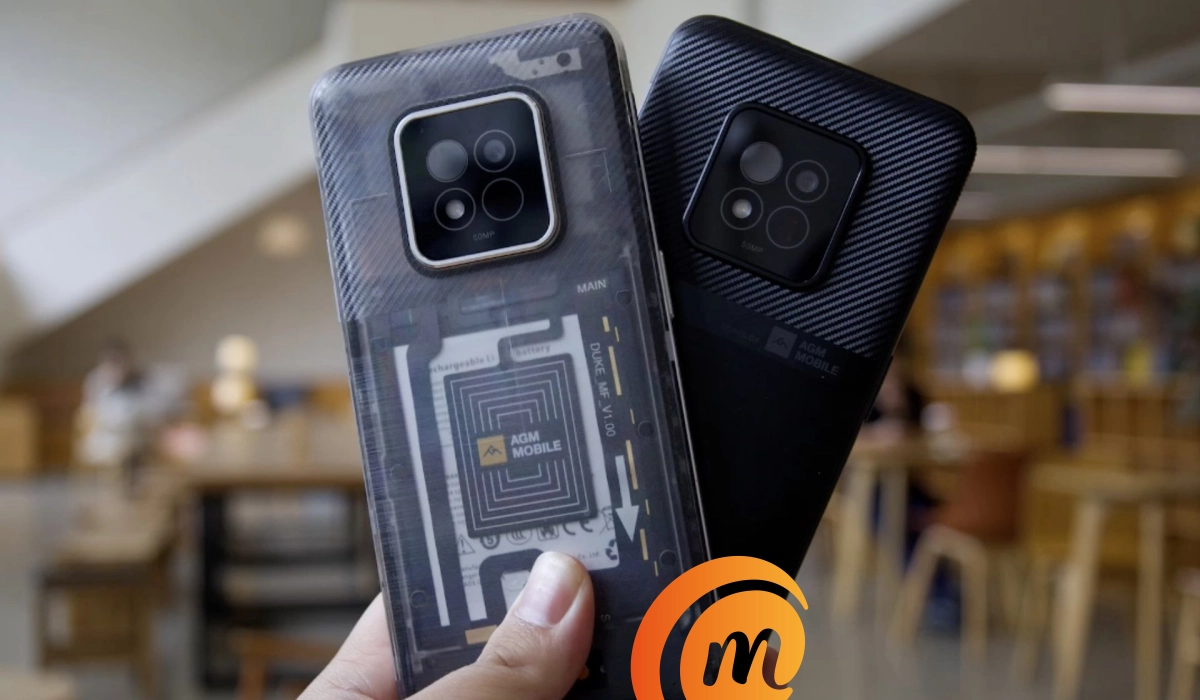
AGM X6 Phantom
For more detailed specifications of the device, have a look below.
- AGM X6 Phantom Specs
- Prices in the USA, UK, EU, Australia
AGM X6 Phantom Specs
Mobile Wireless Network and Software
- 2G mobile network bands : GSM, GPRS, EDGE 850 / 900 / 1800 / 1900 MHz.
- 3G mobile network bands : UMTS, WCDMA, HSDPA 850 / 900 / 2100 MHz
- 4G mobile network bands : LTE.
- 5G mobile network bands : NSA/SA
- SIM Type : Nano-SIM, Dual SIM
- Software / OS : Android 14
- Software Updates :
Design, Form Factor, Appearance
- Dimensions : 174.95 × 81.49 × 11.42 mm
- Weight : 258g
- Display Size: 6.78 inches,
- Screen Resolution : 1080 x 2400 pixels
- Refresh Rate : 120 Hz refresh rate
- Screen Type : IPS LCD Scratch resistant glass
- Frame : Glass front, plastic frame,
- Back/Rear Cover : plastic back
- Ingress Protection/IP Rating : IP68 / IP69K / MIL-STD-810H- Water / dust resistant / shock resistance
- Colorways : Translucent. Black.
Internal Hardware Specs
- Central Processor ( CPU ): 64-bit, 2.0 GHz Octa-core
- Chipset : Unisoc Tiger T750 (6 nm)
- Graphics Processing Unit ( GPU ): ARM Mali-G57 MC2 GPU
- RAM : 8GB
- Extended/Virtual RAM :
- Internal Storage : 128 GB
- External Storage : microSD (shared) up to 512GB
Photography, Video Recording
- Main Camera : 50 MP main sensor + 20MP night vision camera with infrared LED light, autofocus, LED flash, 1080p@30fps video recording
- Front Camera : 16 MP, fixed focus, Face Recognition, 1080p@30fps video capture
Audio, Video Playback
- Music Support : PCM, AAC / AAC + / eAAC + / MP3 / AMR – NB / WB / APE
- 3.5 mm audio headphone jack : Yes
- Loudspeaker : Mono speaker
- Video Support : H.264/MP4/MPEG4 player
- FM Radio : No.
Phone Sensors
- Digital Compass : Yes.
- Accelerometer : Yes.
- Proximity Sensor : Yes.
- Ambient Light Sensor : Yes.
- Barometer : No.
- Pedometer : No.
- Heart Rate Monitor : No.
- Gyroscope (G-Sensor) : Yes.
- Fingerprint Scanner : Yes; side-mounted.
- Face Unlock : Yes.
- Iris Scanner : No.
- Motion Sensing / Gesture Control : No.
- Voice Control : No.
- Intelligent Digital Assistant : Yes; Google Assistant.
- Infra-red/IR Blaster : No.
Connectivity Options
- Bluetooth Version : 5.0
- Bluetooth Profiles : A2DP, LE
- aptX Bluetooth Codecs :
- WiFi : Wi-Fi 802.11 a/b/g/n/ac, hotspot
- GPS : Yes, A-GPS, GLONASS, GALILEO, BDS, QZSS
- USB : microUSB v2.0. Type-C.
- NFC : Market dependent.
Miscellaneous Specs and Features
- Battery Type : Non-Removable Lithium-Polymer
- Battery Capacity : 5000 mAh
- Battery Charging : 18W fast charging
- Wireless Charging : No.
- Reverse Charging : No.
- Model Version/Number :
Launch/Release Dates and Information
- Announced : July 2024
- Release Date : August 2024
Prices in the USA, UK, EU, Australia
AGM X6 Phantom comes in only one storage configuration – 8GB RAM + 256GB internal storage. Listed below are its prices in the US, the UK, Germany, and Australia.
- United States of America (USA) : $249
- United Kingdom (UK) : £249
- European Union (EU) : €299
- Australia : from AUD
Author:InfoDesk
Add MobilityArena as a preferred source on Google
On the 19th of July 2024, when the CrowdStrike software bug hit, IT systems around the world suddenly failed, leading to disruptions at offices, stores, airports. train stations, hospitals, and more. Here is what really happened, in layman’s language.
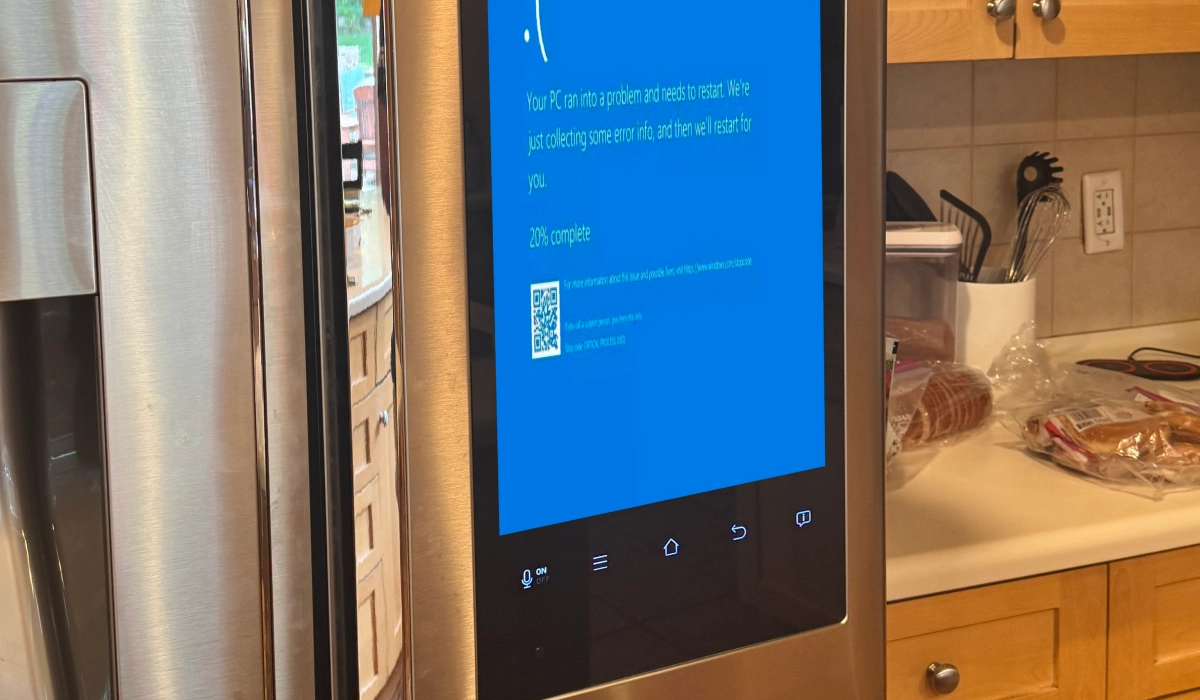
Image source:Tesla Enthusiast.
Technology is great and digital technology, especially, has brought us wonderful advancements in the last several years. But, in light of the Internet breakdown of July 19, 2024, you have to ask yourself if your refrigerator or other home appliance really needs to be connected to the Internet. Because, on this great day, when IT systems around the world shut down, it threw the world into near-chaos.
- Introducing CrowdStrike
- Effects of the CrowdStrike software bug
- Does your fridge need to be Internet-connected?
- Severity
- Moving Forward
All around the world, when the CrowdStrike software bug happened, hundreds of thousands of Internet-connected business systems went offline, throwing the world into panic. Naturally, there were initial questions about whether this was the result of a hack job, but the problem was quickly identified as coming from a buggy software.
IntroducingCrowdStrike
CrowdStrike is a cybersecurity company that most people in the world are hearing about for the first time, thanks to this global crisis that they were responsible for. What happened was that the company , issued a software update for its flagship security product called Falcon Sensor . This update had a bug that caused any Windows computers with Falcon installed to crash without fully loading. You can imagine the rest of the story; right?
Windows operating system runs on millions of devices all over the world. It is the most widely used operating system outside of cell phones. It is especially prevalent in enterprise or business circles. While it does not directly power cell phones and IoT devices , many systems that those devices depend on for connectivity and processing were affected as well.
Effects of the CrowdStrike software bug
When the CrowdStrike software bug hit IT systems, flights were grounded at airports, train stations basically ground to a halt, and banking systems went silent. Stores experienced the failure of their payment systems and could accept only cash. Broadcasting stations, hospitals, educational institutions, and others, all took a hit. For the hours before the the problem was identified, isolated and fixed, the world of commerce took a massive hit. And no-one should be surprised about that. This kind of outage is an occupational hazard of modern business systems.
No-one ought to be surprised that a singular event like this was capable of taking down IT systems, and causing widespread mayhem, the world over. That risk has always been there, and if it can happen, given enough time, it will happen. And when it did this time, the first outages of this pre-zombie apocalypse happened in Australia and quickly spread to Asia, Europe, the United States, and the rest of the world.
It will not be surprising to hear news that malicious actors took advantage of the outage to inflict further harm to businesses and individuals around the world. Bad people love and thrive in times of chaos.
Does your fridge need to be Internet-connected?
Someone tweeted , in jest, that due to the outage, they could not open their smart fridge. Bants. Jest. The fridge in the tweeted image likely does not run Windows 10 or 11, and so it is very unlikely that the CrowdStrike software bug had any direct impact on it. But then, who knows what the next bug or hack will affect? Perhaps embedded home appliances? Or even electric cars?
The question is, why does your refrigerator or washing machine and other similar consumer electronics need to be connected to the Internet? Why the risk of immediate hunger because of a software bug or some other issue that can take down fridges and other home appliances?
As you may already know, there are multiple possible things that can trigger a shutdown of this kind. This time, it was a software bug; next time, it could be terrorists hacking into a foundational IT system. Or just some college kid messing around with a fancy new hacking software.
Imagine someone living in a smart home that was affected by this outage and they found them-self trapped inside and unable to go out because the doors and windows are all controlled by an Internet-connected system. Perhaps it did happen and I just haven’t gotten wind of the story yet. Or am I blowing this out of proportion?
Severity
Which leads to the question: How severe were the disruptions caused by the CrowdStrike software bug? I will put it at a number 7, on a scale of 1 to 10. The disruptions were massive, severe, and widespread.
Moving Forward
All of the world’s super-computing systems are sitting on multiple technological fault lines, any one of which can give way at any time, whether from a buggy software update, a hack, or some other issue that compromises it. How prepared are we to deal with the worst case scenarios of these possibilities? The CrowdStrike software bug episode is a reminder or an early warning of what is possible. The question is, Will we learn from it and adjust or will we move on and get on with our lives like nothing happened?
Author:Mister Mobility
Digital Skills and Communication Coach | Mobile Phone Connoisseur since 2001 | Tech Blogging since 2004
