Add MobilityArena as a preferred source on Google
You may have heard of Android Auto and now also Android Automotive, and you probably wondered if they are the same thing. They are not. The latter is an improvement on the former.
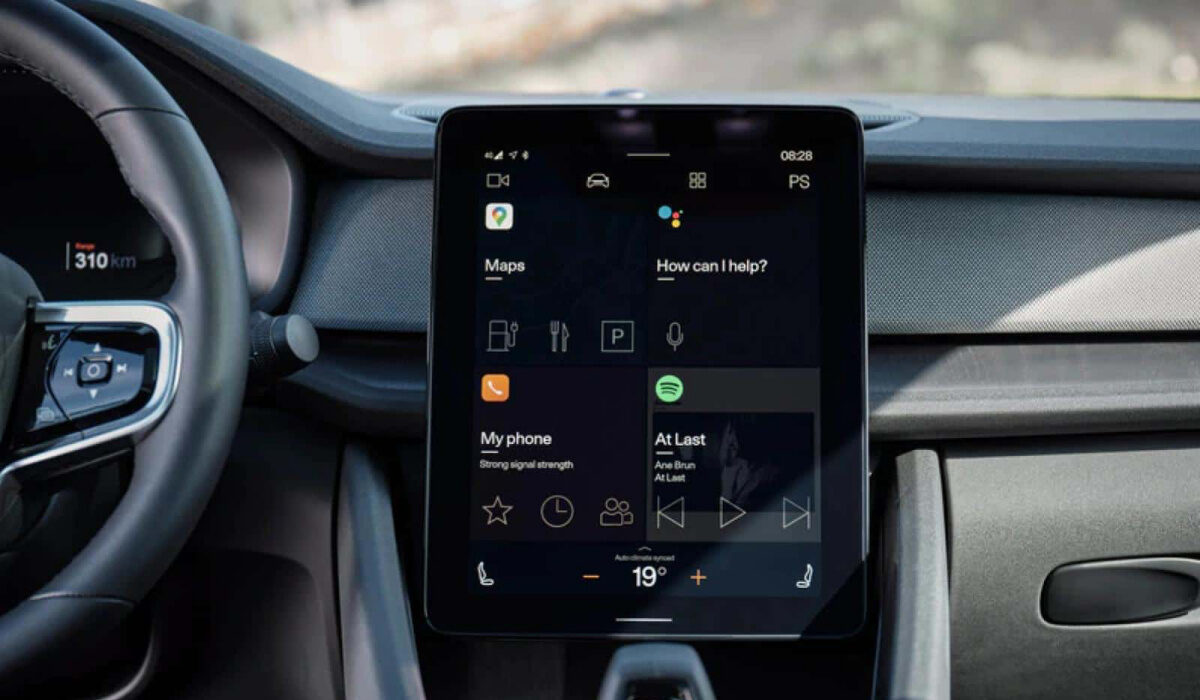
It isn’t only Apple that has its smartphone data connectivity system connecting with the multimedia system. Google also wants us to be able to use our favourite apps and multimedia while on the road. What are the differences between Android Auto and Android Automotive ? Let us explain.
- Android Auto – the basics
- Android Automotive – the basics
- Android Auto vs Android Automotive: To sum up
- Which car brands are adopting Android Automotive?
Android Auto – the basics
Android Auto is an application created by Google in order to manage and stream the image from your personal device (smartphone) running on Android system to the screen located on the console of your car, connected to the multimedia system. As a result, it is possible to benefit from the solutions that were previously used on our smartphones, such as: satellite navigation, playing multimedia files, sending SMS and making phone calls, searching for information on the Internet or communicating with a personal assistant.
Android Auto is a solution available wired (via USB cable) or wirelessly, using Bluetooth technology. Obviously, in order to use it you need to find out whether your car offers support for this system. What’s interesting, you can switch between the Android Auto interface and the built-in interface of your car’s on-board computer at any time. If you own an Audi without Android Auto support, you can use additional Android Auto modules which will enable you to use this system without replacing your car radio with an aftermarket device.
Android Automotive – the basics
Android Automotive (also known as Android Automotive OS or AAOS) is an operating system developed by Google and Intel. It was developed to be used for dashboards (multimedia screens) used in modern cars. Automotive companies such as Audi and Volvo took part in creating this platform. It is worth mentioning that Android Automotive is not only focused on providing us with travel-related information and multimedia playback. Car manufacturers who decide to use the software may allow us to control air conditioning or other vehicle functions with it.
Android Auto vs Android Automotive:To sum up
Unlike Android Auto, Android Automotive is a complete operating system that runs in the vehicle’s computer. It does not require a smartphone to operate. All you need is your Google account to access all your most important content and applications.
Android Automotive is an open source operating system and any automaker can use it without Google Automotive Services (GAS), which is a collection of apps and services from Mountain View company (Google Maps, Google Play, Google Assistant, etc.).
Android Automotive seems to be a more beneficial solution, but it will still be some time before the software will be available in all new car models.
Which car brands are adopting Android Automotive?
Car brands that are switching to Automotive for use in their cars include Volvo, Polestar, BMW, Honda, GM, and Stellantis.
Author:MobileChic
That motivated, gadget-loving geeky chic who tries to stay on top of things. Unapologetic iFan.
Add MobilityArena as a preferred source on Google
In this article, I dive into the general history of mobile phones by telling the story of my own personal history – which is a rich one for that matter. Since 2001 when I first used a mobile phone till date, I have used about 300 different models, including Motorolas, Nokias, Ericssons, Sonys, Sony Ericssons, Siemens, Alcatels, Sendo, Trium, Sagems, BlackBerrys, BQ, Wiko, iPhones, Samsungs, Xiaomis, TECNOs, itels, Microsoft Lumias , Google Pixels, and most recently a OnePlus.
While there had been attempts at making pocket-sized, handheld telephones since as far back as 1917, the first one was not produced till 1973, and Motorola (an American company back then) was the first at it. On April 3, 1973, the first cellular mobile phone call was placed on a Motorola phone. Incidentally, I was born 7 days later. The cell phone was a forerunner and a herald of my impending arrival. I doubt that my parents had any idea that I would one day be called Mister Mobility.
As a mobile phone connoisseur, reviewer, and historian, it is my opinion that the history of mobile phones is best told in terms of generations, with sub-categories in between. You’ve heard of 2G, 3G, , 4G, and 5G. The G standards for generation, so when you say 4G, what you are referring to is the fourth generation of mobile phone technology.
The History of Mobile Phones: First Generation (1G)
I was a child all through the first generation of mobile phones and experienced it only in terms of what I read. From 1979 all the way to 1991, the world went through iterations of making cellular phones usable.
Did you know that Japan was at the forefront of mobile technology for decades? The first generation of cellular technology was launched in 1979 in Tokyo, Japan by Nippon Telegraph and Telephone. And the Japanese have had the world’s most advanced mobile networks since then, often outpacing Europe and North America by miles.
The Nordic countries quickly jumped on 1G in 1981, embracing the world of cellular communications, and as we shall see later, tailgating the Japanese for decades. Nordic countries are a group of countries in northern Europe. They include: includes Finland, Norway, Sweden, Denmark, and Iceland. The first 3 are major contributors to mobile phone history.
1G did not get to the US and Canada until 1983. Some will tell you that the first commercially available cellphone was the DynaTAC, but they would be referring to the USA only. Cellphones were already being used in Japan and Europe before that.
What was the period of 1G like? It was pretty much the age of wireless voice communications only. Not that you couldn’t transfer data over a 1G connection, but you’d be frustrated to heaven, down to hell, and back. Cellular technology and networks were new, so quality was poor. It was cutting edge at the time, but it wasn’t anything close to what you enjoy today, in terms of quality.
Pretty much every country in the world has shut down its 1G telephone networks. Except for Russia, where reports say their NMT technology 1G services are still running.
The History of Mobile Phones: Second Generation (2G)
2G is short for second-generation cellular network. 2G cellular networks were commercially launched in Finland by Radiolinja in 1991. As you can imagine, Europe was taking mobile phone technology by the horns and began to chart a course that the rest of the world would embrace. This was the first phase of the history of mobile phones, as the preceding years from 1973 were mostly developmental in nature.
The first mobile phone with internet access was Nokia 9000 Communicator and was launched in 1996. It used CSD. Note that Circuit Switched Data required the phone line to dial into a server to make an Internet connection, so no phone calls can be made or received during an active data session. This was a massive limitation of CSD. The other big limitation was the speed. CSD was slow, limiting users to no more than 9.6 kbit/s. Which was why WAP sites were limited to mostly text. Still, being able to use the Internet on a phone back then was a novelty.
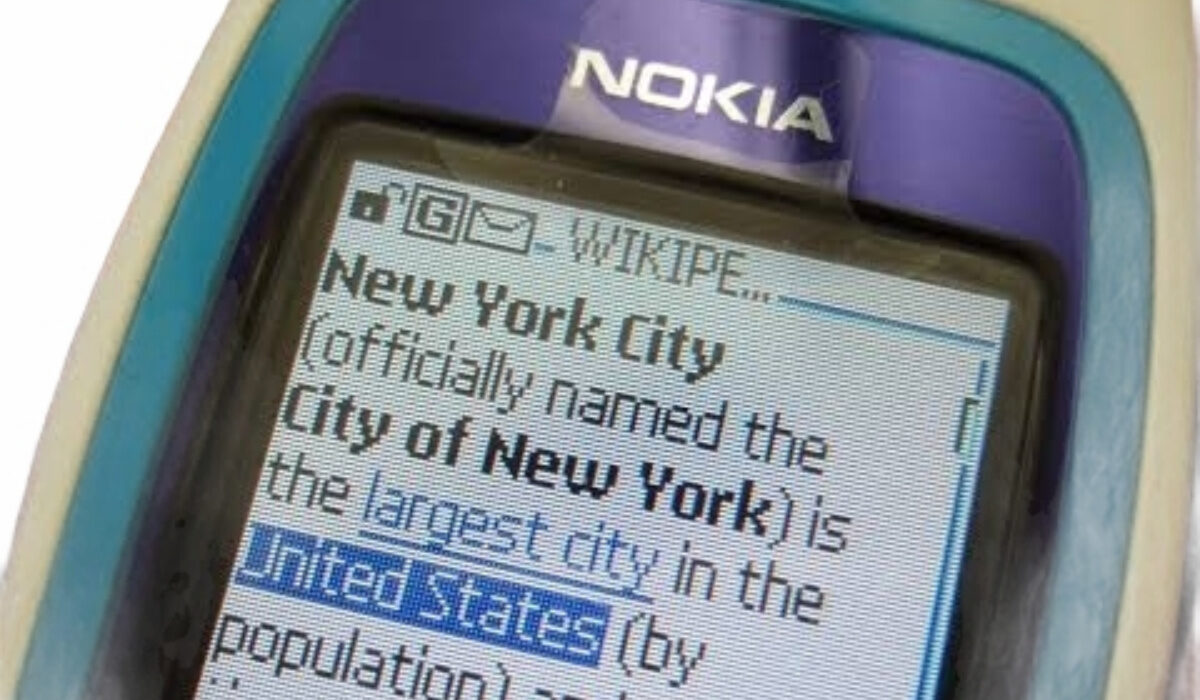
1999 was the defining year for browsing on mobile phones. In Japan, NTT DoCoMo introduced the mobile Web with the first full internet service on mobile phones, and the first mobile-specific web browser, which they called i-Mode. If you ever read up about a phone with i-Mode, it was definitely Japanese. For the first time, people could browse on a mobile phone.
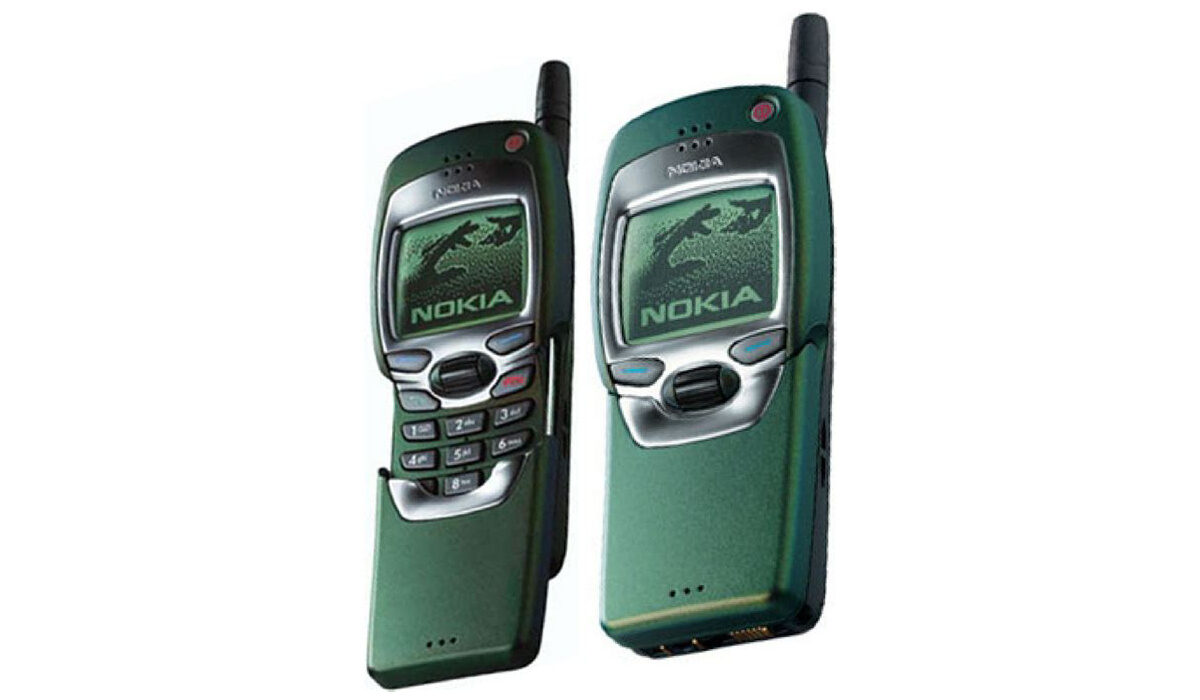
Nokia launched the 7110 (image below), the first regular cell phone with a WAP browser. WAP was much more limited than the i-Mode standard used in Japan, but it was a first step. It was limited to mostly text and the most basic of images – nothing like the advanced Web browsing that you know today.
This was the era that I began to experience mobile phones. My first phone, the Motorola Talkabout T2288 had a WAP browser, and I used it quite a bit. Dial-up Internet was expensive but that couldn’t keep the explorer in me from giving it a go. I went on to use dial-up mobile Internet on more advanced phones like Ericsson R380s, Motorola Accompli A008, and Nokia 9210i Communicator.
GSM went on to be extremely popular and was adopted by almost everyone eventually. In the United States, Qualcomm tried to do things differently, pitching Code-division Multiple Access (CDMA) as an alternative standard for commercial cellular communications. It never gained significant traction outside of the US and Canada. Globally, GSM won the 2G race.
2G was slow for data, though, and everyone likes fast data. In 2000, the European Telecommunications Standard Institute (ETSI) came up with a layer of packet data that could run on top of GSM networks. It was called General Packet Radio Service (GPRS). It was an extension of 2G technology and so became known as 2.5G. For the first time, mobile users could have an always-on Internet connection.
I remember using GPRS on my Siemens M55 and Samsung C100 phones, among others. This was the era when European mobile phone brands ruled the world. At a time in this era, Nokia had 34% of the global cell phone market. There are also a few highly visible made in America brands. The Nokia Communicators were the most advanced and most powerful mobile phones of this era.
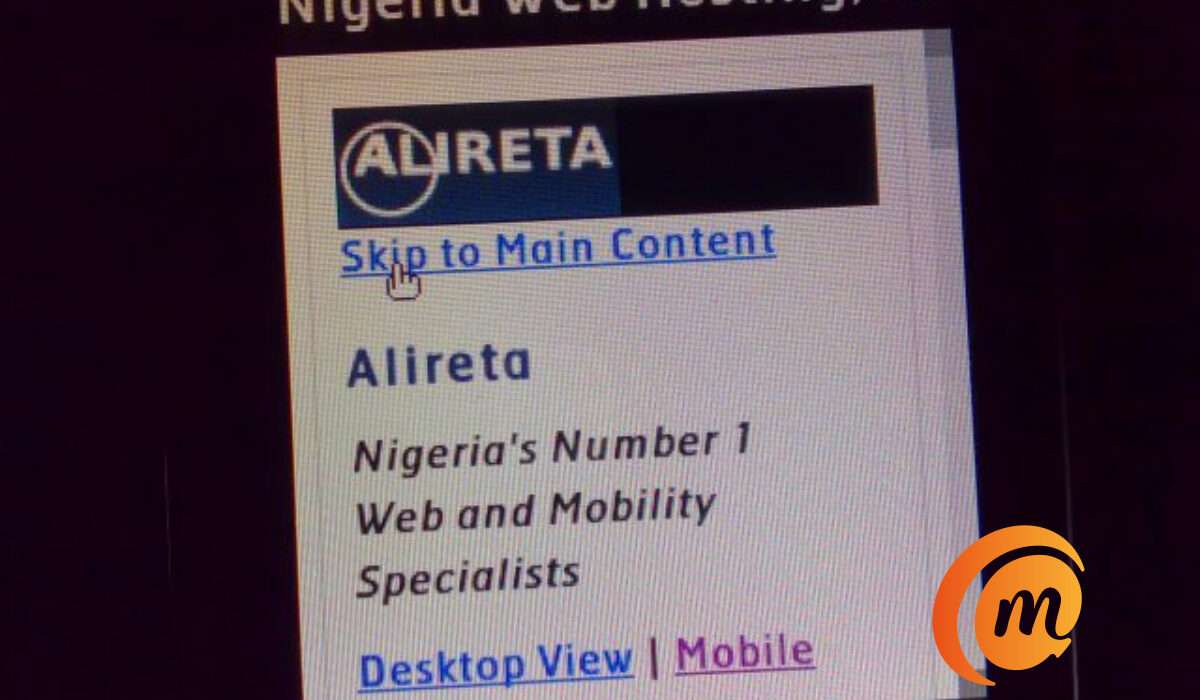
My obsession with everything mobile was total. I got involved in developing mobile-compatible websites that could be accessed on mobile WAP browsers in the early 2000s. I started by learning, and creating WAP sites in, Wireless Markup Language (WML), and kept learning as new standards were released. The above is a photo of one of my WAP 2.0 sites developed using XHTML (eXtensible HyperText Markup Language Mobile Profile).
The History of Mobile Phones: Third Generation (3G)
The next phase of the history of mobile phones came to be with the arrival of 3G and packet switch data. Once again, Japan took the lead. In May 2001, the complete move away from circuit switched data (dial-up) to packet data became a reality with the introduction of 3G technology. For the first time, really fast mobile Internet was available on cell phones. Yay!
While 2.5G was fast, 3G did away with the old 2G technology completely to deliver much faster Internet connections over mobile networks. And this third generation was so versatile that it grew into a large family, from Universal Mobile Telecommunications System (UMTS), which is basic 3G, to High Speed Packet Access – HSPA (3.5G) and Evolved High Speed Packet Access, HSPA+, HSPA Plus, or HSPAP (3.75G), 3G just kept evolving and getting better.
I look back at the 3G era with nostalgia, as far as my personal history of mobile phones is concerned. This was the hey days of Symbian smartphones by Nokia and Sony Ericsson. It was the era of the Motorola RAZR. This was an era of exciting mobile phones and smartphones with a diverse range of form factors – sliders, side sliders, oblong, folders, QWERTY keyboards, and more.
The history of mobile phones is not complete without the mention of the iPhone. The first iPhone was announced in 2007 during the 3G era, but it was a 2G device. 3G was not introduced in the iPhone until June 2008 (iPhone 3G), but I held out till the release of iPhone 3Gs in 2009 before buying my first ever iPhone.
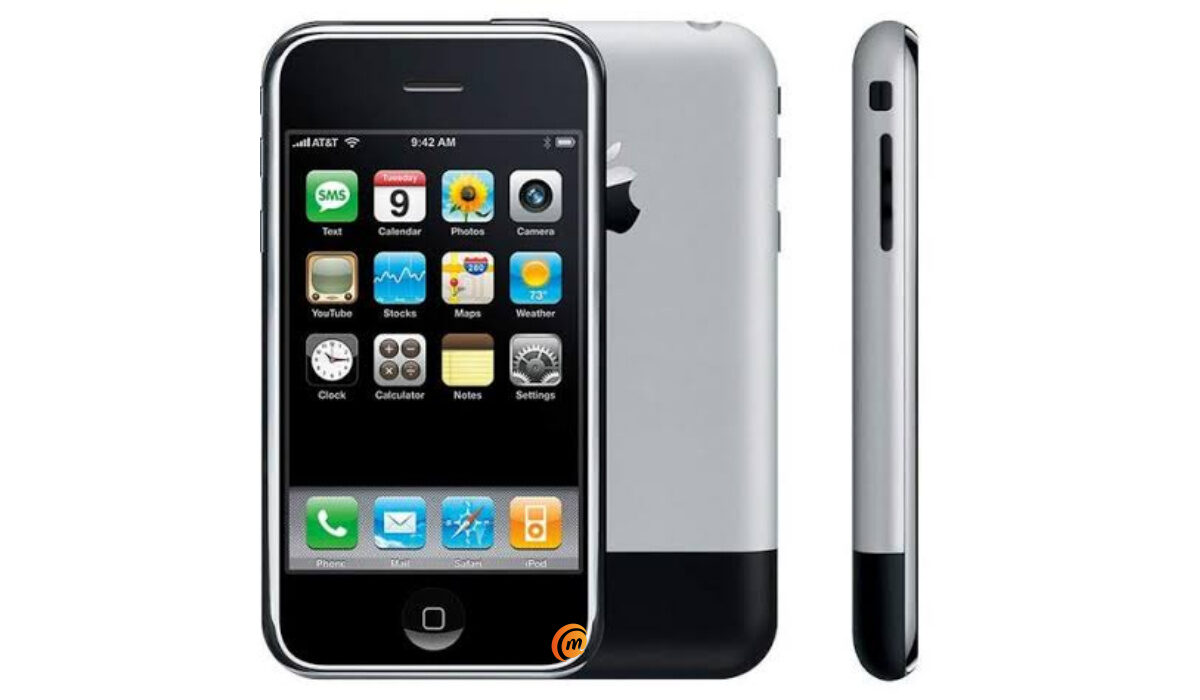
I have not been a huge fan of Apple iPhones, for years. The poor battery life was one of the key reasons. The lack of certain basic functionality, including copy-and-paste of text, and multitasking, in the earliest models was another reason. Since the 3GS, the only other iPhone I have owned was the iPhone 6S. But I am loving the 13 Pro Max , and 2022 might just be the year I have another adventure with Apple.
Likewise, what will an article about the history of cell phones be without a mention of the first Android phone , HTC Dream? It was clunky and not quite beautiful, but it was the forerunner of every Android smartphone in existence today. It arrived in October 2008, a year after the first iPhone.
The History of Mobile Phones: Fourth Generation (4G)
There are two broad 4G (fourth generation of broadband cellular network technology) – WiMAX and LTE (Long-Term evolution). 4G LTE is what the world has gone ahead with, and it was the Nordic countries of Norway and Sweden that led the way in 2009.
It was during the 4G era that aptX HD was first seen in mobile phones. The aptX standard was created by Qualcomm to bridge the gap of audio quality over Bluetooth connections. And in 2016, LG G5 became the first mobile phone to have aptX HD . I owned its successor, the LG G6 which also had the technology. Other Blietooth standards and technologies improved greatly as well.
The 4G era was also when China took centre-stage as the top manufacturer of mobile phones in the world. Because of economies of scale, almost every cell phone brand now manufactures all or part of its products in China. And so, the era of made in China phones was born. Not only that, Chinese smartphone brands took the world by storm, such that it became difficult to find non-Chinese smartphones in the market.
With the arrival of 4G LTE came the question of whether you can upgrade your 3G phone to 4G . If you are wondering about it, you can click that link to go read the detailed explanation, if you want to, but the summary is that a conversion, while feasible, is mostly impractical. Just go buy a 4G smartphone and ditch your old 3G phone.
As for the 4G phones I have used, let’s just say they are too many to list. My favourite models include: Samsung Galaxy S9 Plus, Xiaomi Mi Note 10 Pro, and TECNO Camon 18 Premier.
The History of Mobile Phones: Fifth Generation (5G)
The next era of mobile phone history is that of 5G . Fifth generation mobile networks began to be deployed in 2019, the first being in South Korea. The technology has picked up pace. 5G networks are being rolled out on every continent. As with previous generational shifts, 5G technology comes with faster Internet speeds. With a 5G phone, you will enjoy much better and much faster mobile Internet.
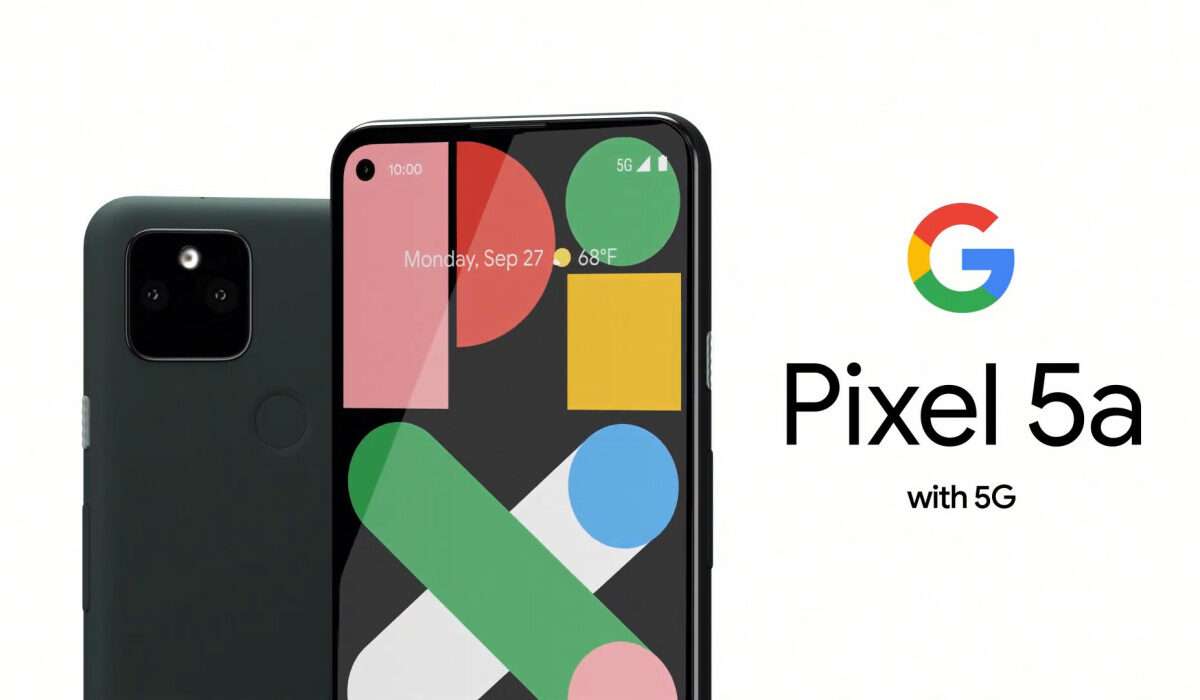
It is still early days with the fifth generation of mobile technology, and the only 5G smartphone I have used so far is Google Pixel 5a 5G. I have a few others I am considering and will be continuing my adventures with mobile phones. OnePlus Nord 2 5G had my attention earlier, but I am not a fan of the UI games that the brand has been playing in recent times. I should be excited about Google Pixel 6 phones, but I am not.
My history of mobile phones has been mostly exciting, but every now and then, I can’t seem to find a device that really excites me. I am not quite sure what Android 5G phone I’d really love to use next, at this time. I might wake up tomorrow and be sure, though. One of the questions people are asking today is if it is possible to convert or upgrade their 4G phones to 5G . Technically, it is possible, but just go buy a new 5G smartphone; right?
Will we get souped up versions of 5G, like 5G Advanced, 5.5G or 5.75G or 5.9G, or the like? Looking back at how 3G and 4G evolved, chances are that we will. Each evolution will bring faster speeds and some other improvements. There is no end to our need for speed. We are only about 3 years into 5G services, and so there is room for lots of improvements and enhancements.
The History of Mobile Phones: Sixth Generation (6G)
We are not done yet with 5G, but work on 6G, the sixth generation of mobile technology, is already under way. Some countries, like China, have already tested 6G technologies. It is too early to have any details of the technicalities, but as always, it will involve better capacity and faster speeds. The human desire for speed is insatiable, after all. When will 6G networks and smartphones start rolling out? The simple answer is that nobody knows. But I will be here hopping on to it and writing about it when it does.
In closing, it is difficult to list all of the mobile phones that I have used in an article like this, and that isn’t the goal. The goal was to provide you with an enjoyable story that provides details of important points in the history of mobile phones, and I hope I have achieved that. Perhaps I left out a few things that should be mentioned here; if so, please drop me a comment below and I will rectify that. As always, I appreciate your feedback.
- Don’t miss our reviews .
- Join our WhatsApp Group , to be notified of the most important articles and deals,
- Follow us on Instagram , Facebook , Twitter , and YouTube .
Author:Mister Mobility
Digital Skills and Communication Coach | Mobile Phone Connoisseur since 2001 | Tech Blogging since 2004
