Add MobilityArena as a preferred source on Google
The smartphone operating system race has been fought and won, and sad as it is for me, there are only two dominant platforms left standing: Android OS and iOS. And so it is that no matter how much we have talked about it in the past, we cannot get away from making more Android vs iPhone comparisons from time to time.
If you are new to mobile operating systems, here is a brief explainer. Android OS is the mobile operating system developed by Google and used in smartphones made by Samsung, Xiaomi, OnePlus, Nokia, OPPO, TECNO, Infinix, itel, Huawei, Sony, Alcatel, BLU, TCL, Vivo, Nothing, and Google. iOS is the mobile operating system developed by Apple and used in iPhones, iPods, and iPads.
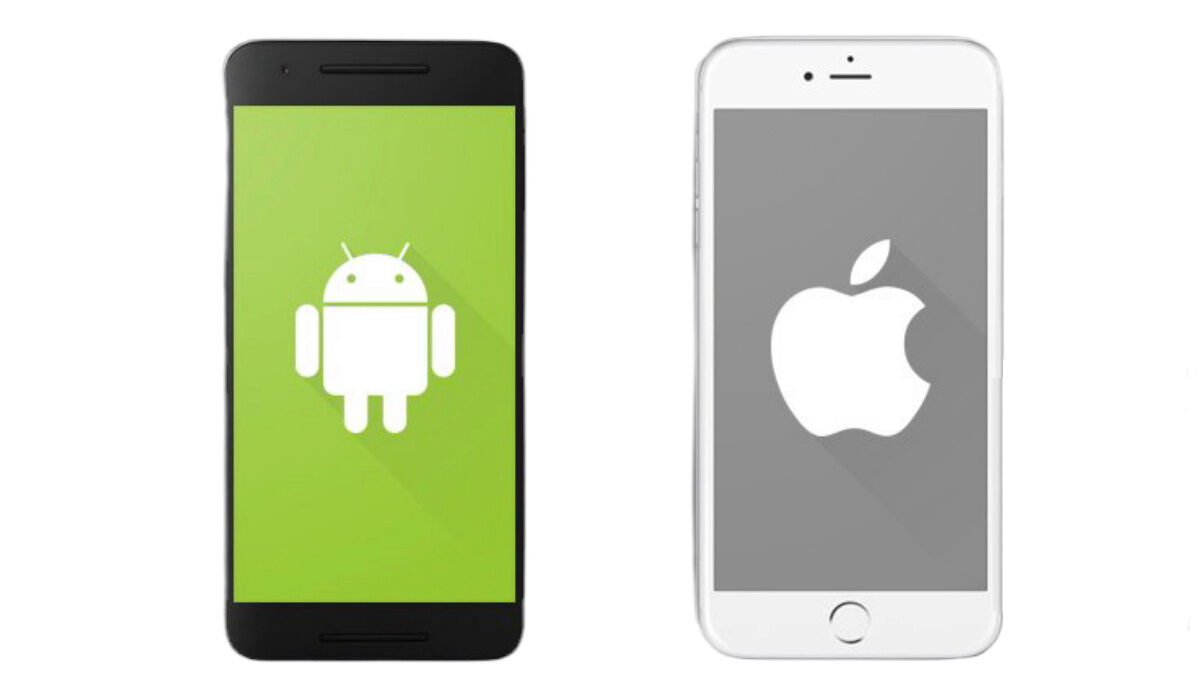
In this article, we look at which platform is dominant in each of the six inhabited continents of the world – Europe, North America, South America, Asia, Africa, and Oceania.
Android vs iPhone in Europe
On the old continent, Android OS has a market share of 70%, while 30% of all the smartphones on sale are powered by iOS. Europeans love their Android smartphones.
Android vs iPhone in North America
iOS has a slight lead on the North American continent, where it has 55% of the market, while Android has 45%. The United States and Canada are two markets that are very different from most smartphone markets around the world.
Android vs iPhone in South America
Take a flight down to South America and the picture changes drastically and is a huge contrast to what obtains in the north of the continent. Holding only 10% of the market, iOS is grossly outgunned. Android rules there, with a 90% market share.
Android vs iPhone in Asia
In Asia, Android OS also rules, with 82% of the market. iOS clocks in at 18% of the market.
Android vs iPhone in Africa
On the continent of Africa, Android rules, with 84% of the market, leaving iOS with 16%.
Android vs iPhone in Oceania
The continent of Oceania includes Australia, New Zealand, and about 12 other countries in the Pacific Ocean. Here, iO S is in a good position with 55% marketshare, while Android has 45%.
In Summary
Africa, South America, and Asia are alike, as far as smartphone platform market share is concerned. Android rules supremely in those regions and iOS is a marginal platform. Europe is Android territory as well, just not as invested as the earlier three continents.
It is in North America and Oceania that have a strong iOS foothold – strong enough to have a little over 50% of the market share in those regions. While iOS wins in those regions, it isn’t by any large margins – barely a 10% lead in each.
Personally, I am sad that competing platforms like Windows Phone/Mobile and BlackBerry OS had to die and become history. Both were quite good alternatives to this two-horse race that we have today. I also used Ubuntu Mobile and PalmOS, and wish both had taken off and ramped up users. Alas, it wasn’t meant to be so. KaiOS is a mobile operating platform with promise, but it powers smart feature phones , not smartphones. And so it is that the only options we have for smartphones today are iOS and Android OS.
On the whole, Android is the dominant mobile operating system on the planet. And that is understandable, considering that every other smartphone maker apart from Apple makes Android phones. As a matter of fact, that Apple’s iOS even holds its own as much as it does is the stuff of legends.
- Don’t miss our reviews .
- Join our WhatsApp Group , to be notified of the most important articles and deals,
- Follow us on Instagram , Facebook , Twitter , and YouTube .
Author:Mister Mobility
Digital Skills and Communication Coach | Mobile Phone Connoisseur since 2001 | Tech Blogging since 2004
Add MobilityArena as a preferred source on Google
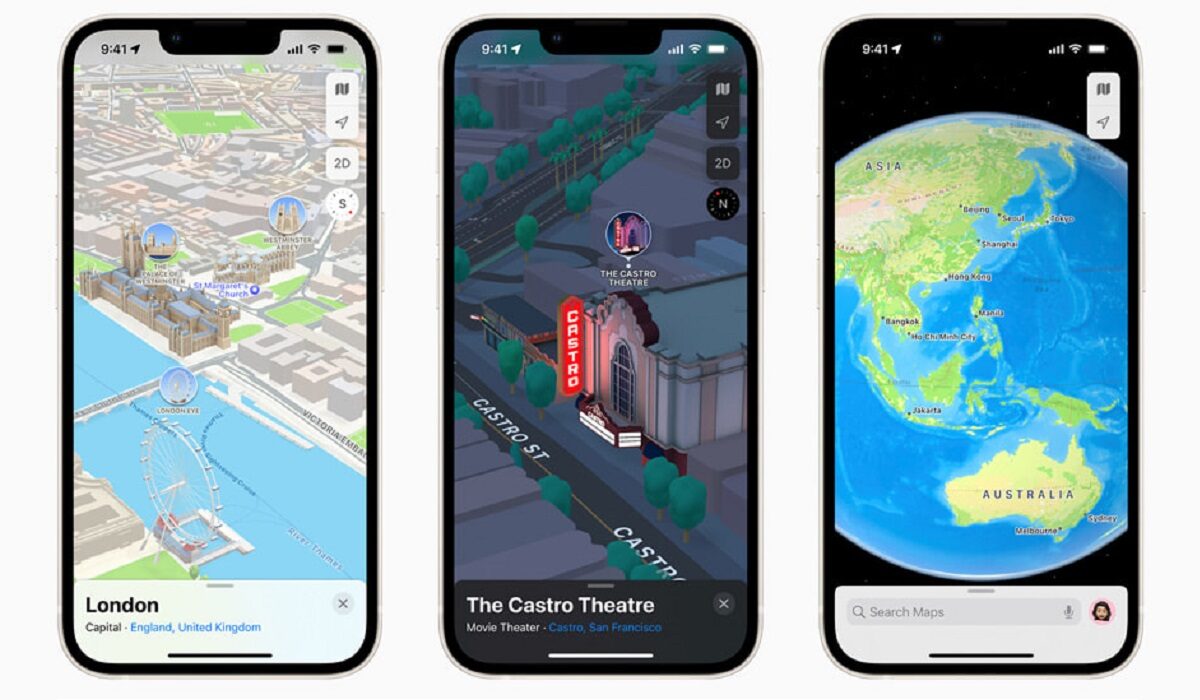
Apple Maps is a web mapping service and navigational tool developed by Apple Inc. It is available as an app on devices running iOS, iPadOS, macOS, and watchOS. It is also available for use on the Web with your browser.
Apple Maps was first launched in 2012 with iOS 6, as an alternative to Google Maps. But that initial product was a disaster and pretty much useless to anyone. In September 2018, a new, revamped version was later launched to make it a more useful tool. Since then, the product has continued to make progress.
Apple Maps vs Google Maps
As Google Maps is the default navigation tool for hundreds of millions of mobile phone users around the world, it is natural for people to compare the two services. Both have key features that users have come to expect from a map tool – transit directions, real-time navigation, traffic, location sharing, ability to save locations, street view, satellite view, incident reporting, voice assistant support, etc.
Apple Maps is far behind Google Maps in terms of features and coverage. For example, while Google Maps is usable almost everywhere in the world, Apple Maps coverage as at April 2022 covers a mere 8.5% of the world’s population. Also, Google Maps’ provides more accurate and detailed info about the impact of traffic on your movement.
Google Maps allows users to download maps to their devices upfront, so they can continue to navigate even when outside of network coverage area. This is another distinct edge that it has over Apple Maps. Google Maps also supports various modes of transportation – including car, public bus, cycling, and walking. Apple Maps does not provide this.
Lastly, in terms of availability on multiple platforms, Google Maps wins hands down, as you can use it on any kind of terminal, including Android phones and tablets, iPhones, iPads, Windows PC, and Mac. Apple Maps, on the other hand, is available only inside of Apple’s ecosystem, on devices like iPhones, iPads, and Mac. It is not available on Android and Windows platforms, though you can access it via a Web browser.
If you are locked into Apple’s ecosystem, though, and Apple Maps covers your location, it has a better integration, and you should consider using it. Speaking of locations and coverage areas, as at April 2022, Apple Maps is available in only eleven countries and territories. Outside those locations, it is useless. Have a look at the list of locations below.
Apple Maps Coverage Areas and Locations
Do you want to know what locations Apple Maps has covered? Have a look at the list below.
- Initial Coverage Location: Northern California (from September 2018)
- Expansion #1: Hawaii (from November 2018)
- Expansion #2: Southern California (from January 2019)
- Expansion #3: Southwest U.S. (from March 2019)
- Expansion #4: Texas & the Gulf Coast (from August 2019)
- Expansion #5: Northeast U.S. (from September 2019)
- Expansion #6: Midwest + Western U.S. (from November 2019)
- Expansion #7: Final Parts of the Continental U.S. (from January 2020)
- Expansion #8: Puerto Rico, Guam, the U.S. Virgin Islands (from April 2020)
- Expansion #9: Ireland, United Kingdom (from October 2020)
- Expansion #10: Canada (from December 2020)
- Expansion #11: Spain & Portugal (from June 2021)
- Expansion #12: Italy, San Marino, Vatican City, Andorra (from September 2021)
- Expansion #13: Australia (from December 2021)
- Expansion #14: Germany, Singapore (from April 2022)
- Don’t miss our reviews .
- Join our WhatsApp Group , to be notified of the most important articles and deals,
- Follow us on Instagram , Facebook , Twitter , and YouTube .
