Add MobilityArena as a preferred source on Google
BlackBerry’s Chief Operating Officer Marty Beard has released a statement in which he tries to convince us that BlackBerry 10 OS is not going away. I am still not convinced. The official statement makes BlackBerry sounds like the girl who doesn’t want a guy but wants to hold on to him anyway. Here is the official statement from Marty:
Last week we shared the latest plan to keep advancing our smartphone portfolio. Unfortunately, the news was misinterpreted by many – from the media, to tech observers, to our fans and customers. I made the rounds this week with the press to set the record straight, and the message was this – BlackBerry is not backing away from BB10. Our customers depend on the BB10 platform, and they are the ones that drive our roadmap. That is why we are committed to not just maintaining BB10 software, but advancing it to be even more secure and provide even greater productivity. You’ll see that with the next 10.3.3 update coming within the next month, which will be focused on enhancing our already-stellar privacy and security features. Future BB10 software updates for 2017 are already in the works. Meanwhile, BlackBerry 10 devices such as the BlackBerry Passport and Leap are still available to our loyal customers. Our customers also help us decide what type of keyboard we make for them. And what they ask for is choice in both a virtual and physical keyboard. This means we’ll continue to make our iconic BlackBerry keyboard. We have four physical keyboard options that we currently offer: Passport, Passport Silver Edition, Classic and PRIV. There is solid demand for physical keyboards – and as long as that’s the case, we’ll continue to make them. For virtual keyboard fans, you have Leap and PRIV (just keep that slider down). Now that you know we’re committed with BB10, let me explain why BlackBerry’s device strategy is truly unique. It’s differentiated because it goes beyond just smartphones. Our view is the rapidly growing mobile environment is quickly being encompassed by an IoT world that requires both strong security and connectivity. The foundation for this started with the BB10 software platform, which was built by engineers with decades of experience in security. But we knew there was a need to bridge the connectivity gap – leveraging Android was the solution. But, we didn’t just want to create another prosaic Android device. We wanted to merge the best of BlackBerry with Android – the notion of a new merged BlackBerry platform meant we would provide the security and connectivity BlackBerry is known for with the content available in the Android ecosystem – all in one environment. BlackBerry is the only one with this unique flavour of smartphone in the market today. PRIV was the first iteration…and soon there will be others. At BlackBerry, we’re not looking to fit into the industry standard mould. That’s because mobility has evolved beyond just smartphones and tablets. Besides our burgeoning enterprise software business, the new Mobility Solutions division has defined a strategy enabling us to agilely pursue opportunities in this new security-focused era.
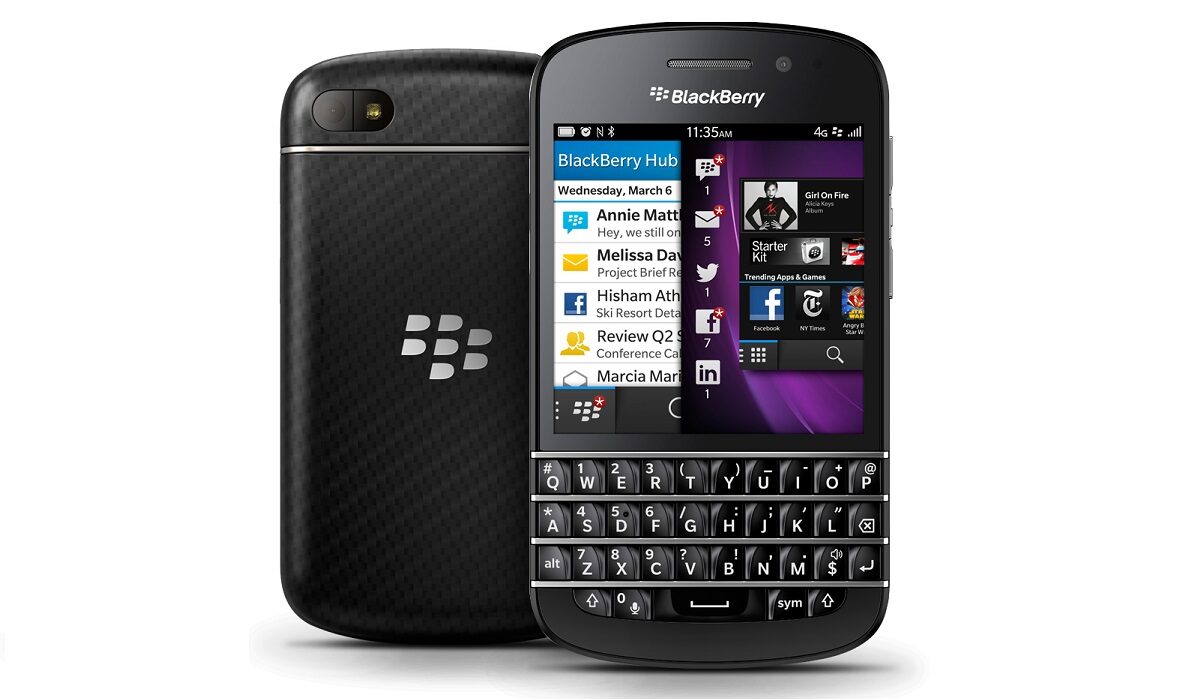
Now, read on for my take on the above statement.
BlackBerry Will Make More Physical Keyboards
The statement is very categorical about the fact that Blackberry Ltd. will make more smartphones with a physical keyboard. There is no ambiguity about it.
BlackBerry Has Switched Platforms
There is nothing in that statement that says that BlackBerry will continue to produce new BlackBerry 10 smartphones. The statement dances around and finally attempts to sell the Priv as a middle ground between BlackBerry 10 and Android: “We wanted to merge the best of BlackBerry with Android – the notion of a new merged BlackBerry platform meant we would provide the security and connectivity BlackBerry is known for with the content available in the Android ecosystem – all in one environment.”
But what that statement says is that BlackBerry has moved to Android OS and is attempting to replicate the level of security available on BB10 on Android OS. That’s all. Summary: BlackBerry has moved to Android. Whether they are able to replicate that security is another matter. But the move has been made. The switch has been pulled.
The statement is clear that BlackBerry will continue to support existing BB10 smartphones with software updates, which is fair enough. It sounds very familiar. It sounds like what we heard concerning Symbian OS when Nokia pulled the switch. Repeat after me:
- BlackBerry 10 has failed BlackBerry and the company has switched to Android.
- The future of BlackBerry is Android OS.
BlackBerry Ltd. doesn’t want BlackBerry 10 any more, but wants to keep it around. Sounds like when a girl does not find a guy attractive and so does not want him in the way he wants her, but she wants to keep him around. She consigns him to the friend zone.
BlackBerry 10 OS Is On Life Support
Keep using your existing BlackBerry 10 smartphones if that works for you. I have no problem with that. But there is nothing that BlackBerry Ltd. has said in recent times that suggests that there is a medium or long term future for BlackBerry 10 OS. If any, the future of that platform from this point will be short. As far as I can tell, BlackBerry 10 is on life support. The end is nigh.
- Don’t miss our reviews .
- Follow our news on Google News .
- Join our WhatsApp Group , to be notified of the most important articles and deals,
- Follow us on Instagram , Facebook , Twitter , and YouTube .
Author:Mister Mobility
Digital Skills and Communication Coach | Mobile Phone Connoisseur since 2001 | Tech Blogging since 2004
Add MobilityArena as a preferred source on Google
While travelling is still viewed by some as an opportunity to unplug from your digital self more and more people are utilizing apps to make their travels simpler, safer, and more fun. While mapping, translation, and currency converters remain the golden standards of travel applications, there are numerous apps out there that put a different spin on the genre. As a founder with experience across the tech spectrum, including travel, Matt Keezer , who helped found FlightHub in 2012, seemed like the perfect person to ask about these off the beaten path apps. He provided me with his top 3 travel apps for those looking for more than just the basics.

Travel List
Travel List is an app that is dedicated to making sure that you have everything you need before you leave home. Designed to work with your phone’s calendar, this app is fully customizable to incorporate all kinds of trips, from road trips to the country, to business trips with several destinations. Scheduled alerts can remind you not just of general items, but time sensitive ones like chargers, devices, and documents you need to pack for specific trips.
Gate Guru
While many apps can track your flights, none do it as thoroughly as Gate Guru. This app goes beyond itineraries according to Keezer, giving you detailed information about the specific amenities available at the terminals you’ll be visiting and maps of the airports you’ll need to navigate over the course of your travels. Additional info includes weather, time zones, and other tips for surviving your latest airport experience.
ICE
While no one expects to find trouble on vacation it is always wise to plan for it. While nothing beats travel insurance for ensuring your overseas safety, apps like ICE can be a lifesaver. More or less a MedicAlert bracelet built into your phone, ICE can provide first responders with information regarding allergies, insurances, medical conditions, and medications all without unlocking your phone. This can obviously be a huge help if you find yourself needing medical aid while abroad.
