Add MobilityArena as a preferred source on Google
If you value the freedom of owning your phone outrightly so you can use it anywhere you like, a SIM-Only plan is what you need from your carrier. Whether it is. AT&T, T-Mobile, or Verizon, or any of the smaller carriers (MVNOs), you can bring your own device and get a SIM or eSIM for text, calls and data.
Even if you purchased your phone from a carrier, as long as you have unlocked it, you can use it with a SIM-Only plan from any of the other carrier.
As the name indicates, a SIM-Only plan means that all you are getting from a carrier is a mobile line; it does not include a phone. So, a SIM-Only plan from T-Mobile, for example, means you are getting a line from the carrier for use in a phone you already own or intend to buy from elsewhere.
- SIM-Only vs BYOD
- eSIMs on SIM-only plans
- Top SIM-Only Plans with Unlimited Data
- Best SIM-only Plans with Metered Data
- How to use your BYOD plan
SIM-Only vs BYOD
This is why the phrase, SIM-Only plan, is used interchangeably with the term, BYOD (Bring Your Own Device). You have to bring your own device in order to use a SIM-Only plan. Everywhere you see the term, BYOD, in this article, it refers to the same thing – a plan where you purchase a SIM card or mobile line only.
eSIMs on SIM-only plans
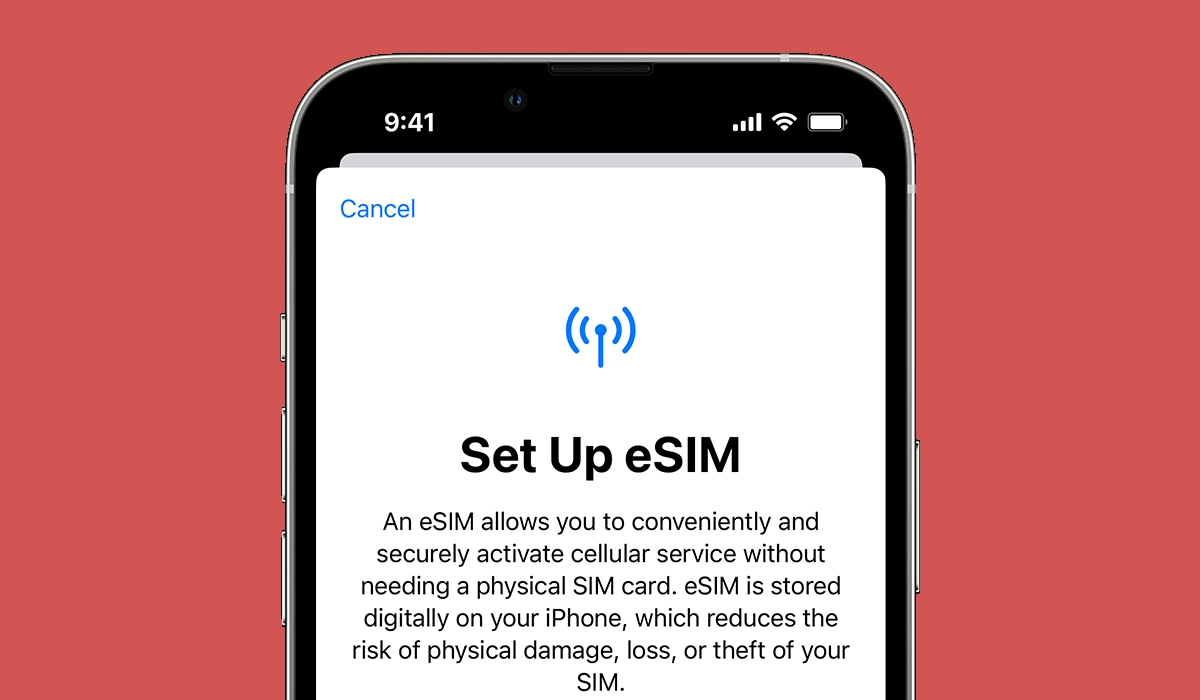
Some SIM-only plans support eSIMs
Note that some SIM-only plans support eSIMs, so if your iPhone, Samsung or Pixel smartphone supports eSIM, you are not left stranded. Be sure to ask your carrier.
Top SIM-Only Plans with Unlimited Data
Let’s explore some of the best BYOD/SIM-Only plans that include unlimited data from various carriers in the US:

Visible runs on Verizon’s 4G and 5G networks. This MVNO offers unlimited data for $20 per month. This BYOD plan includes unlimited text and calls not just in the US but also to to Canada and Mexico. The plan has Mobile Hotspot included so you can share your mobile data with other phones, laptops, etc.
Boost Mobile rides on the infrastructures of AT&T, T-Mobile, and Dish, giving you a certain amount of redundancy. You can get a BYOD plan that includes unlimited data for $25 per month. It is the most expensive of the unlimited data BYOD, but then again, riding on three networks means that the chances of you running out of coverage are slim. Plus, the first month is at a discount .
Best SIM-only Plans with Metered Data
Twigby , which uses Verizon’s infrastructure, has a BYOD plan that includes 2GB data and unlimited calls, and texta for only $5 per month for the first three months and $10 per month thereafter.
Tello , which relies on T-Mobile’s 4G and 5G networks, offers 5GB data monthly for $13/month. This SIM-Only plan includes unlimited text and 500 call minutes. They will also ship the SIM to you for free.
MobileX , an MVNO riding on Verizon’s back, offers 10GB data for about $15 monthly. The speed is throttled after you have used up your 10GB allocation. You do have to spend an initial $9.98 for the SIM kit which gives you a limited time 10-day FREE Trial with unlimited talk, text and data. In addition, after the trial period, new users who choose to continue to use MobileX will receive up to $10 credit towards future services.
Psst : Did you know that the founder of MobileX, Peter Adderton, is the same person thated the team that created Boost Mobile?
How to use your BYOD plan
Using a BYOD or SIM-Only plan is pretty easy. Simply extract the SIM card from the starter pack and insert it into your smartphone and you are good to go. You can extract your SIM card at any time and use it in any unlocked device.
Where both the carrier and your smartphone supports eSIM, your carrier will walk you through how to set eSIM up on your phone. If you belong to the Apple ecosystem, we have an easy tutorial on how to set up eSIM on your iPhone .
Author:Mister Mobility
Digital Skills and Communication Coach | Mobile Phone Connoisseur since 2001 | Tech Blogging since 2004
Add MobilityArena as a preferred source on Google
Modern smartphone cameras have multiple types of lenses. Some have dual camera lenses, while some have triple, quad, and even penta camera lenses. Dual means two, triple means the camera has three lenses, quad means it has four lenses, and penta means it has five lenses.
- Dual Camera Phones
- Triple Camera Phones
- Quad and Penta Camera Phones
- Smartphone Camera Lenses Explained
- Pay Attention To Your Needs
Dual Camera Phones
Most people are familiar with dual camera phones. The base iPhone models are examples of phones with dual camera lenses at the back. The non-Pro iPhones usually sport a wide angle lens and an ultra wide angle lens.
But not all dual camera phones use that combination. Some combine a wide angle lens with a macro lens, and others a wide angle lens with a depth sensor. It all depends on what the manufacturer has in mind.
Triple Camera Phones
The iPhone Pro series and the Pixel Pro series usually add a telephoto camera to the above mix, which makes them triple camera phones. Remember that I said triple means three? Yup.
So, these top models from Apple, Google, and Samsung (and other phone brands, too) tend to have a wide angle camera lens, an ultrawide angle lens, and a telephoto lens. Sometimes, the third is a telephoto periscope lens. Telephoto and periscope camera lenses are almost the exclusive preserve of premium flagship phones.
But budget smartphones also can have triple camera lens combination without telephoto/periscope lens. For example, Samsung Galaxy A35 which is on sale for about $325 right now in the US, has a wide angle lens, an ultra wide angle lens, and a macro lens. The third lens in a triple camera phone is usually dependent on the cost of the phone.
Quad and Penta Camera Phones
Between 2018 and 2022, there was a craze for quad and penta camera phones. Manufacturers tried to outdo one another by cramming as many camera lenses as possible into their phones. I owned a few quad camera phones and owned one Penta camera phone (Xiaomi Mi Note 10 Pro).
The Mi Note 10 Pro had a wide angle lens, two telephoto lens, one ultrawide angle lens, and a macro lens. While five camera lenses seemed like an overkill, this was an exceptional camera phone and the cameras performed admirably. You can check out my review . You can also have a 360-degree look in this YouTube video .
Anyway, the craze to cram as many camera lenses into phones has waned and cellphone brands are now content with dual or triple camera lenses in their phones. Once in a while, someone still announces and releases a quad camera phone, but it has become a rare practice. More is not always better .
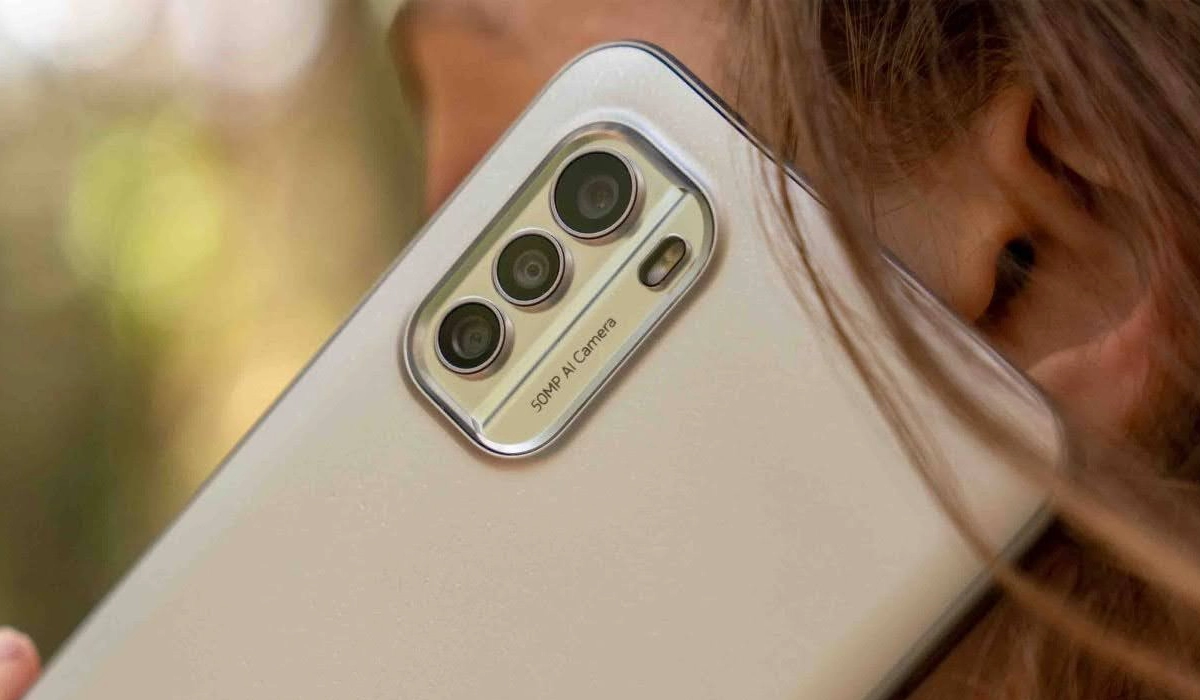
Modern smartphones have different types of camera lenses and they all do different things.
Smartphone Camera Lenses Explained
Now that I have explained how cellphone brands combine different kinds of camera lenses in their phones, let’s look at each type and what they do.
Understanding Wide Angle Lenses
The main camera lens at the back of most smartphones is a wide angle lens. Its goal is to capture photos with a fair balance of details and coverage. Which makes the main camera of phones good for general photography, including landscape photos.
Understanding Ultra Wide Angle Lenses
But sometimes, you need to capture a wider field for view. Perhaps you are at a party or a football match or a basketball match and you need to capture a wide area, this is where an ultrawide angle camera is needed. It crams more people and a wider area into each photo.
Understanding Depth Sensor aka Bokeh Lens
What of a depth sensor? If you have a depth sensor on your phone, it isn’t exactly a proper lens in the sense that it captures an image. Rather, it is a sensor that provides extra information that allows the main camera to shoot portrait photos – photos with the blur phenomenon that is sometimes also called bokeh. Like the name suggests, it helps to add depth to the photos you shoot.
Understanding Macro Lenses
Macro lenses exist to capture tiny objects at extremely close-up range. Let’s look at an example: you spot a beautiful ladybug on your window sill and want to capture it. Or perhaps you want to capture the drops of water on a cold beer bottle. A macro lens is best suited for that job. Capturing tiny objects is the speciality of a macro lens.
Understanding Zoom Lenses
A zoom lens is a generic name for a telephoto or periscope lens. Both of these types of camera lenses are specialised at zooming into (magnifying) far away objects so they appear closer. They provide what you may have seen referred to as optical zoom .
There are two types of zoom – digital zoom which is achieved through software, and optical zoom which is achieved through actual zoom lenses. Optical zoom gets much better results.
Understanding Telephoto Lenses
A telephoto lens uses a single zoom lens with a longer focal point to magnify distant objects. It provides what is called optical zoom. You can use it to magnify a banner on a store front one or two blocks away. The zoomable distance depends on how powerful the telephoto lens is.
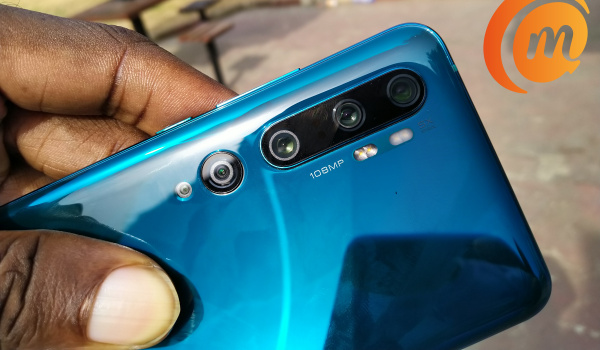
Xiaomi Mi Note 10 Pro penta camera has two telephoto lenses
Understanding Periscope Lenses
A periscope lens is an advanced type of telephoto lens that uses not just a single zoom lens, but also a series of mirrors and a prism to provide much greater magnification than a regular telephoto camera lens does.
While a telephoto lens can do 2x or even 3x optical zoom, a periscope lens can do up to 10x or more optical zoom. This allows for magnification of greater quality and over longer distances.
Pay Attention To Your Needs
If you are particular about smartphone photography, you will definitely need to pay attention to the different kinds of camera lenses specified for any devices you are interested in.
Don’t forget that pretty much every modern smartphone has a wide angle lens as its main camera. Most also have an ultrawide angle lens as the second camera lens. Others have a depth or macro sensor.
Telephoto lenses are expensive and periscope lenses even more so. Which is why these types of camera lenses are found mostly in the most expensive smartphones. Some upper mid-range models now feature a telephoto lens, though, so that feature is beginning to trickle down.
Let me know if you have any questions about smartphone camera lenses and I will do my best to provide helpful answers.
Author:Mister Mobility
Digital Skills and Communication Coach | Mobile Phone Connoisseur since 2001 | Tech Blogging since 2004
