Add MobilityArena as a preferred source on Google
What Are Bluetooth Codecs? A Bluetooth codec is a software format that compresses and encodes music, making it efficiently transmissible wirelessly between devices. These codecs determine how Bluetooth audio is transmitted from the source device (e.g., smartphone or tablet) to the Bluetooth speaker or headphones. The term “codec” comes from the process of encoding and decoding the transferred media.
There are four most popular Bluetooth codecs, namely: SBC (developed by the Bluetooth Special Interest group – SIG), AAC (developed by the Moving Picture Experts group – MPEG), aptX (developed by Qualcomm), and LDAC (developed by Sony).
- Why Should You Care?
- Introducing the top Bluetooth codecs
- Comparison: SBC vs AAC vs aptX vs LDAC
Why Should You Care?
- The choice of Bluetooth codec significantly affects sound quality between your source device and audio peripherals (headphones, speakers, etc.).
- Different codecs have varying bitrates and methods of processing data during transmission.
- If you want the best possible audio quality over Bluetooth, consider using a higher-quality codec than the standard AAC and SBC ones; I advice that you preferably go with an aptX codec.
- Understanding and selecting the right codec ensures an optimal listening experience when using Bluetooth devices.
Introducing the top Bluetooth codecs
SBC (Sub-band Coding) : SBC is an audio subband codec specified by the Bluetooth Special Interest Group (SIG) for the Advanced Audio Distribution Profile (A2DP). It serves as a digital audio encoder and decoder used to transfer data to Bluetooth audio output devices like headphones or loudspeakers.
- Key Points : Basic codec with the lowest bit rate. Provides manageable transfer rates (192-320 kbps) at the expense of sound quality. Mandatory for all A2DP-enabled devices, making it virtually universal. SBC is the most widely used Bluetooth codec, being supported by most Bluetooth gadgets and devices.
AAC (Advanced Audio Codec) : AAC is a widely supported Bluetooth codec used by Apple. It provides fairly good audio quality without requiring excessive processing power. AAC has a maximum transfer rate of 250 kbps and can support audio quality up to 24-bit/96 kHz.
- Key Points : Preferred by Apple. Inconsistent when used with Android devices. Offers higher audio quality than SBC.
aptX : aptX is a series of Bluetooth codecs developed by Qualcomm as an alternative to SBC with the objective of matching the audio quality of wired headsets. It can transmit audio at CD-like 16-bit/44.1 kHz and has a data rate of 352 kbps. aptX is found in various devices, including computers, smartphones, and consumer electronics products.
- Key Points : Widely used and synonymous with Bluetooth. Provides good audio quality. Supports higher bit depth and sampling rate than SBC. Found only in smartphones using Qualcomm chipsets (for now).
aptX codecs include: standard aptX, aptX HD , aptX Adaptive , and Snapdragon Sound . Click on each name to go read up some more about their specifics.
LDAC : LDAC is a proprietary audio coding technology developed by Sony. It allows streaming high-resolution audio over Bluetooth connections at up to 990 kbps and 32 bits/96 kHz. LDAC is used in headphones, earphones, smartphones, and other devices.
- Key Points : Handles hi-res audio efficiently. Approximately three times more data can be streamed over Bluetooth compared to other codecs. Offers impressive quality on paper, but real-life performance may vary.
Comparison: SBC vs AAC vs aptX vs LDAC
- SBC : Basic, universal, and manageable transfer rates.
- AAC : Preferred by Apple, better quality than SBC.
- aptX : Widely used, good audio quality, and higher bit depth.
- LDAC : High-resolution audio, efficient streaming, and impressive specifications.
Choosing the right codec depends on your device compatibility and desired audio quality. Personally, I am a fan and evangelist of aptX codecs and look out for that in devices that I am interested in. What is limiting the adoption of aptX codecs is that fewer smartphones are using Qualcomm chipsets, thanks to the rise of MediaTek and other chip brands. As such, where my devices do not support aptX, I gladly use Bluetooth accessories that support SBC, as it is the most widely available Bluetooth codec right now. It is the most basic codec, but where the desirable is not available, the available becomes desirable.
If you are an Apple device user, you are pretty much tied to AAC, as that is what Apple has stuck with, at least for now.
Author:Mister Mobility
Digital Skills and Communication Coach | Mobile Phone Connoisseur since 2001 | Tech Blogging since 2004
Add MobilityArena as a preferred source on Google
I was fishing for information about Nothing Technology’s upcoming budget phone, the CMF Phone 1 , when I ran into one of their chargers, listed as a GaN charger . That caught my interest and I took a close look at it. Of course, that inspired this article.
You have probably seen a few mobile phone and accessories brands advertise GaN chargers and wondered what they are. The industry is developing at rapid pace, and this means that new phrases and terms show up. As such, seeing a new term means that some new technology is afoot. In this case, GaN technology is behind some of the blazing fast charging speeds in the latest smartphones.
Here are some key takeaways from this article:
- GaN is replacing silicone in newer chargers.
- GaN-based chargers are up to three times as efficient as silicone chargers.
- GaN generates less heat during fast charging.
- GaN allows for each transistor to pack in more components and features in chargers than silicone does.
- GaN offers much faster charging speeds than silicone chargers.
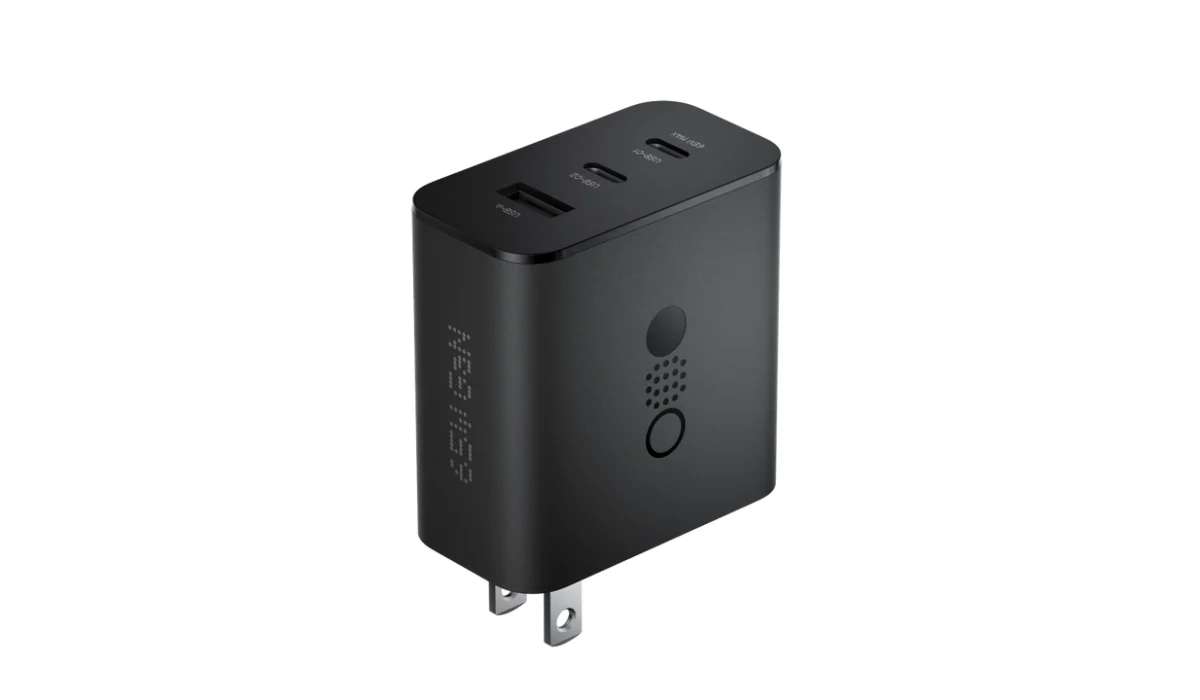
A POWER 65W GaN charger
- What is GaN?
- How are GaN chargers better than silicone chargers?
- Advantages of GaN technology
- Disadvantages of GaN technology
- How to identify GaN chargers
- The first GaN Charger ever released
- The fastest GaN charger in 2024
- Compatibility matters
What is GaN?
Gallium Nitride (GaN) is a crystal-like semiconductor material that is able to conduct much higher voltages than silicone can. It was discovered by Paul-Émile Lecoq de Boisbaudran in Paris in 1875 and has been used in LEDs since the 1990s. Its application has since spread beyond LEDs and now includes use in faster chargers for smartphones and other electrical/electronic devices.
How are GaN chargers better than silicone chargers?
Because GaN components conduct electricity at much higher voltages and at a faster rate, GaN technology is known for faster processing.
One consequence of the better conductivity of GaN technology is that there’s less heat generated. As such, GaN chargers produce less heat. Less heat means components can be closer together, so a charger can be smaller than ever before, while maintaining all the power capabilities and safety standards.
When silicone is replaced with GaN components, less space is used. This is because there is no need to keep large spaces, for cooling, between components. As such, more processing power can be packed into the same space. As a matter of fact, more processing power can be packed into smaller spaces, too. The result is that you get a more powerful, and also more compact, fast charger.
Advantages of GaN technology
- Smaller Size : GaN chargers are physically smaller than silicon chargers because they require fewer components.
- Higher Efficiency : GaN can conduct higher voltages over time than silicon, resulting in more efficient energy transfer.
- Less Heat Generation : GaN chargers lose less energy to heat, improving overall efficiency.
- Faster Charging : GaN enables higher switching frequencies, allowing faster wireless power transfer.
Disadvantages of GaN technology
- Harder to Train : GaN models require diverse data for accurate training.
- Complex Text and Speech Generation : Generating results from text or speech using GaN can be challenging.
How to identify GaN chargers
There is no way to identify a GaN charger from its look or appearance only. If you do look on the label or imprinted text, you will see it specified there. That is the easiest way to tell if a charger uses GaN technology or not.
The first GaN Charger ever released
Apple adopted GaN and released their 140W USB-C power adapter in October 2021, for the 16-inch Macbook Pro. Other technology brands have since adopted the technology. These brands include: Anker, Nothing technology, Satechi, Zendure, and Ugreen, among others.
The fastest GaN charger in 2024
The fastest GaN charger, as at June 2024, is the Ugreen Nexode 300W GaN 5-port desktop charging station. This charger works well for desktops, laptops, smartphones, and other devices.
Compatibility matters
When using a GaN charger with your phone, compatibility matters. Your smartphone has to meet certain requirements and standards to take advantage of the benefits of GaN technology.
The first is that your phone must have a USB-C port . USB-C is the standard for fast charging. This is no big deal for the majority of Android phones users who own a Samsung, Google Pixel, Nothing Phone, OnePlus, Motorola, and others. Apart from the most entry-level models, most Android phones have a USB-C port. The latest iPhone 15, 15 Plus, 15 Pro, and 15 Pro Max , all use USB-C, as well. Older iPhone models are excluded.
The next requirement is Power Delivery (PD) . GaN chargers often support Power Delivery (PD) technology and your phone will benefit from faster charging if it supports PD. Check to see if your phone supports PD.
Lastly, as applies to fast charging generally, your cell phone will not charge faster than its own specified voltage and amperage levels, even if the GaN charger in use can charge much faster than that.
Author:Mister Mobility
Digital Skills and Communication Coach | Mobile Phone Connoisseur since 2001 | Tech Blogging since 2004
