Add MobilityArena as a preferred source on Google
“Does the Galaxy S9 Plus have IR blaster?” was the question on the lips of many when the phone first showed up. Infra-red ports are no longer the rave they used to be years ago on mobile phones, but some manufacturers still use them. And some Samsung fans are bitter.
Back in the day, the most advanced mobile phones would have an infra-red port. It was used for data transfer, including internet sharing. Yes; those were the days before Wi-Fi became a thing. To share your phone’s internet, you used an old-school data cable or infra-red.
With the presence of Wi-Fi, the need and demand for infra-red blasters diminished. In recent years, Xiaomi has put an IR blaster in many of its phones. This time, these ports enable the phones to be used as TV controllers. Yes; mobile phones have taken over the roles of everything else; why not add TV controller to it?
It also enables the ability to control the DVD player, air conditioner, and some other household appliances. But a more accurate version of Face ID uses infra-red and, so, we are seeing an upsurge of IR ports in smartphones. So, perhaps, a new IR revolution may yet happen based on this.
I have owned or reviewed a number of phones with an infra-red blaster and enjoyed using the feature. However, I cannot say that I have missed it in all the other phones I have used that did not have it. It has never felt like an essential to me.
Does Samsung S9 Plus Have IR Blaster?
The Samsung Galaxy S9 Plus is a top dog in 2018, and it does not have the feature. Some people think that the phone would be even better if it has one. Unfortunately, it does not. Fans were disappointed that the Galaxy Note 9 does not have an IR blaster, either. Same thing goes for Galaxy S9: it does not have one as well.
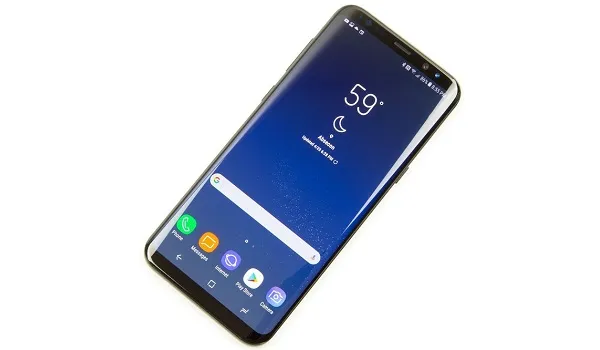
And some Samsung fans are bitter about this omission. Some have based their phone buying decision on this factor and moved on to other smartphone brands. Here is an example of one of such conversations on Samsung’s own community website.
There are scores of other online platforms where fans griped about the matter. It looks like the simple question, “Does S9 Plus have IR blaster” may have impacted Samsung’s sales in some way.
The Last Samsung Phones With IR Blaster
The last Samsung models that had an IR blaster were the Galaxy S6 and the Galaxy Note 4. Since then, Samsung has ignored infra-red. And it does not look like the S10 range of phones will have this feature.
Your Best Options For Phones With IR Blaster
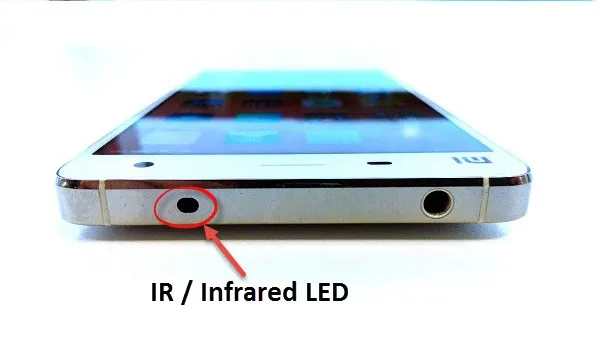
If you want a smartphone with an infra-red blaster, your best options are in the direction of Xiaomi and Huawei. The Xiaomi Redmi Note 5 and Redmi Y1 are extremely popular with young people and both have IR blaster built in. Others include Xiaomi Mi A1, and Mi A2. Huawei has a number of models with an IR blaster. These include P20 Pro, Mate 10 Pro, and Honor View 10, among others.
Gionee produced a few smartphone models with infra-red blaster. It is unfortunate that the company has declared bankruptcy. Some of their phones are still available in the market though. I have reviewed a few LG smartphones and enjoyed using their IR blaster to control the TV. But it looks like LG might be dropping the feature too.
Deal-breaker?
There is a vocal enough community of smartphone enthusiasts who are put off by the S9, S9 Plus, and Note9 not having an Infra-red blaster. I am not sure that it is a large enough community to make a big dent in the fortunes of these products. But then, I have not conducted any scientific survey to arrive at that conclusion. Still, including an infra-red port cannot cost much if Xiaomi is putting it in their budget phones.
Who knows, part of why Xiaomi and Huawei devices are selling so well (besides pricing) might be that those brands are now on the heels of Samsung? What are the chances that having an IR blaster in key models could be a factor? After all, so many people around the world watch TV, play videos and play music on infra-red controlled home systems.
- Don’t miss our reviews .
- Follow us on Instagram , Facebook , Twitter , and YouTube .
Author:Mister Mobility
Digital Skills and Communication Coach | Mobile Phone Connoisseur since 2001 | Tech Blogging since 2004
Add MobilityArena as a preferred source on Google
UMIDIGI F1 Quick Specs: Android 9.0 smartphone features a 6.3 inch FullHD display,128GB internal memory, 4GB RAM, Helio P60 processor, 5150mAh battery, 18W Fast Charge, NFC, and a16MP + 8MP dual camera .
The F1 has a waterdrop LTPS edge-to-edge display. There is no mention of any kind of protection for it. Which is odd. At this price, one would expect some.
The notch houses an array of sensors that include a 16 megapixel camera for selfies. The selfie camera provides face recognition so you can unlock the phone with your eyes. There is a fingerprint sensor at the back of the phone too, should you prefer using that.
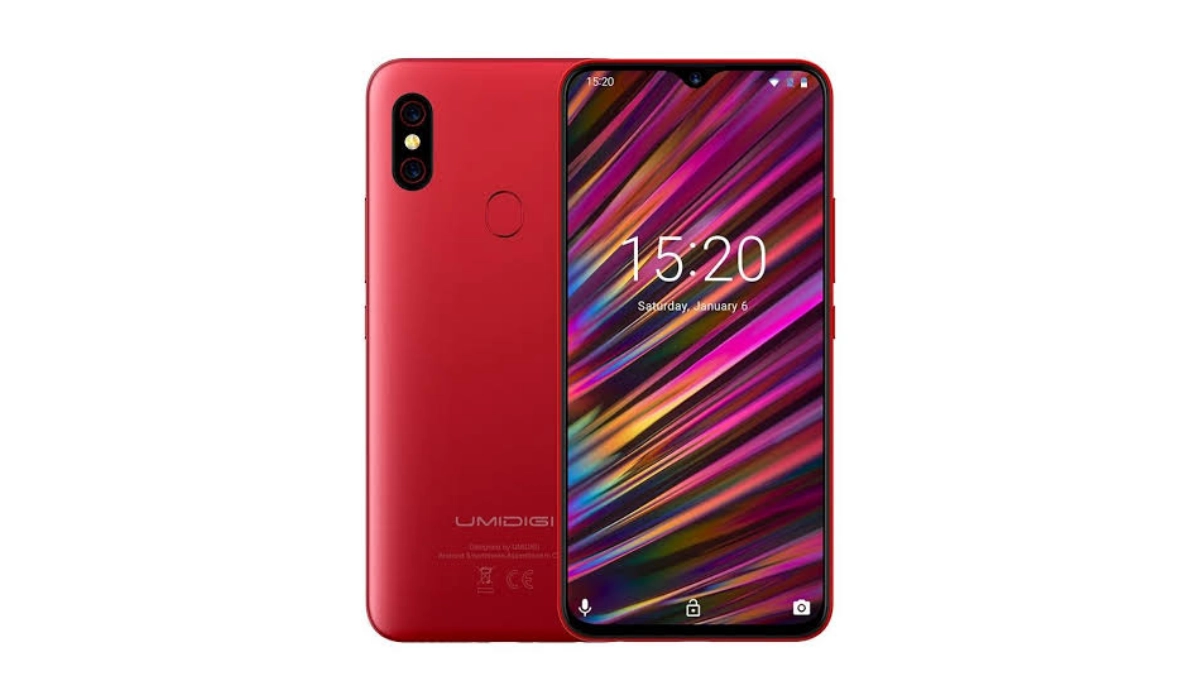
The biggest feature of the Umidigi F1 is hidden away from sight. There is a 5150 mAh battery hidden away inside its slim body. And best of all, it supports 18W fast charging so you can top it up real fast when you need to.
The main camera on the F1 is a dual camera that combines a 16 megapixel primary lens with an 8 megapixel secondary sensor. For low-light situations, there is a dual-LED dual-tone flash provided.
Still on internals, the UMIDIGI F1 is powered by a Helio P60 chipset. There is 4 GB of RAM available, as well as a whopping 128GB internal storage. That is a lot of space for your pictures, videos and other files. And should you need more space, a memory card slot allows you to add a card of up to 256 GB.
This affordable 4G smart phone runs stock Android 9 Pie software. That means Umidigi has not customised the software in any way. 4G LTE support is quite wide: 21 4G bands are supported, and there is Voice Over LTE (VoLTE) available too.
If you use your smartphone for wireless payments, you will be glad to know that the F1 is equipped with NFC specifically for payments. It supports both Google Pay and on-vehicle payment.
Umidigi F1 Specs and Features
Wireless Network and Software
- 2G mobile network : GSM, GPRS, EDGE 850 / 900 / 1800 / 1900 MHz; CDMA 800 / 1900 / TD-SCDMA
- 3G mobile network : UMTS, WCDMA, HSDPA 850 / 900 / 1700(AWS) / 1900 / 2100 MHz; CDMA2000 1xEV-DO
- 4G mobile network : LTE bands 1(2100 / 2(1900) / 3(1800) / 4(1700/2100) / 5(850) / 7(2600) / 8(900) / 12(700) / 13(700) / 17(700) / 18(800) / 19(800) / 20(800) / 25(1900) / 26(850) / 28(700) / 34(2000) / 38(2600) / 39(1900) / 40(2300) / 41(2500)
- SIM Type : Nano-SIM, Dual SIM, Dual 4G VoLTE
- Software / OS : Stock Android 9 Pie
Design, Form Factor and Appearance
- Dimensions : 156.9 x 74.3 x 8.8 mm
- Weight : 186g
- Display : 6.3 inch, 2340 x 1080 pixels, 19.5:9 aspect ratio, LTPS display
- Sensors : Fingerprint, Face Recognition, Gravity Sensor, Geomagnetic Sensor, Accelerator, Proximity Sensor, Light Sensor, Gyroscope, E-Compass
- Colours : Black. Gold. Lava Red.
Internal Hardware Specs
- Processor Type : 64-bit Octa-core 2.0 GHz 4xCortex-A73 + 4xCortex-A53
- Processor Name : Mediatek MT6771 Helio P60
- Graphics Processor : ARM Mali G72 MP3 800MHz
- RAM : 4 GB
- Internal Storage : 128 GB
- External Storage : microSD, up to 256 GB (dedicated slot)
Photography and Video
- Rear Camera : 16 + 8 megapixels dual camera, Dual-LED dual-tone flash, 1080p@30fps video recording
- Front-facing Camera : 16 megapixels, 1080p@30fps video capture
Multimedia
- Music Support : PCM, AAC / AAC + / eAAC + / MP3 / AMR – NB / WB / APE
- Audio : 3.5mm audio jack
- Loudspeaker : Mono
- Video Support : H.264/MP4/MPEG4 player
- FM Radio :
Connectivity Features
- Bluetooth : v4.2, A2DP
- WiFi : Wi-Fi 802.11 a/b/g/n, hotspot
- GPS : Yes, A-GPS, GLONASS, BDS, Beidou
- USB : microUSB v2.0; Type-C 1.0 reversible connector; USB-OTG
- NFC : Yes, Google Pay, on-vehicle payment
Miscellaneous Specs and Features
- Battery Charging : 18W QuickCharge
- Battery Type and Capacity : Non-Removable Lithium-Polymer 5150mAh
- Announced : January 2019
- Availability : January 2019
UMIDIGI F1 Price and Availability
The costs $240.00 and is available on global e-commerce web sites like GearBest, AliExpress, as well as regional e-commerce web sites like Jumia and others.
OnePlus used to be the brand known for the tag, Flagship Killer but that brand has been producing smart phones that cost an arm and a leg of late. OnePlus has moved up the social ladder. Looking at the value that the Umidigi F1 packs and the price, it has earned the right to be called by that title.
