Add MobilityArena as a preferred source on Google
“Does the Samsung Galaxy Z Fold6 have IR blaster?” is a question I have been asked a few times. Infra-red ports are no longer the rave they used to be years ago on mobile phones, but some manufacturers still use them. And some Samsung fans are bitter about it.
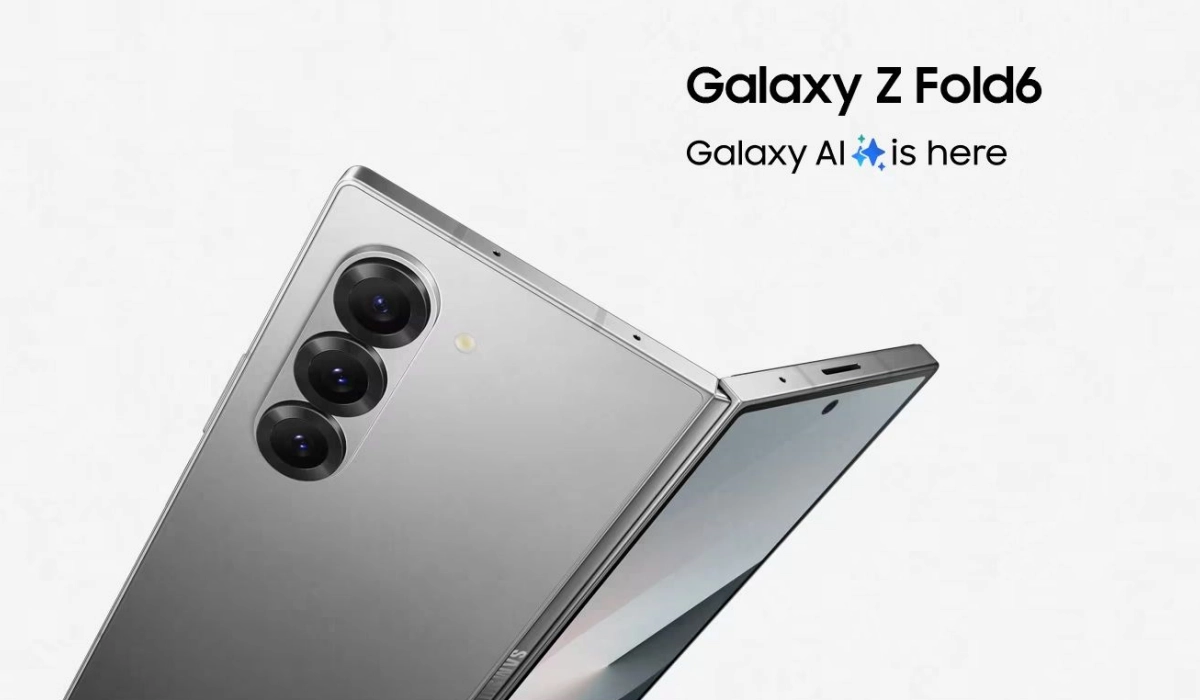
Samsung Galaxy Z Fold6 foldable phone
Back in the day, the most advanced mobile phones would have an infra-red port. It was used for data transfer, including internet sharing. Yes; those were the days before Wi-Fi became a thing. To share your phone’s internet, you used an old-school data cable or infra-red.
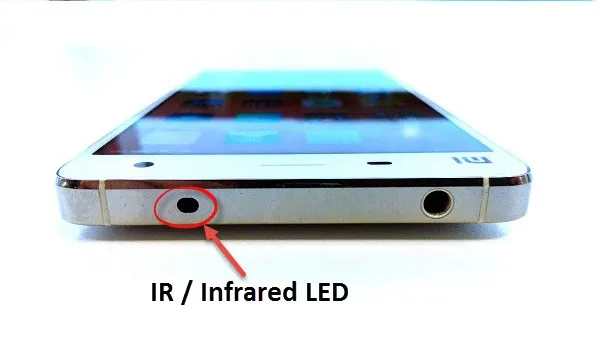
With the presence of Wi-Fi, the need and demand for infra-red blasters diminished. In recent years, Xiaomi has put an IR blaster in many of its phones. This time, these ports enable the phones to be used as TV controllers. Yes; mobile phones have taken over the roles of everything else; why not add TV controller to it?
It also enables the ability to control the DVD player, air conditioner, and some other household appliances. But a more accurate version of Face ID uses infra-red and, so, we are seeing an upsurge of IR ports in smartphones. So, perhaps, a new IR revolution may yet happen based on this.
I have owned or reviewed a number of phones with an infra-red blaster and enjoyed using the feature. However, I cannot say that I have missed it in all the other phones I have used that did not have it. It has never felt like an essential to me.
- Does Samsung Galaxy Z Fold6 have IR blaster?
- Does Samsung Galaxy Z Fold5 Have IR Blaster?
- The Last Samsung Phones With IR Blaster
- Your Best Options For Phones With IR Blaster
- Deal-breaker or not?
Does Samsung Galaxy Z Fold6 have IR blaster?
The Samsung Galaxy Z Fold6 is a 2024 smartphone, and it does not have the feature. Some people think that the phone would be even better if it has one. Unfortunately, it does not. Fans were disappointed that recent Galaxy flagship phones like the S23 Ultra, S24 Ultra , and others did not have an IR blaster, either. Same thing goes for Samsung Galaxy Z Fold6: it does not have one either.
Does Samsung Galaxy Z Fold5 Have IR Blaster?
Samsung Galaxy Z Fold5 does not have an IR blaster, as well.
Some Samsung fans have based their phone buying decision on this factor and moved on to other smartphone brands. Here is an example of one of such conversations on Samsung’s own community website.
There are scores of other online platforms where fans are griping about the matter. But I doubt that the answer to the simple question, “Does Samsung Galaxy Z Fold6 have IR blaster” will have any impact on Samsung’s sales in any way. Maybe all of a few hundred people will refuse to buy it for that reason.
The Last Samsung Phones With IR Blaster
The last Samsung models that had an IR blaster were the Galaxy S6 and the Galaxy Note 4. Since then, Samsung has ignored infra-red. And it does not look like the S10 range of phones will have this feature.
Your Best Options For Phones With IR Blaster
If you want a smartphone with an infra-red blaster, your best options are in the direction of Xiaomi and Huawei. The Xiaomi Redmi Note 13 Pro+ and other models in the Note 13 range are extremely popular with young people and both have IR blaster built in. Others include Xiaomi 14 series. Huawei has a number of models with an IR blaster. These include P20 Pro, Mate 10 Pro, and Honor View 10, among others.
Gionee produced a few smartphone models with infra-red blaster. It is unfortunate that the company has declared bankruptcy. Some of their phones are still available in the market though. I have reviewed a few LG smartphones and enjoyed using their IR blaster to control the TV. But it looks like LG might be dropping the feature too.
Deal-breaker or not?
There is a vocal enough community of smartphone enthusiasts who are put off by the Galaxy Z Fold6 not having an Infra-red blaster. I am not sure that it is a large enough community to make a big dent in the fortunes of these products. But then, I have not conducted any scientific survey to arrive at that conclusion. Still, including an infra-red port cannot cost much if Xiaomi is putting it in their budget phones.
Who knows, part of why Xiaomi and Huawei devices are selling so well (besides pricing) might be that those brands are now on the heels of Samsung? What are the chances that having an IR blaster in key models could be a factor? After all, so many people around the world watch TV, play videos and play music on infra-red controlled home systems.
- Don’t miss our reviews .
- Follow us on Instagram , Facebook , Twitter , and YouTube .
Author:Mister Mobility
Digital Skills and Communication Coach | Mobile Phone Connoisseur since 2001 | Tech Blogging since 2004
Add MobilityArena as a preferred source on Google
The Moto Edge 50 Fusion and Moto Edge 50 Pro are alike in some ways, and different in others. Let’s have a look at the details.
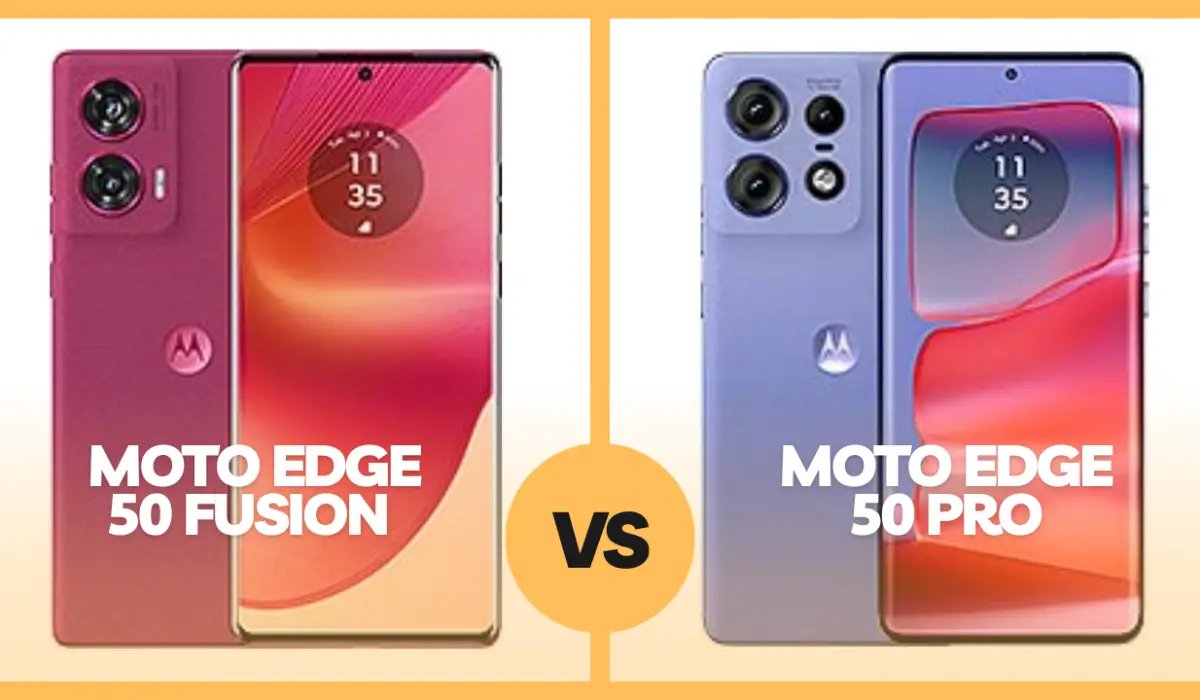
- Moto Edge 50 Fusion vs Moto Edge 50 Pro
- Similarities
- Differences
- Verdict
Moto Edge 50 Fusion vs Moto Edge 50 Pro
Here is a quick background or foundation for this comparison. Both devices are members of the Moto Edge 50 series and they were both announced in April 2024. As a matter of fact, they are similar in more ways than they are different, though the differences are significant enough to make you think carefully about your final buying choice.
Similarities
Looking at the Moto Edge 50 Fusion and Moto Edge 50 Pro, they are similar in appearance. The difference in their heights is so small that the human eye can miss it. And that is no surprise because, in addition to each having a 6.7-inch display, they both share similar design styles, with minor differences standing out mostly at the back. So, looking at them, placed side by side, from the front, you will be hard pressed to tell the difference between them.
They both have IP68 dust and water resistance (submersion of up to 1.5 meters depth for 30 minutes). Other shared features include dual SIM with eSIM support , stereo speakers, NFC, in-display fingerprint scanners, and the absence of a 3.5mm audio jack.
Differences
Now to the differences between the Moto Edge 50 Fusion and Moto Edge 50 Pro, we start with the thickness and weight. While they are almost the same height, the Edge 50 Pro is much thicker, clocking 8.3mm against the Edge 50 Fusion’s 7.9mm. The Edge 50 Pro is heavier too (186g vs 175g).
They have the same display size and type (OLED), but the Edge 50 Pro’s display has a higher resolution and refresh rate – 1220 x 2712 pixels and 144Hz respectively. The Edge 50 Fusion clocks at 180p resolution and 120Hz refresh rate.
At the top of the Edge 50 Fusion’s display is a 32MP selfie camera, while the Edge 50 Pro has a 50MP selfie camera with autofocus. Traditionally, selfie cameras are fixed focus, so auto focus here is a plus for the 50 Pro.
Still on cameras, when we flip both phones to the back, we find that, in addition to the 50MP wide and 13MP ultrawide lenses on both devices, the 50 Pro also has a 10MP telephoto camera with PDAF, OIS, and 3x optical zoom. That’s a solid bonus for shutterbugs who want better zooming capabilities in their camera.
The 50 Pro has WiFi 6 and more location/positioning options, if you are into adventuring and travelling off the beaten paths.
Coming down to battery, this is where the Edge 50 Fusion has its sibling beat: it has a 5000mAh battery while the 50 Pro has a smaller 4500mAh battery. Motorola makes up for that smaller battery by including wireless charging (50W) and reverse wireless charging (10W) in the Edge 50 Pro.
And while the Fusion does only 68W wired charging, the Pro goes all the way to 125W charging via a compatible cable. And the difference in real terms is huge. The 68W fast charging charges the Fusion from zero to 50% in 15 minutes, while the 125W fast charging takes the Pro from zero to 100% in 18 minutes flat. That is a massive difference. I want some of that, please!
I must not forget to touch on the processors. The international version of the Fusion has a Snapdragon 7s Gen 2 chipset while the Pro has a Snapdragon 7 Gen 3 chipset. Of course, the latter is the more powerful of the two.
Verdict
The Moto Edge Pro is the more advanced of the two devices, and it is also the costlier of the two. But choosing it has a price that goes just beyond finances; you have to give up some battery life, and that sucks. It would have been perfect if Motorola put a 5000mAh battery in that beauty.
That aside, if you had to choose between the Moto Edge 50 Fusion and Moto Edge 50 Pro (with cash not being an issue), what would your decision be? Personally, the smaller battery capacity and thicker profile of the 50 Pro irks me, but the more capable processor, better cameras, and better charging options, are all significant. I will take the Pro in a heartbeat. We don’t always get everything we want; do we?
But if cash is an issue, you will have to settle for the Edge 50 Fusion. It costs only $450, while the 50 Pro costs $565. In Germany and other European Union counteies, their prices start from €349 and €449 respectively. In the UK, the Moto 50 Fusion clocks at about £385, while the 50 Pro clocks at £486.
Author:Mister Mobility
Digital Skills and Communication Coach | Mobile Phone Connoisseur since 2001 | Tech Blogging since 2004
