Add MobilityArena as a preferred source on Google
Dual cameras (also called stereo cameras) are the rave these days – whether in front of the phone or at the back. For clarity, dual cameras refer to setups where you have two lenses side-by-side, one another. The result is the camera can capture three-dimensional images. The primary camera works like a regular camera. The trick is usually with the secondary camera. Read on for explanations.
What Does The Secondary Camera Do?
The secondary camera is usually able to do either of two things:
- add the ability to zoom or capture a wider area. In this case, the secondary camera usually has a wide angle lens
- capture depth of field in the image. In this case, the secondary camera is usually a monochrome (that is black and white) camera
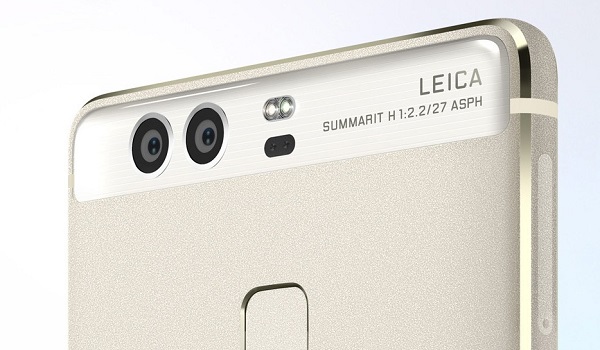
Our focus will be with dual cameras that capture images with depth of field, because this is the more popular scenario on dual camera smartphone. In such dual cameras, the objective is to create depth of field. One camera takes the regular photo. The other adds depth to it. The result is a photo that looks like something shot with a more professional camera.
In dual cameras, one camera takes the regular photo. The other adds depth to it. The result is a photo that looks like something shot with a more professional camera.
Depth Of Field and Bokeh: Any Difference?
Bokeh and depth of field are closely related terms, though they are not the same. When you look at a photograph in which there is a section in focus, that’s a photo with depth of field. Bokeh refers to how the blurred part of the photograph is rendered. This blurred area can be smooth, jagged, or harsh.

The photo below was shot with the dual selfie cameras on the Lenovo Vibe S1 . You can see how the objects in the background are out of focus and blurred away.
So, you can see that bokeh and depth of field are related. For a photo to have bokeh effect, it must have depth of field. So, dual cameras that produce depth of field are great for taking photographs with the Bokeh effect.
Note that some smartphones with really excellent cameras are able to add depth of field and bokeh without the need for a dual camera setup. Examples include the Nokia 808 PurView and Lumia 1020 . While not traditionally regarded as a great cameraphone by many, the BlackBerry Passport pulls it off too with a single camera .
Advantages of Dual Cameras In Smartphones
In summary, here are the advantages of dual cameras in smartphones:
- Faster focusing when shooting pictures
- Greater depth of field in pictures
- Refocus and other effects possible after the photos have been taken
- Better low-light capabilities
- Better picture clarity
Note that how good a dual camera smartphone is will also depend on how well implemented the cameras are. But all things being equal, a dual camera smartphone is a step towards much better photography.
One More Thing
Do not forget to ask what kind of dual cameras are on the smartphone that you are interested in buying. You don’t want to buy a camera phone for great depth of field images and end up with a dual camera that produces wide angle images.
- Don’t miss our reviews .
- Follow our news on Google News .
- Join our WhatsApp Group , to be notified of the most important articles and deals,
- Follow us on Instagram , Facebook , Twitter , and YouTube .
Author:Mister Mobility
Digital Skills and Communication Coach | Mobile Phone Connoisseur since 2001 | Tech Blogging since 2004
Add MobilityArena as a preferred source on Google
If you are getting an error that says, “There was a problem communicating with Google servers” or “Cannot connect to Google servers” on your Android smartphone, you are not alone. A lot of Android smartphone owners are too. This quick guide spells out how to solve the problem .
Every now and then when trying to use a Google app, Android smartphone users get an error message that says, There was a problem communicating with Google servers . They cannot connect to Google servers and so are unable to use any of those apps.
It is a very annoying problem that is fairly common. Thankfully, it isn’t a problem without a solution. We have compiled some solutions that have worked for different people and different devices. There is no way to tell which will work for your device, but one of them should and get rid of the error messages.
To make the process easy for you, we present the easy fixes first. If the first one doesn’t work, try the next, and work your way through the three solutions that way. Don’t panic; the first two are relatively easy, and you should have no trouble implementing them.
- Fix 1: There was a problem communicating with Google servers / Cannot connect to Google servers
- Fix 2: Problem communicating with Google servers / Cannot connect to Google servers
- Fix 3: Problem communicating with Google servers / Cannot connect to Google servers
- Fix 4: Problem communicating with Google servers / Cannot connect to Google servers
Fix 1: There was a problem communicating with Google servers / Cannot connect to Google servers
- If you are already signed in to a Google Account on your device, remove it.
- Go to Settings -> Apps, and clear cache and data of the following apps: Google App, Google Play Store, and Google Play Services.
- Go back to Settings –> Account, and sign in to your Google account again.
You should be able to login to use any Google services now without that problem communicating with Google servers error popping up. If this does not fix the problem, go on to the next process below.

Fix 2: Problem communicating with Google servers / Cannot connect to Google servers
Basically, what this solution does is reinstall Google Play Services. It is a simple process. Follow these steps:
- Go to Settings -> Security -> Check Unknown sources
- Head over to this APK Mirror page to get the version of Google Play Services that is applicable to your Android version.
- Download and install.
- Now sign in to your Google account again.
You should be able to use any Google apps and services now without that error popping up. This is the solution that solves the problem most times and should get you sorted too.

Fix 3: Problem communicating with Google servers / Cannot connect to Google servers
This solution is more complicated and requires that you root your Android device. This means you are at risk of damaging your phone. If you are not technically inclined, please do not use this. If you do choose to root your device, you do so at your own risk.
- Go to Settings -> Accounts, and remove your Google account.
- Run a search for ES File Explorer or Root Explorer apps. Download either and install it to your device.
- Open Root Explorer. In the main window, use the mount option to mount it as read and write
- Go to Device Root–system–etc–Press hosts file and “open in text editor”
- Erase everything in that file and replace it with: 127.0.0.1 localhost.
- Save the file and exit
- If you do not have Google Play Services installed on your phone, click on this APK Mirror link to get the version that is applicable to your Android version.
- Now sign back in to your Google account.

Fix 4: Problem communicating with Google servers / Cannot connect to Google servers
We have feedback from one of our readers. In his case, the problem seemed to start happening when he switched his home from a standard router to a Mesh system. What seemed to fix it for him was switching his device to a different Internet connection, adding the Google account, and then switching back to the home network. Do give that a try to see if it solves the problem for you.
You should be able to use Google apps without getting any more “ There was a problem communicating with Google servers ” errors and prompts.
