Add MobilityArena as a preferred source on Google
The Edifier TWS1 Pro and TWS NB2 Pro are offspring of the same parent company. I have had the privilege of playing with both to compare what the experience with each are. Like smartphones, Bluetooth earphones often differ in many ways – materials of construction, quality of the membrane, IP rating, audio codecs, Bluetooth versions, etc.
How do this two fare? What are their differences, and what features do they have in common? From what I have seen of both, they might bear the same brand name, but they are two very different devices in terms of approach, design, features, and audio listening experience.
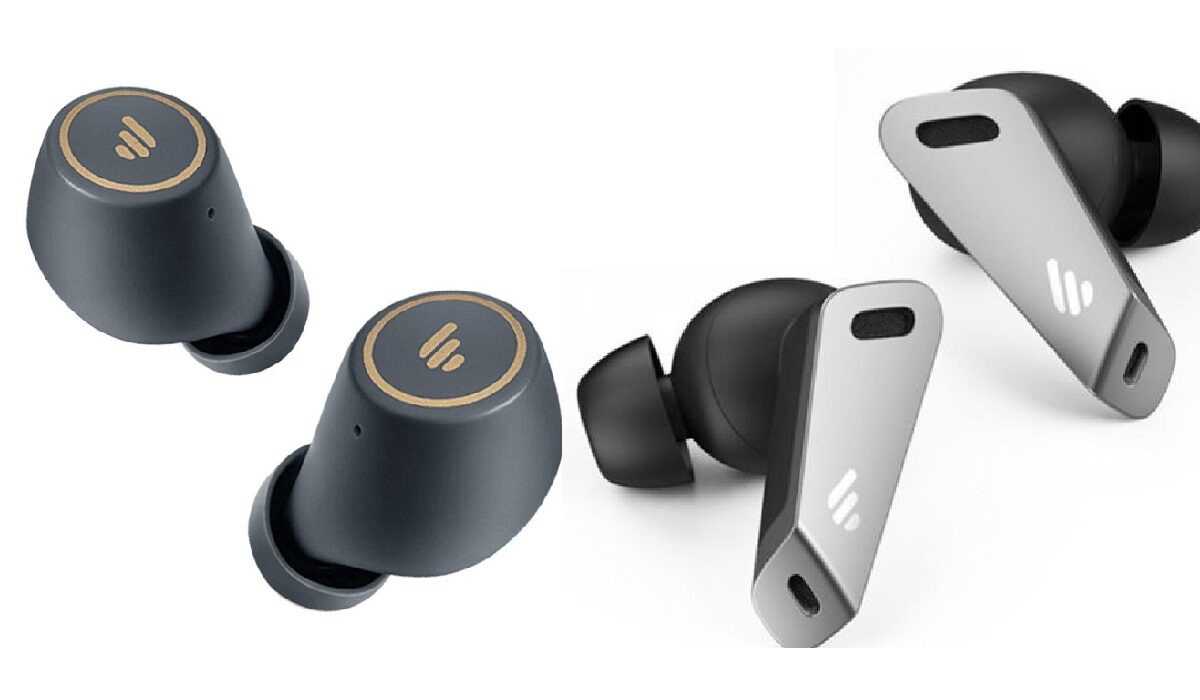
L-R: Edifier TWS1 Pro and TWS NB2 Pro
The NB2 Pro is the slightly older of the two devices, and this is reflective in some features. Let us have a look at our side-by-side comparison table.
- Edifier TWS1 Pro and TWS NB2 Pro: Comparison Table
- Edifier TWS1 Pro and TWS NB2 Pro: The Differences Explained
- Edifier TWS1 Pro and TWS NB2 Pro: Conclusions
Edifier TWS1 Pro and TWS NB2 Pro: Comparison Table
| Edifier TWS1 Pro | Edifier TWS NB2 Pro |
|---|---|
| Bluetooth 5.2 | Bluetooth 5.0 |
| HFP, HSP, A2DP, AVRCP | HFP, HSP, A2DP, AVRCP, BLE |
| Titanium diaphragm | Composite diaphragm |
| IP65 water/dust protection | IP54 splash/dust protection |
| Qualcomm aptX Adaptive | N/A |
| Qualcomm cVc 8.0 noise cancellation | Dual-mic, hybrid noise cancellation |
| N/A | Quick Ambient Mode |
| N/A | In-ear detection |
| 7.5W “Fast” charging | 5W Standard charging |
| 12-hour playback time, plus 30-hour extra battery time via charging case | 7 to 9-hour playback time, plus 18-23-hour extra battery time via charging case |
| $49.99 on Amazon. ₦14,600 on Jumia. | $79.99 on Amazon. ₦24,600 on Jumia. |
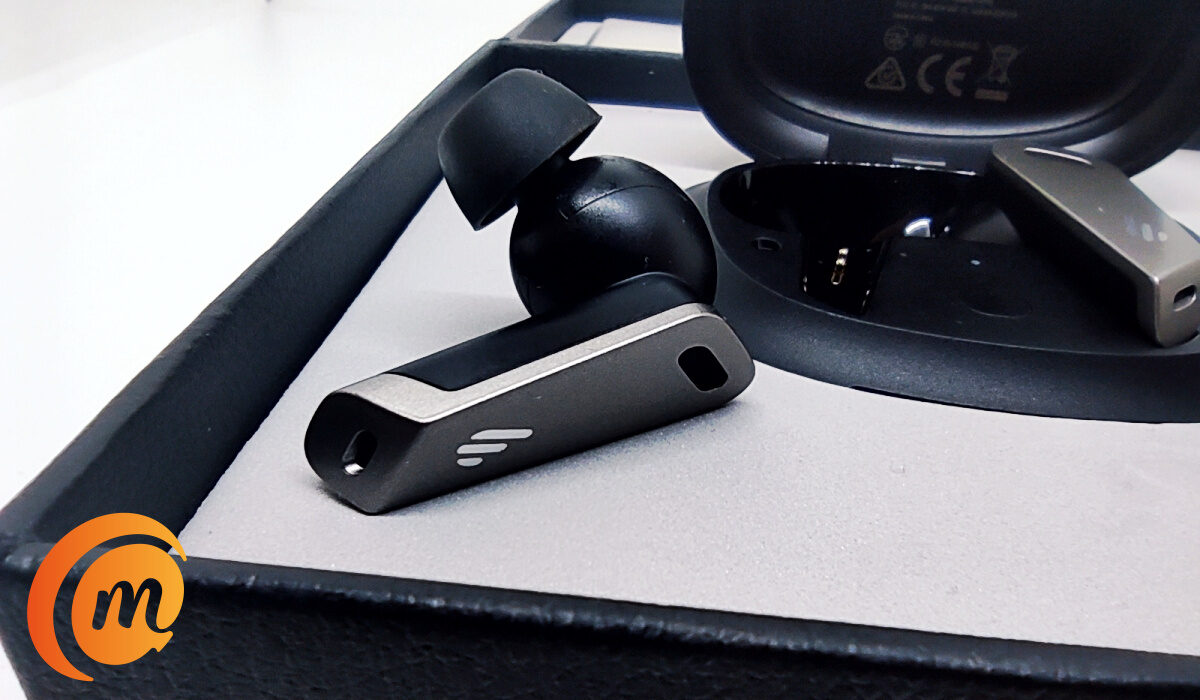
Edifier TWS NB2 Pro
Edifier TWS1 Pro and TWS NB2 Pro: The Differences Explained
In terms of appearances and quality of materials used, the TWS NB2 is the far more impressive earbuds here. You cannot wear them and not get noticed. They look futuristic and feel more premium in the hand. The TWS1 Pro (and its charging case) looks and feels much cheaper.
But it isn’t about looks alone. The TWS NB2 also offer the ability to switch between ambient modes. The Quick Ambient Mode feature lets you cycle between modes where you can hear sound from around you, to Normal Mode where surrounding sound is cancelled out, to Game Mode where you get better latency for your gaming experience.
It also has IP52 protection from splashes and dust. However, the TWS1 Pro has a higher, IP65 rating, which provides better protection from water. The latter will survive being dropped in a bowl of water for about 30 minutes. The TWS NB2 is not likely to.
The TWS NB2 also detects when the buds are taken out of your ears and automatically pauses music playback when that happens. This is not available in the TWS1 Pro.
While the TWS NB2 uses Bluetooth 5.0, its younger sibling uses the newer, more advanced Bluetooth 5.2. In practical terms, Bluetooth 5.2 translates to better quality audio and longer battery life. This reflects in the battery life figures for these two earbuds: the TWS1 Pro lasts longer on a full charge.
When it comes to audio quality between the Edifier TWS1 Pro and TWS NB2 Pro, the combination of Bluetooth 5.2, aptX Adaptive codec, and the solid titanium diaphragm puts the TWS1 Pro ahead of its sibling. The newer earbuds also use Qualcomm’s cVc 8.0 noise cancellation, which does a good job of keeping unwanted sound out.
In terms of charging speeds, the TWS1 Pro supports the slightly faster 7.5W charging, as against the standard 5W charging on the TWS NB2. It isn’t that much faster, but I will take faster any day.
In terms of Bluetooth profiles , both devices are similar, with the exception that the TWS1 Pro lacks Bluetooth LE (Bluetooth Low Energy), which is an older standard for lower power consumption. This omission isn’t a problem because Bluetooth 5.2, which the TWS1 Pro uses, is a more advanced profile with better low energy management.

Edifier TWS1 Pro
Edifier TWS1 Pro and TWS NB2 Pro: Conclusions
I love the futuristic design of the NB2 Pro, along with its adaptive noise cancellation and the different modes you can cycle through, depending on your surrounding. But when it comes to music playback quality, the TWS1 Pro takes the cake. The aptX Adaptive support, as well as high quality membrane, combine to produce much better quality audio. Plus, it has a higher waterproof and dustproof IP rating.
And in an interesting twist, the TWS1 Pro is also the more affordable of the two. On the other hand, my experience has been that the NB2 Pro is more suited for driving, cycling, or walking, as the Ambient Mode lets you stay aware of sounds around you, for your personal safety. It is also definitely better for gaming (thanks to the Game Mode), and is better suited to occasions where you need to look cool and make a statement. Check out our Edifier TWS NB2 Pro review .
In summary, these two earbuds are great products that meet different needs. If you were given the option to pick between the Edifier TWS1 Pro and TWS NB2 Pro wireless earbuds, which will be your choice?
Author:Mister Mobility
Digital Skills and Communication Coach | Mobile Phone Connoisseur since 2001 | Tech Blogging since 2004
Add MobilityArena as a preferred source on Google
A few weeks ago, the OPPO Research Institute officially released its first 6G white paper – “6G AI-Cube Intelligent Networking” in Shenzhen, China. As one of the telecommunications industry’s first in-depth looks of how artificial intelligence (AI) can empower 6G network architecture, the white paper proposes a more detailed vision for the design of next-generation communication networks.
Right now, OPPO has established a pre-research team to conduct preliminary research on 6G service and technology requirements, key technologies, and system features.
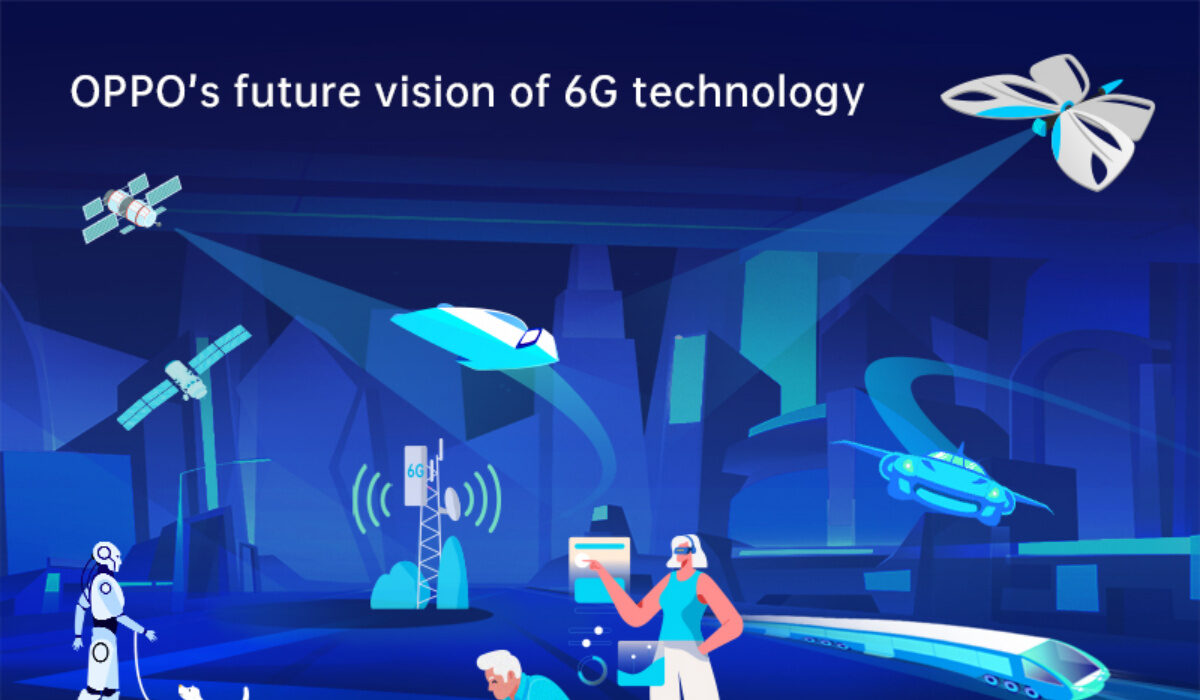
OPPO’s future vision
OPPO believes that 6G will reshape the way people interact with AI like never before, allowing AI to become a truly public-serving technology that can be used by everyone. Empowered by 6G, smart devices will become important participants and users of AI, downloading and deploying AI algorithms at different application levels to create new immersive experiences while also constantly collecting data to feed more advanced AI models.
For example, in the case of autonomous vehicles, 6G networks will be able to assign the most appropriate AI algorithm and the optimal communication connection based on the location of the vehicle and the current physical environment (e.g., time of day, weather). The vehicle will be able to immediately download and run AI algorithms that have been trained by countless other vehicles and devices, allowing the vehicle to provide the safest and most comfortable journey for the passenger.
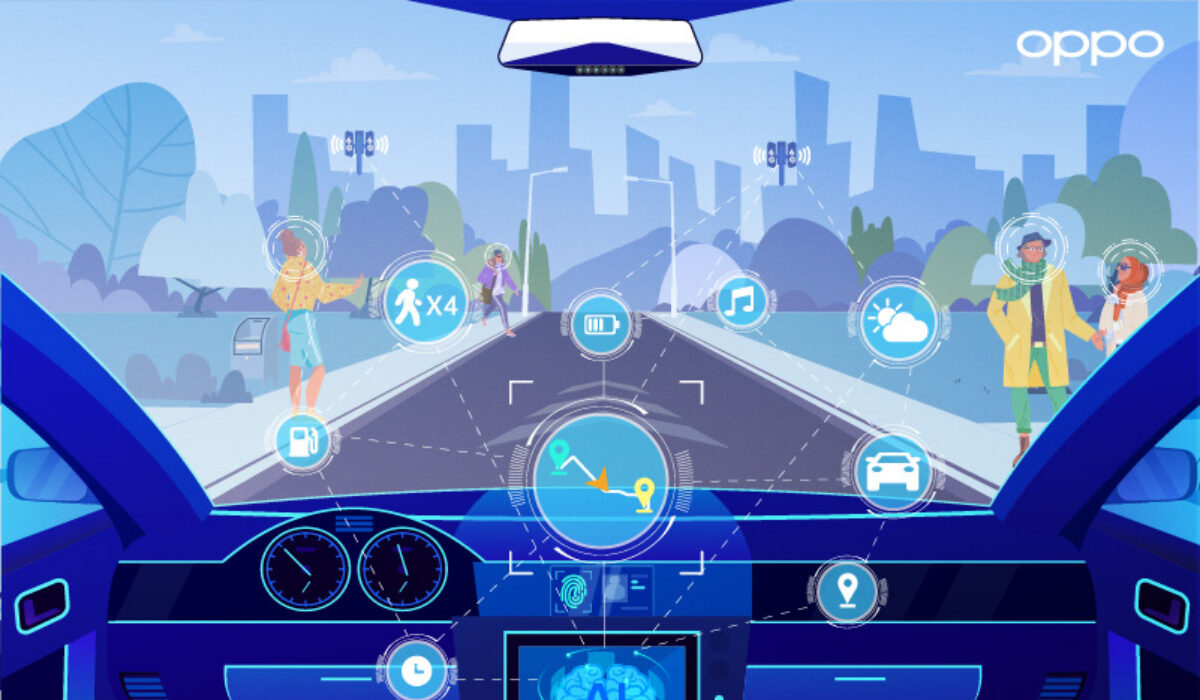
6G will revolutionize how AI works
“Technological development must be forward-looking. Mobile communication technology evolves in decade-long periods, and standardization of the next generation of communication technology is expected to begin in 2025, with commercial implementation following in around 2035,” said Henry Tang, OPPO’s Chief 5G Scientist. “Looking towards 2035, OPPO expects the number of intelligent agents in the world to far exceed the number of humans. Therefore, the next generation of communication technology, 6G, should be able to serve the needs not only of people but of all forms of intelligence and their various interactions. With this end goal in mind, we have carried out the early technical research and system design.”
Current networks can be broken down into two dimensions: the control plane (CP) and the user plane (UP). The UP is mainly responsible for the part of network performance that users can directly perceive, such as speed and latency. The CP, on the other hand, is closely related to network configuration, ensuring normal network operations under different movement patterns and location ranges of the network nodes. If we liken the UP to vehicles that are moving quickly through urban traffic, then the CP is the road traffic control.
OPPO’s 6G white paper takes an innovative step forward by introducing AI Function Plane as a new dimension in 6G networks, running perpendicular to the traditional CP and UP planes to form an Intelligent Cube (AI-Cube). This unique, AI-enhanced architecture will enhance the 6G network on two levels: network functionality and high-level networking capability to allow 6G networks to self-optimize, dynamically administrate themselves, and intelligently distribute resources.
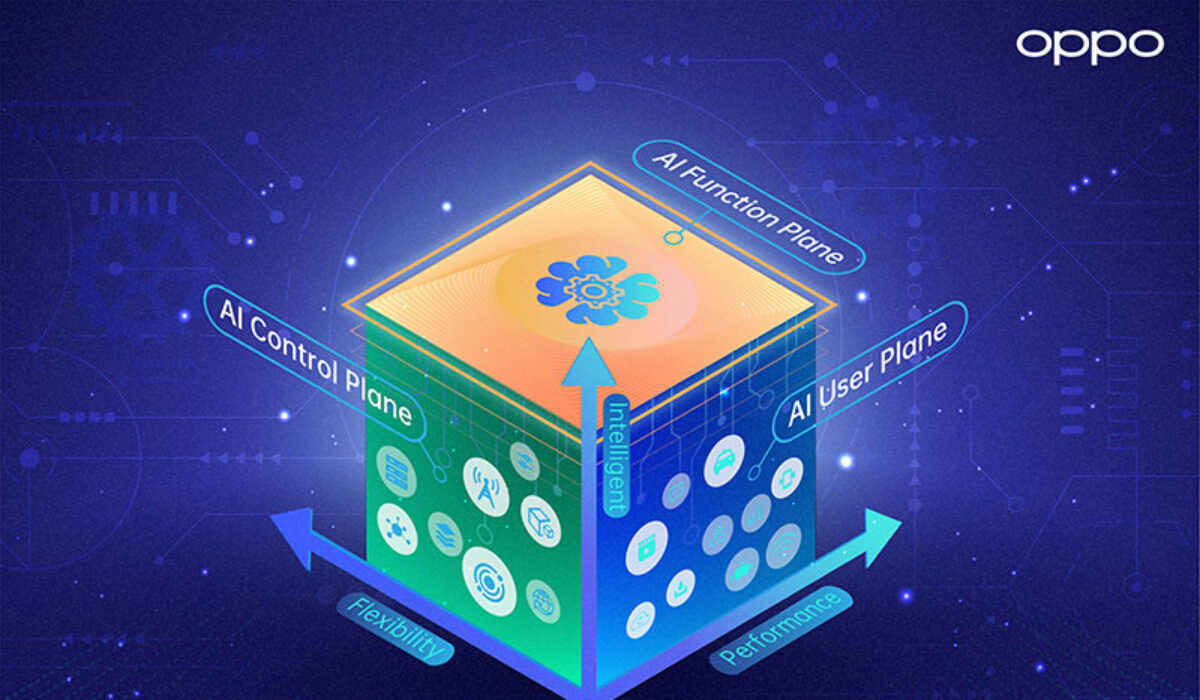
The AI-Cube under 6G network
6G will fundamentally revolutionize how AI infers, learns, interacts, and is applied, solving many traditional problems faced in AI development, such as data silos and user privacy. To alleviate some of the current limitations of AI algorithms, the white paper proposes dividing AI resources into different domains. Arranged according to specific AI tasks, multiple nodes, and resources under the 6G network will form AI domains, providing optimal strategies for accurate AI model allocation, network resource scheduling, and data sharing.
Currently, the limited computing power and storage capacity of smart devices make it difficult for them to employ large, generalized AI algorithms. Meanwhile, the specialized AI capable of running on these devices are unable to meet the large data demands of most users. Under 6G networks, however, the AI domain will be able to take on multiple roles such as that of a traditional base station, database, AI model repository, and application server.
Under the proposed network, 6G devices will be allocated to an AI domain based on the location and requirements of the device. This AI domain will then issue the most suitable AI algorithm and task needed to deliver the desired services while providing the most optimal communication connection to carry out the relevant tasks. Unlike 4G and 5G networks, the AI used for inferring and decision making in 6G networks will be organically integrated on the device side and the network side, with the device assuming a more important role.
OPPO will continue to conduct pre-research into 6G technology that will assist in the formation of the world’s 6G standards in the near future. As a key contributor to the popularization of 5G, OPPO will also continue to work with its partners to promote the large-scale commercialization of 5G, leading the development of the Internet of Experience through the evolution of communications technology to bring its benefits to all.
