Add MobilityArena as a preferred source on Google
Apple’s FaceTime feature is one of the best among similar platforms. FaceTime is a wonderful way to communicate when it works, especially since you get to make crystal-clear video calls with your loved ones. When it doesn’t, however, it can be a source of concern for iPhone users.
There are so many potential issues to consider when you find that FaceTime doesn’t function on your iPhone, so much that it might be challenging to know how to solve it.
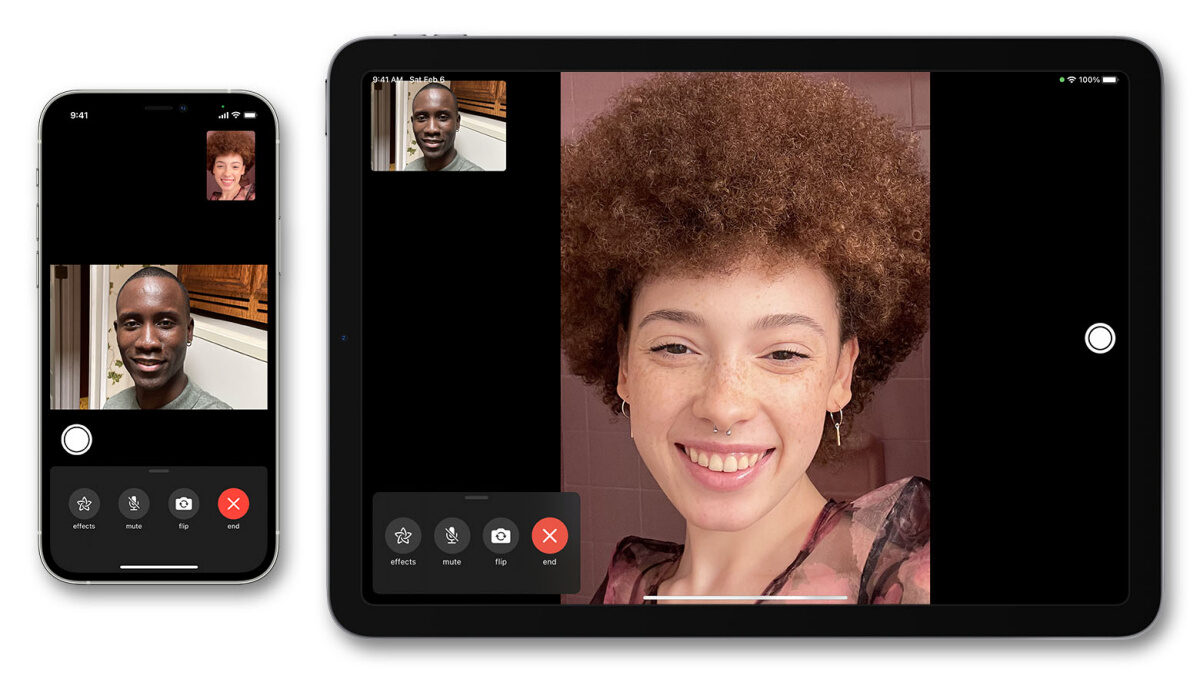
FaceTime Not Working on your iPhone: Solutions and fixes
However, the instructions and tips we’ve provided in this article to troubleshoot the issue should help you get FaceTime working just fine again.
Confirm if there’s a general problem
Sometimes there are technical problems with Apple services, so FaceTime won’t connect for anyone. When this occurs, your only option is to wait for Apple to come out with a fix.
Visit the Apple System Status website to view the status of each Apple service at the moment. You’ll also be able to find out whenever FaceTime is unavailable on this page.
Verify that FaceTime works in your Location
FaceTime is unfortunately not available everywhere, however it is quite close. Additionally, not every single phone provider offers it.
Find out if FaceTime is expected to operate in your country with your cell carrier by visiting Apple’s carrier support page. If FaceTime isn’t available where you reside, using a VPN on your iPhone may allow you to get around these restrictions.
Check your Internet Connection
FaceTime uses the internet to connect to other people, unlike traditional phone calls. Try loading a new browser on your iPhone, iPad, or Mac to check your internet connection if FaceTime isn’t connecting.
FaceTime can be used on an iPhone or iPad with cellular data, but Wi-Fi is the preferred connection. Go to Settings > Cellular and enable the FaceTime slider to use cellular data if you want to use FaceTime without Wi-Fi.
Make sure to use the Right Contact Details
By heading to Settings > FaceTime > You Can Be Reached By FaceTime At on your iPhone, you can view your own FaceTime contact information. Also ensure you have the correct information for the person you are trying to have a video chat with, so ask them to verify their details too.
Confirm that your device is compatible with FaceTime (for Group FaceTime)
If your smartphone is too old, you might not be able to make Group FaceTime chats function on it. Even if one-on-one FaceTime talks are allowed, this may still be a problem for group chats.
Everyone must have an iPhone 6s or later running iOS 12.1.4 or later in order to participate in group FaceTime calls
Limit Group Members (for Group FaceTime Chats)
With FaceTime, you may initiate a group conversation with up to 32 individuals at once. However, with that many individuals present, it is challenging to identify the particular person that is creating FaceTime issues. To identify where the issues arise, try starting a one-on-one conversation and then gradually adding more participants.
If FaceTime won’t connect to anyone at all, your device or internet connection must be the problem. However, if FaceTime isn’t working with a specific person, the issue is presumably on that person’s end.
Update your iPhone’s Software
If your iPhone doesn’t have the newest software installed, FaceTime may have problems working. To resolve this problem, update your device’s OS to the most recent version. Also make sure the person you’re calling has the most recent software version on their device.
Go to Settings > General > Software Update on your iPhone to update your software.
Set Date and Time Automatically
In the event that FaceTime isn’t functioning on your iPhone, Apple advises that you let the time and date be set automatically. The majority of iPhone users already do this, but you should check again to ensure that it is turned on in your device’s settings.
Make sure Set Automatically is turned on in the Settings > General > Date & Time section of an iPhone.
Disable FaceTime temporarily in Settings
From the FaceTime settings on your iPhone, you’ll be able to toggle FaceTime on and off. When you turn it back on, you might need to log into your Apple ID account.
Go to Settings > FaceTime on an iPhone. Toggle FaceTime off using the button towards the top of the page, then press it once more to turn it back on. This might just get FaceTime to work fine again.
Sign out, then Sign back in
On your iPhone, sign out completely and then re-sign in if FaceTime is still not functioning. When logging back in, be sure to use the proper Apple ID username and password.
Navigate to FaceTime under Settings on your iPhone to do this. In the Caller ID section, tap your Apple ID, and then select Sign Out from the box that displays. Tap Use your Apple ID for FaceTime after signing out to sign back in with your Apple ID information.
Summarily , if FaceTime does not work on your iPhone for one reason or the other, at least one of the fixes we’ve described above should help you get it working again. So make sure to read through this article and follow the instructions carefully.
Also, don’t forget to recommend this article to your friends and loved ones so they can also benefit from it.
- Don’t miss our mobile phone reviews .
- Follow our news on Google News .
- Join our WhatsApp Group , to be notified of the most important articles and deals,
- Follow us on Instagram , Facebook , Twitter , and YouTube .
Author:Joan Agie
Add MobilityArena as a preferred source on Google
The iPhone’s straightforward user interface is one of its major attractions; it just works great. However, while we can expect the iPhone to frequently surpass its rivals in terms of features and user experience, all devices will eventually start to lose speed as they get older.
The double-edged nature of new iOS updates can occasionally make older iPhone devices even slower. And in the end, seeing your once-new, lightning-fast iPhone start to stutter to a slower speed can be quite annoying.
If you’re looking for ways to speed up your slow iPhone device, then keep reading through this guide. We’ve provided some helpful tips below which should get your iPhone to optimum performance.
Adjust Transparency and Motion Settings
Although visual enhancements may be attractive on an iPhone device, there is processing overhead that may slow down the device in the long run. By turning them off or lowering them, you can slightly increase the speed of your phone.
To do this:
- Open the Settings app, then look for the Accessibility option under Settings .
- Decide on the text size and display.
- Toggle Reduce Transparency to On.
- You can also try a different approach which entails selecting Reduce motion under Settings > Accessibility > Motion .
After adjusting these settings, it’s a good idea to restart your device so that your device recognizes the newly-adjusted settings. Afterward, the performance should now be much better than before.
Restart your iPhone Device
The hardware support staff will most likely present these straightforward instructions as a tried-and-true opening gambit for most issues. This is because restarting your device frequently solves general issues with your device and improves performance.
To turn off your smartphone and turn it back on:
- Simply press and hold the Sleep/Wake button on the device and then slide the switch that shows up on your screen after this action.
- After that, hold down the Sleep/Wake button once more until the Apple logo appears.
Restarting your device might seem like a rather minor and insignificant step, but this is the easiest fix for many issues with mobile devices.
Get Rid of Apps You Don’t Use Frequently
Another thing to do is examine every app and game on your iPhone, then remove any one of them you don’t use frequently. Ensure to be thorough during the process because as these apps run and update regularly in the background, they may use up resources and take up space that is much needed for optimum performance.
On an iPhone, you can delete apps by tapping and holding until they all enter a jiggling mode or by simply tapping and holding the icon of the app you want to get rid of and selecting Delete app from the popup menu.
Update your iPhone to the Latest iOS Version
Apple constantly releases fresh versions of iOS, not only to provide new features and increase security but also to enhance overall speed.
As such, it’s smart advice to always verify if a new iOS update is available, so that you can update as necessary, take advantage of new features and enjoy a general improvement in your iPhone’s performance.
To update your iPhone:
- Go to Settings > General > Software update to accomplish this.
- If an update is available, your iPhone will check for it and prompt you to download and install it.
It’s also a good idea to set up your iPhone for automatic iOS updates so that you don’t have to remember to do it every time.
Turn Siri Off
Although Siri, Apple’s personal assistant, can be useful to iPhone users, there are a few functions that you may want to disable to improve speed and performance on your device.
In iOS 9 and later devices, Siri can automatically offer resources when you search, but this capability can also cause your iPhone to lag. To turn it off, simply Go to Settings > Siri and Search to turn it off.
Another feature; you can call Siri up at any moment if you have an iPhone 6S or later by saying “Hey Siri.” This feature also affects performance drastically.
By going to Settings > Siri , searching for “Hey Siri” and switching off the option to Listen for Hey Siri , you can disable this feature. After that, tap on the Siri off button.
Disable Automatic Downloads
You might want to turn the automatic download feature on if your iPhone is the sole device connected to your Apple ID, but the truth is this is not exactly necessary..
If you own other Apple devices, your iPhone may unintentionally be downloading additional apps and information that you didn’t approve from another device.
In any case, you can easily disable background automated tasks to enhance the speed of your iPhone.
To do this:
- Find the Automatic downloads section under Settings > App Store .
- Next, turn off Automatic updates
At this point, you should restart your device and evaluate your phone’s performance if it has gotten any better.
Clear Browsing History
Safari is one application where getting rid of unnecessary files is comparatively simple. Given that your iPhone may need to cache websites you visit again, this could initially slow down browsing, but there will likely be a net speed benefit in clearing away the rubbish.
Simply go to Settings > Safari and select “ Clear browsing data .”
Other steps you can take include:
- Performing a hard reset on your device
- Adjusting settings to Low Data Mode
- Turn off background app refresh
- Delete old files
In summary , the different steps we’ve described above will help you optimize your slow iPhone to work faster. So, try one or more of them on your device and watch your phone’s performance speed up remarkably.
- Don’t miss our mobile phone reviews .
- Follow our news on Google News .
- Join our WhatsApp Group , to be notified of the most important articles and deals,
- Follow us on Instagram , Facebook , Twitter , and YouTube .
