Add MobilityArena as a preferred source on Google
The FullView Display aka edge to edge display was pioneered by Samsung Mobile and is now in use by many other smartphone brands. Other terms used to refer to the same type of display are Fullscreen and bezel-less. But what does Full View screen really mean? One easy way to understand it is that it refers to a certain class of displays with minimal bezels.
Bezels are the borders between the screen and frame of devices with a display, e.g., a smartphone, a PC monitor. Bezels offer protection for the screen, but in small devices like smartphones, they also take up lots of space. And phone makers are eternally looking for ways to maximize space. Hence, the birth of Fullscreen, Fullview, edge-to-edge, or bezel-less displays.
To provide the best possible user experience for phone users, these new types of phone displays have a tall aspect ratio. What is aspect ratio? A good definition of aspect ratio is that it is the ratio of Length x width of the screen. 16:9 ratio has been the standard phone display aspect ratio. It can be referred to as a short and squat ratio.
A FullView screen is one that has a slim and tall aspect ratio. 18:9 is the most common FullView Display ratio right now. Here is what the older 16:9 aspect ratio looks like beside an 18:9 aspect ratio of the same size:
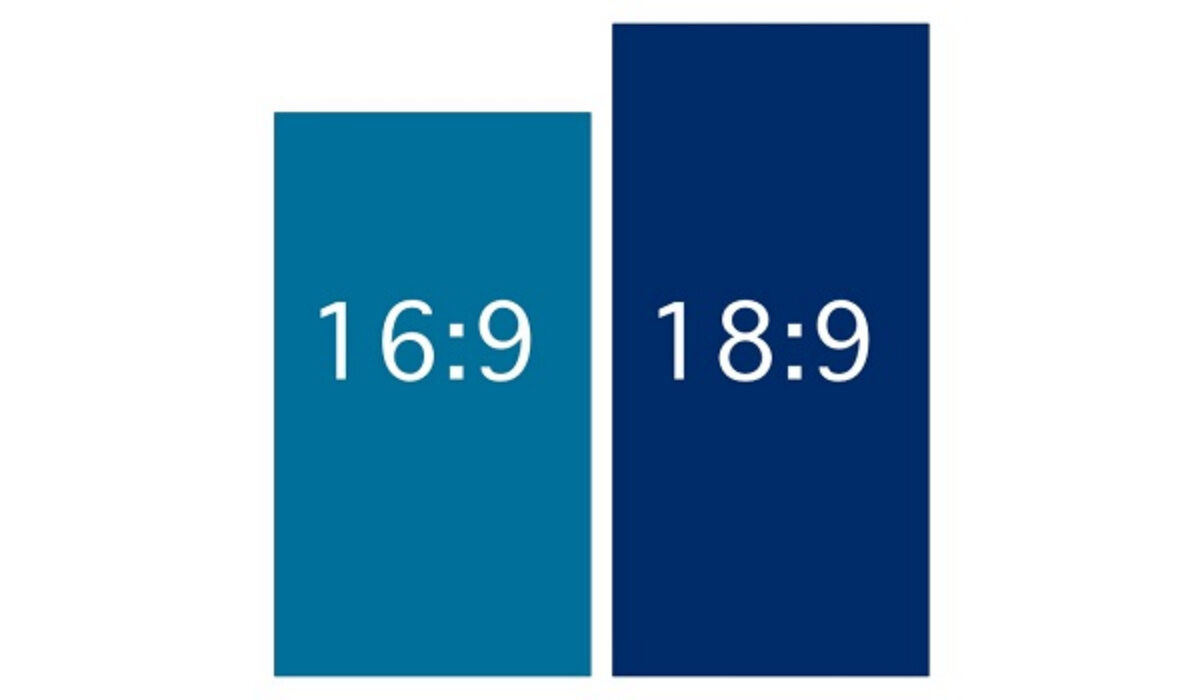
16:9 aspect ratio versus 18:9 aspect ratio
It is said that a picture speaks more than a thousand words. Hopefully, the above image paints a clear…well, picture. The FullView screen (right) is taller and slimmer.
- FullView Display Ratios
- FullView (Edge to edge) Display Versus Bezel-less
- How Does A FullView Display Benefit You?
- Which Do You Prefer?
FullView Display Ratios
So, again, a FullView Display is one with a tall aspect ratio, and is often combined with a bezel-less design. Bezel-less does not necessarily mean no bezels at all, but that the bezels are less than what occurs on older, standard phones. In other words, bezel-less really means minimal or reduced bezels.
As mentioned already, the 16:9 ratio has been the standard phone display. It is still used by a number of brands, including in recent phones like: HTC U11, OnePlus 5, Xperia XZ Premium, and Google Pixel 2. Other aspect ratios used in edge to edge displays are 19:9, 19.5:9, and 21:9, among others.
The new generation of taller displays have 18:9 (LG G6), 18.5:9 (Samsung Galaxy S8, Samsung Galaxy S9), 18.7:9 (Huawei P20), and 19:9 (Nokia X6 2018).
Other taller display aspect ratios include: 19.5:9 (Apple iPhone X), and 17: 9 (Xiaomi Mi Mix). As you can see, there is a variety.
FullView (Edge to edge) Display Versus Bezel-less
To clear the bezel-less versus FullView Display question, a smartphone can use any aspect ratio and still be bezel-less. It does not necessarily have to use a taller display in order to have tiny bezels. For example, the Elephone S8 (below) has a 16:9 aspect ratio despite its bezel-less design. As such, it is wider than FullView Display phones like Samsung Galaxy S8, LG G6, iPhone X, and others.
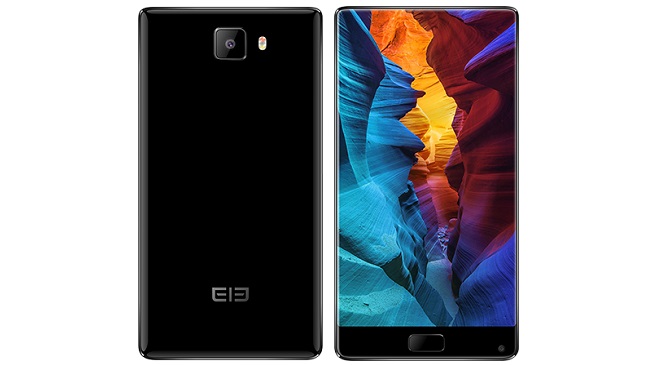
Elephone S8 was one of the early Fullscreen/FullView/bezel-less phones
But taller aspect ratios are the future of Fullscreen or Fullview displays. The taller aspect ratio screens let modern wide-screen movies fill the screen without any wasted space. Remember the black bands that show on the top and bottom of your screen when you are watching movies on standard phones? Full-View Screens get rid of those.
So, besides the video watching advantage, what are the other advantages and disadvantages of having a Full-View screen on a smartphone?
How Does A FullView Display Benefit You?
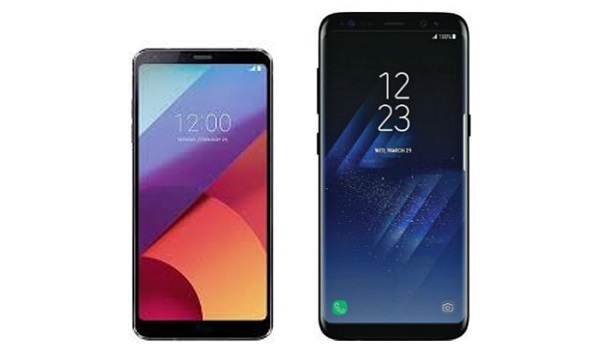
Early edge-to-edge displays on Nokia and Samsung phones.
A FullView Display allows you to fit in a bigger display in a small, handier form factor. Such phones fit in the hand better because of their narrower profile. It also means that they get taller.
FullView Displays are also great for split screen use; when you are using two apps on your phone screen, both fit in as two full squares. This is different from the less convenient fit that you get on a more traditional 16:9 display. These taller edge to edge displays are also great for gaming, allowing developers to fit in more on-screen controls.
However, while many movies and videos are now shot in widescreen format, some are still not and so will not display properly on a FullView Display. As such, you will see black bars on either side of such videos when watching them on a FullView screen. Yes; crazy. But that problem will go away as more and more videos are shot in 18:9 aspect ratio.
Lastly, while a smartphone with a FullView Display fits in the hand better, the top of the tall display can be difficult to reach with one hand. Some manufacturers address this by including an optional one-handed mode in their devices.
Which Do You Prefer?
Not all manufacturers have jumped on the FullView Display bandwagon. Sony, for example, has stuck with the traditional 16:9 aspect ratio till date, having said they will not be using the 18:9 aspect ratio . Of course, that may change in the future.
Now that you understand what a Fullscreen, bezel-less, or Fullview Display is – and their pros and cons – which do you prefer – FullView, edge to edge, screens or the traditional 16:9 short and squat displays?
- Don’t miss our reviews .
- Follow us on Instagram , Facebook , Twitter , and YouTube .
Author:InfoDesk
Add MobilityArena as a preferred source on Google
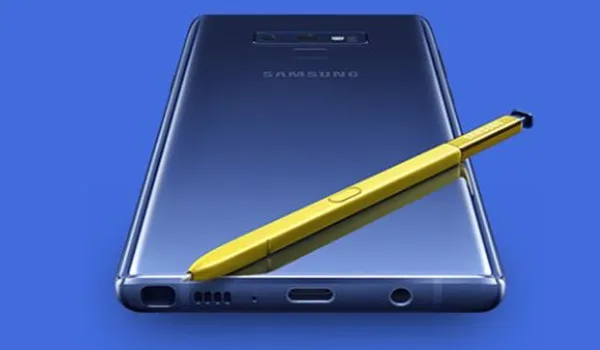
Samsung Galaxy Note9 Specs : In terms of design, Samsung Galaxy Note 9 is a physical replica of its predecessor. This is the same path that Samsung took with the Galaxy S8 and S9. And what is a Galaxy Note without a stylus aka S-pen? The S Pen is now Bluetooth-enabled and can act as a remote shutter for the Note9’s camera. Once slid into its holster in the phone, it starts charging. Cool.
Of course, the Note9 also offers improved support for Samsung DeX, which provides desktop experience support. Samsung’s virtual assistant, Bixby, is here too.
If you are a gamer, the Samsung Galaxy Note9 is a beast of a device for you. Coupled with the Snapdragon 845 chipset and 8GB of RAM, Samsung has built into it a “water-carbon cooling” system that helps it to prevent overheating during prolonged heavy-duty usage – like gaming sessions. So, if you are shopping for a gaming phone, the Note 9 is as good as it gets.
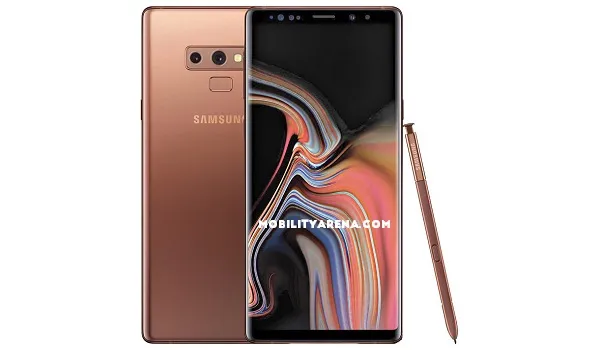
Samsung Galaxy Note9 Specs
Find below the full Samsung Galaxy Note9 specs, features, availability and price.
Wireless Network and Software
- 2G : GSM, GPRS, EDGE 850 / 900 / 1800 / 1900 MHz
- 3G : UMTS, WCDMA, HSDPA 850 / 900 / 1900 / 2100 MHz
- 4G : LTE frequency bands LTE 1(2100) / 2(1900) / 3(1800) / 4(1700/2100) / 5(850) / 7(2600) / 8(900) / 12(700) / 13(700) / 17(700) / 18(800) / 19(800) / 20(800) / 25(1900) / 26(850) / 28(700) / 38(2600) / 39(1900) / 40(2300) / 41(2500)
- SIM Type : Single and Dual Nano-SIM options
- OS : Android 8.1 Oreo + Samsung Experience UI
Design
- Dimensions : 161.9 x 76.3 x 8.8 mm
- Weight : 153.8 g
- Display : 6.4 inches, 1440 x 2960 pixels, SuperAMOLED Always On display
- Sensors : Fingerprint, Face Unlock, Accelerometer, Proximity, Barometer
- Build : Aluminium Frame + IP68 dust/water resistance
- Colours : Ocean Blue, Midnight Black, Lavender Purple, Metallic Copper.
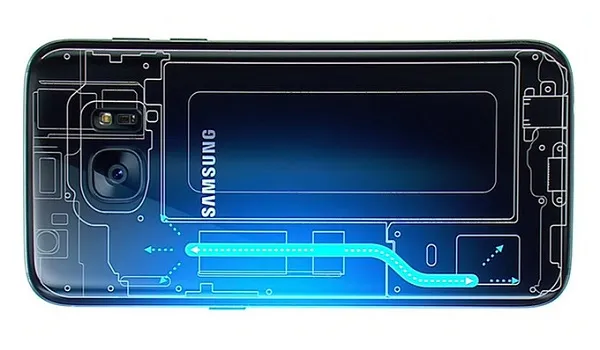
The Samsung Galaxy Note9 specs are those of a top gaming smartphone. It has cooling pipes built in to prevent overheating.
Hardware
- Processor Type : 64-bit Octa-core 2.7 GHz
- Processor Name : Exynos 9810
- Graphics Processor : Adreno 630 / Mali-G72 MP18
- Cooling System : “Water-carbon cooling” system
- RAM : 6GB / 8GB
- Internal Storage : 128 GB / 256GB / 512GB
- External Storage : microSD, up to 512GB
Cameras
- Rear : Dual 12 megapixels + 12 megapixels, auto-focus, Dual Pixel PDAF, LED flash
- Video recording : 4k video; 960fps super slow-motion videos
- Front-facing : 8 megapixels, Flash
Multimedia
- Music Support : MP3/WAV/eAAC+ player
- Loudspeaker : Stereo
- Video Support : MP4/MPEG4/H.263/H.264 player
- FM Radio : Yes
Connectivity
- Bluetooth : v5.0
- WiFi : Wi-Fi 802.11 a/b/g/n, hotspot
- GPS : Yes
- USB : microUSB v3.1, USB Type-C, USB-OTG
Miscellaneous
- Battery Charging : Quick Charge 2.0 Fast Battery Charging; Wireless Charging
- Battery Type and Capacity : Non-removable Lithium-Polymer 4000mAh
- Announced : August 9, 2018
- Samsung Note 9 release date : August 24, 2018
Samsung Galaxy Note9 Price
The 6GB/128GB version of the Samsung Note9 costs $999 while the 8GB/512GB variant sells for $1,250.
Samsung Note 9 Release Date And Availability
You can buy Samsung Galaxy Note9 from phone retailers – both off-line and online – worldwide from the 24th of August, 2018.
- Don’t miss our mobile phone reviews .
- Follow our news on Google News .
- Join our WhatsApp Group , to be notified of the most important articles and deals,
- Follow us on Instagram , Facebook , Twitter , and YouTube .
