Add MobilityArena as a preferred source on Google
Do you ever wonder how apps on Google Play Store are considered safe? Why is it recommended to download apps only from the Store? A lot of people download their apps from anywhere. Some even get them from other people via various file-sharing platforms. However, Google Play Store is the safest place to download apps from. This is because Google takes user security very seriously.
We all know that malware and viruses are rampant on the Internet. In fact, cyber criminals have become much better at disguising their malware as innocent-looking apps. It is almost always impossible to know if any software you download from anywhere will cause damage to your device, until you download that software. By then, however, it would be too late. Therefore, it is imperative that users only download files from trusted sources; in fact, you should only visit secure sites, whether you browse with your phone or with your computer.
Google Play Store is the safest place to download apps on the Android platform. this is because Google encrypts user data like no other. In 2014, Android Lollipop came with high-level encryption by default. Although not many users enjoyed the benefits of this encryption, it was there. This encryption has been present in all the subsequent Android versions.

Furthermore, Google has various security services to help manage the Android platform. Google employs a myriad of devices and features to keep the Android platform safe. Also, there are periodic updates to the operating system. The updates contain security patches, which deal with new threats as they come.
The most important part of the Google Play Store security is the ability to identify problematic apps and developers. They do this before these apps become a problem to users. This is achieved through looking into various aspects of the business, customer feedback, app behaviour, and software code. This information is compared with that of known problematic apps. If too many similarities come up, they red-flag the app.
Google puts user security first in all they do. This is why the Play Store is the safest place to download apps on the Android platform. So, next time you want to download an app, check the Play Store first.
- Don’t miss our reviews .
- Follow our news on Google News .
- Join our WhatsApp Group , to be notified of the most important articles and deals,
- Follow us on Instagram , Facebook , Twitter , and YouTube .
Author:EmmyCN
Add MobilityArena as a preferred source on Google
What is a fast charger? A fast charger is a type of charger that is designed to charge your device more quickly than a standard charger. If you have ever wondered how fast chargers or quick chargers work, this article explains that, including the different available types from different manufacturers, their versions, and compatibility issues.
Not all chargers are the same. Regular USB 2.0 ports on a PC put out 500 mA (that is half of 1A). Regular USB chargers put out 5 volts at 1A. That explains why charging your phone via your laptop is always a slower experience than using a wall charger. A conventional charger, delivering 5V/1A, will charge a phone’s battery from 0% to 12% in 30 minutes.
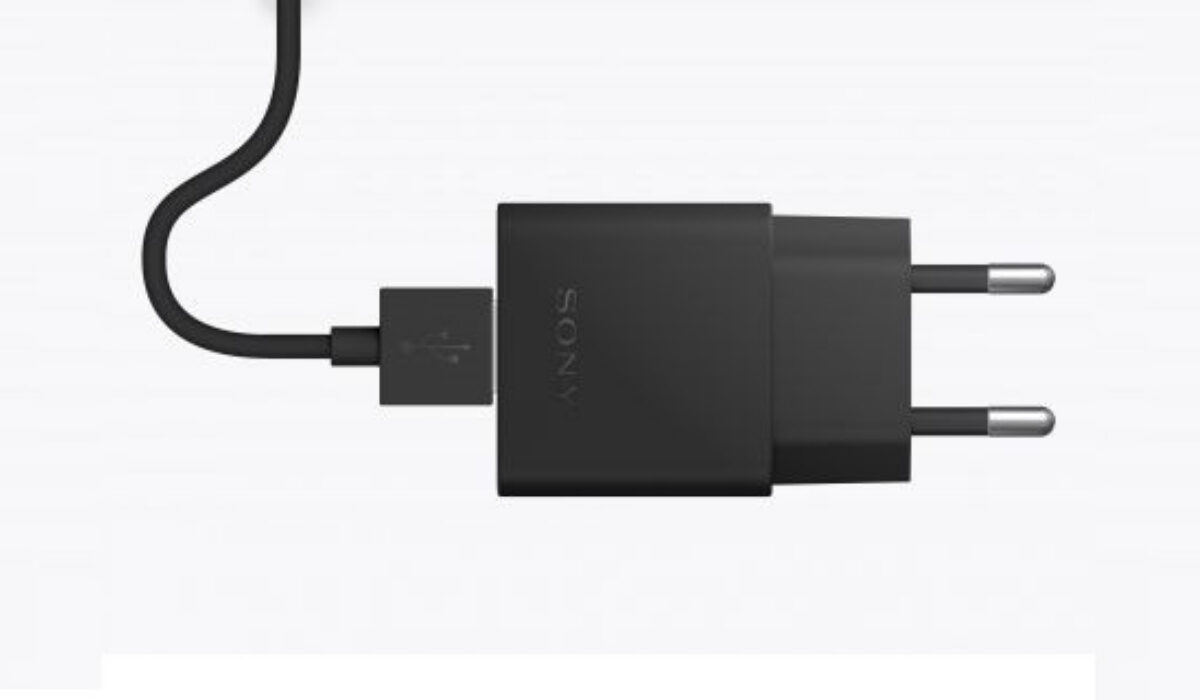
To speed up smartphone charging, various wired fast charge technologies and chargers have been developed. In this article, we explore how fast battery charging and wired fast chargers work.
- How Wired Fast Chargers Work
- Compatibility Issues
- Qualcomm Quick Charge Versions
- Pay Attention To Charger Rating
- Is A Higher Rated Charger Dangerous For My Device?
- Wired Fast Chargers: The Summary
- Is wired fast charging bad?
- Is it good to charge your phone to 100%?
- At what percent should I charge my phone?
How Wired Fast Chargers Work
Wired fast chargers work by increasing the amount of power that is delivered to your device’s battery, which can help to reduce the amount of time it takes to charge your device.
Fast chargers typically come in two main types: wired and wireless. Wired fast chargers use a cable to connect your device to the charger, while wireless fast chargers use electromagnetic induction to transfer power to your device. This article is focused on wired fast chargers.
Different smartphone and accessories manufacturers have come up with their own branded fast charging solutions. Mediatek calls theirs Pump Express, while Qualcomm calls theirs Quick Charge. Feel free to ignore the branding used by each manufacturer; while the implementations differ, the principles they work on are similar: they pass more current to the phone to speed up charging .
Here is a list of all available wired fast charging technologies:
- QuickCharge by Qualcomm
- PUMPExpress by MediaTek
- SuperCharge by Huawei
- VOOC and SuperVOOC by OPPO – offers up to 150W and 240W fast charging.
- Dash Charge and WarpCharge by OnePlus
- Super FlashCharge by vivo, which now has 120W fast charging capable of filling up a 4000mAh battery completely in 13 minutes.
- Adaptive Fast Charge by Samsung
- Turbo Charge by Motorola
- Fast Charge by Apple
- Mi Charge by Xiaomi offers 100W fast charging.
There is also USB Power Delivery , which is a universal wired fast charging standard for USB devices. If your smartphone manufacturer enables it, you will be able to use any compatible USB cable from any manufacturer to get your smartphone charged quickly.
Compatibility Issues
While the principle behind fast chargers are the same, the implementation by different manufacturers is different. The implication is that the different wired fast charging standards are not compatible with one another. A smartphone with MediaTek’s Pump Express is not compatible with Qualcomm QuickCharge. And a smartphone with QuickCharge technology is not compatible with OPPO’s VOOC. And so on like that.
In order to keep the battery from being overloaded, wired fast chargers pass more current for a period, so the phone charges faster for that period, and then revert to regular current for the rest of the charging cycle.
But there are different versions of the technology, with each offering shorter charging times than the previous version.
Qualcomm Quick Charge Versions
Qualcomm’s wired quick charging technology is in use by many smartphone brands. Let us have a look at its different available versions available on fast chargers today (we keep updating this list with new versions as they are announced):
- Quick Charge 1.0 Charges your phone battery from 0 to 30% in 30 minutes , after which charging slows down. Puts out 10W (5 volts at 2 amp). Full charging will happen in a little over two hours.
- Quick Charge 2.0 Charges your phone battery from 0 to 60% in 30 minutes and then slows down. Puts out 9 volts at 1.67 amp (9V/1.67A). That’s about 15W. Full charging will happen in a little under two hours.
- Quick Charge 3.0 Charges a phone from 0 to 80% in about 35 minutes , and then slows down. Delivers 18W of power. Full charging will happen under 2 hours.
- Quick Charge 4.0 Charges your phone from 0 to 50% in 15 minutes , and then slows down. It also charges up to 5° C cooler. Full charging will happen in about one and half hours.
- Quick Charge 4 Plus : charges 15% faster or 30% more efficiently than Quick Charge 4.
- Quick Charge 5.0 : charges 0-50% in 5 minutes. Carries 100W+.
Pay Attention To Charger Rating
The point to note is that fast chargers are rated differently to enable different rates of charging. As such, it is important what kind of charger you use with your smartphone. Phones have different charging standards too.
For example, to get Quick Charge 2 charging speeds, both your phone and the charger must be Quick Charge 2.0 compatible. Same goes for all other standards. To get the appropriate fast charge speed, you need to use a compatible charger with your phone.
Is A Higher Rated Charger Dangerous For My Device?
If you use higher rated fast chargers with your smartphone, are you at any risk? Well, your phone will warm/heat up a bit during charging, because more current is being passed into it. But modern phones have regulators built in and there is no risk of your phone being damaged by higher rated fast chargers. The built-in regulator will let in only the recommended amount of current.
Using a more powerful charger will speed up the charging process, depending on the charging standard your phone is compatible with. At worst, it will charge your phone like any ordinary charger would.
In summary, no matter the rating of wired fast chargers you use, the smartphone itself decides how much current is drawn.
Wired Fast Chargers: The Summary
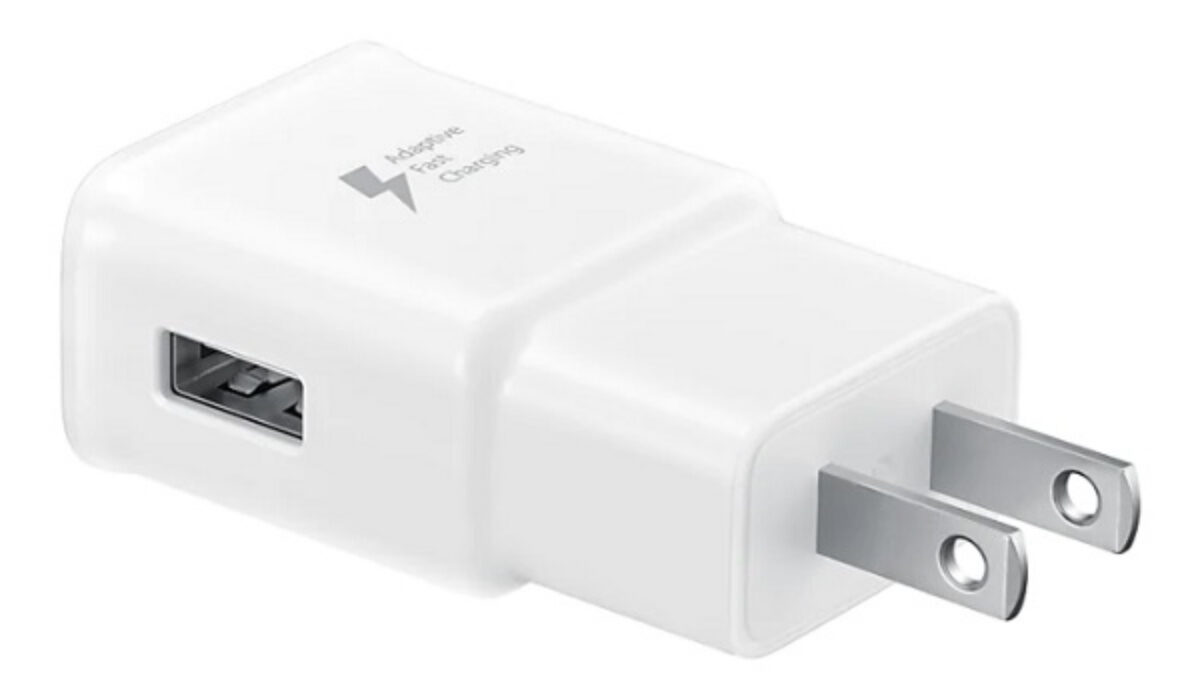
The summary of the whole matter is that if possible, get the most powerful charger that you can get your hands on. Whatever the charging standard your smartphone supports, you know you are covered. When you change phones, you can also relax knowing that it does not matter what type of charger is bundled with it. You have a wired quick charger that has you covered.
There is a range of wired fast chargers available in the market. For a long time, my default go-to quick charger was a Nokia 5V / 2A charger. I own also own Anker’s 20W PowerPort III wall charger .
Is wired fast charging bad?
On the contrary, quick chargers are good. They help users cut down on the time needed to top up their smartphone batteries. They are also designed with safety in mind.
Is it good to charge your phone to 100%?
When using fast chargers, as with standard chargers, the ideal thing to do is top up your cell phone’s battery at every opportunity you get. Just plug it and charge till it is full. Charging your phone all the way to 100% is not harmful.
At what percent should I charge my phone?
You do not have to wait for your smartphone to give you a low battery alert or to shut down before you charge it. As a matter of fact, you should avoid that. The best way to keep your cellphone battery in optimal health is to top it up at random. As a rule, anything from 80% down to 30% is a good time to plug your phone to a charger to top it up. This rule applies whether you have access to fast chargers.
Author:Mister Mobility
Digital Skills and Communication Coach | Mobile Phone Connoisseur since 2001 | Tech Blogging since 2004
