Add MobilityArena as a preferred source on Google
Why should you delete your iPhone browser cache? One of the most used apps on modern smartphones, including your Apple iPhone, is the Web browser. Whether you choose to use Safari or a 3rd party browser, Web browsing is likely a top activity for you. Which means that it’s cache (a temporary storage that makes browsing faster) gets clogged up easily, and then results in lower performance. Your phone slows down. This is one key reason why you should clear your iPhone browser cache regularly.
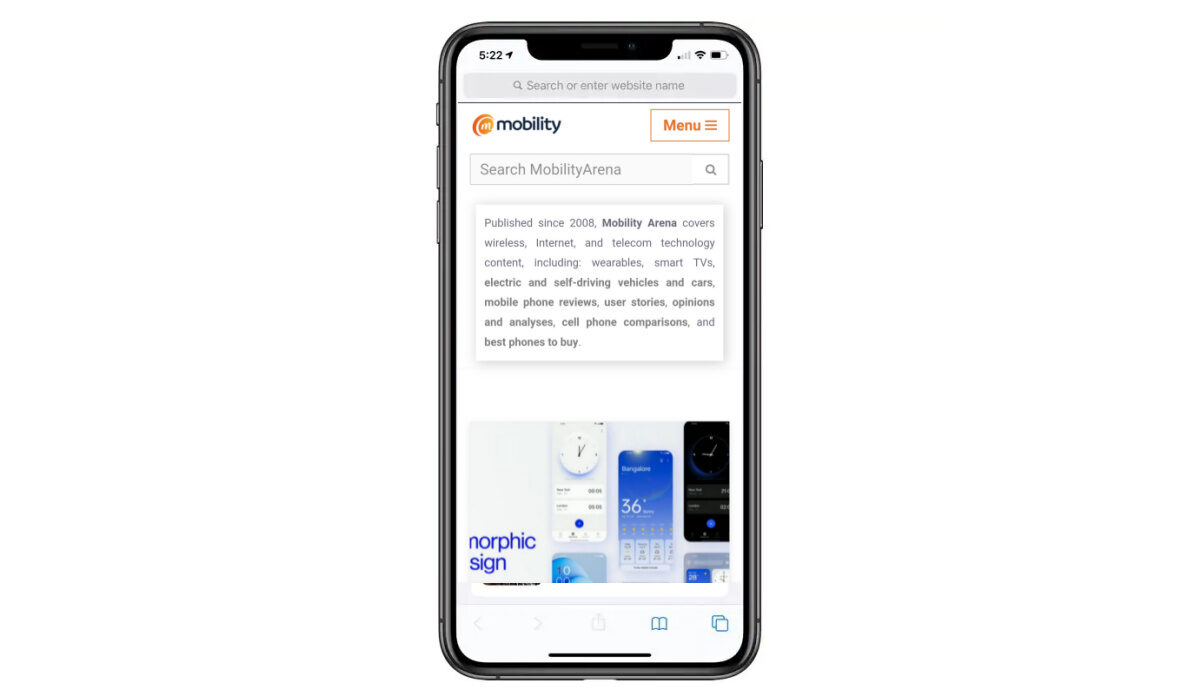
How to clear the iPhone browser cache (Safari)
To clear your history and cookies, on your iPhone, go to Settings > Safari, and tap Clear History and Website Data . Then tap Remove Now .
Doing this will clear not just the cache, but also your history and cookies. However, your saved website passwords and AutoFill data will not be deleted.
How to clear your iPhone browser cache (Chrome)
- Open the Chrome app.
- Select the three dots in the bottom right to open more options.
- Scroll down and select Settings .
- Select Privacy in the next menu.
- Then select Clear Browsing Data to open up one last menu.
- Select the intended time period you want to clear data from at the top of the menu.
Does clearing my iPhone browser cache delete passwords?
Not at all. Clearing your iPhone browser cache does not delete your saved passwords.
What happens when you clear your iPhone browser cache?
Clearing your Web browser cache deletes junk files and frees up the memory of your iPhone. This can improve performance when using the browser.
How often should I clear my browser cache on my iPhone?
It depends on your usage, but we will recommend that you do it at least once a month. If you use your web browser very heavily, feel free to clear the cache bi-weekly or weekly.
What are the downsides to clearing browser cache?
If you delete the browser cache, the next time you visit a previously cached website, the site will be forced to load a fresh copy of the content of the page(s) you are visiting. This refreshing will cost you a small amount of time, but it will also create a new cache, so the page loads faster the next time you visit it. That’s all there is to it.
Does clearing my iPhone browser cache delete AutoFill data?
Not at all. When you delete your browser cache, your AutoFill data will not be deleted when you clear your iPhone browser cache.
- Don’t miss our mobile phone reviews .
- Follow our news on Google News .
- Join our WhatsApp Group , to be notified of the most important articles and deals,
- Follow us on Instagram , Facebook , Twitter , and YouTube .
Author:MobileChic
That motivated, gadget-loving geeky chic who tries to stay on top of things. Unapologetic iFan.
Add MobilityArena as a preferred source on Google
Why do you need chipset ranking, and why a Snapdragon processor ranking list by performance, specifically? Qualcomm is a popular mobile processor manufacturer and an industry leader. The manufacturer produces chipsets (processors) that span the three broad tiers of the smartphone market – premium flagships, mid-rangers, and the entry-level segments.
Chipset ranking can depend on factors such as the intended use of the chipsets in question, their specific features and capabilities it offers (e.g. network capabilities), and its performance. The ranking provided on this page takes these factors into consideration, but the overriding factor is performance. Of course, the higher a smartphone processor ranks in terms of performance, the more capable it is in terms of features. There are always a few exceptions to that rule of course, and there are some processors with higher performance which lack certain features that some lower ranked processors have. that As such, there is no universal way to rank them.
Qualcomm Snapdragon chipset ranking
As such, chipset ranking is not an exact science. It is more of a general guide. For more specifics, you have to dig into the specs sheet of each chipset. As this chipset ranking article is specifically about Qualcomm Snapdragon processors, note that sometimes, Qualcomm’s chip naming system is confusing, as you will find some chips with a lower number but with superior capabilities to some other numbered higher. The lists below help to clear away some of that confusion. They also let you see which models are the best and most powerful (which are used in the most expensive smartphones), and which ones are used in cheaper Android phones.
- Premium Flagship Snapdragon Processor Ranking List By Performance
- Upper Mid-range Snapdragon Processor Ranking List By Performance
- Lower Mid-range Snapdragon Processor Ranking List By Performance
- Entry-level Snapdragon Processor Ranking List By Performance What was the fastest or best Snapdragon processor in 2022? What was the fastest or best Snapdragon processor in 2023? What is the fastest or best Snapdragon processor in 2024?
Premium Flagship Snapdragon Processor Ranking List By Performance
This chipset ranking provides the exclusive list of the best Snapdragon processors in the market. Android smartphones using any of these chipsets are the most powerful cell phones in the market in 2024.
- Snapdragon 8 Elite – formerly expected to be called Snapdragon 8 Gen 4 (3nm, announced in October 2024)
- Snapdragon 8 Gen 3
- Snapdragon 7+ Gen 3 (4nm, 2024)
- Snapdragon 8+ Gen 2 (2023)
- Snapdragon 8 Gen 2
- Snapdragon 8+ Gen 1
- Snapdragon 7 Gen 3 (2024)
- Snapdragon 7s Gen 3 (August 2024)
- Snapdragon 7+ Gen 2
- Snapdragon 7s Gen 2 (4nm, 2024)
- Snapdragon 8 Gen 1
- Snapdragon 888+
- Snapdragon 888
- Snapdragon 870
- Snapdragon 865+
- Snapdragon 865
Upper Mid-range Snapdragon Processor Ranking List By Performance
A quick note to clarify things about this list. You will find flagship processors from years past listed here, and that is because, in terms of CPU performance today, these older flagship chips fall among the current crop of mid-rangers. As such, they are listed here, because the idea of the lists on this page is to help you with a fair picture of how each processor ranks in terms of CPU performance.
- Snapdragon 6 Gen 3 (released in September 2024)
- Snapdragon 7 Gen 1
- Snapdragon 782G
- Snapdragon 778G Plus.
- Snapdragon 780G
- Snapdragon 6 Gen 1
- Snapdragon 778G
- Snapdragon 855+
- Snapdragon 768G
- Snapdragon 750G
- Snapdragon 765G
- Snapdragon 765
- Snapdragon 860
- Snapdragon 750G
- Snapdragon 855
- Snapdragon 845
- Snapdragon 835
- Snapdragon 6 Gen 1 (4nm, 2022)
- Snapdragon 4 Gen 3 (4nm, 2024)
- Snapdragon 6s Gen 3 (6nm, June 2024)
- Snapdragon 695 5G
- Snapdragon 732G
- Snapdragon 720G
- Snapdragon 730G
- Snapdragon 4 Gen 2
- Snapdragon 4s Gen 2 – released in July 2024
- Snapdragon 4 Gen 1 – released in September 2022
Lower Mid-range Snapdragon Processor Ranking List By Performance
These Snapdragon chipsets provide decent performance for Android smartphones at a lower budget price point.
- Snapdragon 690
- Snapdragon 730
- Snapdragon 480
- Snapdragon 712
- Snapdragon 685
- Snapdragon 680
- Snapdragon 678
- Snapdragon 710
- Snapdragon 675
- Snapdragon 660
- Snapdragon 670
- Snapdragon 665
- Snapdragon 662
- Snapdragon 460
- Snapdragon 636
- Snapdragon 632
- Snapdragon 630
- Snapdragon 625
- Snapdragon 626
Entry-level Snapdragon Processor Ranking List By Performance
- Snapdragon 450
- Snapdragon 439
- Snapdragon 430
- Snapdragon 435
What was the fastest or best Snapdragon processor in 2022?
That honour of best Snapdragon processor went to the Qualcomm Snapdragon 8+ Gen 1 chipset. It is built on the 7 nm process and was the best and the fastest Snapdragon processor for most of 2022. It was overthrown when Vivo released the first Snapdragon 8 Gen 2 phone, Vivo X90 Pro+ , in December 2022.
What was the fastest or best Snapdragon processor in 2023?
That honour of best Snapdragon processor in 2023 goes to the Qualcomm Snapdragon 8 Gen 2 chipset.
What is the fastest or best Snapdragon processor in 2024?

The best Snapdragon processor throughout most of 2024 was Qualcomm Snapdragon 8 Gen 3. It was displaced in October by the new 3nm Snapdragon 8 Elite.
Author:Mister Mobility
Digital Skills and Communication Coach | Mobile Phone Connoisseur since 2001 | Tech Blogging since 2004
