Add MobilityArena as a preferred source on Google
If you’d like for Siri to read your text messages out loud when they come in, this has been possible since iOS 13.2, so you are in luck. As such, you can enjoy a world of convenience and not have to touch your phone when you have a new text message or iMessage arrives. Yes; it works for iMessage as well.
Note though that for Spirit to read out your text messages automatically, you must have Airports, Airports Pro, Powerboats Pro or Beats Solo Pro headphones connected to your iPhone. Otherwise, it won’t work.
How it works
When a new message arrives, and you have compatible headphones on, Siri will play a tone, then read aloud the sender’s name and the new message. If it ia a long message, rather than read out the message, Siri will instead announce the sender’s name and include that a message has been received.
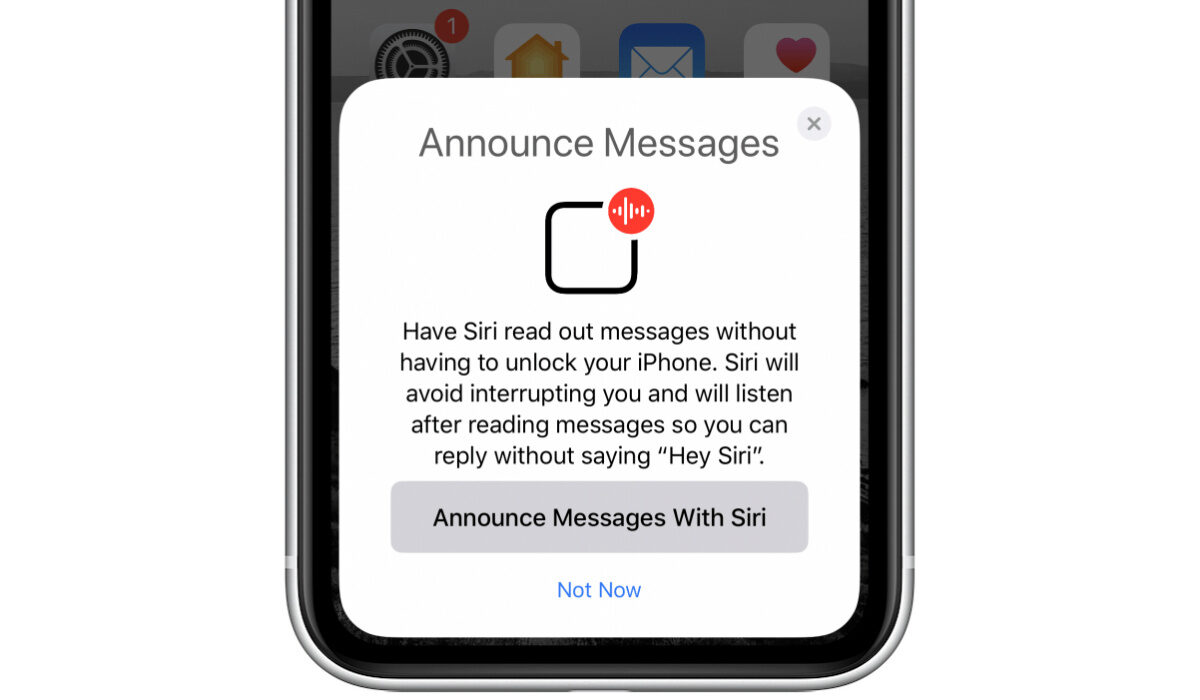
You can setup Siri to read your text messages out to you automatically.
- How it works
- Configure: How to set Siri to read your text messages automatically Have Siri repeat the message How to use Siri to respond to Messages Have Siri check and read out your most recent message Make Siri read old (previously read) text messages
- How to make Siri read out your email
Configure: How to set Siri to read your text messages automatically
The following steps require that your iPhone or other iDevice is running iOS 13.2 or newer. Do a quick check by opening the Settings app → General → About.
Once confirmed that your software is up-to-date, you can proceed with the steps below to enable Siri to read your text messages aloud automatically as they arrive.
- Open the Settings app on your iPhone, iPod Touch, or iPad. If you’re running iOS 14 (or later), go next to Notifications . If you’re running iOS 13 go to Siri & Search .
- Next, tap Announce Messages with Siri. Be sure to enable the Announce Messages with Siri option.
That is all you need to do. Once done, from now on, Siri will automatically read incoming messages to your supported headphones.
How it works
Siri will automatically send you a notification when you get a new message without you having to say, “Hey Siri.” Once it reads the message, you can respond with a number of options and commands, some of which we highlight below.
Have Siri repeat the message
If you didn’t quite hear the first read out, or you missed a detail, you can tell Siri to repeat it by saying “Repeat the message” or “Read again.”
How to use Siri to respond to Messages
Now that you have enabled Siri to read your text messages to you as they come in, sometimes you want to send a reply. Thankfully, it can take care of that too, all hands-free.
After reading out a message to you, Siri will ask you if you want to respond. Say “Yes” and it will give you the option to dictate a message in response. If you say “No”, Siri will go on and read out the next new message.
Dictate the message you want to send .
The dictated message will be displayed on the screen for you to review. You can say “No” or “Cancel,” for the option to dictate another response. Say “Yes” or “Send” to have Siri send the reply.
After sending the reply, Siri will proceed read the next unread text message or iMessage in the list.
Have Siri check and read out your most recent message
If you want to check your most recent message, say, “Read my latest message.”
Make Siri read old (previously read) text messages
Only if you know the person and the exact date of the conversation and tell Siri something like, “Read out Peter’s message from January 1, 2022”.
How to make Siri read out your email
You can also have Siri read out your email messages, but you lose some convenience, as it can’t read incoming messages automatically like it does text messages.
Go to Settings → General → Accessibility → Speech section.
You will be presented with two options: Speak Selection and Speak Screen. The latter is what you need to enable. to configure Siri to read everything that is visible on your screen. Which is how it will be able to read your e-mails, as well as web pages, and other documents.
So, in this case, you will require some use of your hands. To have Siri read out your email, press and hold the Home button on your iPhone or iPad or say “Hey, Siri” to activate Siri. Then say, “Read my unread emails.”
It will read out your first 25 email subjects and senders. You have to tap on a specific email to view it directly in the Mail app, then instruct Siri to read it out, by saying something like, “Read my last email”.
Like we already mentioned, it isn’t automatic like text messages, and it involves repeated action on your part. Not quite as convenient as how it handles text messages and iMessages.
Some day, Siri will be able to automatically read out your incoming email too. For now, you can enable Siri to read your text messages automatically and enjoy that till an automatic option for email becomes available.
Author:InfoDesk
Add MobilityArena as a preferred source on Google
On regular everyday usage of your smartphone you are constantly at risk of malware attacks, so how can you tell if your phone has malware. This article will cover what malware are, how to identify them and how to get rid of them on our smartphones.
What Is Malware?
The word malware is got from two words, being “malicious software”, which in a way makes what it is less scary. These software programs are designed to attack systems, servers or networks for the sole purpose of causing damage. Designed to come in rather subtle looks, they trick unsuspecting users into activating them. Yes, there can be malicious software programs or malware on your smartphone and the effects of this software can be very catastrophic.
There are lots of malware out there and each has a specific purpose of a specific area of a system, network or server they attack. For this article, we will look into malware that is common to smartphones.
- Rooting: This malware roots your device hence unlocking the operating system giving it access to manipulate the device.
- Adware: This simply supplies your smartphone with random ads in form of pop-ups aimed at redirecting users to an attached link (website) which holds malicious content.
- Ransomware: This malware aims to demand money for the device owner as payment or a Ransom for certain important files held hostage.
- SMS malware: This malware intercepts SMS messages resulting in outrageous charges without the knowledge of the device owner.
- Trojan malware: Trojan malware conceals itself as a harmless file or software existing on the device.
- Spyware: This monitors and records activities on a device without the knowledge and permission of the device owner.
- Worms: These are malware that copy itself onto other computers. There can be transferred through vulnerability in software, corrupted emails and attachments.
- Virus: This is a malicious software that replicates itself into other programs in a computer, hence altering how the computer works.
These are just a few of the malware that is common to smartphones, and they affect the device in very different ways. Despite the different ways this various malware might attack, they all have a singular aim, which is to cause harm to the host smartphone or owner. We need to be on guard against any form of malware to protect information stored on our smartphones.
How To Tell If Your Phone Has Malware
To ensure that your phone is malware-free, you certainly need to keep your eyes out for these malicious software programs. But what signs point to the presence of malware on your device? Let us take a look at a few signs to tell if your phone has malware:
The Appearance Of An Unknown Application:
This is one of the most obvious ways to tell if your phone has malware! As a smartphone user, you should be able to tell the applications that you have on your smartphone, one that came pre-installed and others that you installed for your usage. So, the moment you come across an application that certainly did not come pre-installed on your device, and you did not install it by yourself, you should know that you have malware residing in your smartphone. Most of the time, this unknown application is a Trojan horse.
Your Phone Gets Too Slow And Starts Lagging:
If you begin to notice any unusual slow performance of your device, then that might be a red flag and a sign that your phone has malware. Your phone might get slow if you are overstressing its processor and have too many apps open at the same time. But if this is not the case and your phone is just unnecessarily slow, then you have malicious software on your device.
Constant Pop-up Ads:
Like we pointed out earlier in the article, Adware is designed to keep throwing unnecessary ads your way, these ads are designed to prompt a user to click on the redirecting link. So if you are getting constant annoying ads now, and then it might be time to check if your device is virus-free.
These are just some signs to tell if your phone has malware there are a lot of other signs out there, but to be on the safe side, it is wise to run a virus scan on your device from time to time. To do this, we recommend a few antivirus applications for Android and iOS here:
- AVG Antivirus ( Android and iOS )
- Norton 360 ( Android and iOS )
If you just want to get rid of the malware completely, then you can try resetting your device, but bear in mind that doing this erases any saved data that you have on your device. In order not to get to the point where resetting your device is the only option, keep an eye out for malware. Do not download applications from unknown sources, do not click on just any link from an email from an unknown source or a pop-up ad.
Author:KittysTech
Tech analyst, Collins Eshiet, writes about technology. Follow me on Twitter @KittysTech.
