Add MobilityArena as a preferred source on Google
If you want to be sure whether the iPhone you are buying is a brand new or refurbished unit, here is how to find out.
This article will be of special interest to individuals who want to buy their Apple iPhone through unofficial channels. This can include buying from online platforms like eBay, or from independent retailers and the like. You want to be sure whether what you are buying is brand new or refurbished, seeing as there are people who pass off refurbished units as brand new.
One way to do this is by checking the iPhone’s model number. Why? Apple uses the model number to identify the different categories of iPhone units. Those categories are – brand new retail unit, replacement unit, refurbished unit, and personalised unit.
Differences between brand new and refurbished iPhones
While refurbished iPhones can be a great option if you are looking for a good deal, there are some traits that you should be aware of. Here are the major differences between brand new iPhones and refurbished iPhones.
Condition :
The packaging of a new iPhone has never been opened and the phone itself never been used. It comes with all original packaging and accessories. Refurbished iPhones, on the other hand, are pre-owned devices that have been returned for one reason or the other, been professionally inspected, tested, and restored to their original factory settings. They may have minor cosmetic blemishes but are in good working condition.
Features and Updates :
If an iPhone is brand new, it comes with the latest iOS version and is compatible with all the latest apps. Refurbished iPhones, on the other hand, may not have the latest iOS version installed or may lack compatibility with certain apps, depending on how old they are.
Price :
Typically, brand new iPhones cost more than refurbished units. This makes the latter a budget-friendly option.
Understanding iPhone Model Number
I mentioned earlier, that the model number is a valid way to know the status of an iPhone. The model number of an iPhone follows a specific format x-yyyy-za/b.
It begins with a variable first letter indicating the source of the device (e.g., refurbished, retail, replacement, or personalized).
This is followed by four characters (usually digits).
The third and last section is made up of one or two characters representing the region of the device’s origin.
Example: if your model number is “MWLR2LL/A,” the first letter is “M,” and the last section (“LL/A”) specifies the region.
The determining factor for the status of the device is the first letter of the model number, and so we shall limit ourselves to that in this guide. The first letter in an iPhone’s model number letters provide valuable information about the history and status of the iPhone. There are four of them: M, N, F, and P, and I explain what each represents on the section below.
Check the Model Number to tell if an iPhone is refurbished or brand new
Here are the meanings behind the iPhone model numbers with these letters:
- M : Indicates a brand new retail unit. If your iPhone has an “M” in its model number, it means it is fresh from the factory and hasn’t been refurbished or replaced.
- N : Represents a replacement unit for a faulty phone. If you receive an Apple replacement phone due to a service request, it will have an “N” in its model number.
- F : Refers to a refurbished device. These iPhones have undergone a refurbishing process and are sold as certified refurbished units. The refurbishment can be done by Apple or by a carrier.
- P : Signifies a personalized (engraved) unit. If your iPhone was customized with engraving, it will have a “P” in its model number.
Now that you know how to identify whether an iPhone is a brand new retail unit or a refurbished unit, using the model number, the next question is, “Where can you find the iPhone’s model number?”
How to find an iPhone’s model number
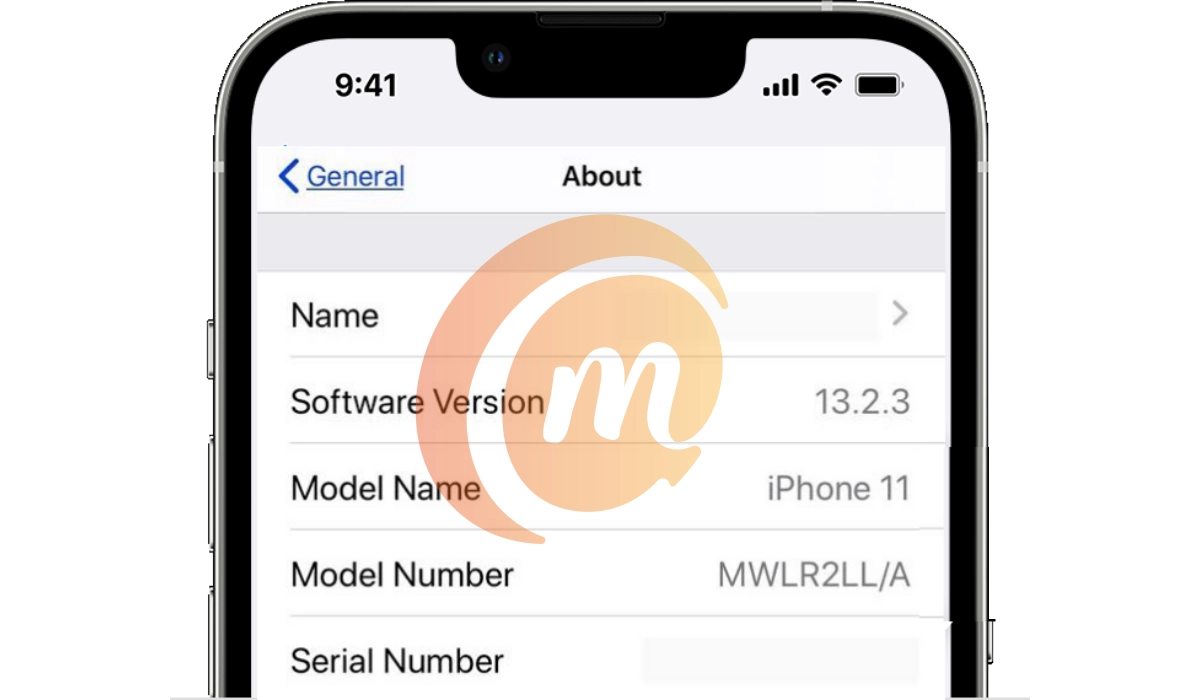
To find an iPhone’s model number, follow these steps:
- Settings : Open the “Settings” app on your iPhone.
- General : Scroll down and tap on “General.”
- About : Tap on “About.”
- Model Number : To the right of Model Number, you’ll find the part number. To find the model number, tap the part number.
If you check your iPhone’s.odel number and it starts with the letter M , the unit is brand new from Apple. However, if the model number starts with an F , that is a refurbished unit.
That covers everything you need to know to find out whether an iPhone is brand new or refurbished or any other status.
Author:Mister Mobility
Digital Skills and Communication Coach | Mobile Phone Connoisseur since 2001 | Tech Blogging since 2004
Add MobilityArena as a preferred source on Google
Silicon battery technology offers performance advantages for smartphones and electric vehicles (EVs), but at what cost?
The premise of new Silicon battery technology is that silicon promises better capacity, longer-range, and faster-charging, than batteries with traditional graphite anodes. I explain things below.
- How batteries work
- From Lithium-ion batteries to Silicon batteries
- Types of Silicon Battery Technology
- Smartphones with silicon battery technology
How batteries work
In simple terms, a battery is a device that stores and provides electricity, and it does so by using electrochemical reactions. There are three main components of a battery:
Anode: The electrode where oxidation (loss of electrons) takes place during discharge. Common materials for anodes include graphite or metals. The anode is where much of the focus of current silicon battery technology is focused, as we shall see further down the article. Remember: the anode.
Cathode: The electrode where reduction (gain of electrons) occurs during discharge. Cathode materials vary and can include metals like lithium, cobalt, or manganese, depending on the type of battery.
Electrolyte: A substance that allows ions to move between the anode and cathode, facilitating the flow of electric current. The electrolyte is usually a liquid or a gel containing ions.
When you connect an external device that needs power to the battery circuit, charged ions start to flow from the anode to the cathode through the electrolyte. This creates a potential difference, and electrons then move from the battery to your connected gadget, providing power.
From Lithium-ion batteries to Silicon batteries
Lithium-ion batteries have been popular for decades now. In this type of battery, the cathode is commonly composed of a lithium metal oxide, such as lithium cobalt oxide or lithium iron phosphate. The anode is made from some type of carbon, such as graphite, and the electrolyte is a lithium salt. Remember that our focus here is the anode.
Graphite has an upper limit in capacity of 372 mAh/g. On the other hand, pure crystalline silicone has a theoretical capacity of 3600 mAh/g, roughly ten times that of graphite. So, it makes sense to switch from graphite to silicon; right? Yes, but there is a problem: when charged and discharged, silicon changes volume. The implication of this is that using pure silicon anodes will result in swelling and buckling with each charge and discharge cycle, and eventually self-destruction. A battery with pure silicon anodes would fail.
The solution is a new type of battery using a new composite silicon-carbon material for the anode. Adding silicon to the graphite increases the capacity of the anode. Currently, commercial silicon-carbon batteries have a capacity of around 550 mAh/g. The resulting increase in capacity is significant to make a difference in smartphone battery capacity.
Some call this new battery type silicon-carbon composite anode battery or silicon-carbon battery. Some also call it lithium-silicon battery. The terminologies are still evolving. But it is the most prevalent type of silicon battery technology around today in 2024 and the only one in use commercially (to the best of my knowledge).
In essence, current silicon battery technology is about graphite anodes being replaced with silicon-based anodes. But there are other approaches or types of silicon-based battery technology. Let’s have a look at them, quickly.
Types of Silicon Battery Technology
Listed below are some of the most promising types of silicon-based batteries being developed today:
Lithium-Silicon or Silicon-Carbon Batteries: As already mentioned above, these batteries use a silicon-carbon composite as the anode material instead of graphite. Silicon has a much larger specific capacity (up to 3600 mAh/g) compared to graphite. However, challenges like volume expansion during lithium insertion and high reactivity in the charged state have hindered commercial adoption. The silicon-carbon composite anode uses small amounts of silicon (up to 10% of the anode) to enhance performance. This battery type is already commercially available.
Solid-State Silicon Batteries : This approach is based on lithium-ion batteries but modified to use a solid electrolyte, solid cathode, and silicon-based solid anode. This silicon battery technology offers potential advantages in terms of energy density and safety. It is still in experimental phase.
Graphene-Encapsulated Silicon Microparticles : This approach uses a method of encapsulate silicon microparticles in a graphene shell, thus improving stability, confines fractured particles, and enhances energy density. These microparticles reached an impressive energy density of 3300 mAh/g. This is still in development, as well.
Silicon-Air Batteries : Here, the anodes are a combination of silicon and oxygen. While still in research stages as well, silicon-air batteries hold promise. These batteries could offer high energy density and environmental benefits.
Smartphones with silicon battery technology
There are not a lot of phone brands adopting silicon battery technology yet. As a matter of fact, as at the time of writing this article, only two known smartphone brands use it – Honor and OnePlus. They have used silicon battery technology in the following smartphones:
Honor Magic 6 Pro : Released in January 2024, the Magic 6 Pro features a second-generation silicon-carbon battery. It boasts a 5600 mAh capacity, 80W wired SuperCharge, and 66W wireless SuperCharge speeds. Remarkably, it survived extreme conditions, including a flight to over 16,000 ft and five days in a freezer, still running at over 10% battery.
OnePlus Ace 3 Pro : This 2024 smartphone features a 6100mAh battery that uses silicon-carbon anodes, as well as 100W wired fast charging. It is the first smartphone to use the new Glacier battery developed by OnePlus and CATL, and which will be used in newer OnePlus phones.
Honor Magic 5 Pro : The predecessor to the Magic 6 Pro, the Magic 5 Pro, also utilized a silicon-carbon battery. It demonstrated impressive performance, especially in low temperatures.
Electric vehicles (EVs) are also beenficiaries of silicon battery technology. Tesla uses silicon-carbon batteries in its electric vehicles (EVs).
Author:Mister Mobility
Digital Skills and Communication Coach | Mobile Phone Connoisseur since 2001 | Tech Blogging since 2004
