Add MobilityArena as a preferred source on Google
HMD Global is a Finnish mobile phone manufacturer that has exclusive rights to the Nokia brand for mobile phones. The company was founded by Jean-Francois Baril, a former Nokia executive, on 1 December 2016.
The European phone brand initially manufactured only Nokia-branded smartphones and feature phones from 2016 to 2023, but from 2024 is pursuing a brand identity separate from Nokia and engaging in production of HMD-branded phones. Find out more details below.

- Nokia and HMD Phones
- Where are HMD phones made?
- Countries and Markets where HMD Phones are sold
- HMD Global Market Share in the US
- Nokia and HMD phones sold in the US
- Upcoming HMD Phones
- HMD Global’s market share worldwide
- The Rising European Cell Phone Brand
Nokia and HMD Phones
HMD Global makes a range of smartphones that run on Android One, as well as feature phones that run Series 30+ or KaiOS operating systems. Some of their popular models include Nokia 8.3 5G, Nokia 2720 Flip , and Nokia 3310.
HMD originally made only Nokia-branded phones from 2016 to 2023, but in 2024 the company also began to make HMD-branded smartphones, carving out a new identity for itself separate from Nokia.
In January 2024, HMD Global officially removed the mobile phone section from Nokia’s website and now has the “nokia.com/phones” page redirected to their newly launched official website, “ hmd.com ”.
Where are HMD phones made?
Like most other phone brands, HMD phones were all originally manufactured in China. However, in October 2023, some HMD phones began to be manufactured in Europe, specifically in Romania. This makes HMD Global the first major global smartphone manufacturer to return manufacturing to Europe, joining the likes of Gigaset.
The first phone manufactured in Europe by HMD Global is the rugged 5G Nokia XR21 .
HMD Global has development facilities in Finland , where it is headquartered, and where it has also acquired assets of Valona Labs and launched a new Centre of Excellence for software, security and services.
Countries and Markets where HMD Phones are sold
HMD Global sells phones in 91 markets across 8 regions and has sold over 240 million phones to date. Some of the countries where HMD Global operates include Finland, India, China, Romania, the United States, the United Kingdom, Germany, France, Brazil, and Nigeria . HMD Global is also expanding its presence in the Middle East and Africa regions.
HMD Global Market Share in the US
HMD Global tops the feature phone market for Q3 in the US, with a 30.7% market share by value and 22.4% by volume. However, the market share of HMD Global for smartphones in the US is miniscule.
The company announced its largest US expansion and growth in 2022 at major US wireless providers. The new brand identity and upcoming line of HMd-branded phones could also potentially increase its smartphone market share in the US in the future. Time will tell.
Nokia and HMD phones sold in the US
Some of the phones by HMD that are officially sold in the US are:
- Nokia G310 5G : A feature-packed and durable 5G smartphone with a 6.5-inch HD+ display, a 48 MP quad camera, and a 5000 mAh battery.
- Nokia G400 5G : An entertainment powerhouse with a 6.8-inch FHD+ display, a 64 MP quad camera, and a 4470 mAh battery with wireless charging.
- Nokia G50 : A future-proof 5G smartphone with a 6.82-inch HD+ display, a 48 MP triple camera, and a 5050 mAh battery.
- Nokia XR20 : A life-proof and long-lasting smartphone with a 6.67-inch FHD+ display, a 48 MP dual camera, and a 4630 mAh battery with wireless charging. It is also water, dust, and drop resistant.
- Nokia C200 : A budget Android smartphone with a 6.5-inch HD+ display, a 13 MP dual camera, and a 3000 mAh battery.
- Nokia C100 : A budget Android smartphone with a 6.5-inch HD+ display, a 5 MP dual camera, and a 3000 mAh battery.
- Nokia 2780 Flip : A modern twist on the classic flip phone with a 2.8-inch QVGA display, a 2 MP camera, and a 1500 mAh battery. It runs on KaiOS and supports 4G connectivity.
Upcoming HMD Phones
The new HMD-branded phones are coming under two product lines – Pulse and Legend. Pulse devices are entry-level models, while the Legend models exist in the midrange segment. A breakdown of some of the upcoming phones:
- HMD Pulse,
- HMD Pulse+,
- HMD Pulse Pro,
- HMD Legend,
- HMD Legend+,
- HMD Legend Pro.
HMD Global’s market share worldwide
According to the web search results, HMD Global’s strongest sales are in the feature phone segment, where it tops the market for Q3 in 2023, with a 30.7% market share by value and 22.4% by volume. Some of the regions where HMD Global has a strong presence in feature phones are Africa , Latin America , and Europe .
For smartphones , HMD Global’s market share is much lower, accounting for only 0.7% of shipments in Q4 2020. That was a drop in the ocean. However, HMD Global’s smartphone shipments grew 42% YoY to 12.24 million units in Q1 2022, increasing its market share to almost 1% . So, the company is seeing growth, small as it is.
Some of the countries where HMD Global has increased its smartphone sales are India , China , and the United States . HMD Global is also investing in the development of head-mounted displays (HMDs), which are projected to have a market size of USD 26.4 billion by 2029.
The Rising European Cell Phone Brand
HMD Global is the leading European cell phone brand and also one leading the modern charge of made in Europe phones. As the company transitions into producing its self-branded HMD phones separate from Nokia smartphones, it holds a promise, a breath of fresh air, to a market that has been dominated by American , Korean , and Chinese companies, and provides options for users looking for smartphones that are not made in China .
Author:Mister Mobility
Digital Skills and Communication Coach | Mobile Phone Connoisseur since 2001 | Tech Blogging since 2004
Add MobilityArena as a preferred source on Google
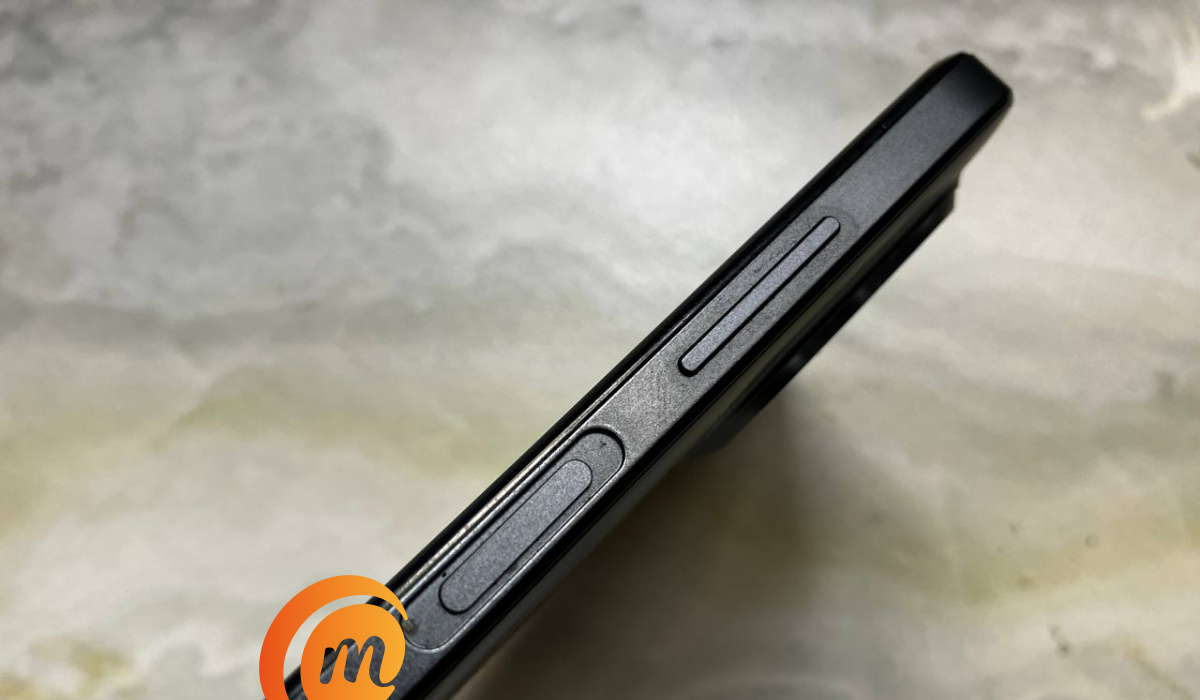
The only good thing that side-mounted fingerprint scanners have going for them is that they are affordable and so allow manufacturers to include a fingerprint reader in entry-level smartphones. That aside, side-mounted fingerprint scanners are a terrible idea and need to go away as fast as possible.
Side-mounted fingerprint scanners are a type of biometric security feature that are embedded in the power button of some smartphones. To unlock the device, you have to place your thumb or other finger on the power button.
- Side-mounted fingerprint scanners deliver poor usability
- Side-mounted fingerprint scanners inadvertantly do unintended things
- Not user-friendly for left-handed folks
- Side-mounted fingerprint scanners have a smaller surface area
- Why do foldable phones have side-mounted fingerprint scanners and not in-display scanners?
Side-mounted fingerprint scanners deliver poor usability
How many times have you held your smartphone in your hand and your thumb naturally rested on the edge of your phone? Never; right? Hovering over the screen is the natural position of our thumb when holding a phone, which is just perfect for in-display or under-display fingerprint scanners. Where your phone has a side-mounted scanner, every time you need to unlock it or unlock an app, your thumb has to leave its natural position on the screen and travel to the edge to do so. If you have to do that often, it gets tiring.
For example, if you have app lock enabled on your smartphone for a number of apps, each time you switch to that app, your thumb has to do that travelling to the side or edge where your phone’s power button is located. Every single time. If you have done that 10 times in 30 minutes, you already know how tedious it is. If you have to do it 30 times in 30 minutes….
Side-mounted fingerprint scanners inadvertantly do unintended things
Besides the issue of natural placement, as my buddy Muyiwa reiterated, side-mounted fingerprint scanners have a habit of inadvertently unlocking your phone when you either simply want to adjust it in your pocket, or check time/notifications without unlocking the phone. I know it, too, from experience. It is so annoying.
Not user-friendly for left-handed folks
Side-mounted fingerprint scanners tend to not be convenient for left-handed users or users who switch hands frequently, as they may have to adjust their grip or use a different finger to unlock the phone. In contrast, an in-display or rear scanner does not discriminate against whatever hand you are more comfortable using.
Side-mounted fingerprint scanners have a smaller surface area
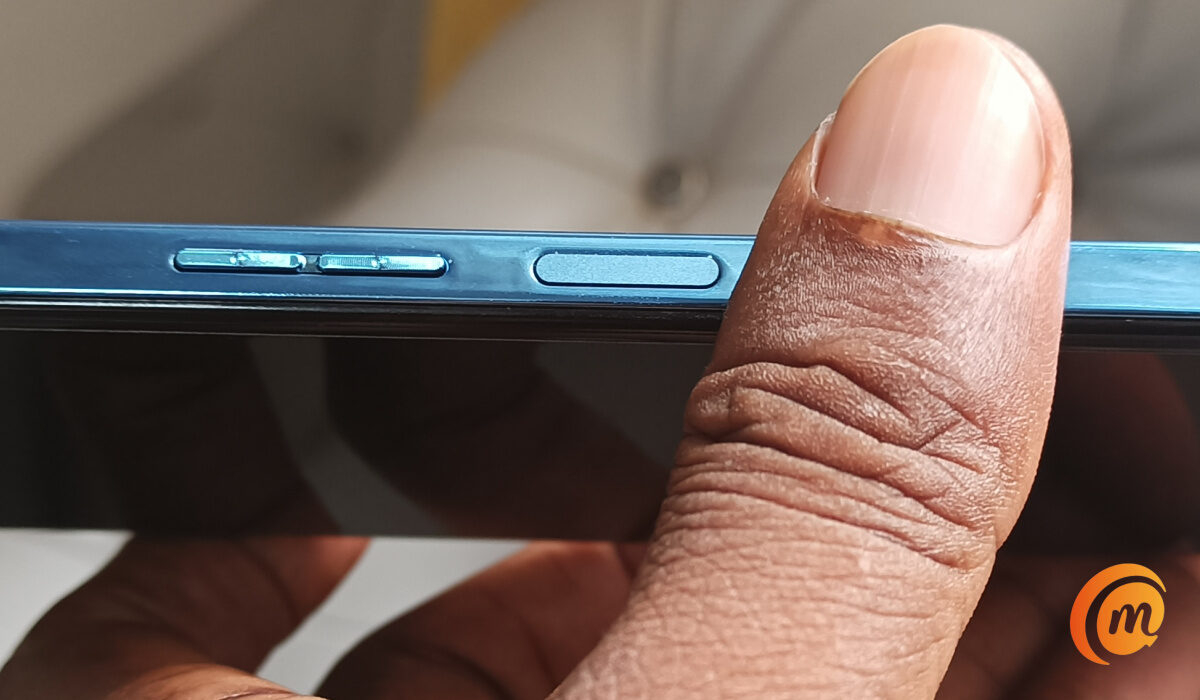
Generally, side-mounted readers have a smaller surface area than in-display and rear-mounted readers. In day-to-day use, this often results in a reduction of the accuracy and security of the scan. Even when registering your fingerprint using a side-mounted scanner, you tend to need to do repeated imprints to have your fingerprint properly registered.
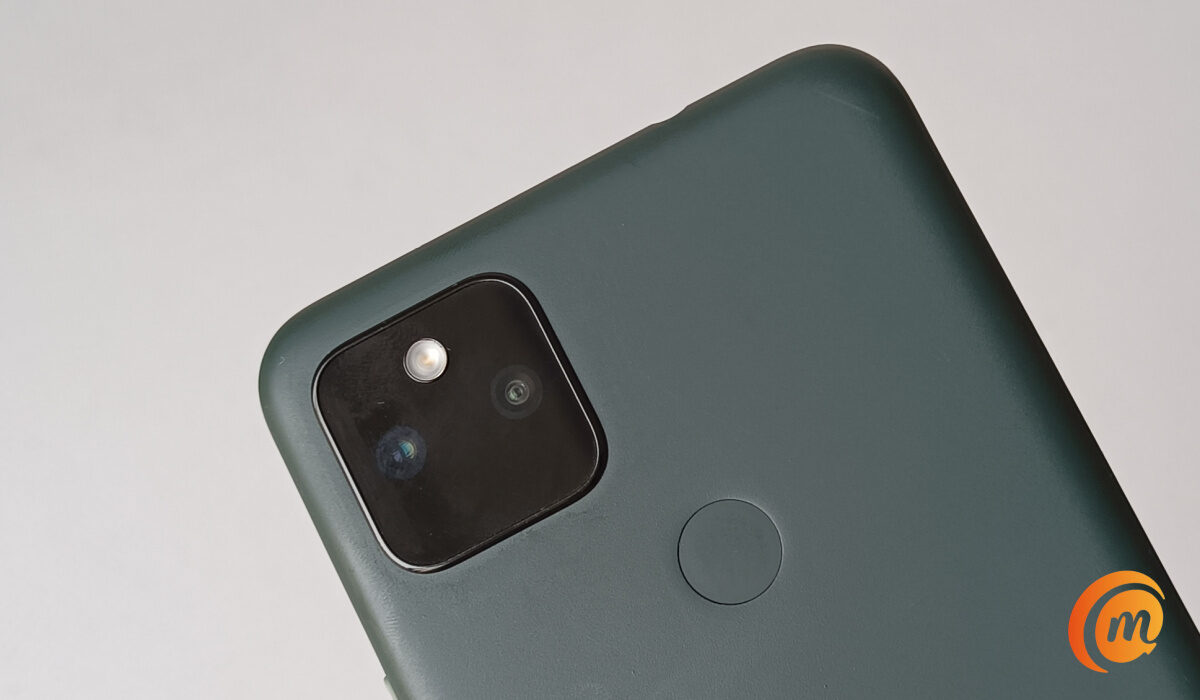
Am I saying that side-mounted fingerprint scanners are useless? Of course, they are not. They serve a purpose. Like I already pointed out, they are great for entry-level devices, because they are better than not having one at all. Personally, though, for entry-level phones, I would rather the scanner is on the back than on the side.
But smartphone companies have decided that they need the back area for bigger camera modules and other features, so that is likely wishful thinking. Budget smartphone will likely have make do with side-mointed fingerprint scanners for a long time. What I do not get is why anyone should have to out up with them on more premium devices.
Smartphone makers have said goodbye to rear fingerprint scanners
Why do foldable phones have side-mounted fingerprint scanners and not in-display scanners?
Why are there side-mounted scanners on premium, high-end phones? This is prevalent among foldable phones, to be more specific.
First, side-mounted scanners allow for folding phones to be unlocked in both closed and open states. A foldable phone would need two in-display scanners for that. The Vivo. X Fold2, with its dual under-display scanners, is an example of this. But this is an outlier; most manufacturers generally go with a side fingerprint scanner on their foldable devices.
Secondly, side-mounted scanners are generally more cost effective to implement. They are mature technology, compared to in-display scanners. As the prices of foldable phones drop, I expect that more manufacturers will also drop the side scanner arrangement.
The early days of in-display scanners were problematic. As with most new technology, it had its fair share of issues, including reliability issues. But those days are past now and in-display scanners have proven themselves to be as secure, as fast, and as reliable as older types of scanners. And they are perfect for usability because the scanner spot is right where your thumb naturally hovers over your phone screen.
Hopefully, side-mounted fingerprint scanners will disappear completely one day and in-display scanners, especially the ultrasonic type , rule the smartphone world. Or we might have to embrace something new entirely.
Author:Mister Mobility
Digital Skills and Communication Coach | Mobile Phone Connoisseur since 2001 | Tech Blogging since 2004
