Add MobilityArena as a preferred source on Google
JEXI is a 2019 movie that is themed around a young man with a phone that has artificial intelligence named JEXI built in. If you are wondering if a JEXI phone really exists, among other questions from the movie, I am here to help with answers.
The main character of the movie is named Phil. He is a social hermit, a recluse with no social interactions or relationships. He does not have any friends and has no girlfriend either. He is a geeky/nerdy type who is completely addicted to his phone.

He has to upgrade his phone and picks one that offers an interesting feature – an AI-powered virtual assistant called JEXI. With the help of this new companion, he begins to get his life in order and reaches out to make friends. But the more JEXI helps Phil live better, the more JEXI develops the personality of a jealous lover and seeks to sabotage him in order to keep Phil to herself.
Suddenly, this cool piece of tech is a nightmare that Phil did not see coming. JEXI is acting on its own initiative and making decisions against Phil’s will. And it isn’t holding back in doing whatever it takes to achieve its goals. Imagine an AI system that has access to your contacts, schedules, finances, et al., and uses them all to sabotage your every move. That is JEXI.
- Is there really a JEXI phone?
- Is there a real JEXI?
- How intelligent is AI?
- JEXI and the future of AI
Is there really a JEXI phone?
I imagine that this is the top question on the minds of many people who have seen the movie. As of today in 2023, there is no JEXI phone out there. There is no smartphone or app with the capabilities of JEXI in production yet.
AI on smartphones are still in their primitive days, if we are being honest. They are smart enough to pull out information from databases, schedule appointments for you based on available data, and carry out very basic activities. None of them is even close to the capabilities of the JEXI phone.

Is there a real JEXI?
Some of the available artificial intelligence assistants that are available today include Google Assistant by Google, Siri by Apple, Cortana by Microsoft, and Bixby by Samsung, among others. None of them have capabilities as close to what JEXI has in the movie. Not one of them is self-aware, as JEXI is.
Of course, I imagine that there are teams of developers scattered around the globe working on more advanced AI systems for smartphones. I do assure you that it will take some time before we see anything remotely half as powerful as what we see on the JEXI phone.
How intelligent is AI?
Present-day AI are incapable of replicating human intelligence. They are not even close. Most of what we know as artificial intelligence today is just algorithms recognizing and reading patterns, learning from them, and making decisions based on those patterns.
In the future, AI will get more advanced and perhaps overtake human intelligence. Self-learning algorithms mean that future AI will keep learning and self-correct and self-programme. The possibilities are limitless, and one day we will have much more advanced systems on our smartphones similar to what obtains with JEXI phone. For now, we are at the primitive stage.
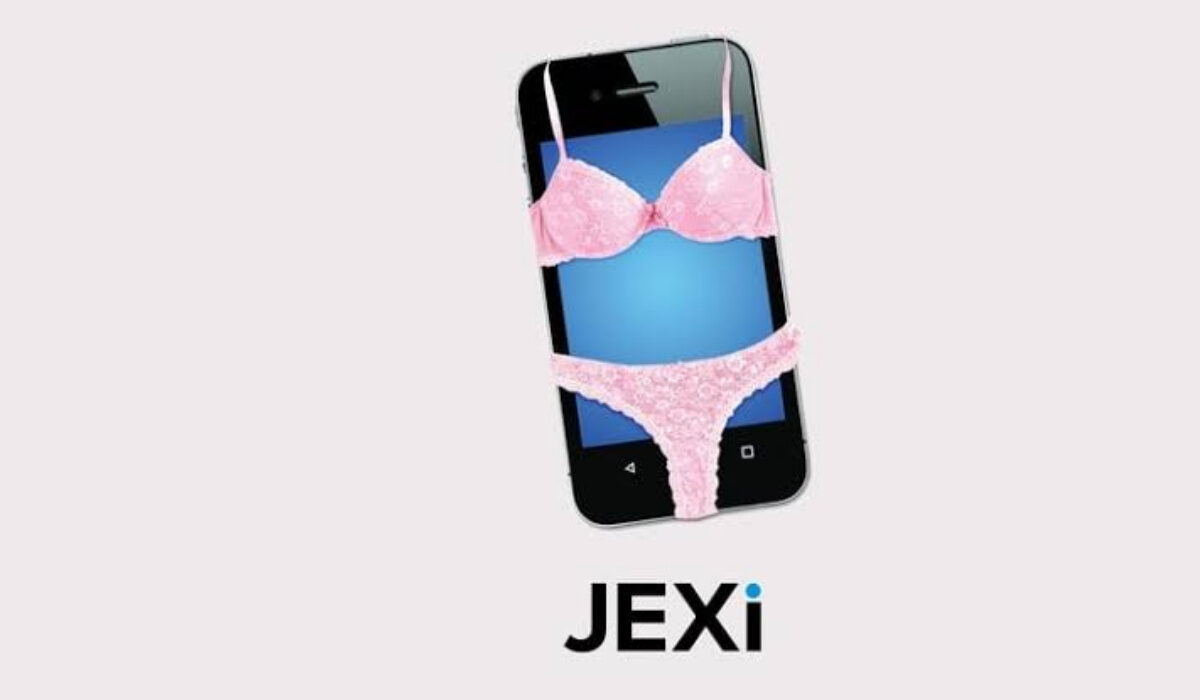
JEXI phone – powered by artificial intelligence
JEXI and the future of AI
One day, AI may become self-aware, or something close to that, just like JEXI is in the movie. The movie plays on the worst case scenario of AI going renegade, similar to the themes of many other movies we have seen. The Terminator franchise is built around a similar theme.
Besides The Terminator, other artificial intelligence movies that have been produced include: The Matrix, A.I., Blade Runner, Extinction, Super Intelligence, Automata, and I Robot, among others. Like JEXI, all of them play with the possibilities of what AI can evolve into in the future.
Author:Mister Mobility
Digital Skills and Communication Coach | Mobile Phone Connoisseur since 2001 | Tech Blogging since 2004
Add MobilityArena as a preferred source on Google
Back in 2001 when I began my journey in mobile phones, cellular phones and wireless networks were not powerful or capable enough to load full webpages. They could load basic, text-based web pages over what was called WAP (Wireless Application Protocol). The markup language for creating web pages for handheld devices was called WML, short for Wireless Markup Language.
As such, back then, mobile web pages where referred to as WAP pages and mobile web browsers called WAP browsers. It wasn’t until cellphones and smartphones became much more powerful that they could load and run standard web pages.
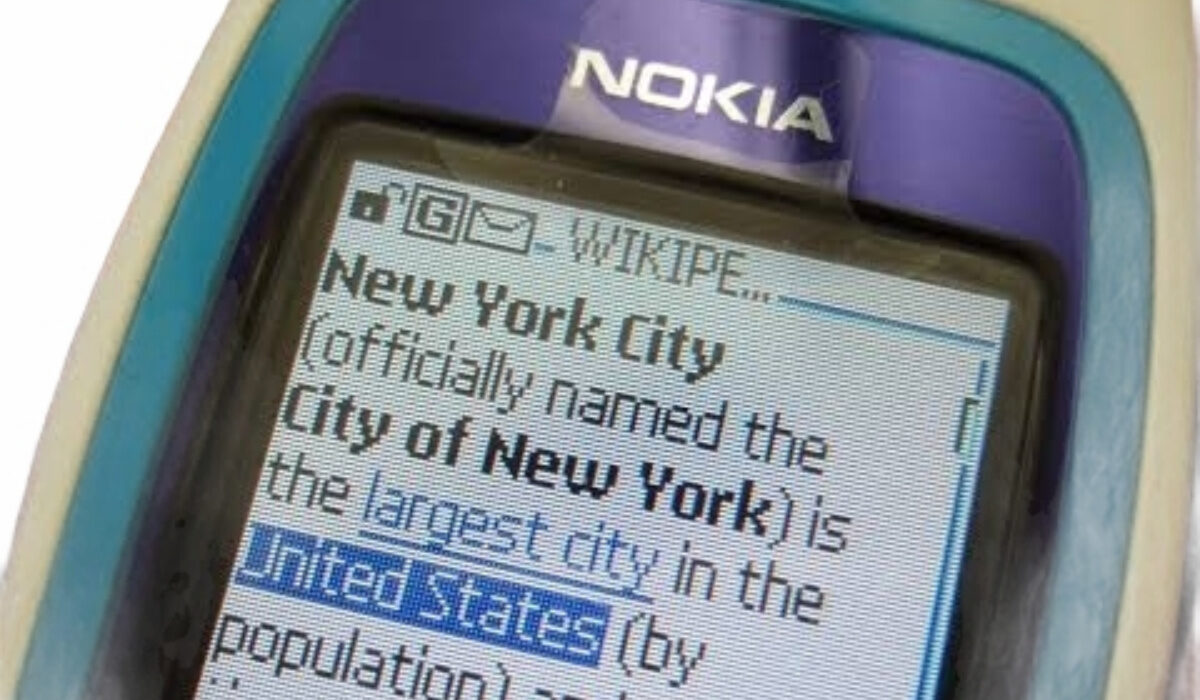
An XHTML webpage, a successor to WML or WAP pages
WML was formerly called HDML (Handheld Devices Markup Languages), and was based on XML. If you know XML and HTML, learning WML isn’t difficult. It allowed for text and basic images of Web pages to be presented on cellular telephones and personal digital assistants (PDAs).
WML was designed from the ground up to work efficiently on the small screens of handheld and mobile devices. It was the foundation on which the modern mobile web that everyone uses today was built.
Learning WML was quite easy for me, and in no time, I was creating WAP pages. I was obsessed with making sure that all my websites had WAP versions for mobile phones. I firmly believed that the future of the Web was mobile, and I have since been vindicated.
Most of today’s web traffic happens on mobile phones. Specifically, as at this year (2021), 55% of global website traffic is from cell phones (excluding tablets) [1]. To get a clearer picture, as at 2011, 6% of all web traffic were from mobile phones. In the early 2000s when I was building WAP sites, the figure was more like 0.9%.
WML is now dead; AMP carries on its legacy
Of course, now that mobile devices are capable of running standard HTML pages, WML has gone obsolete. But the principles behind it are still very alive till today. The core of those principles is ensure that pages load fast on mobile devices.
The next generation of mobile web browsers after WAP browsers were known as XHTML browsers. XHTML standard was quite common by 2010, and the first Android phone , HTC Dream, had an XHTML browser. As a markup language, XHTML was a bridge between HTML and XML (the family that WML belonged to). I had tons of fun with XHTML. I think it was my favourite wireless markup language. But we keep moving, and while XHTML is not dead, the world has largely moved away from it.
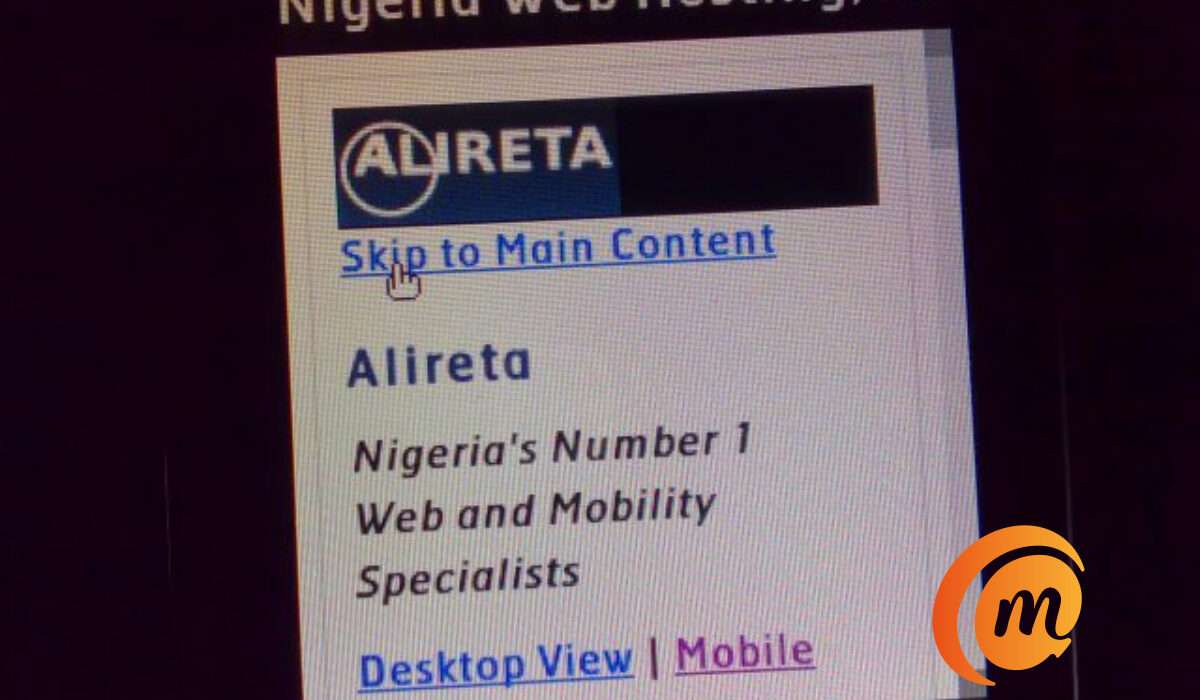
Even till today, thanks to slower networks in many parts of the world, standard web pages often struggle to load on time. Most webpages are horribly bloated and so are a pain to access for hundreds of millions of mobile users worldwide.
What is AMP?
This situation with bloated websites that load slowly is the core reason why we have Google’s AMP standard catching today. AMP is an abbreviation for Accelerated Mobile Pages. Like WML/WAP of old, AMP strips off as much bloat as possible from webpages, so that only the most essential parts load on smartphones and cell phones.
By definition, AMP is a project that Google implemented to speed up the delivery of Website content. Like WML, it uses a stripped down version of HTML, but this time, one known as AMP HTML. The results are the same: smaller-sized Webpages, and faster loading speeds on mobile phones and other gadgets. Implemented well, AMP makes your website zippier on the draw. And if there is anything that your readers want, it is fast page loading times.
You can imagine that I have become mildly obsessed with AMP as well. I love the Web, but my extreme love is for the mobile web. Unlike the now dead WML, AMP is fully HTML and works with regular web browsers. It just strips off the kludge, mostly JavaScript, so that web pages can load faster.
AMP is not suitable for all kinds of websites, though. It is great for informational websites, like blogs, news sites, wikis, and the like. But it isn’t for ecommerce sites and other websites that require advanced functionality that is heavily dependent on JavaScript. Using it on the latter will break some functions on those websites.
I remember WML and WAP with fondness; it is history now. Not every web developer is sold on AMP, but I will always be committed to whatever markup language makes it easier for users to access websites on their mobile devices. And today in 2022, AMP does that very well.
References
- Global website traffic from 2015-2021: source .
You are reading Mobility Arena .
- Don’t miss our reviews .
- Join our WhatsApp Group , to be notified of the most important articles and deals,
- Follow us on Instagram , Facebook , Twitter , and YouTube .
Author:Mister Mobility
Digital Skills and Communication Coach | Mobile Phone Connoisseur since 2001 | Tech Blogging since 2004
