Add MobilityArena as a preferred source on Google
Liquid Crystal Display (LCD) is the most popular kind of display on smartphones today. The phone in your hand likely has one. There are other kinds of displays, so why is this type so common and what are the benefits? A Liquid crystal display is a flat-panel display that makes use of light-modulating properties of liquid crystalline compounds. Liquid crystalline compounds are substances that maintain a state of matter between solid crystals and conventional liquids.
Liquid crystalline compounds emit no light of their own directly, but use a reflector to produce images in colour. LCDs have a wide range of applications from instrument panels, aircraft cockpit displays, computer monitor screens, LCD televisions, and a number of portable devices like cameras, smartphones and digital cameras.
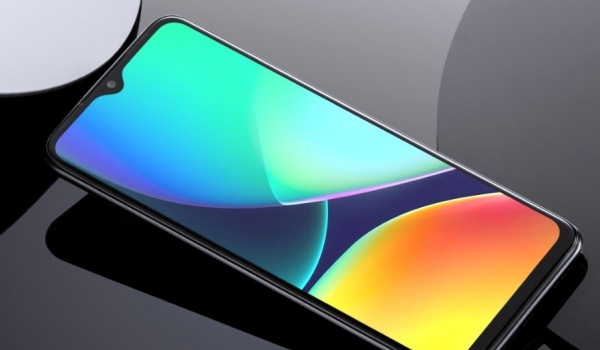
As earlier mentioned, most smartphones nowadays have LCDs as the prevalent touchscreen technology they are fitted with. Smartphones today have a range of applications, from surfing the web, playing games, watching TV shows just to name a few. To enjoy these benefits to the fullest, smartphone screens have evolved over time to let users get better screen and picture quality on their devices.
- How Does LCD – Liquid Crystal Display – Technology Work?
- Benefits Of Liquid Crystal Display (LCD) In Smartphones
- Disadvantages of LCD technology
- Costs of Having LCDs In your smartphone
- What Types Of Smartphones Use Liquid Crystal Displays?
- The Great Competitor And The Future Of Liquid Crystal Displays
How Does LCD – Liquid Crystal Display – Technology Work?
An LCD is created with the use of two pieces of polarized glass. The second glass is placed perpendicular to the first, and placing the two polarizer 90-degrees from one another will block out all light waves.
The first layer creates polarized light on one plane and the second glass passes only light waves that travel at a 90-degree angle to the first plane, blocking off the polarized light passed by the first filter.
In between both perpendicularly placed polarizer glasses, a layer of liquid crystals can be found. These liquid crystals, which are in a state of matter between solid crystals and regular liquids, take up a number of different forms and shapes which are dependent on factors that include temperature.
One type of nematic liquid crystal employed in LCD is the twisted nematic. Twisted nematic liquid crystals naturally exist in a twisted structure. As light waves travel through the liquid crystal, they twist in a manner that lets them pass through the second polarized glass.
Liquid crystals can also be affected by electric current. When a current is applied to a twisted nematic liquid crystal, it untwists and does not let the passing light waves rotate. These waves are then blocked out by the second polarizer. To apply the electrical current needed to alter liquid crystals, LCD makers use a thin grid of transparent transistor.
A transistor represents a single area in which an electric current can be applied to produce a unique shade, which is known as a “sub-pixel”. Each sub-pixel can then be filtered through one of the three primary colours, red, green or blue. When an electric voltage is applied on these sub-pixels, each sub-pixel intensity can go over 256 shades. The combination of three sub-pixels make up a pixel, and a combination of pixels make up a smartphone’s display.
Benefits Of Liquid Crystal Display (LCD) In Smartphones
One of the foremost benefits of an LCD in a smartphone is the clarity of text and images, giving users clearer visuals on their devices. Another upside to the use of Liquid Crystal Display in smartphones is lack of bulk. LCDs are generally thinner, lighter and easier to handle, making sure that smartphones do not have to endure any extra mass.
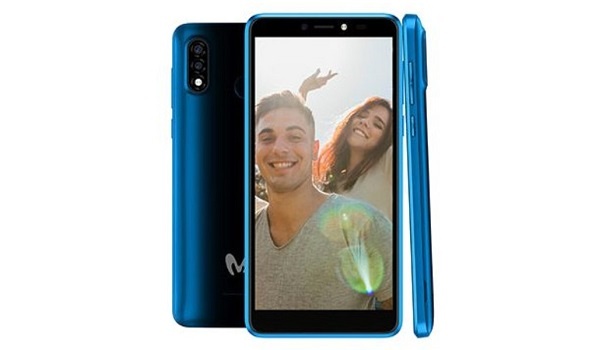
Smartphones with LCDs are sleeker and come with a more attractive design, making them easier to operate with one hand.
Devices that have LCDs have more space for extra features in them, as LCDs help smartphone users manage the extremely limited space in the interior of smartphones. LCDs are also very energy efficient, consuming low power and making them a delight for manufacturers and phone user alike.
It is easy to dispose and is available in a variety of screen sizes.
Liquid Crystal Display types also cost less than competing types, which is one key reason why most smartphones use one. You will find LCD screens on the most basic smartphones, in mid-range smartphones, and also high-end smartphones.
Disadvantages of LCD technology
- Motion blur is common with LCDs
- The colors and contrast from various viewing angles can be inconsistent
- Imagery not as solid with analog interface
- With brightness from backlighting, imagery may appear flat
- LCDs have a fixed resolution
Costs of Having LCDs In your smartphone
LCDs have seen an increased application in recent times, which has led to a spike in the prices of smartphones and television sets that use this technology.
In January 2016, the average price for a 40-inch LCD panel was $94 according to reports from HIS Markit. Now, this same panel size sells for $141, an almost 50% increase jump in price. This has forced smartphone manufacturers to up the prices of their device to cater to the rising cost of this technology, meaning that users have to pay more for smartphones that use LCDs.
What Types Of Smartphones Use Liquid Crystal Displays?
Within smartphones, there are TFT and IPS displays. TFT means Thin Film Transistor, which is an advanced version of LCD which employs an active matrix. This means that each pixel is attached to a transistor and capacitor individually.
IPS stands for In-plane switching, which is an improvement on TFTs and delivers better viewing angles compared to TFTs. Smartphones with these displays (TFT or IPS) use Liquid Crystal Displays.
The Great Competitor And The Future Of Liquid Crystal Displays
In spite of the widespread use of LCDs, there are fears that a certain fast-rising technology is expected to see LCD use decline in the coming years. This technology, AMOLED (Active Matrix Organic Light Emitting Diode), use OLEDs which consume less power, provide better picture quality, have faster refresh rates, are more durable and weigh lighter than LCDs.
Presently, OLED screens are more expensive to produce than Liquid Crystal Displays, making smartphones with OLED more expensive. It is however expected that the cost of producing OLED screens will reduce in the coming years, paving the way for more OLED smartphones and devices in the not-too-distant future.
References
- Source ;
- Source ;
- Source ;
- Source ;
- Source .
- Don’t miss our mobile phone reviews .
- Follow our news on Google News .
- Follow us on Instagram , Facebook , Twitter , and YouTube .
Author:Alfa Baye
Staff Writer
Add MobilityArena as a preferred source on Google
One of my greatest frustrations with using a mobile hotspot (aka mifi) has been how it runs out of battery power at periods when I need it urgently. The average mifi just does not have the battery capacity to deliver long-lasting Internet connection. Which is why I decided that it was time for me to get myself a mobile hotspot with a big battery.
Standard mifi devices have a 1500mAh battery built in. Which is no surprise that their battery life sucks. I would often go to bed with my mifi fully charged and running, and by the time I am awake in the morning, it is either dead or greatly depleted. Don’t ask me why I leave it on all night: who has the time to switch off a hotspot every night?
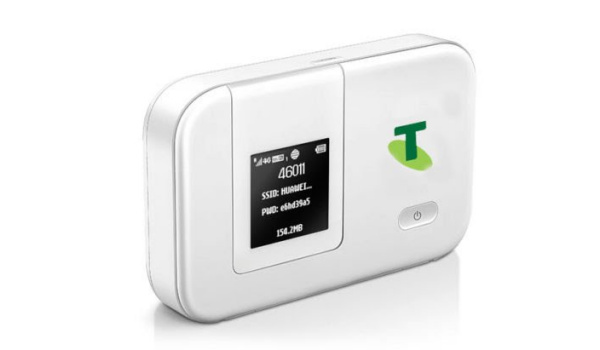
Huawei E5372Ts is a mobile hotspot with a big battery
To help solve battery life issues, smartphones have gotten bigger batteries over the last few years. Most smartphones now come fitted with a decently sized battery. It has become increasingly difficult to find a smartphone with poor battery life. Not that they do not exist, but you really have to be bottom-of-the-barrel broke to settle for one.
The solution to poor battery life on mifi devices was simple, as far as I was concerned: give them bigger batteries. Surely, someone must already be doing that, I thought to myself. And so, I went hunting.
Did I Find Any Mobile Hotspot With A Big Battery?
Yes! I found a handful. There are mobile hotspot devices out there with a 3000mAh battery. I even found one with a monster 6400mAH battery!
Huawei E5577S: 3000mAh Battery
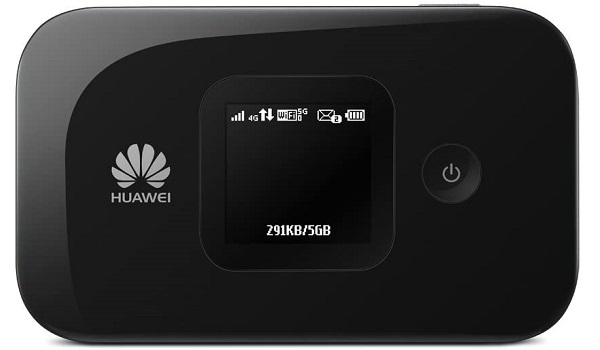
First on our list is the E5577s from Huawei. It packs double the battery capcity of standard mifi devices. That is, 3000mAh. The product listing says this will deliver 12 hours of shared Internet access on a full charge. Not bad at all.
It will connect you to 10 devices simultaenously. It supports the following LTE frequencies: 1(2100), 3(1800), 5(850), 7(2600), 8(900), and 20(800).
Huawei E5785: 3000mAh Battery
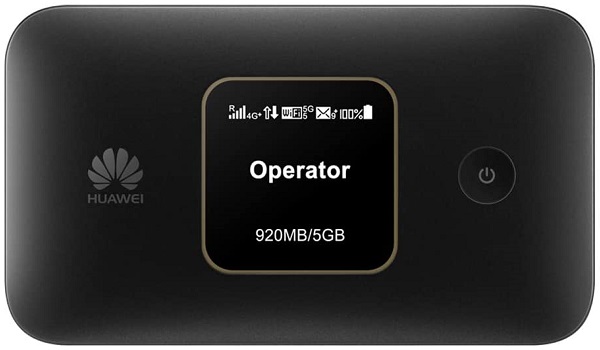
Huawei E5785 has a 3000mAh battery and is specificed to provide 12 hours of usage while connected to a maximum of 10 devices.
Supported LTE bands are: 1(2100), 3(1800), 5(850), 7(1600), 8(900), 20(800), 32(1500), and 38(2600).
For the specs, this model has a nice price tag: $100.
Huawei E5788: 3000mAh Battery
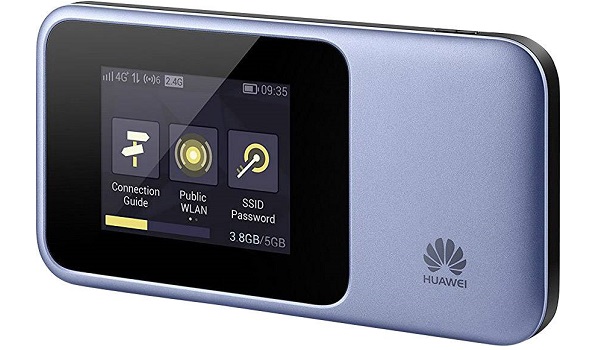
This one is badass in a different way. While it has a 3000mAh battery, its maximum download speed is 1 Gbps. So you get why that is special, the others have maximum download speed of 150 Mbps or 300 Mbps. Now, you get it.
Which is why you should be willing to pay the $420 price tag. Plus, it looks different too, so if you want to carry around a mobile hotspot with a big battery and a touch of style, this is what the doctor ordered.
Suppoorted LTE bands are: 1(2100), 3(1800), 4(1700), 7(2600), 38(2600), 40(2300), 41(2500), and 42(3500).
NETGEAR AirCard AC797: 2930mAh Battery
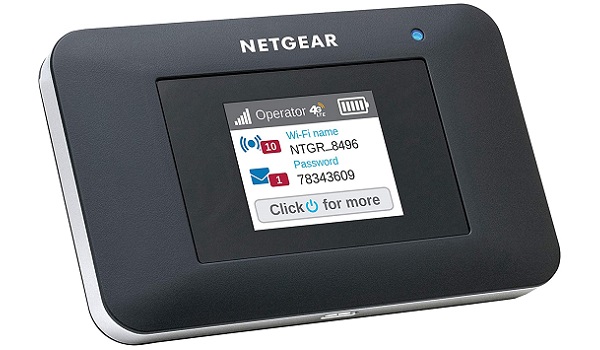
This mifi by Netgear has a 2930mAH battery and is popular in the United States. One wonders why it wasn’t simply rounded up to 3000mAh. Anyway, it qualifies as a mobile hotspot with a big battery. So, what should you expect?
Expect maximum of 11 hours of us, connect to up to a whopping 32 devices (some e-commerce stores say 15). Maximum download speed is also a notch above the rest – 400Mbps. It supports the following LTE bands – 1(2100), 2(1900), 3(1800), 4(1700), 5(850), 7(2600), 12(700), 14(700), 29(700), 30(2300), and 66(1700).
How much does the Netgear Aircard AC797 mobile hotspot cost? A hefty $230.
Huawei E5885: 6400mAh Battery
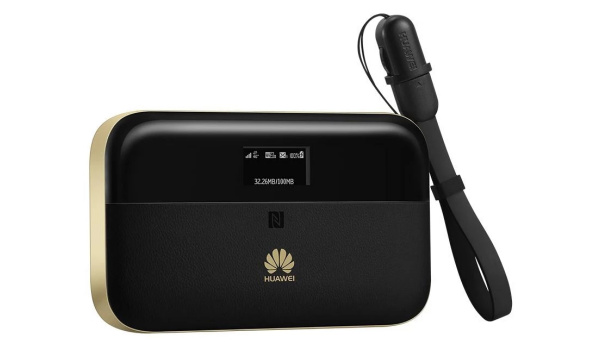
The manufacturer says this mobile hotspot with a big battery will provide you with 25-hour uninterrupted Internet service on a full charge. That’s exactly the kind of thing I am talking about. A mifi device that I can charge once a day and not worry. In addition, the E5885 can connect up to 32 Wi-Fi enabled gadgets at a go. No kidding.
It supports the following LTE bands: 1(2100), 3(1800), 7(2600), 8(900), and 20(800).
Big battery and big specs must mean a big price; right? Definitely. The Huawei E5885 is avaialble at e-commerce stores for between $125 and $150. I found it on Jumia, but it carries a rather steep price tag there. You might be better off ordering directly from foreign e-stores.
Huawei E5372Ts: 3560mAh Battery
Huawei E5372Ts has a 3560mAh battery, connects 10 devices at the same time, and will provide a maximum of 10 hours of usage.
Supported LTE bands include: 1(2100), 3(1800), 7(2600), 8(900), and 20(800).
This mifi has a pocket-friendly price tag too. You will find it on AliExpress and other stores for between $60 and $70. I found it on Jumia too for a comfortable price, though it will be shipped in for you too – probably from an AliExpress source.
Wrapping Up
And it is a wrap. If you want a mobile hotspot with a big battery, you now have a list to pick from.
Of course, all of the above mobile hotspots are 4G LTE devices. They all have big batteries to make your shared Internet experience much better. They all offer a minimum of 10 hours of usage on a full charge. That is almost a full working day. Not bad at all.
Nearly all of them are manufactured by Huawei. It looks like this Chinese company has the mobile hotspot market on lockdown globally. Of course, there are other brands available, if you search hard enough.
Author:Mister Mobility
Digital Skills and Communication Coach | Mobile Phone Connoisseur since 2001 | Tech Blogging since 2004
