Add MobilityArena as a preferred source on Google
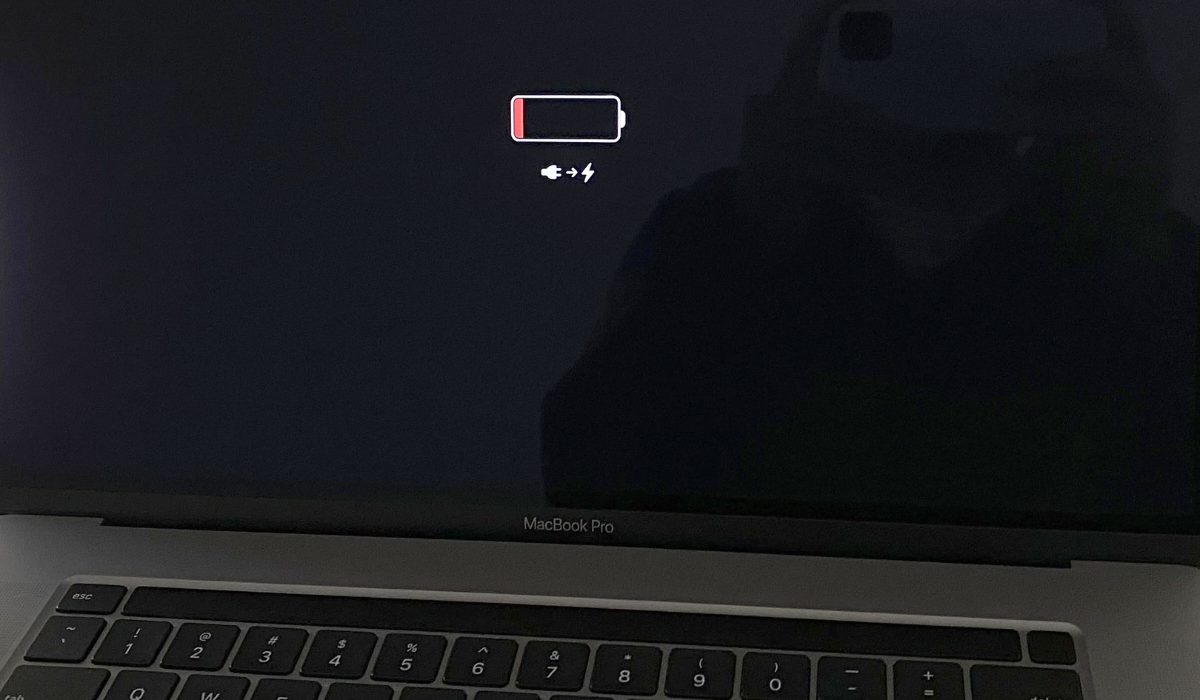
Imagine the frustration if you open your MacBook after leaving it asleep for a while only to realize that the battery has depleted since you last used it. Some functions on your MacBook might continue to drain its battery even when the device is in sleep mode. Certain accessories and malware are also common culprits.
In this article, I’ll explain some ways to fix MacBook battery draining in sleep mode. Read on to learn what features and applications might be using your MacBook’s battery even in sleep mode. You’ll also learn how to disable or switch them off to prevent this issue in the future.
- How Can You Fix MacBook Battery Draining in Sleep Mode? Disable Bluetooth on Your MacBook Disconnect USB Accessories From Your MacBook’s Turn off the Power Nap Feature Update Your Mac and Apps Turn Off Notifications on Your MacBook Locate Battery-Draining Apps and Background Processes Check for Energy-Draining Malware on Your MacBook Check Your MacBook’s Battery Health
How Can You Fix MacBook Battery Draining in Sleep Mode?
Is your MacBook draining a lot of battery even after you hibernate it? Follow the troubleshooting steps outlined below to fix MacBook battery draining in sleep mode.
Disable Bluetooth on Your MacBook
Your MacBook requires power to locate, connect, and maintain a connection with Bluetooth devices. When your MacBook is in sleep mode, leaving these connected can gradually drain the battery in your system.
Your MacBook will continue to look for nearby Bluetooth devices if Bluetooth is enabled. Although at a slower rate, this activity can also drain the battery. You can avoid any pairing attempts and fix MacBook battery draining in sleep mode in this case by turning off Bluetooth. Do this on both your MacBook and any nearby Bluetooth devices when not in use.
Click the Control Center icon in the menu bar and set the Bluetooth toggle to Off to disable Bluetooth on your MacBook.
Disconnect USB Accessories From Your MacBook’s
Like Bluetooth-connected devices, USB accessories drain some of the battery on your MacBook when they are connected. This is particularly true for USB devices that don’t have their own power sources—they draw power right from your MacBook, draining it even further.
Therefore, it is essential to unplug your external hard drives, keyboards, mice, and any other USB accessories from your MacBook’s ports before leaving it for a while. This will help you fix MacBook battery draining in sleep mode.
Turn off the Power Nap Feature
Power Nap is a function on Intel MacBooks that enables background tasks to run while the device is using battery power—even while it is in sleep mode. Such tasks include checking Mail messages and creating Time Machine backups.
Sometimes, you may prefer not to interrupt these operations, but leaving the Power Nap feature enabled causes a continual drain of your MacBook’s battery.
To fix MacBook battery draining in sleep mode, you’ll need to switch off the Power Nap feature with these instructions:
- Click System Settings and choose the Battery menu in the sidebar.
- To completely turn off the feature press the Options button at the bottom.
- Next, set the Enable Power Nap dropdown menu to Never , or change it to Only on Power Adapter to prevent Power Nap from activating when your MacBook is unplugged.
Update Your Mac and Apps
Due to bugs, several of your MacBook’s apps may deplete the battery faster than they should. Regular updates for your Mac and its apps can fix these bugs and enhance performance so that these apps consume less battery.
In essence, by updating macOS, you make sure your MacBook receives improvements in energy efficiency that will help fix MacBook battery draining in sleep mode. Follow these steps:
- Open the Mac App Store application and choose the Updates menu to update any installed apps on the Mac.
- Individual apps can be updated here, or you can select Update All to download and install them all at once.
- Open System Settings , select General > Software Update , to update macOS.
- Click the Update Now button to download and install the most recent version of macOS if one is available.
As a safety measure, don’t forget to backup your files before installing the update.
Turn Off Notifications on Your MacBook
Notifications that appear on your screen while your MacBook is in sleep mode are another factor that can drain its battery. Notifications have the ability to awaken a MacBook from sleep mode, turning on the screen and draining the battery.
In addition, notifications use energy since they run background processes continuously to see whether there is anything they can notify you about. By turning off notifications, you can disable these processes and fix MacBook battery draining in sleep mode.
To turn off notifications when your MacBook is in sleep mode, navigate to System Settings > Notifications and turn off the toggle next to Allow notifications when the display is sleeping .
Locate Battery-Draining Apps and Background Processes
As I said earlier, some apps and MacBook features depend on background processes to function. Even when the device is in sleep mode, these processes use battery power. Therefore, it is best to identify the software that is causing the issue if your MacBook experiences battery drain.
With your Mac’s built-in Activity Monitor app, you can find this information and fix MacBook battery draining in sleep mode. Follow these instructions:
- A simple Spotlight search ( Cmd + Space ) will launch Activity Monitor .
- In Activity Monitor , press the % CPU column to organize it based on apps and processes using most of the power to the least.
I’ll advise that you close any processes that consume more than 60% of your CPU. To turn off a process, click on it to highlight it and then click the Stop ( X ) button at the top of the window. It’s also worth checking the Idle Wake Ups column for any additional processes that might be awakening your MacBook when it is not in use.
Check for Energy-Draining Malware on Your MacBook
Normal operations might consume your MacBook’s battery in sleep mode, but malware can also drain it. Although Apple’s computers tend to be virus-free, ransomware that targets Macs does exist and some of it can cause havoc on your laptop’s battery.
If you want to find out if your MacBook has a virus on it, you can download a malware scanner. You can also examine the % CPU column in Activity Monitor , as detailed in the last section, and conduct some web research to discover if any power hogs are indeed malicious software that needs to be deleted
Like any other Mac antivirus program, most scanners will offer you options for removing malware if it is detected. Use them to remove the malware and fix MacBook battery draining in sleep mode.
Check Your MacBook’s Battery Health
If you’ve followed all of the instructions above and your MacBook’s battery is still running low when it’s in sleep mode, it’s possible that the battery is the root of the issue. Batteries lose some of their capacity as they get older. They can approach 0% faster, even in sleep mode, because they don’t keep charges for as long.
Fortunately, Apple offers a simple method for checking your MacBook’s battery life to investigate this:
- Go to System Settings > Battery and search for Battery Health on the right.
- If Normal appears next to it, your MacBook’s battery is functioning well and hasn’t lost a lot of capacity yet.
- if it reads “ Service Recommended ,” contact Apple as soon as possible to get your MacBook’s battery changed.
To conclude, several factors can cause your MacBook battery to decrease when in sleep mode. However, I’m sure that the troubleshooting options above will help you to identify the issue and fix MacBook battery draining in sleep mode. If you need to fix other MacBook issues, check out this category or reach out to Apple’s Help Center .
Author:Joan Agie
Add MobilityArena as a preferred source on Google
As a very ardent user of mobile internet on my gadgets, I have always been faced with the dilemma of trading battery life for faster Internet speeds or the other way round. It is a simple thing to understand, and since we also talk about cars and other vehicles here on MobilityArena, I shall use an analogy. When you drive faster, your vehicle burns fuel faster, so you run out of gasoline faster.
It is the same thing that happens when you switch to newer mobile Internet technologies that deliver faster Internet speeds. It happened when 3G was introduced, happened when 4G was introduced, and is happening now that 5G is here.

When you opt for faster Internet, battery life tends to take a hit
- From EDGE to 3G
- From 3G to 4G, and 4G to 5G
- Managing faster Internet and better battery life Reduce Screen Brightness Switch to a Lower Screen Refresh Rate Turn Off Unused Features Use Battery-Saving Mode
From EDGE to 3G
An associate, Emmanuel shared his experience: “Even with the 2500 mAh battery that powers my Galaxy Note, browsing with 3G on will keep me online for about 4 hours after which I begin to get the battery low notification.”
From 3G to 4G, and 4G to 5G
This scenario repeated itself when 4G was introduced and now that 5G is here. Our smartphones have bigger batteries than ever – 5000 mAh batteries are almost the norm now – yet many users struggle with battery life, especially over a 5G connection. This is the trade-off when we get faster Internet technologies.
Managing faster Internet and better battery life
There are several steps that mobile users can take to reduce battery drain when using newer mobile Internet technologies. Some mobile users switch between newer and older technologies as needed to maintain this balance. For example, back when 3G was introduced many years ago, one associate of mine would keep his smartphone on EDGE except for when he needed faster Internet to download fairly big files (then he would switch to 3G for that action, and back to EDGE once done). He hardly ever made use of 3G for everyday tasks, all in a bid to conserve battery power.
I think that can be tedious, especially if you have to download files fairly often. But I understand that each mobile user must find what works for them. Here are a few more ways that you can squeeze better battery life out of your smartphone when you want to continue to enjoy the faster Internet speeds that 4G and 5G provide.
Reduce Screen Brightness
Smartphone displays are the biggest guzzlers of battery power. Their higher resolutions, higher refresh rates, and support for advanced features means that when your screen is on, it drains a lot of power. It can’t be helped if you have to use your phone, but one thing you can do to save battery life is reduce the brightness. A brighter screen requires more power to operate, so lowering the brightness can help extend battery life.
Switch to a Lower Screen Refresh Rate
If your smartphone supports higher refresh rates like 90Hz, 120Hz, 144Hz and higher, that is a significant consumer of power. So, if you want better battery life from your phone, disable higher refresh rate. You will find the menu to do that under Screen/Display under your phone Settings.
Turn Off Unused Features
Turning off unused features like Bluetooth, Wi-Fi (when outside of your Wi-Fi coverage), and GPS can help reduce battery drain. These features can use a lot of power, especially when they are constantly searching for a signal.
Use Battery-Saving Mode
Many phones have a battery-saving mode that can be enabled to reduce power consumption. This mode may reduce performance or limit certain features, but it can help extend battery life, especially when you are not using the phone e.g. when in meetings, while sleeping, or carrying out other activities. Some smartphones allow you set a schedule during which battery-saving mode is activated, so your phone conserves power.
There are many articles on the Internet that say to close unused apps to conserve battery life, but that is an arguable point. Most smartphones have excellent app management already and I don’t think that you hunting apps to close will help you much in this area.
Author:Mister Mobility
Digital Skills and Communication Coach | Mobile Phone Connoisseur since 2001 | Tech Blogging since 2004
