Add MobilityArena as a preferred source on Google
Dear smartphone enthusiast, this is a public service announcement: it is time to upgrade your Android phone’s RAM. If you are not already informed about it, let me put you through. The first thing you need to know is that RAM is the memory allocated to launching and running apps. It is different from ROM or internal storage, which is used for storing your files – video, audio, text, etc.
If your phone regularly exhausts its RAM while you are using it, it slows down and becomes sluggish. Apps will also shut down in the backgroud, so when you go back to them, they actually have to start from a state of sleep. The summary is that RAM is essential to smooth running of apps and switching between apps. The more RAM you have, the more aps you can keep running at the same time.
Once upon a time, smartphones did not require as much resources as they do now. As a matter of fact, in the beginning, the earliest smartphones had their RAM sizes in MB and they ran smoothly. I remember that the Nokia E7 , a Symbian OS premium phone, had 256MB of RAM. That was back in 2011.
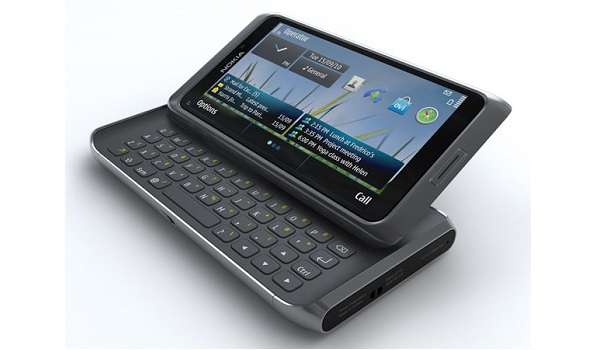
Nokia E7 Communicator was a 2011 flagship and had 256MB RAM. Hian!
Android phones proved to be even more resource hungry than anyone ever thought could be and they climbed higher up the RAM table. In 2012, Samsung’s flagship and the richest Android experience at the time, the Galaxy Note II , was equipped with 2GB RAM. That was a premium phone. Year after year, Android has needed more RAM. Of course, the same goes for iOS, though Apple’s mobile operating system is not as hungry as Android.
Until recently, if someone wanted to know the least amount of RAM that I would recommend for a smooth experience on Android, my answer was 3GB. But in the last few months of handling a number of Android phones, I have observed that even with 4GB RAM, I get some hiccups.
Note that I am a power user. That means I often have multiple task-intensive apps running at the same time. So, 3GB and 4GB RAM will still work for many everyday users who do not carry out image editing, video manipulation and all sorts on their phones.
If you just use your smartphone for phone calls, messaging and social media, you will be mostly good with 3GB and 4GB RAM. Don’t panic.
But power users like myself will have noticed how inadequate even 4GB of RAM is becoming. I reviewed the Huawei P30 during the year and found its 8GB RAM absolutely delightful to use. I also found 6GB RAM still very smooth to use on the Samsung Galaxy S9 Plus. But using a phone with 4GB RAM now is proving mildly annoying. I say mildly, because it isn’t a horrible experience at all. But every other day, I max it out and I feel the impact on performance.
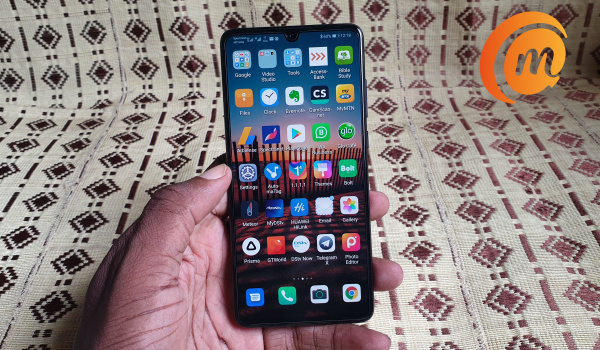
Huawei P30 is equipped with 8GB RAM
Perhaps it is this obvious to me because I have experienced more RAM. Once you have encountered better, anything less feels inadequate. So, maybe I am spoilt from having used more RAM on other devices. But then, that is really the only way to tell about these things. This is where experience matters: the person who has used two or more different standards is able to tell whether or not there is a valid difference.
Android apps are larger and hungrier
Android mobile apps keep getting larger and more resource-intensive. There are apps that used to be 3MB in size a year ago but are now ruuning into 25MB in size. Some are even much bigger. And more of those apps are connecting with the phone camera, with more sensors, and including more advanced capabilities than ever before. All of these have impacted RAM usage on today’s smartphones.

Which is why the current crop of high-performance Android smartphones are equipped with 12GB RAM . Today’s smartphones require a lot more resources to run smoothly than ever before. Have you noticed how many smartphone manufacturers now have mid-range devices with 6GB and 8GB RAM? Exactly. It is because Android apps need those resources. The OPPO A9 2020 is a case in point. During my review , I found its 8GB RAM a delight for multitasking.
Upgrade your Android Phone’s RAM
Having handled phones with 3GB, 4GB, 6GB, and 8GB RAM, I can tell you for sure that there is a world of a difference between having 4GB RAM and 6GB RAM. If you are wondering, the only way to upgrade your Android phone’s RAM is to buy a new model. Mobile technology is not yet at the point where you can have your RAM module swapped with a higher capacity one. So, you have to include more RAM in your smartphone shopping list.
If you can, go all the way and get a premium smartphone with 12GB RAM, because as Android mobile apps acquire new, more advanced capabilities, they will put more demand on your smartphone’s resources. By the end of 2020, we might be seeing flagships with 16GB RAM . Mad oh!
- Don’t miss our mobile phone reviews .
- Follow our news on Google News .
- Join our WhatsApp Group , to be notified of the most important articles and deals,
- Follow us on Instagram , Facebook , Twitter , and YouTube .
Author:Mister Mobility
Digital Skills and Communication Coach | Mobile Phone Connoisseur since 2001 | Tech Blogging since 2004
Add MobilityArena as a preferred source on Google
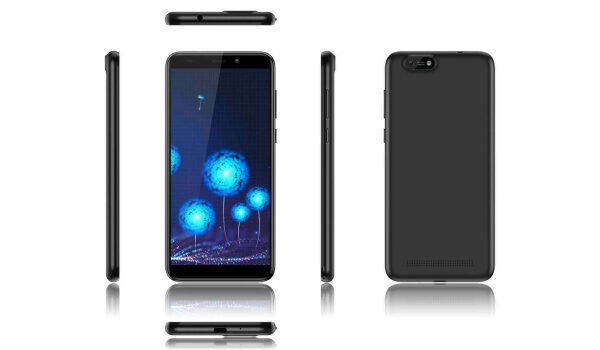
PinePhone Quick Specs : This is a Linux smartphone released in July 2020. It features a 5.99-inch display, Allwinner A64 chipset, 2 MP selfie camera, 5 MP dual rear camera, 2 GB RAM, 16 GB internal memory, and a 3000 mAh battery.
Phone Status : The PinePhone is a Linux smartphone that is capable of booting up into any one of four available Linux mobile operating systems. For user privacy and security, it also has six (6) hardware kill switches to disable/enable the following features at will: modem, Wi-Fi/Bluetooth, microphone, headphone, front camera, and rear camera. Here are the detailed PinePhone specifications, release date and price.
Specs
Mobile Wireless Network and Software
- 2G mobile network bands : GSM, GPRS, EDGE 850 / 900 / 1800 / 1900 MHz.
- 3G mobile network bands : UMTS, WCDMA, HSDPA 800 / 850 / 900 / 1700(AWS) / 1900 / 2100 MHz
- 4G mobile network bands : LTE B1(2100) / B2(1900) / B3(1800) / B4(1700/2100) / B5(850) / B7(2600) / B8(900) / B12(700) / B13(700) / B18(800) / B19 / B20(800) / B25(1900) / B26(850) / B28(700) / B38(2600) / B39(1900) / B40(2300) / B41(2500)
- 5G mobile network bands : No.
- SIM Type : Micro SIM
- Software / Operating System : Mainline Linux Mobile. PinePhone will automatically boot to any ARM distro from microSD if a bootable card is inserted. Some Linux kernels are available for phones, including: postmarketOS, Ubuntu Touch, Sailfish OS, Maemo Leste, and LuneOS.
Design, Form Factor, Appearance
- Dimensions : 160.5 x 76.6 x 9.2 mm
- Weight : 180-200g
- Display : 5.99 inches, 1440 x 720 pixels, 18:9 aspect ratio, IPS LCD screen, hardened glass
- Colours : Black.
- Physical Build : Plastic, matte black finished plastic case.
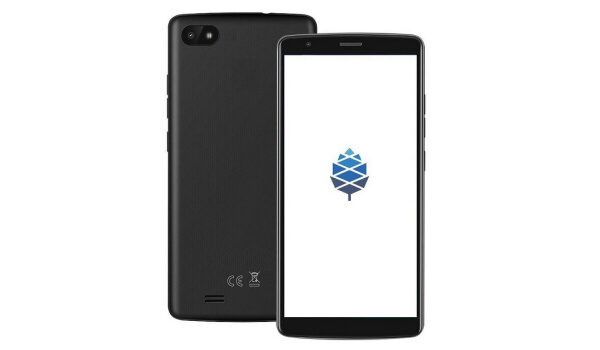
PinePhone specifications and features
Internal Hardware Specs
- Processor Type : 64-bit, 1.15 GHz Quad-core, Cortex-A53
- Processor Name : Allwinner A64
- Graphics Processor : ARM Mali 400 MP2
- RAM : 2 GB
- Internal Storage : 16 GB
- External Storage : microSD, up to 2TB (dedicated slot)
Photography, Video Recording
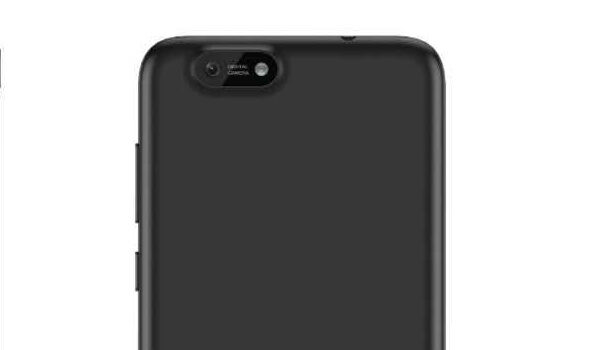
- Rear Camera : 5 MP camera, f2.2 Aperture, LED flash, 720p@30fps video recording
- Front-facing Camera : 2 MP, f2.0 Aperture, Face Recognition, 720p@30fps video capture.
Audio, Video Playback
- Music Support : PCM, AAC / AAC + / eAAC + / MP3 / AMR – NB / WB / APE
- Audio : 3.5 mm audio jack
- Loudspeaker : Mono speaker
- Video Support : H.264/MP4/MPEG4 player
- FM Radio :
Phone Sensors
- Digital Compass : Yes
- Accelerometer : Yes.
- Proximity Sensor : Yes.
- Ambient Light Sensor : Yes.
- Barometer : No.
- Pedometer : No.
- Heart Rate Monitor : No.
- Gyroscope (G-Sensor) : Yes.
- Fingerprint Scanner : No.
- Face Unlock : No.
- Iris Scanner : No.
- Motion Sensing / Gesture Control : No.
- Voice Control : No.
- Intelligent Digital Assistant : No.
- Infra-red Sensor : No.
Connectivity Options
- Bluetooth : v4.0, A2DP
- WiFi : Wi-Fi 802.11 b/g/n, hotspot
- GPS : Yes, A-GPS, GLONASS, BDS, BeiDou, Galileo, QZSS
- USB : microUSB v2.0; USB-OTG
- NFC : No.
Miscellaneous Specs
- Battery Type and Capacity : Lithium-Ion 3000 mAh
- Battery Charging : 15W Fast Charging + USB Power Delivery
- Wireless Charging : No.
- Reverse Charging : No.
- Model Number : N/A
PinePhone Price and Release Date
- Announced : February 2019
- Release Date : July 2020
- Country Availability : Global Online.
- Price : $149.99 for the 2GB RAM / 16GB ROM variant, and $199.99 for the 3GB RAM / 32GB ROM variant. Prices include shipping.
This Linux smartphone is available in the US and works on all major telecom wireless carriers/networks in the country.
Buyer’s Guide Verdict
Not available.
Our Buyer’s Guide Verdict is recommendation that we make based on our evaluation of the specifications of the device. It is a general guide designed to help you understand how much value a smartphone offers for its price. It is not a stamp of quality assessment or an endorsement of the device or of the manufacturers. Be sure to ask questions and use your judgement when buying any device, as MobilityArena may not be held responsible for your buying decisions .
PinePhone Review Rating
We are yet to review the PinePhone and so do not have a review rating for it yet. This section will be updated with our review rating and a link to the review page, as soon as we have a review ready.
