Add MobilityArena as a preferred source on Google
Mobile CPUs are the center of the operations of any smartphone. As such, mobile CPU manufacturers play an important role in the industry. The most popular mobile CPU manufacturers are Qualcomm and MediaTek, but there are others, and I provide the list further down in this article.
You have seen the words and terms like CPU, chipset, processor, and SoC used when referring to smartphones. They can be quite confusing, especially if you are not a technical person. What are they? I provide answers below.
- What is a CPU?
- What is a GPU?
- What is RAM?
- What is a chipset?
- What is an SoC?
- Other components you may find inside a smartphone’s SoC
- List of Mobile CPU Manufacturers
What is a CPU?
The CPU, or Central Processing Unit , is the main processor in the computer or smartphone. It does all the calculations or processing of data. Which is why it is also known as the processor. The CPU or processor is the brain of the smartphone.
What is a GPU?
The GPU is the Graphics Processing Unit , and as the name suggests, it controls issues pertaining to how well graphics are displayed on the screen. As such, GPUs are critical to gaming, video playback, etc. The more powerful the GPU is, the higher the quality of images and videos on the screen. In other words, Graphics Processing Units determine the quality of the overall viewing experience. If you edit images and videos on your mobile device, the GPU is also key to how well those activities run.
What is RAM?
Random Access Memory (RAM) is a kind of temporary memory that provides for stored data to be received and read almost instantaneously. When you launch an app, its data is immediately written to RAM, so the app can run more efficiently. It is different from the storage memory, also called built-in memory, of a phone, which is for storing files like photos, videos, documents, etc. The bigger and faster the RAM, the more smoothly apps work on your smartphone.
What is a chipset?
A chipset is a collection of integrated circuits which are designed to function together as a unit, especially to perform a particular task within a computer system (including smartphones). It controls the communication between the CPU, RAM, internal storage, USB components, and other peripherals. A chipset can be implemented as an SoC or on a motherboard. I explain further below.
What is an SoC?
A System on a Chip , System-on-Chip , or SoC, is a single silicon chip, or integrated circuit, that integrates the CPU, GPU, network modem, and other components in one package. All these components can also be used together by plugging them to a motherboard (and this is often how it is done in PCs, but the SoC approach has them all built into a single microchip, and this is how it is often done in smartphones.
To reiterate how an SoC works, all computing systems have a CPU, GPU, RAM, ROM, and other components, and when a motherboard is used, all of them are connected as detachable or replaceable components. When a System on Chip (SoC) is used, they are all built into one microchip – none of those components are detachable or replaceable. As such, in cell phones, the words chipset and SoC can be used interchangeably.
Other components you may find inside a smartphone’s SoC
Besides the CPU, GPU, RAM, and ROM, there are other components that are typically found inside a System-on-Chip. Here are a few:
- Integrated Modems : These convert wireless signals into data your phone understands. Types of modems found in phones include 2G, 3G, 4G LTE, 5G, Wi-Fi, and Bluetooth modems.
- Image Processing Unit (ISP) : These convert data from the smartphone’s camera into image and video files.
- Digital Signal Processor (DSP): These handle more highly intensive functions like decompressing music files and analysing data from a gyroscope sensor.
- Neural Processing Unit (NPU): Also called neural processors, these are used in more high-end smartphones to process AI (artificial intelligence) computing and applications. Their functions include processing facial recognition, voice recognition, and camera object segmentation.
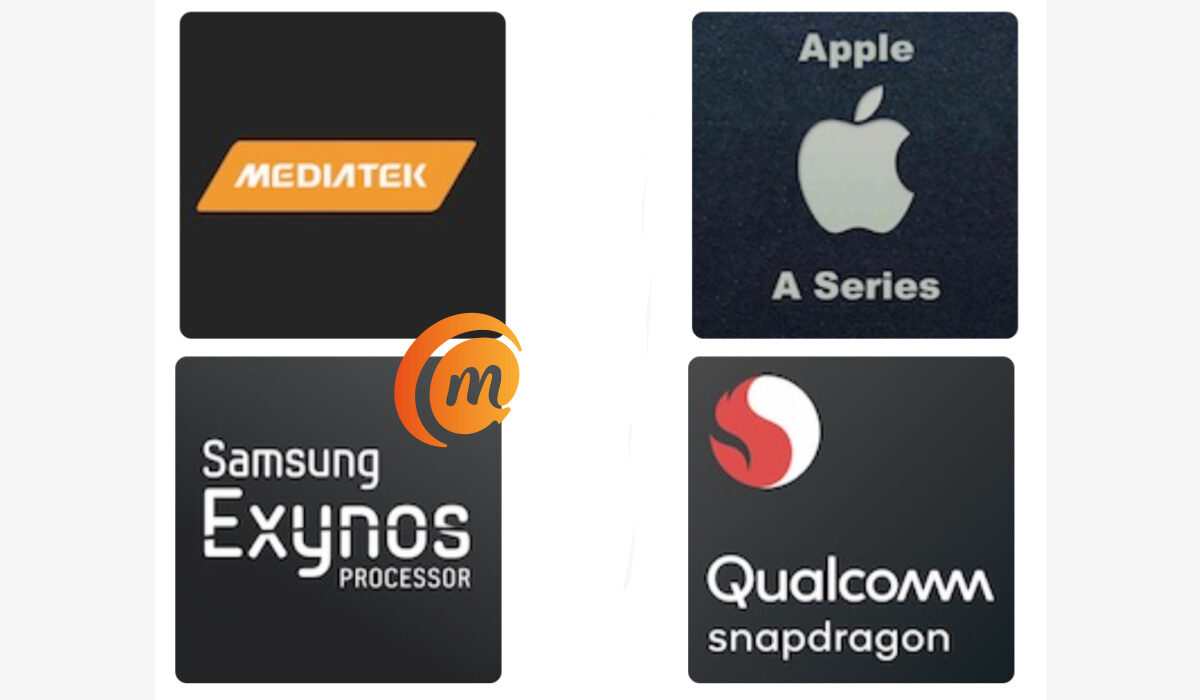
Mobile CPU Manufacturers and Brands
List of Mobile CPU Manufacturers
- Qualcomm : This is an American company that makes the Snapdragon brand of chips. Qualcomm is the leading chipset maker, globally. Have a look at our Snapdragon chipset ranking .
- MediaTek : This is a fast-growing Chinese mobile CPU manufacturer. They produce chipsets branded in their own name, as well as those carrying the Helio and Dimensity labels. MediaTek’s chipsets are in use by almost every smartphone brand in the world.
- Apple Bionic : Apple’s Bionic chips are some of the most powerful in the smartphone industry. They are used only in iPhones, iPads, and iPods.
- Exynos : This chipset brand is owned by Samsung and are used only in Samsung smartphones. Check out our Exynos Chipset list .
- Unisoc : Formerly known as Spreadtrum Communications, Unisoc produces chipsets for low and medium-end cell phones. Their chips have been used by many smartphone manufacturers.
- HiSilicon : This mobile CPU manufacturer is owned by Huawei and the chips are found only in Huawei and Honor smartphones.
- JLQ Technology : This brand is relatively new on the scene and as far as I can tell, it has been used only by Xiaomi (in the Poco C40 ) at the time of this article.
Hopefully, this article has given you a clearer understanding of what CPUs, GPUs, chipsets, and SoCs are and how they work. And hopefully, you are also now more conversant with mobile CPU manufacturers, whose work is essential to the functioning of your smartphone.
Author:Mister Mobility
Digital Skills and Communication Coach | Mobile Phone Connoisseur since 2001 | Tech Blogging since 2004
Add MobilityArena as a preferred source on Google
Best mid-range smartphones that feel like premium flagship devices. You may have heard other people refer to this same class of phones as flagship killers. They cost about half the price of premium flagships, but deliver flagship-grade performance. What then is the catch with these phones that offer so much for so little?
You will find that flagship killers have flagship-grade chipsets , but sacrifice a few non-essential features like, IP rating, camera specs and performance, wireless charging, and build materials. The sacrifices in the camera and build materials are usually not significant, though, so you still get experiences as close to premium flagship level as can be. In all, the best mid-range smartphones that are classified as flagship killers are sweet deals that are often too good to be true.

Which Are The Best Mid-range Smartphones That Run Like Premium Flagships?
Best Mid-range Smartphones That Provide Flagship Performance
Xiaomi Poco F3 : The Poco F3 is the quintessential flagship killer. It is powered by a Qualcomm Snapdragon 870 chipset, and comes in three memory options – 6/128 GB, 8/128 GB, and 8/256 GB. To understand that, 6/128 GB refers to 6 GB RAM and 128 GB storage. It has a 6.67-inch AMOLED screen with 1080 x 2400 pixels resolution, Gorilla Glass 5 protection, 120Hz refresh rate, and HDR10+. Those specs are flagship-worthy.
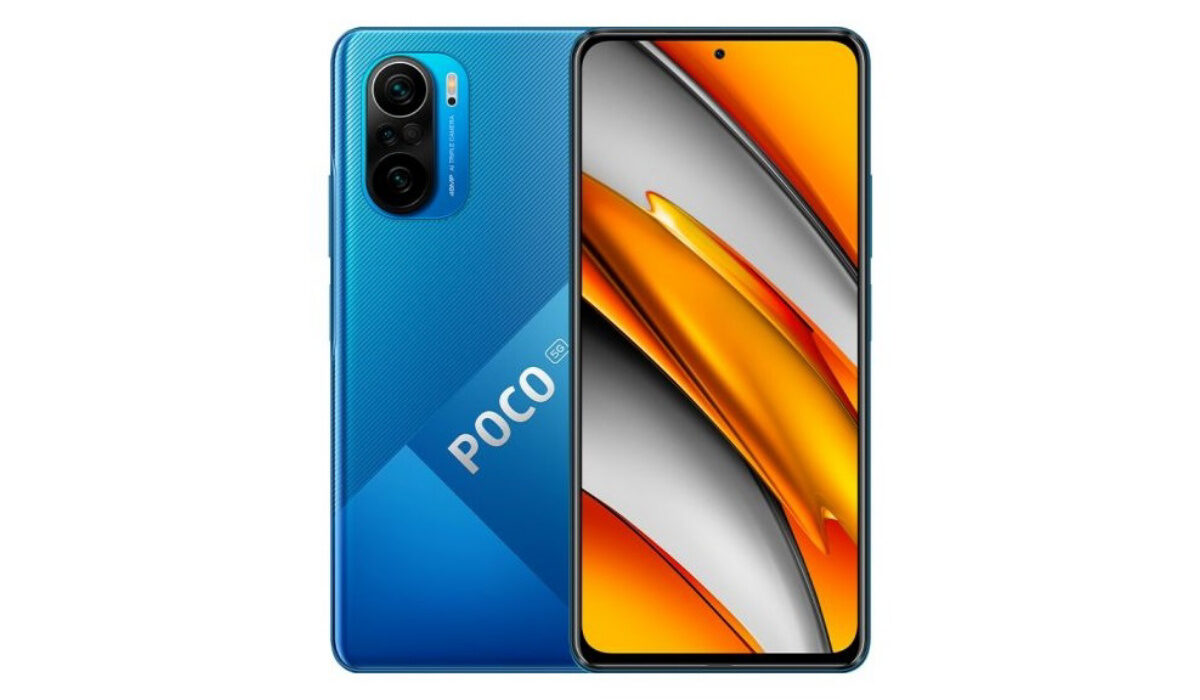
Poco F3 is one of the best mid-range smartphones that offer flagship performance
There is NFC, stereo speakers, and micro USB-C. Like most flagships, there is no 3.5 mm audio port. For power, it has a 4520mAh battery with 33W fast charging, which supposedly can top up the battery in 52 minutes max. The rear battery is a 48-megapixel unit, while the selfie camera is a 20-megapixel unit. And, surprise – while it is not a flagship, it has IP53 dust and splash resistance rating. How much does it cost? From US $300 for the base variant, to US $370 for the top one.
Motorola Edge 20 Pro : Motorola’s flagship killer has the super looks and the specifications to match them. It is also powered by a Qualcomm Snapdragon 870 chipset, and comes in four memory options – 6/128 GB, 8/128 GB, 8/256 GB, and 12/256 GB. It is great to see that last variant, as that one will deliver even more flagship-class performance, especially with the smooth running of apps. The display is a 6.7-inch OLED panel with 1080 x 2400 pixels resolution, Gorilla Glass 5 protection, 144Hz refresh rate, and HDR10+. These are impressive specifications, people.
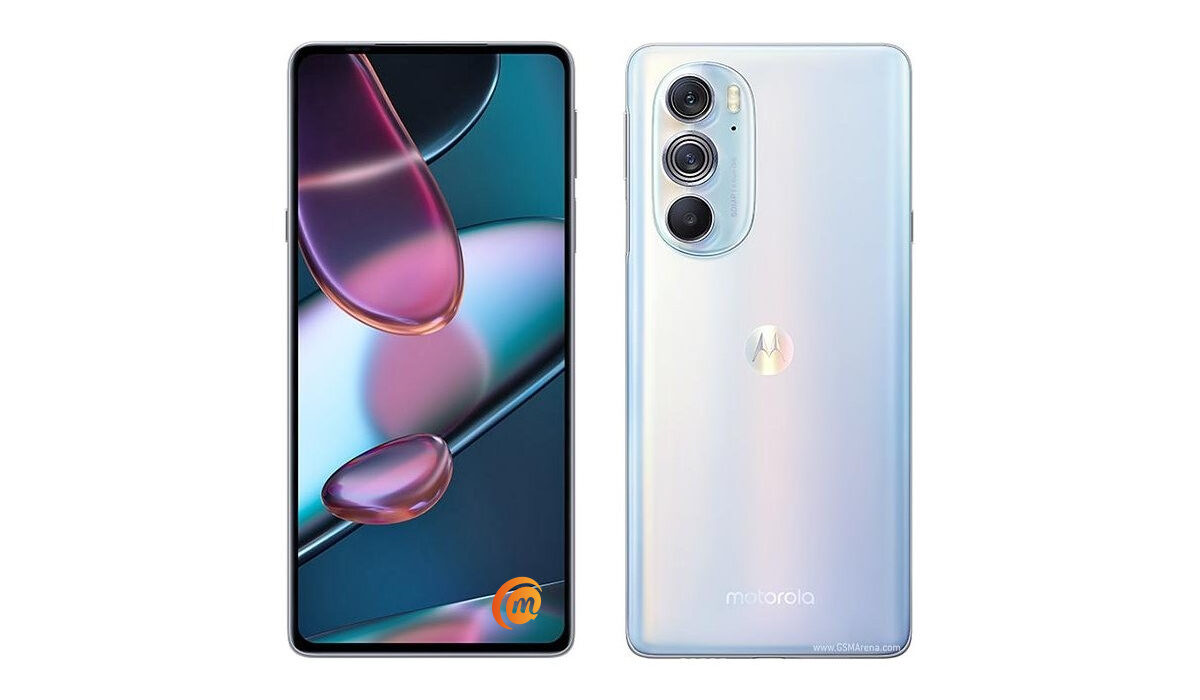
Motorola Edge 20 Pro is one of the best mid-range smartphones that deliver a flagship experience
There is NFC, and micro USB-C. It has no 3.5 mm audio port, though, and the loudspeaker is not stereo. The battery has, 4500mAh capacity and is coupled with 30W fast charging. The rear battery is a 108-megapixel unit, while the selfie camera is a 32-megapixel unit. While there is no official IP rating, Motorola says the body is water-repellent. If you want this Moto, it will set you back by as much as US $500 for the top variant.
OnePlus Nord 2T : The Nord 2T is the slightly upgraded version of the Nord 2 5G, the latter itself a phone that is worthy of being on this list . The Nord 2T uses a Dimensity 1300 chipset and has two memory options – 8/128 GB and 12/256 GB. FYI, the Dimensity 1300 chipset matches the Snapdragon 870 in terms of performance, so don’t turn up your nose at it because it is a MediaTek product. It is the most compact smartphone on this list, with a 6.43-inch display with 1080 x 2400 pixels resolution, Gorilla Glass 5 protection, 90Hz refresh rate, and HDR10+ support.
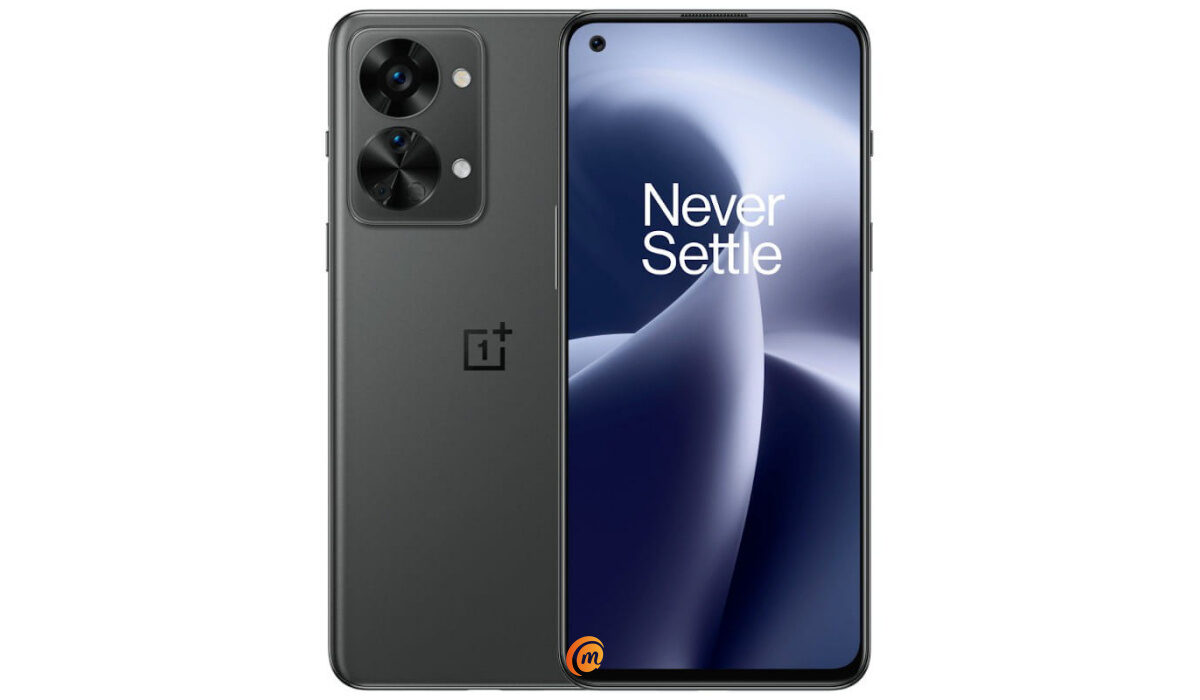
OnePlus Nord 2T is one of the best mid-range smartphones that feel like premium flagships
It has no 3.5 mm audio port, but the usual suspects are there – NFC, stereo speakers, and micro USB-C. What of the battery? We are looking at, 4500mAh capacity here (are these manufacturers copying one another for battery?). But when it comes to charging, the Nord 2T leaves the others in the dust with its 80W blazing fast charging. Expect to be able to go from 0 to 100% battery charge in 27 minutes flat. That is amazing.
The camera specifications are nothing out of the ordinary for this class – 50 MP main lens at the back and a 32-megapixel lens for the selfie camera. If you are interested in buying the OnePlus Nord 2T, set aside $432 for the 8/128 GB variant and $699 for the 12/256 GB variant. Should you find the price too steep, OnePlus Nord 2 (without the T) is available with the same specifications, except for having a Dimensity 1200 chipset and 65W fast charging, for US $360 (8/128 GB) and US $425 (12/256 GB).
- Don’t miss our reviews .
- Follow our news on Google News .
- Follow us on Instagram , Facebook , Twitter , and YouTube .
Author:Mister Mobility
Digital Skills and Communication Coach | Mobile Phone Connoisseur since 2001 | Tech Blogging since 2004
