Add MobilityArena as a preferred source on Google
“Communicators” were the T-Rex (Tyrannosaurus Rex) of early smartphones. Like the real T-Rex, the Nokia Communicator was the most powerful device of its time. It ruled among early smartphones. Communicator was a brand name for a set of smartphones that had a clamshell form factor and opened up to be used for work, just like laptops. When closed, it was used like every other phone because it had an outer display and keypad.
But it wasn’t just about the hardware form factor alone. Nokia Communicators were so advanced in terms of features that they were the pinnacle of convergence, offering laptop-like form with PDA and mobile phone functionality in one package. As such, you could do email, browse the World Wide Web, type and read Office documents, as well as send and receive fax, on them. I still recall receiving urgent documents by fax on a Nokia Communicator that I owned. Simply put, these were incredible mobile devices.
The first Nokia Communicator, the Nokia 9000, had the operating system PEN/GEOS 3.0 . It was also used by Val Kilmer in the 1997 movie The Saint.
After PEN/GEOS 3.0, the subsequent Nokia Communicator models used different versions of the Symbian OS, a mobile operating system based on the EPOC platform.
The Nokia 9210 Communicator, released in 2000, used Symbian OS version 6.0 and Series 80 v1.0.
The Nokia 9500 Communicator, released in 2004, used Symbian OS version 7.0s and Series 80 v2.0.
The Nokia E90 Communicator used Symbian OS version 9.2 and S60 3rd Edition.
- Here Are The Nokia Communicator Models Nokia 9000 Nokia 9110/i Nokia 9210 / 9210i Nokia 9500 Nokia E90
- Nokia Communicators: Honourable Mentions Nokia Communicator Related Articles
- Wrap Up
Here Are The Nokia Communicator Models
Nokia 9000 was the first Communicator and Nokia E90 was the last (even though the slider-keyboard Nokia E7 was later marketed as a Communicator). Between them was a span of eleven (11) years. And they were glorious years.
Nokia 9000
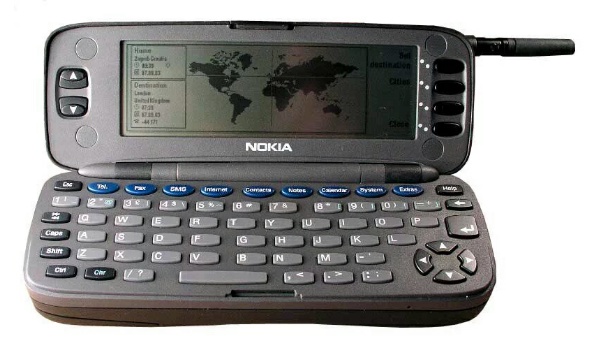
Nokia 9000 opened up: The first mobile phone with internet capabilities
This was the very first Communicator was the Nokia 9000. It was released in 1996 and ran an operating system called GEOS, had a “whopping” 8 MB of internal memory (LOL). It was also the first commercial mobile phone with internet and email capabilities . What other features did it have?
The large (for its time) display was a grayscale panel. Colour screens were not yet a thing on mobile phones at the time. It had 8 MB built-in storage and was powered by an Intel 386 CPU. What operating system did it run? A forerunner of Symbian OS called GEOS.
Nokia 9110/i
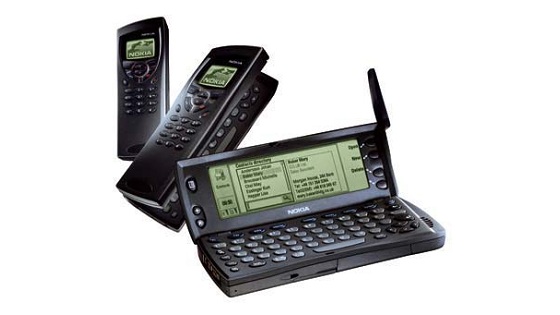
Nokia 9110/i
The Nokia 9110 was launched in 1998. It ran the same locked down OS – GEOS – that its predecessor ran and had a monochrome display like it too. It was no big upgrade, as improvements were incremental.
The display was 4.5 inches large – and it was massive at that time. While it had the same amount of RAM as its predecessor, the CPU was AMD 486 this time. Battery capacity was 1100mAh.
Nokia 9210 / 9210i
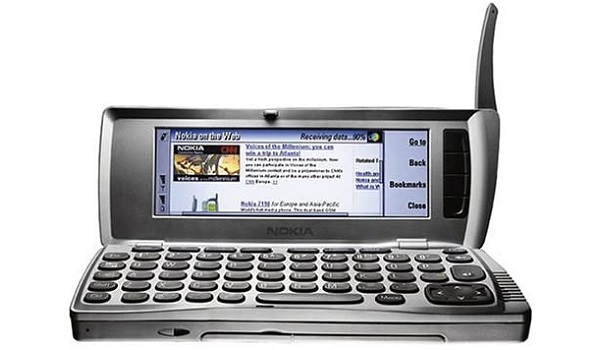
colour screen and Symbian OS arrived on the 9210/i Communicator
Nokia 9210 was the first Communicator to run Symbian OS (Series 80 User Interface) and to have a colour screen. Symbian OS had two different branches then – Series 60 for regular phones and Series 80 for the more advanced Communicators. A third branch was to arrive later in the form of UIQ used by Sony Ericsson in its P800 and P900 series smartphones.
Nokia 9210 was launched in 2001. This was the first smartphone Communicator. The 9210i was released in 2002 and was the first Communicator I ever owned. Nokia 9210i had a 4.5-inch screen and was powered by an ARM 9 CPU.
Nokia 9500
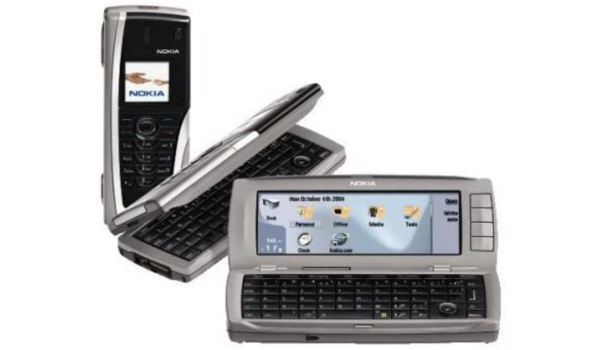
Nokia 9500 Communicator
2004 saw the introduction of the Nokia 9500. Like its predecessor, it also ran Symbian OS Series 80, the version of Symbian that was designed specifically with the Communicator in mind. The 9500 also had Bluetooth, camera and WiFi. I owned a 9500.
The 9500 had a 4.5-inch display, ran Symbian OS v7 (Series 80 UI), and was powered by a TI OMAP 1510 CPU. Internal storage was 80 MB, and it had a 1300mAh battery.
Nokia E90
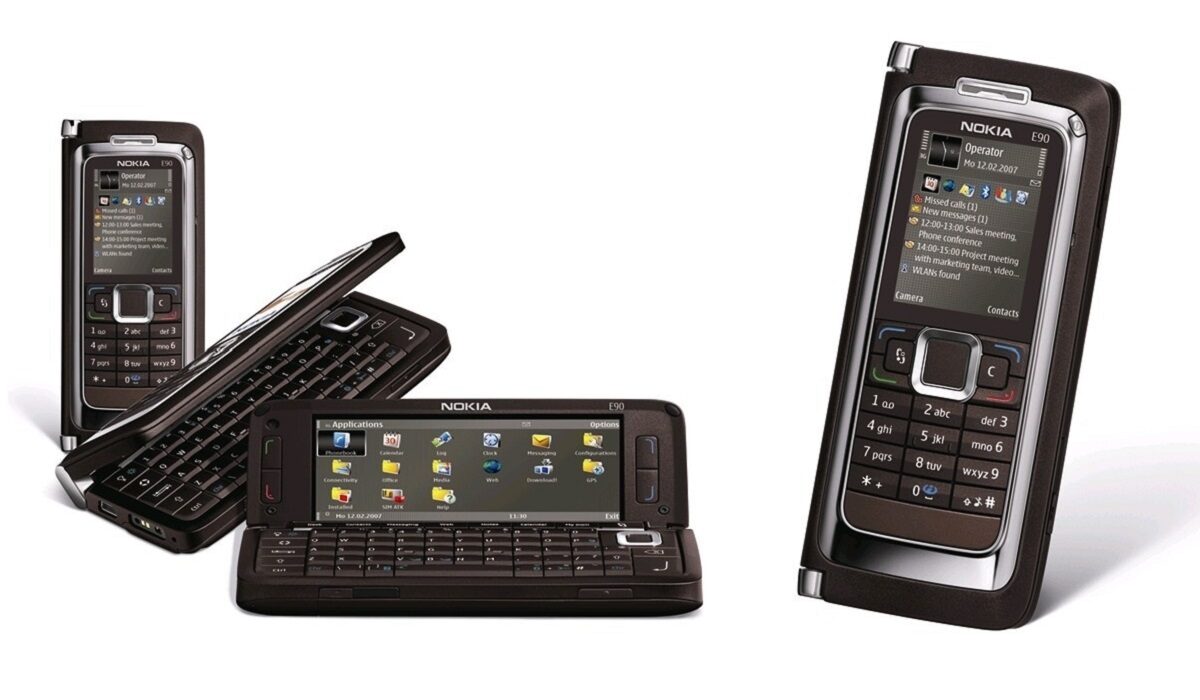
Nokia E90 Communicator
Launched in 2007, the Nokia E90 was the last true Nokia Communicator. It ran Symbian OS Series 60. Nokia had discontinued Series 80 for the more popular Series 60. Series 60 wasn’t well optimised for the display of the Communicator but Series 60 had more apps and so it meant that the E90 users got access to hundreds of apps that Series 80 didn’t have. Many of us Communicator fans griped and complained about how Series 60 made the E90 feel watered-down from traditional Communicators. But it was a great device still.
The E90’s main display was smaller than what we had seen in previous Nokia Communicators. It was 4 inches in size. But besides that, it was a much more powerful, more advanced beast. It had 128 MB built-in storage, a 3.15-megaoixel camera, and a 1500mAh battery.
I remember that the E90’s camera was one of the best in its time. I so loved the E90 that I ended up purchasing it twice. Ah, the love of my life…..
The Nokia Communicator series was discontinued after the E90 model.
Nokia Communicators: Honourable Mentions

Nokia 9300 – Why did Nokia not market it as a Communicator?
The Nokia 9300 and 9300i were smaller versions of the Nokia 9500 and ran Symbian OS too. But Nokia did not market them under the Communicator tag. Which was odd.
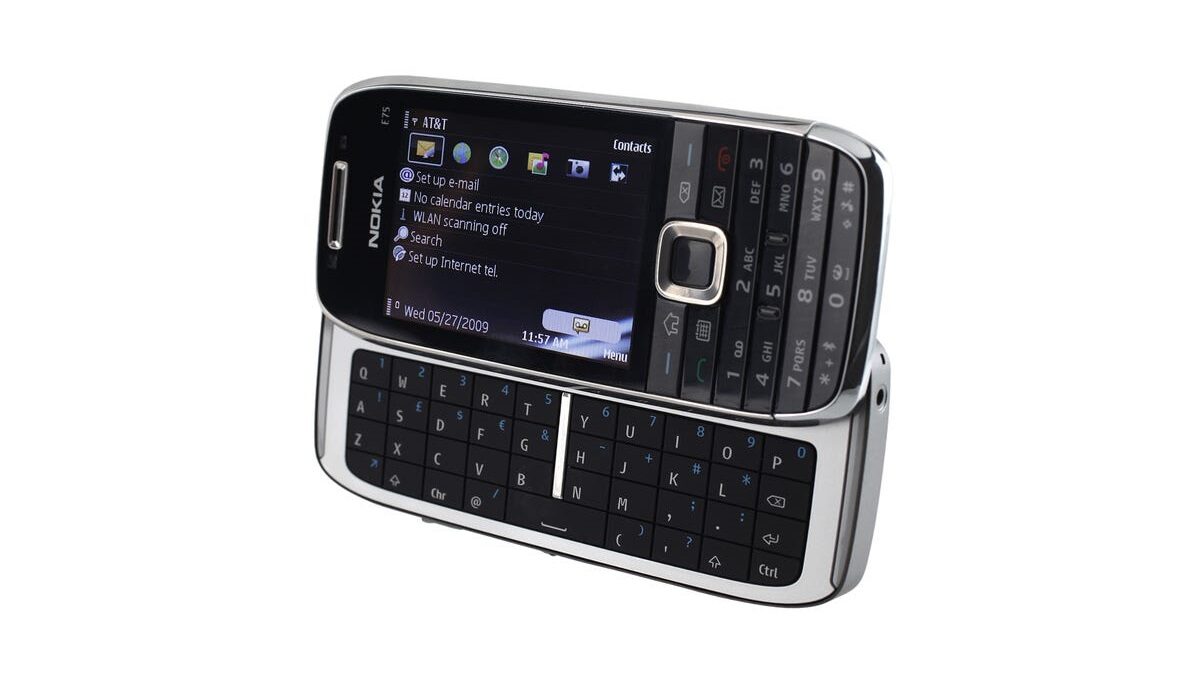
Nokia E75 – Communicator? Nah!
Nokia attempted to market the E75 as a Communicator, but we fans refused vehemently. It ran Symbian OS but didn’t have the Communicator form factor. Its slider keyboard was not classic Communicator form factor. What were they thinking?
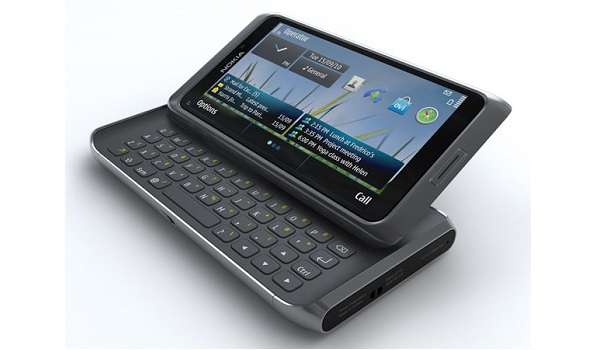
Nokia E7 – Communicator? Kinda….
Lastly, the Nokia E7 was launched in 2011 had a form factor that was similar to the Communicator but instead of a clamshell that opened, it had a slide-out mechanism – more like the E75. It was a sleek beauty and I was privileged to be one of the first to own one. It ran Symbian^3, one of the very last iterations of Symbian OS, and later for updated to Nokia Belle OS.
Nokia E7’s screen was 4 inches in size, but also added Gorilla Glass protection. It was powered by an ARM II CPU, had 128 MB of RAM, 16 GB built-in storage, an 8-megapixel camera, and a 1200mAh battery.
- Communicator Flashback: From the Nokia 9210 to the Nokia E7
- Gemini PDA: The 2nd Coming Of The Communicator Form Factor Is Here
- Casio JD-6000 was Mister Mobility’s first handheld computer
- The First Mobile Phone With Internet Capabilities – Authoritative Mobile History
- Gallery: The 26 Nokia phones of Mister Mobility
Wrap Up
If there is any form factor of mobile phones that I miss till today, it is the Communicator form factor. Using one was like using a phone and a mini laptop rolled into one. Nokia Communicators were powerful and very useful. They were also the most advanced mobile phones around in their days. Perhaps someone can revive the form factor. Just imagine Android or Windows 10 (not Windows 10 Mobile) in a Communicator form factor. Oh-la-la.
- Don’t miss our reviews .
- Follow us on Instagram , Facebook , Twitter , and YouTube .
Author:Mister Mobility
Digital Skills and Communication Coach | Mobile Phone Connoisseur since 2001 | Tech Blogging since 2004
Add MobilityArena as a preferred source on Google
One of the questions I get asked by mobile users who are new to 4G is whether it is possible to use a 4G SIM in a 3G phone. Yes; it is possible, but it depends on a number of factors.
if it is a regular 4G SIM card, it is possible, but you will not get a 4G connection. If your network operator offers 3G and 2G networks, the SIM will lock on to either of those for calls and data. To be able to use a 4G internet connection, you need to put your 4G SIM card in a compatible 4G smartphone. To understand 4G compatibility
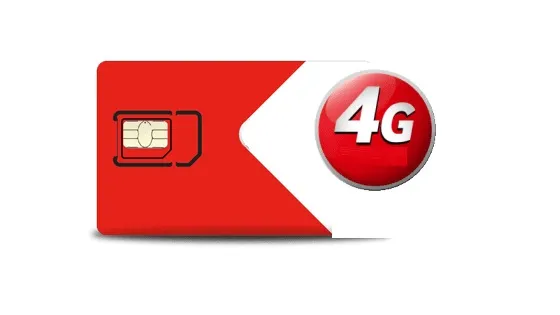
On the other hand, if it is a 4G-only SIM card, i.e., a SIM card that does not support 2G and 3G, but only 4G LTE, the SIM will be unusable in a 3G phone. It will not be able to make a connection to the 3G network, which is all that the phone can connect to. A 4G-only SIM card requires a 4G phone and a 4G LTE network to connect to.
You will be interested in finding out if you can convert or upgrade a 3G phone to 4G .
- Don’t miss our reviews .
- Join our WhatsApp Group , to be notified of the most important articles and deals,
- Follow us on Instagram , Facebook , Twitter , and YouTube .
Author:Mister Mobility
Digital Skills and Communication Coach | Mobile Phone Connoisseur since 2001 | Tech Blogging since 2004
