Add MobilityArena as a preferred source on Google
| Orange Sanza touch |
|---|
| OS: Android 10. Release Date: October 2020. Network Type: 2G/3G/4G Display: 4-inch, 480×960 pixels resolution Processor: Selfie Camera: Rear camera: RAM: 1 GB ROM: 8 GB Battery: 1750 mAh. Phone Status: Official. |
- Orange Sanza Touch Specs Is Orange Sanza touch a 4G phone? Does Orange Sanza touch have a fingerprint scanner? Does Orange Sanza touch have Gorilla Glass? Does Orange Sanza touch have quick charging? Will Orange Sanza touch work in USA? What is the price of Orange Sanza touch? How much does it sell for?
Orange Sanza Touch Specs
Mobile Wireless Network and Software
- 2G mobile network bands : GSM, GPRS, EDGE 900 / 1800 / 1900 MHz.
- 3G mobile network bands : UMTS, WCDMA, HSDPA 900 / 2100 MHz
- 4G mobile network bands : LTE
- 5G mobile network bands : No.
- SIM Type : Nano-SIM, Dual SIM
- Software / OS : Android 10 (Go Edition)
Design, Form Factor, Appearance
- Dimensions : mm
- Weight : g
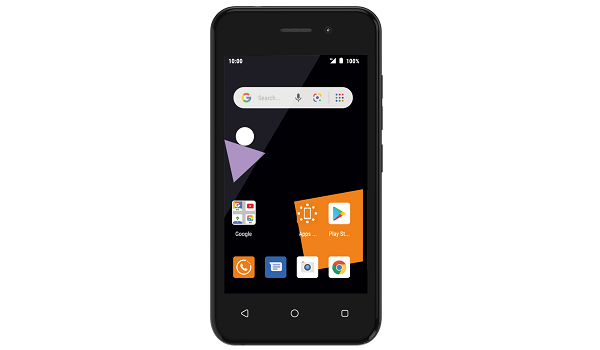
- Display : 4 inches, 480 x 960 pixels, 18:9 aspect ratio, IPS LCD screen
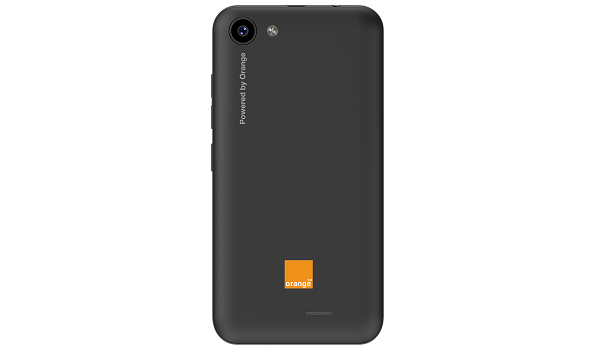
- Colours : Black.
- Physical Build : Plastic
Internal Hardware Specs
- Processor Type : Quad-core, Cortex-A5
- Processor Name :
- Graphics Processor :
- RAM : 1 GB
- Internal Storage : 8 GB
- External Storage : microSD
Photography, Video Recording
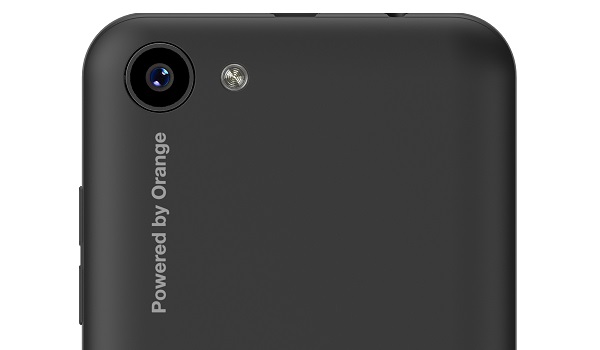
- Rear Camera : MP camera, LED flash, 720p@30fps video recording
- Front-facing Camera : MP, Face Recognition, @30fps video capture.
Audio, Video Playback
- Music Support : PCM, AAC / AAC + / eAAC + / MP3 / AMR – NB / WB / APE
- Audio : 3.5 mm audio jack
- Loudspeaker : Mono speaker
- Video Support : H.264/MP4/MPEG4 player
- FM Radio : Yes.
Phone Sensors
- Digital Compass : No.
- Accelerometer : No.
- Proximity Sensor : No.
- Ambient Light Sensor : No.
- Barometer : No.
- Pedometer : No.
- Heart Rate Monitor : No.
- Gyroscope (G-Sensor) : No.
- Fingerprint Scanner : No.
- Face Unlock : Yes.
- Iris Scanner : No.
- Motion Sensing / Gesture Control : No.
- Voice Control : No.
- Intelligent Digital Assistant : Yes; Google Assistant.
- Infra-red Sensor : No.
Connectivity Options
- Bluetooth : v4.2, A2DP
- WiFi : Wi-Fi 802.11 b/g/n, hotspot
- GPS : Yes, A-GPS
- USB : microUSB v2.0.
- NFC : No.
Miscellaneous Specs and Features
- Battery Type and Capacity : Non-Removable Lithium-Ion 1750 mAh
- Battery Charging : 5W standard charging
- Wireless Charging : No.
- Reverse Charging : No.
- Model Version/Number : N/A.
Price and Launch Date
- Announced : October 2020
- Release Date : September 2020
- Country Availability : Guinea Bissau. Côte d’Ivoire. Madagascar. Africa. Middle East.
- Orange Sanza touch Price : $30.
Questions and Answers
Here are answers to some of the most commonly asked questions about Orange Sanza touch.
Is Orange Sanza touch a 4G phone?
No; the Sanza touch is a 4G LTE phone.
Does Orange Sanza touch have a fingerprint scanner?
The Sanza touch does not have a fingerprint reader.
Does Orange Sanza touch have Gorilla Glass?
No; the Sanza touch does not have Gorilla Glass protection on its screen.
Does Orange Sanza touch have quick charging?
No; the Sanza touch does not have quick charging technology.
Will Orange Sanza touch work in USA?
The Sanza touch has limited network support across various US carriers like AT&T, Verizon, Metro PCS, Sprint, T-Mobile, Virgin Mobile, Cricket, Boost Mobile, H2O Wireless, Ting, US Cellular, Lyca Mobile, PureTalk, Consumer Cellular, Ultra Mobile, Straight Talk, Red Pocket Mobile, Jolt, Airvoice Wireless, and Google Fi. What this means that some bands are supported, while others are not. You will have to make enquiries from your carrier to know what bands/frequencies are supported on them.
What is the price of Orange Sanza touch? How much does it sell for?
The Sanza touch costs $30 and is available with a bundled mobile data plan (voice, SMS, data) on Orange mobile networks in Africa and the Middle East.
MobilityArena Buyer’s Guide Verdict
Not available.
Our Buyer’s Guide Verdict is recommendation that we make based on our evaluation the specs of the device. It is a general guide designed to help you understand how much value a smartphone offers for its price. It is not a stamp of quality assessment or an endorsement of the device or of the manufacturers. Be sure to ask questions and use your judgement when buying any device, as MobilityArena may not be held responsible for your buying decisions .
Phone Review Rating
We are yet to review the Sanza touch and so do not have a review rating for it yet. This section will be updated with our review rating and a link to the review page, as soon as we have a review ready.
Author:InfoDesk
Add MobilityArena as a preferred source on Google
| Orange Sanza touch |
|---|
| OS: Android 10. Release Date: October 2020. Network Type: 2G/3G/4G Display: 4-inch, 480×960 pixels resolution Processor: Selfie Camera: Rear camera: RAM: 1 GB ROM: 8 GB Battery: 1750 mAh. Phone Status: Official. |
- Orange Sanza Touch Specs Is Orange Sanza touch a 4G phone? Does Orange Sanza touch have a fingerprint scanner? Does Orange Sanza touch have Gorilla Glass? Does Orange Sanza touch have quick charging? Will Orange Sanza touch work in USA? What is the price of Orange Sanza touch? How much does it sell for?
Orange Sanza Touch Specs
Mobile Wireless Network and Software
- 2G mobile network bands : GSM, GPRS, EDGE 900 / 1800 / 1900 MHz.
- 3G mobile network bands : UMTS, WCDMA, HSDPA 900 / 2100 MHz
- 4G mobile network bands : LTE
- 5G mobile network bands : No.
- SIM Type : Nano-SIM, Dual SIM
- Software / OS : Android 10 (Go Edition)
Design, Form Factor, Appearance
- Dimensions : mm
- Weight : g
- Display : 4 inches, 480 x 960 pixels, 18:9 aspect ratio, IPS LCD screen
- Colours : Black.
- Physical Build : Plastic
Internal Hardware Specs
- Processor Type : Quad-core, Cortex-A5
- Processor Name :
- Graphics Processor :
- RAM : 1 GB
- Internal Storage : 8 GB
- External Storage : microSD
Photography, Video Recording
- Rear Camera : MP camera, LED flash, 720p@30fps video recording
- Front-facing Camera : MP, Face Recognition, @30fps video capture.
Audio, Video Playback
- Music Support : PCM, AAC / AAC + / eAAC + / MP3 / AMR – NB / WB / APE
- Audio : 3.5 mm audio jack
- Loudspeaker : Mono speaker
- Video Support : H.264/MP4/MPEG4 player
- FM Radio : Yes.
Phone Sensors
- Digital Compass : No.
- Accelerometer : No.
- Proximity Sensor : No.
- Ambient Light Sensor : No.
- Barometer : No.
- Pedometer : No.
- Heart Rate Monitor : No.
- Gyroscope (G-Sensor) : No.
- Fingerprint Scanner : No.
- Face Unlock : Yes.
- Iris Scanner : No.
- Motion Sensing / Gesture Control : No.
- Voice Control : No.
- Intelligent Digital Assistant : Yes; Google Assistant.
- Infra-red Sensor : No.
Connectivity Options
- Bluetooth : v4.2, A2DP
- WiFi : Wi-Fi 802.11 b/g/n, hotspot
- GPS : Yes, A-GPS
- USB : microUSB v2.0.
- NFC : No.
Miscellaneous Specs and Features
- Battery Type and Capacity : Non-Removable Lithium-Ion 1750 mAh
- Battery Charging : 5W standard charging
- Wireless Charging : No.
- Reverse Charging : No.
- Model Version/Number : N/A.
Price and Launch Date
- Announced : October 2020
- Release Date : September 2020
- Country Availability : Guinea Bissau. Côte d’Ivoire. Madagascar. Africa. Middle East.
- Orange Sanza touch Price : $30.
Questions and Answers
Here are answers to some of the most commonly asked questions about Orange Sanza touch.
Is Orange Sanza touch a 4G phone?
No; the Sanza touch is a 4G LTE phone.
Does Orange Sanza touch have a fingerprint scanner?
The Sanza touch does not have a fingerprint reader.
Does Orange Sanza touch have Gorilla Glass?
No; the Sanza touch does not have Gorilla Glass protection on its screen.
Does Orange Sanza touch have quick charging?
No; the Sanza touch does not have quick charging technology.
Will Orange Sanza touch work in USA?
The Sanza touch has limited network support across various US carriers like AT&T, Verizon, Metro PCS, Sprint, T-Mobile, Virgin Mobile, Cricket, Boost Mobile, H2O Wireless, Ting, US Cellular, Lyca Mobile, PureTalk, Consumer Cellular, Ultra Mobile, Straight Talk, Red Pocket Mobile, Jolt, Airvoice Wireless, and Google Fi. What this means that some bands are supported, while others are not. You will have to make enquiries from your carrier to know what bands/frequencies are supported on them.
What is the price of Orange Sanza touch? How much does it sell for?
The Sanza touch costs $30 and is available with a bundled mobile data plan (voice, SMS, data) on Orange mobile networks in Africa and the Middle East.
MobilityArena Buyer’s Guide Verdict
Not available.
Our Buyer’s Guide Verdict is recommendation that we make based on our evaluation the specs of the device. It is a general guide designed to help you understand how much value a smartphone offers for its price. It is not a stamp of quality assessment or an endorsement of the device or of the manufacturers. Be sure to ask questions and use your judgement when buying any device, as MobilityArena may not be held responsible for your buying decisions .
Phone Review Rating
We are yet to review the Sanza touch and so do not have a review rating for it yet. This section will be updated with our review rating and a link to the review page, as soon as we have a review ready.
Author:InfoDesk
Add MobilityArena as a preferred source on Google
There are smart and self-driving vehicles cars in the EV market with intelligent capabilities, but they have yet to make it to mass market. Certain technologies will help bring autonomous vehicles to the masses .
As much as we hear about smart and self-driving vehicles these days, they have yet to make it to mass market. Certainly, there are certain cars in the EV market with intelligent capabilities; some of them will more or less drive themselves, at least in some situations.
And we know that there are cars in development that can fully handle themselves. As of 2020 though, the technology isn’t quite where it needs to be to inspire mass market adoption (let alone changes to laws and regulations that would make fully autonomous vehicles legal).
Which technologies will help bring autonomous vehicles to the masses?
It is difficult to say in full what’s needed to get us to that point. But the following are three technologies that still need to be refined and perfected if we’re to move toward smarter vehicles.
1. Comprehensive Visual Sensors
As of now, autonomous vehicles depend on a number of different kinds of sensors. There’s standard radar, which can recognize the speed of surrounding vehicles; there are cameras that monitor surroundings in real time; and there’s advanced technology called Lidar, which Wired wrote about as a key component of self-driving cars — so cheap it could make such vehicles “a reality.” Unfortunately, none of these sensor options seems to be fully up to the task of gauging an autonomous car’s surroundings. In The New York Times’ look at newer sensors , limitations for each of these options were pointed out, and it was stated that “autonomous cars still can’t see well enough to safely maneuver in heavy traffic.” The same article was making the case for brand new infrared cameras that can recognize and distinguish between objects (such that they can tell the difference between, say, cars, traffic cones, and pedestrians). We don’t know just yet if this is the answer, but it’s clear that more comprehensive sensors are required for autonomous vehicles to operate as they need to.
2. More Capable Batteries
Car batteries have become more of a focal point among interested consumers in recent years, largely because of their implications for electric vehicles. We remarked on a new electric car batter from GM earlier this year, for instance, and it has generated a fair amount of excitement. Supposedly, the battery can outperform Tesla when it comes to driving range, allowing for 400 miles (as opposed to the Tesla Model S Long Range’s 390). It’s likely that we’ll continue to see some one-upping among EV manufacturers seeking to conquer this emerging market.
However, advancement of autonomous vehicles will likely require a more in-depth evolution of car batteries. These cars simply ask more of their batteries, which means said batteries have to be capable of generating significant, safe power without malfunctioning. Overheating is of particular concern, and is already a key focus of electrical engineers designing battery casings and printed circuit boards for use in automobiles. A detailed overview of metal core PCBs by Altium speaks to one potential solution; the use of metal cores in electrical components can help them to conduct heat efficiently, thus potentially allowing a more powerful battery to operate safely. But optimizing this sort of technology for use in high-end autonomous vehicles is still a process.
3. 5G Internet
5G is less a vehicle component and more of a general technological development. With that said however, it’s extraordinarily important to the safe and widespread deployment of smart, self-driving cars. Simply put, intelligent vehicles will only be adequately safe if they’re able to communicate with one another and with their surroundings, and this — to some degree — requires constant, reliable connectivity. That’s something that emerging 5G networks can offer, but they’re not there quite yet.
As stated in ZDNet’s post on 5G and autonomous vehicles , “5G mobile networks are still in the early stages of deployment,” with carriers investing billions but connectivity still nowhere near the ultimate goals. That’s simply not good enough for safe autonomous vehicles, though the same post does note that this might not matter. If other technology progresses to the point that cars can drive safely, they may only rely on network connections somewhat superficially. Altogether, it does appear as if we’re moving toward a reality of widespread autonomous vehicle usage. Whether this happens in five years or 15 though will depend on technologies like these, and how quickly they progress.
