Add MobilityArena as a preferred source on Google
Once upon a time, you had to be physically be present to conduct almost all kinds of transactions, including obtaining an insurance cover. But thanks to digital and e-commerce technologies, anyone anywhere with access to the Internet can purchase auto Insurance online.
Hopefully, you already know the benefits of having a car insurance on your vehicle. The benefits include providing cover for personal accident in the car, cover for physical damage or theft to the car, cover against 3rd party liabilities should you hit someone else, as well as staying compliant with the law. Let’s look at these points briefly before diving into why and how to purchase auto insurance online.
This article pre-supposes that you are buying comprehensive car insurance, and not 3rd party insurance. Where you can afford it, you really should do comprehensive insurance. To understand the difference between these, see our article, Should you get comprehensive or 3rd party insurance?
Having an insurance cover keeps you shielded in the event of an accident. Should your car get damaged in an accident, your insurance policy has you covered. But it also covers 3rd parties, should you hit and damage someone else’s vehicle. You do not have to bear all the liabilities. A car insurance policy also covers theft, so should your car get stolen, it is easier to get a replacement. Lastly, besides these listed benefits, the law requires that your car be insured. You do not want to be on the wrong side of the law and suffer the consequences.
Why Should You Purchase Auto Insurance Online
While you can buy insurance for your vehicle by walking into an office, but buying car insurance online comes with a range of benefits. Let’s look at some key ones.
You Enjoy Convenience : Perhaps the greatest benefit of buying auto insurance online is the convenience. You do not have to leave where you are to process your cover, and you can do it from your smartphone too. It saves you time and effort, and lets you get on with your daily business. Digital and e-commerce technologies have made things so much more convenient.
It Saves You Money : Everybody loves to save money. Ordinarily, you would have to burn gasoline or petrol to drive down to an office to process your car insurance. If you don’t drive, taking a bus or train costs money too. But that isn’t where you make the greatest savings on car insurance. When you purchase auto insurance online, you are helping the insurance company cut down on operational costs, which translates to lower premium. Which is why it costs less when you buy it online. Simply put, you pay a lower premium.
You Cut Down On Paperwork : I can’t tell you how much I dislike lengthy paperwork, which is what one has to deal with when processing insurance the traditional way. Thankfully, the online option is not that tedious.
It Is Easier To Find The Best Deals : No matter the product or service in question, everyone wants the best deals possible. Buying auto insurance online means you can easily search for policies from competing insurance companies and choose which is best for you. There are websites dedicated to presenting comparisons of available policies in your area and providing you with quotes. With a little research, you can get the best insurance deal available and proceed to buy your auto insurance.
You Get Faster Service : This is similar to convenience, but still a distinct benefit of its own. When you purchase auto insurance online, the process is usually automated, such that within a few minutes, you get your documentation in your email and can print out your insurance certificate immediately. If you had to go the traditional offline route of buying car insurance, you would typically have to get on a waiting line to be served.
In closing, being able to purchase auto insurance online has so many benefits and almost no disadvantages. It is a win-win for everybody – you and the insurance company. If you have been buying your insurance policies the traditional way, give the online way a try and see what you have been missing.
Author:Mister Mobility
Digital Skills and Communication Coach | Mobile Phone Connoisseur since 2001 | Tech Blogging since 2004
Add MobilityArena as a preferred source on Google
Electric cars , also generally referred to as electric vehicles (EVs), are automobiles that are propelled by electric motors, instead of a carbon fuel engine. The electric motors are supplied with electricity from batteries. Instead of a petrol engine, an EV has an electric motor, and instead of a fuel tank, it has a battery.
Because electric motors are quieter than carbon fuel engines, EVs are quieter to drive. Driving one for the first time, you might be thrown off by how quiet it is. There is no vrooom when you hit the accelerator pedal!
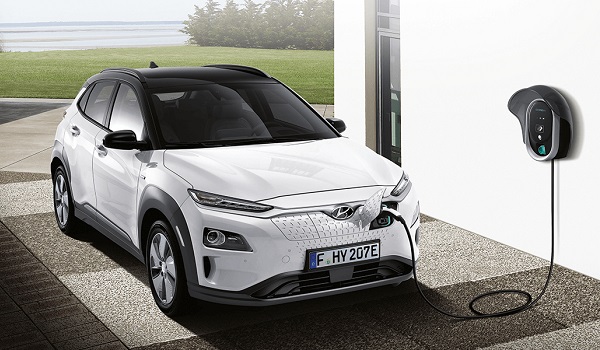
Hyundai Kona EV
- 5 Facts About Electric Cars
- History of Electric Cars
- Frequently asked Questions About Electric Cars Which companies are making electric vehicles? Which car company is selling the most electric cars? Do electric cars charge while driving? Do electric car have keys? How does an electric car transmission work? Do electric cars have clutch? How fast can electric cars go? How far can an electric car go?
5 Facts About Electric Cars
- Electric cars do not have gearboxes . Unlike petrol and diesel engines which are highly inefficient and require gears to deliver the needed torque to the vehicle’s wheels, electric motors generate enough torque and so do not require a gearbox. Surprise. It is for this reason that EVs can deliver instant acceleration, whereas petrol-powered cars need you to switch through gears from 1 to 4 or 5 to accelerate.
- Electric vehicles have low maintenance and running costs . Why? For one, the engine has less moving parts and no combustion. This translates to much less wear and tear in the engine when compared to fossil fuel cars. The lack of a gearbox is part of this equation. What of running costs? Generally, it costs far less to charge up the batteries of an EV than to fill the tank of a fuel-powered car to travel over the same distance.
- Electric vehicles cost more than their petrol engine counterparts . While the maintenance and running costs of an EV are low, you will spend a small fortune to acquire one. This is because, generally, EVs are more expensive to buy than carbon fuel cars. Why? The batteries. Batteries are still expensive, and till we find more affordable means of building batteries, this situation will remain that way.
- The first electric car was built in 1884, and electric cars were the most popular kind of cars for about 100 years after that . Shocking; right? A Londoner by the name Thomas Parker is on record as having built the first EV. Internal combustion engines (ICEs) were not quite usable back then in 1884 and EVs ruled the roads till the early 20th century when ICEs became technologically advanced enough to power road vehicles.
- Tesla is not the only company making electric vehicles : Other auto makers manufacturing and selling EVs include: BYD, GM, Volkswagen, BMW, Mercedes, Volvo, Audi, and Hyundai.
History of Electric Cars
- Electric cars were invented before fuel engine cars. The first crude electric vehicle that was regarded as an actual car was created by English inventor Robert Anderson in 1828 (some sources say it was around 1832). It was not very efficient, but it worked. Some other early EVs were produced in Hungary and the Netherlands in the same period.
- The first practical electric vehicle was produced in 1884, again by another English inventor. This was followed about six years later by another from an American inventor, William Morrison.
- Between 1901 and 1912, a third of all cars on US roads were electric. That seems unbelievable in modern times, considering the number of fuel-burning cars now in use.
- The average speed of EVs at the time was 14 miles per hour (22.53 kilometres per hour). To put that in perspective, Usain Bolt broke the world record in the 100 m race in 2009 at an average speed of 23.5 miles per hour (37.82 kilometres per hour). He has since broken that record twice.
- In 1905, Ferdinand Porsche, creator of the famous Porsche line of cars, created the first hybrid electric vehicle , the Lohnr-Porsche. This car was powered by electricity stored in a battery alongside a gas engine.
- By 1935, all the electric vehicles seemed to disappear completely. This was because Ford Motors built a much faster vehicle that ran on crude oil, which was readily available in Texas and was cheap.
- Up to 80 percent of battery power is used to power an electric car, compared to as little as 14 percent from fuel engines. This makes the electric vehicle a highly efficient mode of transport.
- The fastest EV in the world in 2023 is the Rimac Nevera , which has a top speed of about 256 mph (about 415 kilometres per hour).
- The electric car with the longest driving range in 2023 is the Lucid Air, with a range of 516 miles (about 830 kilometres).
Here are some of the questions you have about EVs, along with the answers.
Which companies are making electric vehicles?
Companies already manufacturing EVs include: Tesla, BYD, SAIC / GM / Wuling, Volkswagen, BMW, Mercedes, Volvo, Audi, and Hyundai.
Which car company is selling the most electric cars?
In 2022, Tesla is the leading EV company in the world.
Do electric cars charge while driving?
As at this time, electric vehicles are unable to charge while driving. That ability may appear in the future. However, certain types of hybrid electric vehicles are able to charge while driving.
Do electric car have keys?
Most of them do, though it is possible to operate own without a key.
How does an electric car transmission work?
Unlike regular cars with an internal combustion engine, an EV transmits driving power directly from the electric motor to the wheels of the vehicle, without the need for a gearbox. A very few high-performance EVs have a two-speed gearbox. But regular EVs do not have a gearbox at all.
Do electric cars have clutch?
The clutch is needed in a car for the purpose of changing gears. As the average EV does not have a gearbox, the clutch is not needed, so it doesn’t have one.
How fast can electric cars go?
Electric vehicles have been known to have top speeds of between 100 mph (160 kilometres per hour) and 258 mph (415 kilometres per hour).
How far can an electric car go?
It depends. We do have on record EVs that can only cover 60 miles (96 kilometres) on a single charge, at the lower end, and models that can do 516 miles (830 kilometres), at the upper end.
Author:Mister Mobility
Digital Skills and Communication Coach | Mobile Phone Connoisseur since 2001 | Tech Blogging since 2004
