Add MobilityArena as a preferred source on Google
A comparison of Samsung Galaxy S22 Ultra and iPhone 13 Pro Max was inevitable. The long-time rivalry between Apple and Samsung is well known and documented. Every year, their premium flagship models are pitched against one another to see which is faster, has better battery life, takes better photos, does more, etc.
Apple iPhones have their traditional weak areas, and same goes for Samsung smartphones. For example, no iPhone has touched the battery life of Samsung phones in years. Likewise, no Samsung model has touched Apple’s toys in terms of raw power.
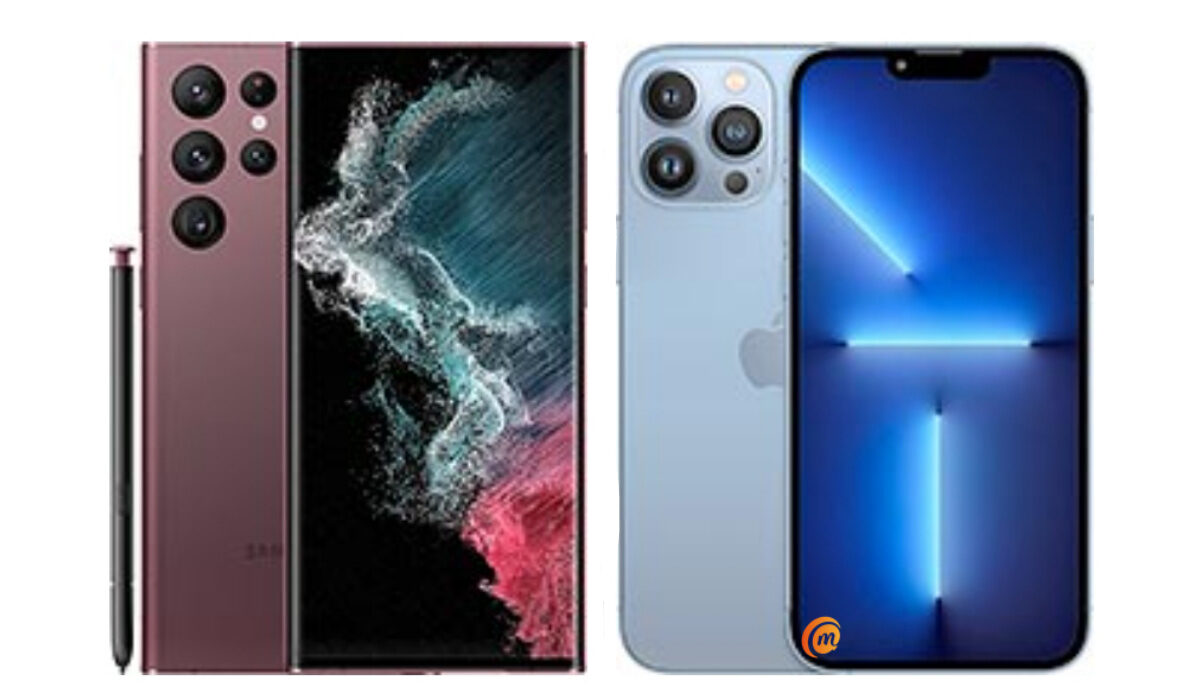
Samsung Galaxy S22 Ultra vs iPhone 13 Pro Max
It looks like that trend persists this year, thanks to benchmark results and other information we are seeing. Let’s get on with our comparison of the two devices.
Samsung Galaxy S22 Ultra vs iPhone 13 Pro Max: Physical Build and Handling
The Galaxy S22 Ultra is a tank of a device. It is bigger (taller, thicker, but narrower) than the iPhone 13 Pro Max, and its square edges give it that hulking look. Yet, for some reason, the iPhone is heavier (240g against the Samsung’s 229g).
In terms of materials, Samsung S22 Ultra is made of glass and aluminium, while the 13 Pro Max is made of glass and stainless steel. Aha! That explains the difference in weight. Stainless steel is lighter than aluminium.
Whichever way you look at it, both Samsung Galaxy S22 Ultra and iPhone 13 Pro Max are solidly built smartphones. We doubt that there is a winner here in terms of build. You just have to go with what you prefer.
Samsung Galaxy S22 Ultra vs iPhone 13 Pro Max: Cameras
Comparing the cameras of premium flagships from both camps is always an interesting exercise. Usually, the numbers do not tell us anything and we have to depend on extensive tests and camera shootouts.
In the last few years, Samsung has fallen behind in the camera department, leaving the top slots to duels between Apple, Huawei, and Xiaomi. Samsung S22 Ultra camera tests and shootout results are not out yet, and so the jury is still out on that. We will have to wait.
Samsung Galaxy S22 Ultra vs iPhone 13 Pro Max: Battery Life
Apple put a relatively big battery in the Pro Max this time. It is not everyday you see a 4352mAh battery in an iPhone, but here it is. iPhone lovers who have gotten tired of being tied to a charging port often must be ecstatic, and for good reason too. Early tests indicate that the iPhone 13 Pro Max has really good battery life.
Eureka! May we see more of this in the years ahead.
But, as good as the iPhone’s battery life is, it still falls short of what Samsung has in the Galaxy S22 Ultra – a massive 5000mAh battery. That’s over 500mAh extra juice.
There are multiple factors affecting battery life, so we can’t look at battery capacity alone. Other factors include screen size and type, processor, and software optimisation.
All these factors notwithstanding, iPhone 13 Pro Max will be hard pressed to one-up Samsung S22 Ultra on this one. Let’s also not forget that the Samsung has 45W fast charging (thankfully), while the iPhone has 27W.
Samsung Galaxy S22 Ultra vs iPhone 13 Pro Max: Performance
Traditionally, Apple’s top iPhones have left Android flagships in the dust in terms of raw performance. And this time, that is exactly what has happened again: iPhone 13 Pro Max beats the crap out of Samsung Galaxy S22 Ultra in performance benchmarks. We are talking about a 35% gap, according to the benchmark tests run by PCMag.
Yes; raw benchmark tests do not tell the full story, but they are are good part of it. PCMag also reports that the S22 Ultra warms up quickly under sustained load and then throttle performance. From the PCMag article:
While running benchmarks, the phone quickly became warm, and as soon as it became warm it returned much lower results.
That doesn’t sound good. Not the heating; not the throttling. The PCMag account says their tests show that the S22 Ultra “throttles to 75% performance after 15 minutes”. Nah; that isn’t good.
Which brings to fore the question of whether these phones really need all the power being built into them. If you’re going to be throttling down to 75% power in order to keep a smartphone cool, perhaps it really doesn’t need all that power to start with and we are just in a race to see who can put in the most powerful chipset and the most amount of RAM in their devices.
Which is what it looks like the Android ecosystem has been about for years. In contrast, Apple’s Bionic chip and mobile operating system make do with 6 GB RAM to deliver the best performance results. The Galaxy S22 Ultra has up to 12 GB RAM.
References
Galaxy S22 Benchmarked: Apple Still Beats Samsung – PCMag .
Don’t miss our reviews .
Join our WhatsApp Group , to be notified of the most important articles and deals,
Follow us on Instagram , Facebook , Twitter , and YouTube .
Author:InfoDesk
Add MobilityArena as a preferred source on Google
Ten years ago, when you thought of mobile automotive technology, mobile phones and apps were not uppermost in your mind. But we have seen a convergence of automotive and mobile technology happen right before our eyes, and it has brought upheavals, created a new industry, and opened new opportunities for all.
What has happened is that a number of technologies that were first widely deployed on cell phones have been adapted to and applied to automobiles, trucks, and other kinds of vehicles.
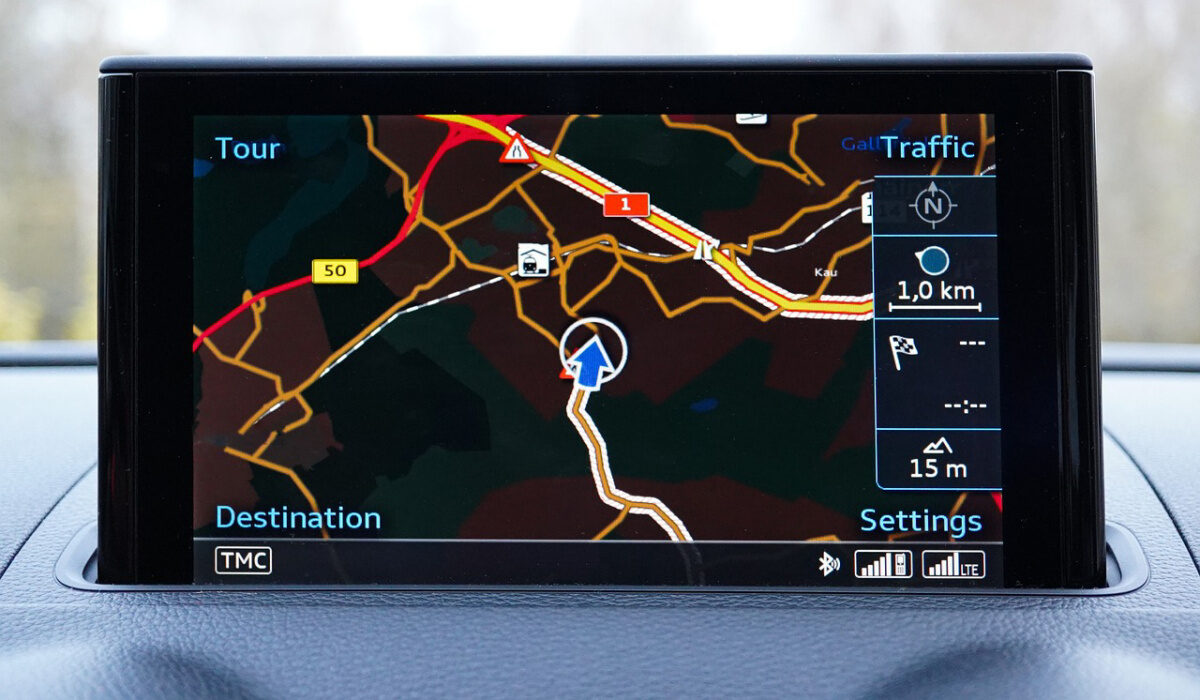
in-car navigation systems are a product of the convergence of automotive and mobile tech
Let’s take navigation as an example. Nokia Maps (now HERE WeGo Maps), and later Google Maps, gained widespread usage on smartphones. Once they were matured enough, these same systems began to be built into cars.
Examples of the convergence of automotive and mobile technology
- Autonomous and semi-autonomous vehicular systems . Today’s vehicles are having assisted driving systems that help keep the driver and passengers safe on the road, e.g., beep loudly when approaching an obstacle, and bring the car to a halt where no action is taken by the driver. We also see new cars that can park themselves in busy or tight parking lots.
- Automotive location and tracking systems . The same way we have Google Maps and HERE WeGo Maps, among others, on our phones, these services have made their way into cars. More and more cars have them built in.
- Remote locking/unlocking and control . This is stuff out of science fiction, to be sure, but you can now travel a thousand miles away and start and stop your car engine remotely. If that is too wild for you to comprehend, today you can buy a car that lets you lock/unlock it and start/stop the engine with your smartphone.
- Computerization : like smartphones, cars are becoming mobile computers, powered by software more than ever before. Like cell phones and smartphones, the modern car is a digital entity running on electronic systems.
- Mobile connectivity in vehicles . Like humans, cars are constantly on the move, and with new technologies requiring a always-on connection, it makes sense that modern cars are coming built with radios that maintain a connection with mobile network towers. This was already a thing with 4G. With 5G connectivity spreading like wildfire, modern connected cars are better able to leverage on wireless technology. Cars can stay connected to our mobile phones, our homes, and other devices in the new world of Internet of things (IoT).
- In-car entertainment platforms. We have seen massive growth in the world of in-car entertainment. Top brands from all over the world are fighting neck-to-neck to have their platforms power entertainment in as many car brands as possible.
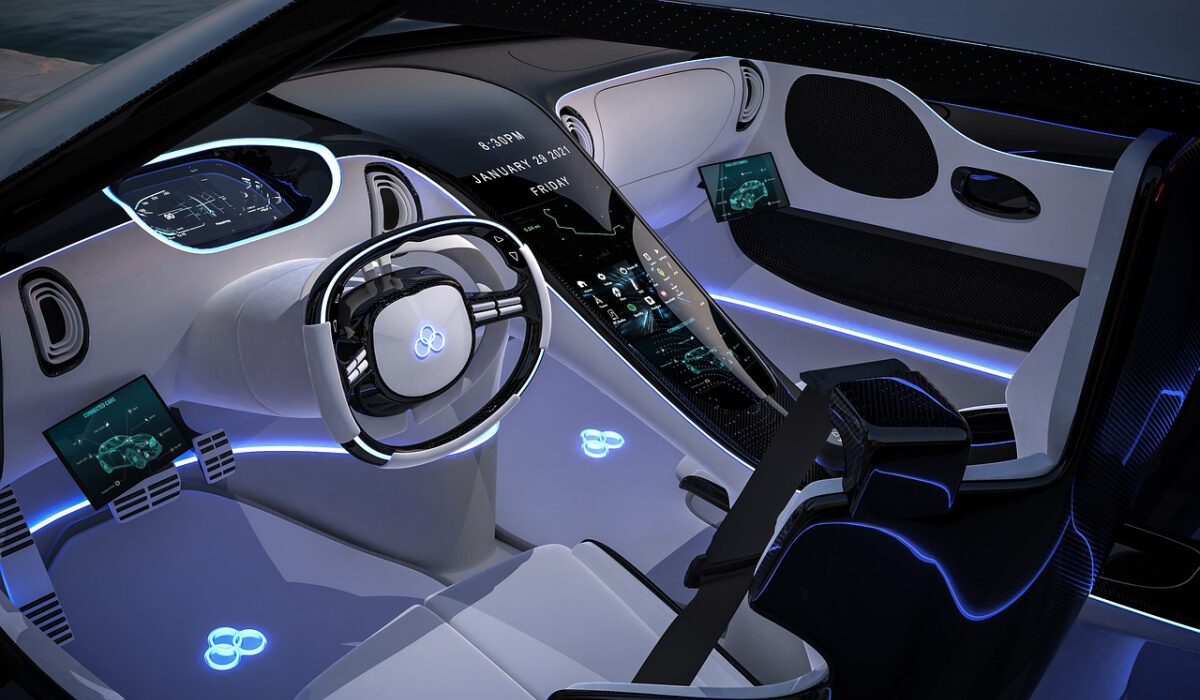
convergence of automotive and mobile tech
For hundreds of years, cars were mostly about mechanical hardware. But this has changed. Software and wireless connectivity is now as much an integral part of automobiles and other auto vehicles. And this is thanks to the adoption of multiple technologies from mobile phones and telecom industries.
Mobile-first technologies like wireless connectivity, navigation systems, operating systems (software), and apps are driving the modern automobile industry, and will do so for a long time. The convergence of automotive and mobile tech will change how cars are built, how they work, and how we drive or ride them.
This convergence is why new players, for example Tesla, have been able to gain an upper hand against long-established players like Toyota, GM, BMW, Hyundai, and others. In response, legacy carmakers are rising up to the challenge – most of them not fast enough.
But we are seeing electric cars, semi-autonomous cars, and vehicles with assisted driving and assisted parking systems from different old players. Everyone sees clearly how the automotive industry is changing, and everyone is trying to get in on the movement and not be left behind.
This convergence of automotive and mobile technologies has created a new ecosystem of services and apps that talk to one another to deliver an improved, more convenient driving (and riding) experience for us. This trend will continue, and there will be a constant innovation till the next big shift occurs.
- Don’t miss our reviews .
- Join our WhatsApp Group , to be notified of the most important articles and deals,
- Follow us on Instagram , Facebook , Twitter , and YouTube .
Author:Mister Mobility
Digital Skills and Communication Coach | Mobile Phone Connoisseur since 2001 | Tech Blogging since 2004
