Add MobilityArena as a preferred source on Google
Samsung Galaxy S22 vs S21: Samsung Galaxy S22 and S21 are siblings, the one a successor to the other. And in many ways, they are similar to one another. That should not be a surprise. The question now is, How is the Galaxy S22 better than the Galaxy S21 it came to replace?
The first thing you will observe when you place them side-by-side is that they look exactly the same, almost to the minutest details. Unless you know what to look for, you will be hard-pressed to tell the Samsung Galaxy S22 and S21 apart.
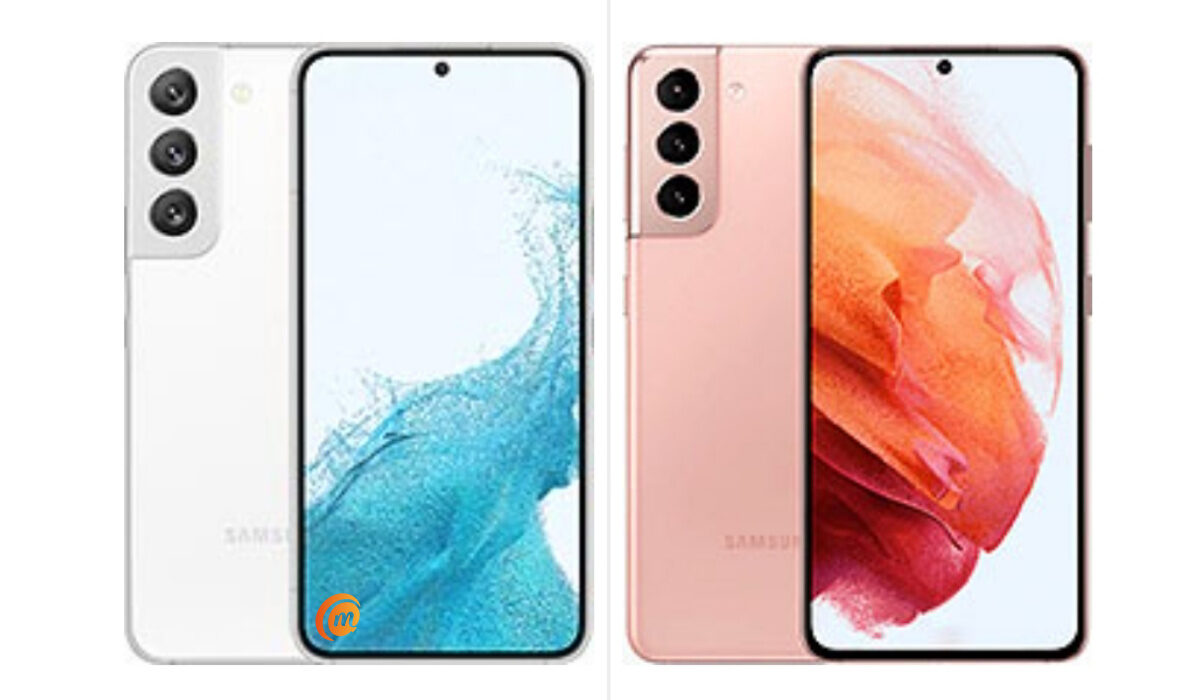
Samsung Galaxy S22 vs S21
Samsung Galaxy S22 vs S21: the similarities
Physical appearance and handling go first. The S22 is slightly smaller and lighter than its predecessor. And that is a good thing. The handier the phone, the better handling it provides, especially for one-handed use. The S22 also has a slightly smaller display, reduced from 6.2 inches (15.75 centimetres) on the previous model to 6.1 inches (15.49 centimetres).
As expected from premium flagships, both Samsung Galaxy S22 and S21 sport IP68 dust/water-resistant rating, so you can use both confidently around water.
Away from looks and feel, let’s have a look at performance. Samsung Galaxy S22 is the more powerful of the two, thanks to its Qualcomm Snapdragon 8 Gen 1 chipset. Sadly, both of them offer only 8 GB of RAM. Not that this is poor or unacceptable. 8 GB of RAM is good on a premium flagship, but it would be nice to have the option of 12 GB RAM too.
Both smartphones are also fitted with 128 GB and 256 GB of built-in storage. There is no memory card slot available on either. Both models offer single and dual SIM options, with 2G, 3G, 4G, and 5G network support.
If you are a music lover, you will be glad to know that both also have stereo loudspeakers. Unfortunately, Samsung has ditched the 3.5mm headphone jack on its flagship models, so neither of them have that.
Samsung Galaxy S22 vs S21: the differences
Hint: Where Samsung Galaxy S22 and S21 differ are in the areas of cameras, batteries, and software.
Samsung S22 drops the ball here with a smaller 3700mA battery, against the S21’s 4000mAh battery. These raw numbers may not tell the complete story, as the S22’s display is 0.1 inches (0.25 centimetres) smaller (I doubt that counts, but hey), and there is a chance that the newer processor is more economical with power consumption. So, the jury is out on that. Both of them have 25W charging. Samsung has refused to upgrade their flagships’ charging speeds to be at par with what competing brands are offering. Sad.
As for cameras, while the selfie shooters are similar, the rear cameras are a different ball game. While Galaxy S21 has a 12-megapixcel triple camera, the S22 has a 50-megapixel triple camera. Yes; we know that megapixel count doesn’t tell the full story, so the jury is out on that too. But Samsung has consistently topped the performance of its previous flagship models, so we can safely expect that the Galaxy S22’s 50-megapixel shooter will do a better job.
Samsung S22 ships out of the box with One UI 4.1, based on Android 12. The older S21 shipped with One UI 3.1, based on Android 11. Of course, the S21 has had Android 12 rolled out to it already, so this may not make for a difference in practical terms.
Samsung Galaxy S22 vs S21: Pricing
When it comes to pricing, experience has taught us that you will get a better deal by buying the older model, as its price will have dropped considerably since launch. Which is why you can get the Galaxy S21 for $439 only, while the S22 sells for about $790. That is almost double the price of the S21.
Between Samsung Galaxy S22 and S21, which is the better smartphone?
Of course, the new Samsung S22 is the better device, though not by much. Do you really need the S22 when the differences between it and the S21 are so small? Then consider how much they look alike. Are these small differences worth the hefty price difference? It depends on you. The ball is in your court.
- Don’t miss our reviews .
- Join our WhatsApp Group , to be notified of the most important articles and deals,
- Follow us on Instagram , Facebook , Twitter , and YouTube .
Author:Mister Mobility
Digital Skills and Communication Coach | Mobile Phone Connoisseur since 2001 | Tech Blogging since 2004
Add MobilityArena as a preferred source on Google
Phone makers have been releasing models with NFC (an abbreviation for Near-Field Communication) for some years now. You have probably purchased a smartphone that had NFC listed as one of its features, and you wondered what that is all about.
I remember something that happened years ago in 2010, when Near-field Communication was still a novelty. During a session at mobiFEST 2010 , a participant spent some time lamenting how our system was not up-to-date. One of the things he devoted time to was his opinion that there is a dearth of Near Field Communication (NFC) mobile phones in the country, while the rest of the world had moved on.
With all the excitement pushed by the gentleman, the reality at the time was that there was a very limited choice of devices on the market then. There were no more than a handful of NFC phones available. Perhaps the most easily obtainable NFC handset in 2010 was the Nokia 6212 Classic.
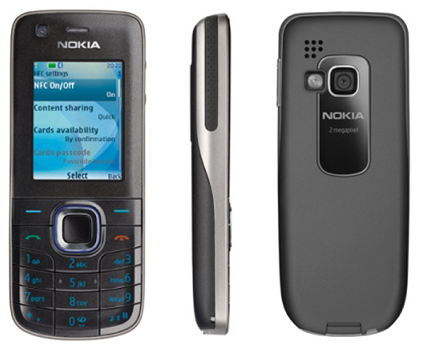
Nokia 6212 Classic was one of the earliest NFC-enabled phones
The rest of this article answers your questions about Near-Field Communication, and also provides examples and use cases of this technology.
What is NFC?
Near Field Communication or NFC, is a short-range high frequency wireless communication technology which enables the exchange of data between devices over about a 10 centimetre (around 4 inches) distance. This makes it specifically suitable for mobile payment, identification, and other related services.
Basically, NFC turns a mobile phone into a contactless card and electronic reader, and allows the phone to communicate and exchange information with other NFC devices.
Near-Field communication: Uses
NFC is useful for a number of scenarios. These include the following:
- Transfer small Images, Files, Contacts, and other small chunks of information : You can easily exchange images, files, and contact details between two phones.
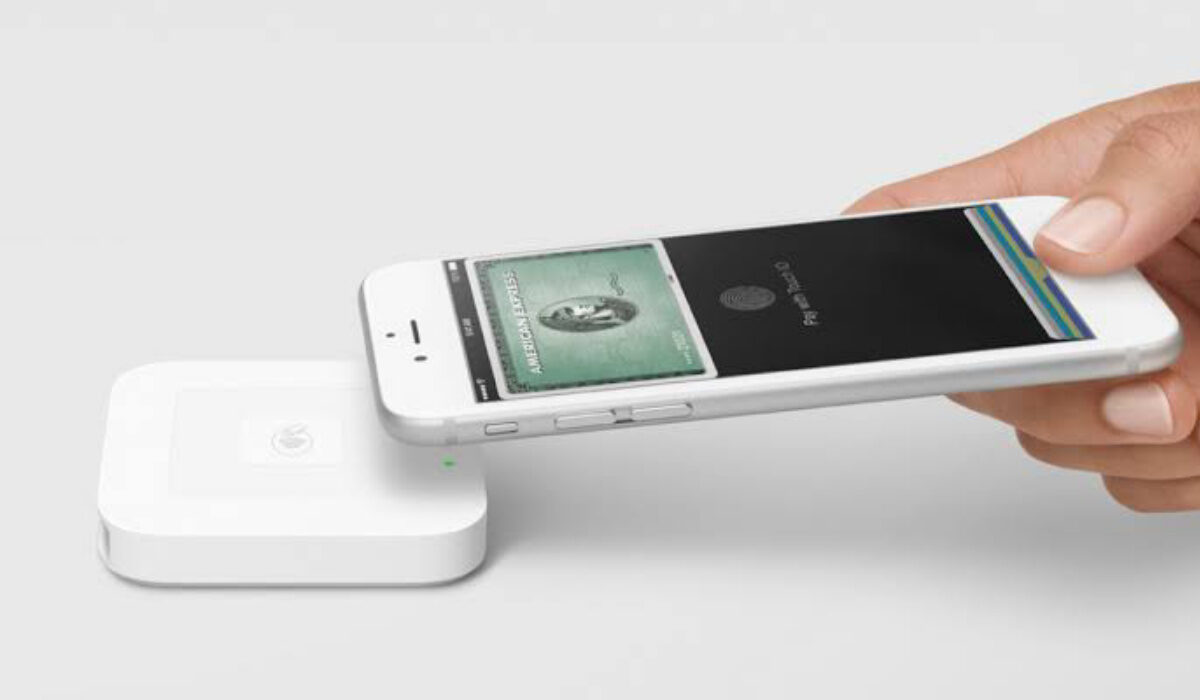
- Payments : This is perhaps the most widely deployed use of near-field communication today. With an NFC-enabled phone, you can pay for items quickly just by holding the phone close to the payment device, or by touching it to it lightly.
- Identity and Ticketing : If you own an NFC smartphone, you can not only purchase your tickets, but also use your cell phone as a digital ticket to access game grounds, buses, trains, aeroplanes, and more.
- Automation via Tags : NFC is used in tags to provide automation. For example, you can embed an NFC tag in your doorway, so when you arrive from work, the lights in your building come on, and when you step out, they go off or dim. NFC tags can be used to adjust other things like modify brightness and temperature.
Near-field communication: Examples
Hyundai Motors recently developed and released a digital car key app that allows you to start and unlock your car using a cell phone. This innovation is an example of NFC at work, so you can start and unlock your car at close range.
Apple’s AirTags use this technology. For example, if you lose your AirTag, anyone with an NFC smartphone can scan it for your contact information to help them return it to you. Also, note that all iPhones from iPhone 7 and newer, running iOS 13 and newer, can read and write NFC Tags.
Accept card payments anywhere with Square
NFC also makes contactless payments possible. For example, Square’s contactless payment system uses Near-field Communication, enabling you to use your smartphone for payments.
But it isn’t only Square that is leveraging this same technology for payments. Apple Pay, Samsung Pay. To make payments, position the top of your iPhone close to the contactless reader. It is that simple. NFC is a technology that is making magic happen.
What are the examples of NFC?
Some examples are contactless payments and ticketing, tagging,
What does Near-field Communication use?
It uses radio-frequency identification technology (RFID).
Is Bluetooth Near Field Communication?
No; Bluetooth is not Near-Field Communication.
Do I need NFC on my phone?
It depends. If you want to be able to use your phone for payment services like Apple Pay and other contactless services, yes; you need it.
What is Near Field Communication?
It is a short-range technology that allows for communication between two electronic devices over a distance of 4 cm or less.
Why use NFC?
It opens you to a world of payments, identification, tagging, automation, and more via your smartphone.
- Don’t miss our reviews .
- Join our WhatsApp Group , to be notified of the most important articles and deals,
- Follow us on Instagram , Facebook , Twitter , and YouTube .
Author:Mister Mobility
Digital Skills and Communication Coach | Mobile Phone Connoisseur since 2001 | Tech Blogging since 2004
