Add MobilityArena as a preferred source on Google
Once upon a time, when Nokia was king in the land of mobile phones, it used a naming scheme similar to what Samsung uses today. We had Nokia C-series, E-series, N-series, and even X-series. Then, Nokia got in bed with Microsoft and ditched that scheme, adopting names like Lumia 620, 720, 1020, etc.
When HMD Global took over as manufacturer of Android-based Nokia phones, they adopted another naming scheme that produced models like Nokia 6.2, 5.1, 8.3, etc. And now, it apears that HMD Global is going full circle and back to the old naming scheme.
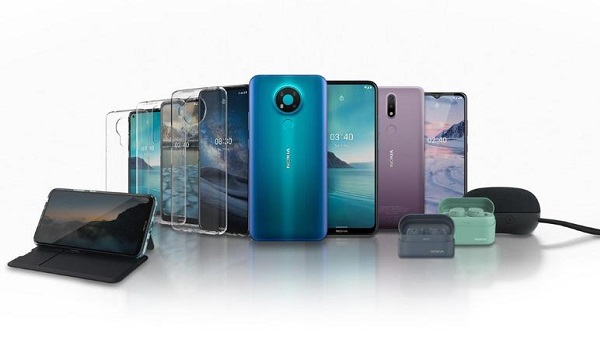
The first devices likely to hit the market belong to the Nokia G-series and X-series, namely Nokia G10 , Nokia X10 , and Nokia X20 . These devices are said to be due for official unveiling in April 2021.
Why the shift to the old naming scheme? I have no idea, but I am one of those who think that the new naming scheme sounds way cooler than the other ones that have been in use since the Microsoft adventure.
I do remember that Nokia also used a 4-number naming series much earlier. Phones like the 9210, 6610, 7250, 9500, etc, come to mind.
Anyway, I like this new naming scheme best of them all. I wonder what the flagship devices will bear. Nokia G-series and X-series are clearly mid-range models. But perhaps that isn’t how the new naming scheme will work. For example, Nokia’s old E-series were for smartphones with a hardware QWERTY keyboard, and those were my favourites.

The Nokia C-series already exist as the range for entry-level smartphones. Devices like Nokia C1 , C1 Plus , C3 and C5 are in that class.
We will have to wait to see what the premium flagship classes will be called, or how the new naming scheme is applied. More information will leak out in the next few weeks before the official announcements begin. That’s for sure.
HMD Global has teased April 8 for the unveiling of new devices. The G10, X10, and X20 are all expected to be announced then.
In the meantime, what do you think? Do you like the new naming scheme or prefer one of the older ones? Let’s hear from you.
Author:Mister Mobility
Digital Skills and Communication Coach | Mobile Phone Connoisseur since 2001 | Tech Blogging since 2004
Add MobilityArena as a preferred source on Google
I did not think that I would like the addition of Chat Bubbles to Android 11 , and after experiencing it, I am sure I don’t. Why is anyone excited about this? What value exactly do chat bubbles In Android 11 bring?
Chat Bubbles are message notifications that pop up and float on top of whatever app you are currently using. As such, you can respond to that chat by tapping on the bubble to open a floating chat screen. You do not have to leave the app you are in to attend to that message.
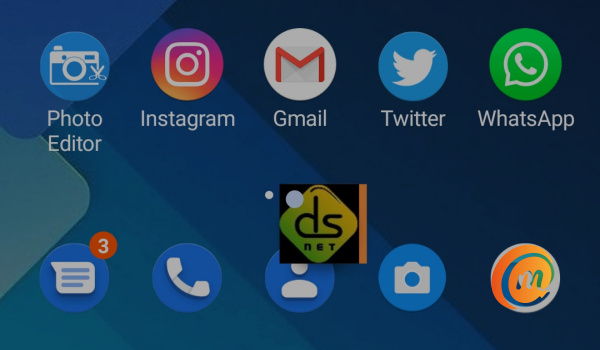
Chat Bubbles In Android 11
My first encounter with the Chat Bubble feature was in Facebook Messenger, which was also the first time we saw the feature. It was distracting and intrusive, and I quickly found the toggle to disable it. It has stayed turned off ever since. I was sure I’d never have to deal with it again.
I have been told that it is a great convenience feature, because you never have to leave what you are doing to respond to a message. I disagree. I am already bombarded with so many smartphone notifications every day that I do not want to immediately attend to.
Does anyone else understand that? I do not have a need to respond to every message that arrives on my smartphone. My life is not a flurry of activities and urgent needs. I do not work for the FBI, secret service, or fire service.
When I am doing something, I focus on it and do not want distractions. Contrary to what you may have been told, multitasking is a myth. It impedes productivity. Multitasking is distraction.
So, I am typing this article on my Android 11 smartphone at 3.31am and a text message comes in. The Chat Bubble pops up on my screen – right in the middle of the very keyboard I am typing with. Who thought this distraction and annoyance would be a great idea? It isn’t. It sucks. I don’t want it. I definitely do not want to stop my train of thoughts to respond to an SMS right now or at any point in time.
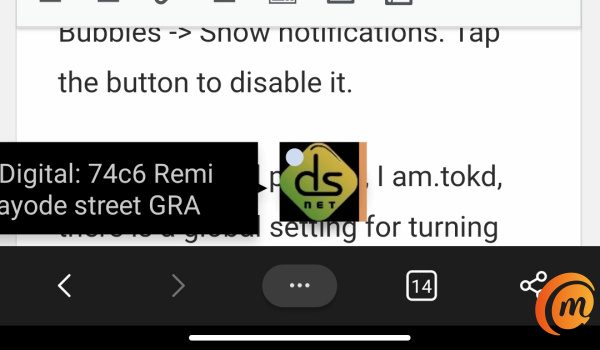
The thing is, without this new Chat Bubbles feature, I could already respond to a text message, WhatsApp message, and Telegram message without opening the respective app. All I have to do is pull down the notification shade, select Reply , type my response there, and send – without leaving what I am doing and opening another app. See? The new Chat Bubbles in Android 11 add no real value.
Why add this clunky, distracting, and annoying layer? It beggars belief that as we are leading crusades to wean people off smartphone addiction and FOMO (fear of missing out), the Android strategy team though it would be fantastic to implement system-wide Chat Bubbles in Android 11 operating system.
You got it wrong, guys. It is a bad idea, and I can’t say it enough. After updating my Xiaomi Mi Note 10 Pro to Android 11 , Chat Bubbles began to pop up each time a message arrived on my phone. If there was hell on earth, this was it.
On Google Pixel phones, I am told, there is a global setting for turning the feature on and off. But I haven’t found it on my MIUI 12 smartphone. I have checked multiple times. It isn’t there. I hunted for that global menu where I could turn it off. Turns out there isn’t one. Aargh! What? How can there not be a kill switch for this? How is the user so poorly thought of that the option to kill this pesky feature with just one tap does not exist?
This is absolute tomfoolery. This is a likely a fault of the MIUI developer team, and it is unacceptable. Eventually, I found that I had to dive into the Additional settings in the app for Messages, where I found a menu named Bubbles, where I could toggle the feature off for the Messages app.
How to turn off or disable Chat Bubbles in Android 11
The path to follow is: Settings > Notifications > Messages > Additional settings in the app > Bubbles > Show notifications. Tap the button to disable it.
Update : I am told that the path to follow has changed since when this article was published. If you cannot find it using the above path, try this one: Settings > Notifications > tap on the word “Messages” > In-app Notification Settings > Bubbles > tap on “None”. Thanks, Andrew!
Does this mean I’d have to do this for each app that has Chat Bubbles in Android 11 implemented? That would suck. For now, I am glad that I am no longer subjected to this distraction and annoyance. I do not need to respond to every incoming message urgently. And Xiaomi needs to implement that global toggle to disable or enable, system-wide, Chat Bubbles in Android 11 and place it in a location that is easy to find.
- Don’t miss our reviews .
- Follow our news on Google News .
- Join our WhatsApp Group , to be notified of the most important articles and deals,
- Follow us on Instagram , Facebook , Twitter , and YouTube .
Author:Mister Mobility
Digital Skills and Communication Coach | Mobile Phone Connoisseur since 2001 | Tech Blogging since 2004
