Add MobilityArena as a preferred source on Google
The goal of the Android Open Source Project is to avoid any central point of failure in which one industry player can restrict or control the innovations of any other player. It is available to anyone and everyone to use as they please.
Unfortunately, mainstream smartphone manufacturers have largely ignored the AOSP and gone ahead to make themselves and their customers fully dependent on one industry player – Google. From Samsung to Sony, brand name smartphone manufacturers took the easy route and ceded control to one entity, though Android Open Source was available and presented them the opportunity to do much more.
I understand why they did it. It was just easier to go with Google’s services than to create something else. Those few daring individuals who tried the road less taken all failed. Microsoft and Nokia failed with Windows Phone. Sailfish has managed to stay afloat. eOS ( formerly eelo ) is still very niche and an enthusiast affair.
But the recent drama between the US government and Huawei which led to the latter being given the middle finger by Google, demonstrates how this dependence on one industry player is a bad idea.
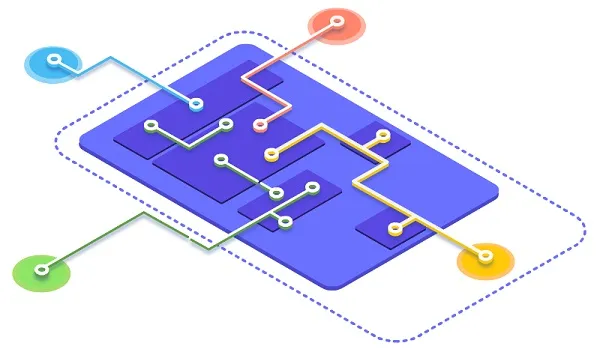
What is the Android Open Source Project?
You may have heard that Android is an open source operating system for mobile devices. You heard correctly. What that means is that anyone can take it and use it as it is, or modify it and rename it, for use.
Modifying Android open Source is also known as forking, or creating a fork. For example, Sailfish OS is a fork of Android. It is a modified version of Android OS.
How has Google been able to keep the Android system dependent? By having key services that have become essential to many users around the world. Those services, like Play Store, Gmail, Maps, etc, are not part of Android Open Source. They are Google services, and any manufacturer that wants to include them in their software or smartphone must license them from Google. So, Samsung, Huawei, Nokia, Xiaomi, TECNO, Infinix, and all the other Android manufacturers license Google services for use on their phones.
Hopefully, you are getting the picture better. Are there any smartphone manufacturers who use Android OS without Google services? Plenty. But they are usually small, relatively unknown brands, mostly operating in China. You see, the average Chinese person does not use Google services anyway, so those phones sell like fresh, hot cakes in China.
If you have ever purchased an Android smartphone that didn’t have Google Play and all those other Google apps pre-installed, that was a phone running Android Open Source and without a license from Google. It is perfectly legal. As a matter of fact, that was the plan – the freedom to allow anyone use Android OS as they deem fit without any rerstrictions by anyone.
Google has no control over Android Open Source. No government can place any restriction on its use either via a ban. Everyone has unrestricted access to it.
Android Open Source Project
It looks like Huawei has forked Android OS
Over the last few years, Huawei has developed a mobile OS, which we are told is called HongMeng OS . The company’s CEO has said that the OS has Android app compatibility, which leads me to believe that it is a fork of Android OS. In other words, Huawei has forked Android. And that is a good thing. It means that using that OS, you will be able to install and use Android apps.
There is the problem of Google services being missing though. It is a problem that Huawei will have to bear, as it looks like mission impossible getting those services on any phone running the new HongMeng OS.
Chinese users will likely embrace HongMeng OS phones, both because they do not need/use Google services anyway and because they are likely to act in solidarity with Huawei. So, though Huawei will suffer some loss, it will not be on all fronts.
Google will lose too, and it may be big
This is not being mentioned a lot in the media, but Google stands at a crossroad too. With their hands forced by the order of the US government, this can quickly snowball and leave them with a bad taste in the mouth.
If there is anything that human history has taught us, it is that no empire gets so large and so strong and so dominant that it cannot come crumbling down. Even Google’s. Should other Android manufacturers see the writing on the wall and acknowledge that what has happened to Huawei can happen to them as well, they may decide to strike out too to protect themselves.
And the best way to do it is to form a coalition to create a fork from Android Open Source that they all can use. Huawei is the world’s 2nd largest Android brand. That is a huge number. If they switch to HongMeng, Google loses some users too.
Imagine a coalition that includes Samsung, Huawei, Xiaomi, and OPPO alone adopting a common smartphone OS forked from Android Open Source. Those four together control over 60% of Android smartphones in the market. That will be a huge loss for Google. And it will be freedom for millions of users whose privacy is invaded daily by Google services.
I had a discussion with EyeBeeKay earlier today, and this was what he had to say:
A coalition will be the way to go. Maybe unite against Google and have s centralised app store that won’t be controlled by any one company or country. Also, new APIs/API changes will no longer be arbitrarily decided by Google or any one company alone helping interoperability in the process. But this could also have its attendant bottlenecks because of possible disagreements among the different companies involved.
I agree. A coalition is the way to go, but we know how things go with these coalitions . Anyone remember the Symbian Foundation, MeeGo, and Tizen?
On a final note, everyone who tried to fork Android and break Google’s monopoly before now was unable to pull the numbers. But that was before the Chinese became dominant players in the mobile world.
If anyone can do it, it is the Chinese. They have consistently pulled the rug from under the feet of everyone who underestimated them.
References
- Android.com .
- Don’t miss our reviews .
- Follow us on Instagram , Facebook , Twitter , and YouTube .
Author:Mister Mobility
Digital Skills and Communication Coach | Mobile Phone Connoisseur since 2001 | Tech Blogging since 2004
Add MobilityArena as a preferred source on Google
You may have heard some phone users complain that one power bank or the other damaged their phone and then concluded that power banks damage cell phone battery. Does using a power bank damage your smartphone battery?
I have been asked a direct question on this subject:
Mr Mo what’s your take on this? There is this belief in some quarters that power bank usage deteriorates battery life/performances faster than the conventional charging. How true is this? Is it scientifically proven?
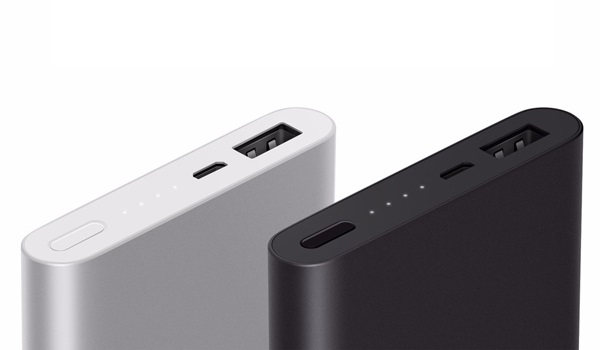
The direct answer to the above question is this: there is no scientific backing to the idea that the use of a portable charger, AKA power bank, leads to faster deterioration in battery life of your smartphone or any kind of device for that matter.
- How power banks work
- Does using a power bank damage your phone battery?
- What other things may damage your cell phone battery?
How power banks work
Power banks are designed to discharge power to your cell phone or other device at specific voltages and power ratings. These follow standard ratings that your device already uses. Using a power bank will not damage your mobile phone battery in any way.
However, as with every other electrical/electronic equipment, a substandard device is capable of causing damage. Substandard cables in homes result in fires. Substandard tyres will expose you to increased danger of vehicle accidents. Substandard cement blocks and concrete mixes will result in collapsed buildings and structures.
In the same way, a poor quality power bank can damage your cell phone battery and cause it to degrade faster than usual. A portable charger of questionable quality can potentially deliver a lower or higher voltage than your smartphone is designed to handle, and this can damage not only your phone’s battery but possibly other electrical circuits in it.
A power bank that is properly designed and built to high quality standards poses no harm to your smartphone, music player, or tablet. Absolutely none.
Also, note that you need to use a power bank with a power rating that matches your phone’s. Using a power bank that discharges a higher voltage than what your phone is built to handle is a dangerous thing and can damage your phone battery.
Good quality power banks often have advanced systems built in to protect your smartphone or other device from overcharging, overheating, over-current and over-voltage. These more intelligent portable chargers are designed to recognise and protect your phone.
Does using a power bank damage your phone battery?
What will damage your phone battery are substandard power banks. So what should you do? Avoid buying ridiculously cheap, nameless and faceless portable chargers, especially if you own a good quality smartphone. Those items are usually of substandard quality and are more likely to damage your cell phone battery.
It is simple logic: if your smartphone is worth anything to you, you should be using good quality accessories with it, especially when it comes to power and battery charging accessories. Also note that using a damaged portable battery can result in problems for your phone. If you power bank begins to bulge, that is an indication that it has a swollen battery. Danger. Stop using that portable battery to avoid damage to your phone and your person. You don’t want a fire outbreak on your hands.
Lastly, when buying a power bank for use with your devices, be sure to check the power ratings to confirm that it discharges voltage and power that is specified for your phone. This is important.
If you see someone complain that a power bank damaged their phone, chances are that they charged said phone with an inferior quality or faulty power bank. Using a power bank in itself does not damage your cellphone battery in any way.
What other things may damage your cell phone battery?
As a bonus point, here are a few more things that can damage your phone battery. Using or charging your phone in extreme temperatures is bad for the battery. More adavanced phones will cut off the charging the process if the environment gets too hot or cold.
Also, note that if you have used a phone for over two years, chances are that you have exceeded the full charge cycles, after which the battery begins to deteriorate. At that point, you either replace the battery or buy a new phone.
Author:Mister Mobility
Digital Skills and Communication Coach | Mobile Phone Connoisseur since 2001 | Tech Blogging since 2004
