Add MobilityArena as a preferred source on Google
PS : This article has been updated with 2022 info. Once upon a time, to get really good performance on a smartphone, you had to buy a flagship. You had to buy one of the most expensive models on the market. However, a number of factors have changed that. In 2016, you no longer need a flagship smartphone to get really good performance and features. The mid-range smartphone is here. But allow me to stretch a bit and introduce you to the super mid-range smartphone .
The term, flagship killer, is used to describe a premium mid-range phone that delivers close to premium flagship performance and features but cost significantly less. Super mid-range smartphones are not on the same level as flagship killers, but they are solid all-rounders.
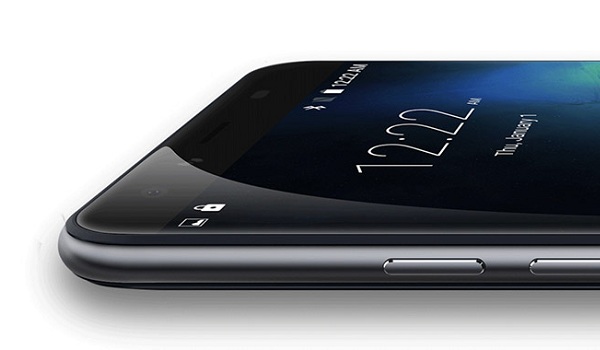
- What Is the super mid-range smartphone?
- The Contenders Are…
- These Models Qualify
- 2022 update on super mid-range smartphones
What Is the super mid-range smartphone?
It is not in the league of the flagship killers, but it has features and specs very similar to what obtains on them. And it costs much, much less. This makes a super mid-range smartphone even better value than a flagship killer. There are not a lot of them around yet, but give it time; the markets will be populated by them in no time.
Yesterday morning, MobilityArena user, Kayode Akinrelere, asked a question about available devices in the sub-$400 price range but with at least 3 GB of RAM and 32 GB internal storage. I shall build a case for the super mid-range smartphone on it. Imagine a quad, hexa or octa-core processor clocked up between 1.5 and 2.2 GHz. The processor will likely be made by MediaTek. The device will be 4G LTE and have a 13 megapixel camera and above. Ladies and gentlemen, I have just introduced you to the super mid-range smartphone.
Some years ago, the above was specs for a flagship, but thanks to the army of Chinese manufacturers and MediaTek (among others), what used to be flagship specs and performance are now readily available at much lower cost to enthusiasts and those who want to live on the cutting edge of smartphone usage. The super mid-range smartphone is a possibility, if it doesn’t already exist.
The Contenders Are…
Here is a quick list of my personal contenders right now:
- Lenovo Vibe K4 Note
- Huawei GR5
- Gionee M5 Plus
- Innjoo Max 3
But if you check their specs, you will see that they all fall short a bit. Internal storage on both the Lenovo and Huawei is 16GB. The processor in the Gionee is 1.3 GHz (aaargh!). We do not yet have details of the processor in the Innjoo, but if past experience is anything to go by, I wont be shocked to see 1.3 Ghz in it too. Mbanu. 1.3 Ghz wont cut it.
There are some models from other brands like Ulefone, Xiaomi, and so on that are close too. Some of their 2014 flagships fit the description perfectly, but we are talking about 2016 devices now (maybe late 2015 too).
These Models Qualify
The Xiaomi Redmi 3 Pro with 3GB RAM, 32GB internal storage, micro-SD card slot, octa-core Snapdragon processor clocked up to 1.5 GHz, 4G/LTE and a massive 4,100 mAh battery meets all the specifications. And it costs less than $400. So, we have one.
Another device that qualifies as a super mid-range smartphone based on the above specifications is the Infinix Zero 3 LTE . 2 GHz octa-core processor. 3GB RAM. 32GB internal storage. 4G LTE. Costing less than N60,000, it is incredible value for money. The build is plastic, but I guess that is partly why the Zero 3 is so pocket-friendly.
Do you know of any other super mid-range smartphones – a 2016 (or late 2015) smartphone that meets up to the specified specs above and costs $400 or below?
2022 update on super mid-range smartphones
It is time to update this article. Just like I predicted back in 2016, the global smartphone market is awash with a number of devices that fit in the super mid-range smartphones category. A few notable ones are Samsung Galaxy A52s 5G , OnePlus Nord 2 , Xiaomi 12 Lite , Redmi Note 11 Pro Plus 5G, and Realme 9 Pro+, among others. Their specs are far above what obtained in 2016, but then that is the natural progression of cell phone technology. The specifications and features for each category keep getting better.
The summary of the matter is that today, you no longer need to spend USD $500 on a smartphone to get fluid or smooth performance and advanced features. That period belonged in the past. With between $300 and $400, you are assured of finding an outstanding smartphone. We are now living firmly in the age of the super mid-range smartphone.
Author:Mister Mobility
Digital Skills and Communication Coach | Mobile Phone Connoisseur since 2001 | Tech Blogging since 2004
Add MobilityArena as a preferred source on Google
BlackBerry’s Chief Operating Officer Marty Beard has released a statement in which he tries to convince us that BlackBerry 10 OS is not going away. I am still not convinced. The official statement makes BlackBerry sounds like the girl who doesn’t want a guy but wants to hold on to him anyway. Here is the official statement from Marty:
Last week we shared the latest plan to keep advancing our smartphone portfolio. Unfortunately, the news was misinterpreted by many – from the media, to tech observers, to our fans and customers. I made the rounds this week with the press to set the record straight, and the message was this – BlackBerry is not backing away from BB10. Our customers depend on the BB10 platform, and they are the ones that drive our roadmap. That is why we are committed to not just maintaining BB10 software, but advancing it to be even more secure and provide even greater productivity. You’ll see that with the next 10.3.3 update coming within the next month, which will be focused on enhancing our already-stellar privacy and security features. Future BB10 software updates for 2017 are already in the works. Meanwhile, BlackBerry 10 devices such as the BlackBerry Passport and Leap are still available to our loyal customers. Our customers also help us decide what type of keyboard we make for them. And what they ask for is choice in both a virtual and physical keyboard. This means we’ll continue to make our iconic BlackBerry keyboard. We have four physical keyboard options that we currently offer: Passport, Passport Silver Edition, Classic and PRIV. There is solid demand for physical keyboards – and as long as that’s the case, we’ll continue to make them. For virtual keyboard fans, you have Leap and PRIV (just keep that slider down). Now that you know we’re committed with BB10, let me explain why BlackBerry’s device strategy is truly unique. It’s differentiated because it goes beyond just smartphones. Our view is the rapidly growing mobile environment is quickly being encompassed by an IoT world that requires both strong security and connectivity. The foundation for this started with the BB10 software platform, which was built by engineers with decades of experience in security. But we knew there was a need to bridge the connectivity gap – leveraging Android was the solution. But, we didn’t just want to create another prosaic Android device. We wanted to merge the best of BlackBerry with Android – the notion of a new merged BlackBerry platform meant we would provide the security and connectivity BlackBerry is known for with the content available in the Android ecosystem – all in one environment. BlackBerry is the only one with this unique flavour of smartphone in the market today. PRIV was the first iteration…and soon there will be others. At BlackBerry, we’re not looking to fit into the industry standard mould. That’s because mobility has evolved beyond just smartphones and tablets. Besides our burgeoning enterprise software business, the new Mobility Solutions division has defined a strategy enabling us to agilely pursue opportunities in this new security-focused era.
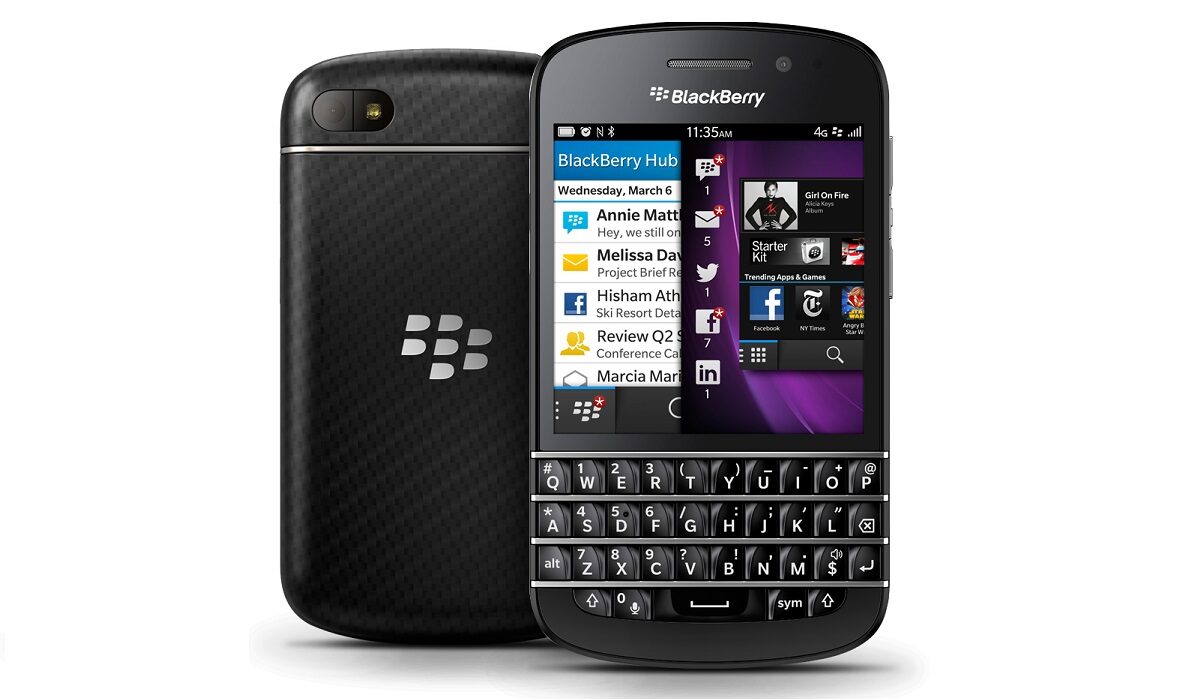
Now, read on for my take on the above statement.
BlackBerry Will Make More Physical Keyboards
The statement is very categorical about the fact that Blackberry Ltd. will make more smartphones with a physical keyboard. There is no ambiguity about it.
BlackBerry Has Switched Platforms
There is nothing in that statement that says that BlackBerry will continue to produce new BlackBerry 10 smartphones. The statement dances around and finally attempts to sell the Priv as a middle ground between BlackBerry 10 and Android: “We wanted to merge the best of BlackBerry with Android – the notion of a new merged BlackBerry platform meant we would provide the security and connectivity BlackBerry is known for with the content available in the Android ecosystem – all in one environment.”
But what that statement says is that BlackBerry has moved to Android OS and is attempting to replicate the level of security available on BB10 on Android OS. That’s all. Summary: BlackBerry has moved to Android. Whether they are able to replicate that security is another matter. But the move has been made. The switch has been pulled.
The statement is clear that BlackBerry will continue to support existing BB10 smartphones with software updates, which is fair enough. It sounds very familiar. It sounds like what we heard concerning Symbian OS when Nokia pulled the switch. Repeat after me:
- BlackBerry 10 has failed BlackBerry and the company has switched to Android.
- The future of BlackBerry is Android OS.
BlackBerry Ltd. doesn’t want BlackBerry 10 any more, but wants to keep it around. Sounds like when a girl does not find a guy attractive and so does not want him in the way he wants her, but she wants to keep him around. She consigns him to the friend zone.
BlackBerry 10 OS Is On Life Support
Keep using your existing BlackBerry 10 smartphones if that works for you. I have no problem with that. But there is nothing that BlackBerry Ltd. has said in recent times that suggests that there is a medium or long term future for BlackBerry 10 OS. If any, the future of that platform from this point will be short. As far as I can tell, BlackBerry 10 is on life support. The end is nigh.
- Don’t miss our reviews .
- Follow our news on Google News .
- Join our WhatsApp Group , to be notified of the most important articles and deals,
- Follow us on Instagram , Facebook , Twitter , and YouTube .
Author:Mister Mobility
Digital Skills and Communication Coach | Mobile Phone Connoisseur since 2001 | Tech Blogging since 2004
