Add MobilityArena as a preferred source on Google
Have you thought about walking into a factory where Robotics and Automation alongside human effort work side by side, seamlessly collaborating to produce goods faster and more efficiently than ever before? This is not a scene from a sci-fi movie; it’s the reality of today’s workplaces, and it’s only getting better. The trends in robotics and automation are set to redefine how we think about work, productivity, and even our daily lives. The earlier we get along the better. Stay glued to this article as I take you on a journey into the world of endless possibilities brought to us by Robotics and Automation.
- The Rise of Collaborative Robots
- Hyper-Automation
- AI Integration: Smarter Robots
- The Human Touch: Enhancing Employee Experience
- A Glimpse into the Future
- Conclusion
The Rise of Collaborative Robots
Once upon a time, the idea of robots taking over jobs sparked fear and skepticism. However, the narrative has shifted dramatically. Enter collaborative robots, or cobots, designed to work alongside humans rather than replace them. These friendly machines are equipped with advanced sensors and AI capabilities that allow them to understand their environment and respond in real-time. Take for instance, in manufacturing settings, cobots can handle heavy lifting or perform repetitive tasks, freeing human workers to focus on more complex and creative responsibilities, allowing them to focus on cognitive tasks rather than physical labor. Jamie Mottershead, a technical director at Renovotec, emphasizes this shift: “Businesses will continue to increase investment in AMR (autonomous mobile robot) solutions in 2024.” With the flexibility and scalability that these robots provide, companies can achieve continuous improvement while enhancing worker safety.
Hyper-Automation

As we welcome and embrace more advanced technologies in our world of today, the concept of hyper-automation is gaining traction. This term refers to the integration of various automation technologies — like RPA (Robotic Process Automation), AI, and machine learning — to automate complex business processes from end to end. According to industry experts, hyper-automation is projected to grow at an astounding rate of over 55% annually, that’s massive. For businesses and organizations, it means they can streamline operations significantly, reduce human error, and increase output. Imagine a logistics company where robots automatically sort packages while AI predicts delivery times based on real-time traffic data, did I hear you ‘Fantastic’!. This level of efficiency not only boosts productivity but also enhances customer satisfaction.
AI Integration: Smarter Robots
The synergy between robotics and artificial intelligence is another game-changer. As AI continues to evolve, it empowers robots to make smarter and more intelligent decisions on their own. For instance, generative AI allows robots to learn from past experiences and adapt their actions accordingly. This capability is crucial in environments like healthcare, where accurate precision is vital. The International Federation of Robotics notes that the stock of operational robots worldwide reached a record of about 3.9 million units in 2022. With advancements in AI, these robots are becoming more autonomous, capable of performing tasks that once required human intervention. The Future is HERE!
The Human Touch: Enhancing Employee Experience
Despite technological advancements, one thing remains clear: human-centricity is highly essential. As automation takes over mundane tasks, workers can devote their time to higher-value activities that require critical thinking and creativity. This shift not only enhances job satisfaction but also fosters a culture of innovation within organizations and businesses. As we are familiarizing ourselves with these technologies, we should expect more intuitive RPA interfaces that empower non-technical users to design and manage automation workflows easily. This democratization of technology encourages innovation across all levels of an organization.
A Glimpse into the Future
As we look ahead, the landscape of robotics and automation is brimming with potential. From mobile manipulators that automate material handling tasks in complex environments to digital twins that optimize performance through virtual simulations, these are endless possibilities. Also, as companies adopt Robotics-as-a-Service (RaaS) models, smaller businesses can access cutting-edge technologies without hefty upfront investments. This accessibility will drive further innovation and integration across various sectors.
Conclusion
The future of work is being shaped by robotics and automation in ways we could only dream of a few years ago. As these technologies continue to evolve and integrate into our daily operations, they promise not just increased efficiency but also a more collaborative workplace where humans and machines work together towards common goals. So the next time you hear about robots taking over jobs, remember this: they’re not here to replace us, rather, they’re here to enhance our capabilities and help us thrive in an increasingly complex world. The revolution is not just about automation; it’s about collaboration — making our lives easier while pushing the boundaries of what we can achieve together.
Author:Ifeoluwa Adeleke
Add MobilityArena as a preferred source on Google
“Will the Galaxy S25 Ultra have IR blaster?” is a question that is ok the lips of Samsung phone fans in North America and other markets. Infra-red ports are no longer the rave they used to be years ago on mobile phones, but some manufacturers still use them. And some Samsung fans are bitter about it.
Back in the day, the most advanced mobile phones would have an infra-red port. It was used for data transfer, including internet sharing. Yes; those were the days before Wi-Fi became a thing. To share your phone’s internet, you used an old-school data cable or infra-red.
With the presence of Wi-Fi, the need and demand for infra-red blasters diminished. In recent years, Xiaomi has put an IR blaster in many of its phones. This time, these ports enable the phones to be used as TV controllers. Yes; mobile phones have taken over the roles of everything else; why not add TV controller to it?
It also enables the ability to control the DVD player, air conditioner, and some other household appliances. But a more accurate version of Face ID uses infra-red and, so, we are seeing an upsurge of IR ports in smartphones. So, perhaps, a new IR revolution may yet happen based on this.
I have owned or reviewed a number of phones with an infra-red blaster and enjoyed using the feature. However, I cannot say that I have missed it in all the other phones I have used that did not have it. It has never felt like an essential to me.
- Will Samsung S25 Ultra Have IR Blaster?
- Will Samsung Galaxy S25 and S25+ Have IR Blaster?
- The Last Samsung Phones With IR Blaster
- Your Best Options For Phones With IR Blaster
- Deal-breaker?
Will Samsung S25 Ultra Have IR Blaster?
The Samsung Galaxy S25 Ultra is expected to be announced in January 2025, and it will likely not have the feature. Some people think that the phone would be even better if it has one. Unfortunately, it does not. Fans were disappointed that recent Galaxy flagship phones like the S23 Ultra and S24 Ultra did not have an IR blaster, either. Same thing goes for Galaxy S25 Ultra: it does not have one as well.
Will Samsung Galaxy S25 and S25+ Have IR Blaster?
Samsung S25 and S25+ will not have an IR blaster, as well.
And some Samsung fans are bitter about this omission. Some have based their phone buying decision on this factor and moved on to other smartphone brands. Here is an example of one of such conversations on Samsung’s own community website.
There are scores of other online platforms where fans are griping about the matter. But I doubt that the answer to the simple question, “Does S25 Ultra have IR blaster” will have any impact on Samsung’s sales in any way. Maybe all of 100 people will refuse to buy it for that reason.
The Last Samsung Phones With IR Blaster
The last Samsung models that had an IR blaster were the Galaxy S6 and the Galaxy Note 4. Since then, Samsung has ignored infra-red. And it does not look like the S10 range of phones will have this feature.
Your Best Options For Phones With IR Blaster
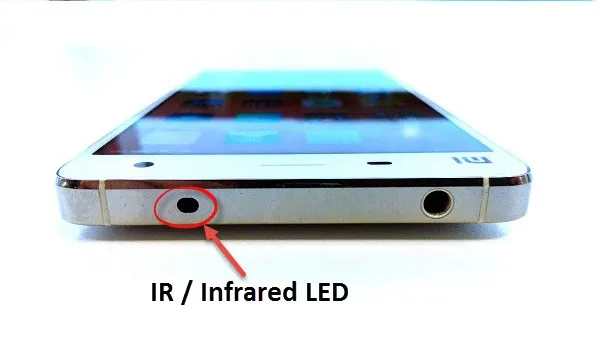
If you want a smartphone with an infra-red blaster, your best options are in the direction of Xiaomi and Huawei. The Xiaomi Redmi Note 13 Pro+ and other models in the Note 13 range are extremely popular with young people and both have IR blaster built in. Others include Xiaomi 14 series. Huawei has a number of models with an IR blaster. These include P20 Pro, Mate 10 Pro, and Honor View 10, among others.
Gionee produced a few smartphone models with infra-red blaster. It is unfortunate that the company has declared bankruptcy. Some of their phones are still available in the market though. I have reviewed a few LG smartphones and enjoyed using their IR blaster to control the TV. But it looks like LG might be dropping the feature too.
Deal-breaker?
There is a vocal enough community of smartphone enthusiasts who are put off by the S25, S25+, and S25 Ultra not having an Infra-red blaster. I am not sure that it is a large enough community to make a big dent in the fortunes of these products. But then, I have not conducted any scientific survey to arrive at that conclusion. Still, including an infra-red port cannot cost much if Xiaomi is putting it in their budget phones.
Who knows, part of why Xiaomi and Huawei devices are selling so well (besides pricing) might be that those brands are now on the heels of Samsung? What are the chances that having an IR blaster in key models could be a factor? After all, so many people around the world watch TV, play videos and play music on infra-red controlled home systems.
- Don’t miss our reviews .
- Follow us on Instagram , Facebook , Twitter , and YouTube .
Author:Mister Mobility
Digital Skills and Communication Coach | Mobile Phone Connoisseur since 2001 | Tech Blogging since 2004
