Add MobilityArena as a preferred source on Google
The QWERTY keyboard is the most widely used, and the most versatile, keyboard layout in the history of man. And whether you prefer to use it in hardware or on a touchscreen, it does not look like it is going away soon. Let’s look at a few historical facts about it and why it is so damned good.
A keyboard is a text input tool that allows a person to enter letters, numbers, and other characters. Decades ago, the QWERTY keyboard started out on the humble typewriter, a non-electronic gagdet. But the computer arrived and it transitioned to that as well and became an electronic too too. And when PDAs and mobile phones arrived, it was only a matter of time before it became a part of their DNA too.
The QWERTY keyboard is the standard typewriter and computer keyboard in countries that use a Latin-based alphabet. And it has evolved from its humble hardware beginnings to the highly versatile virtual tool that hundreds of millions of people use today.
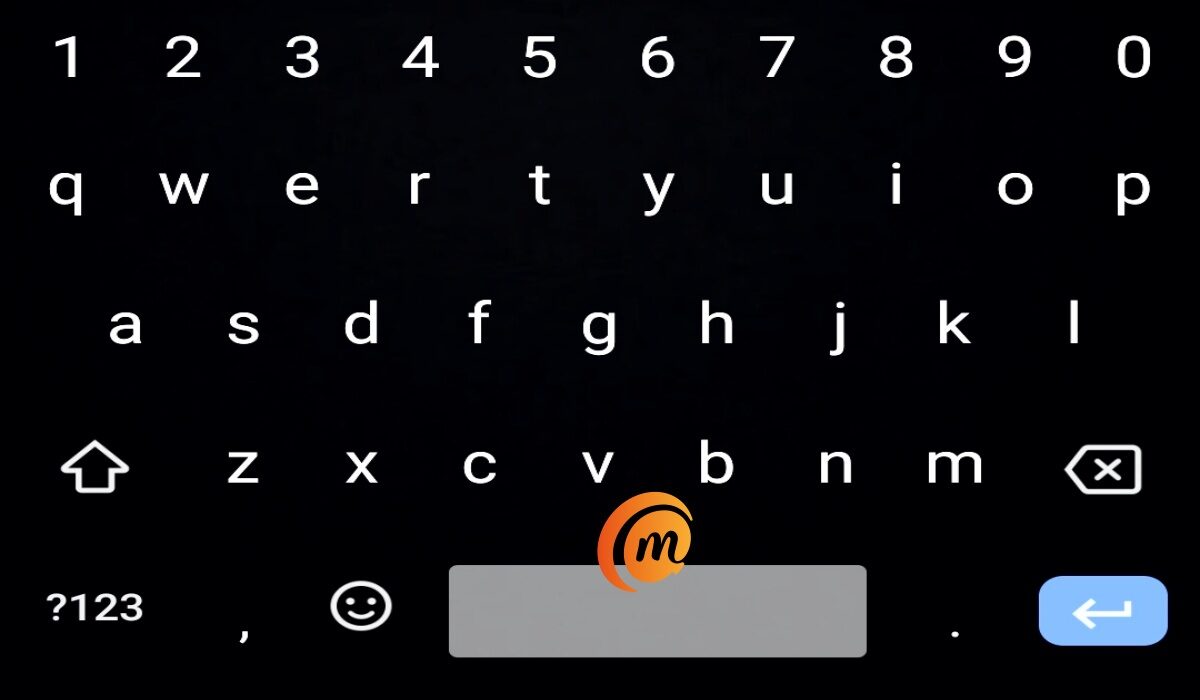
History of the QWERTY keyboard
The QWERTY keyboard layout had its first iteration by Christopher Sholes. Which is why it is also called the Sholes keyboard. In 1874, Sholes invented the typewriter, with a keyboard design that had an early version of what we know today.
There is a story that claims otherwise though[1], and says that the QWERTY keyboard is the result of a long, complicated process beyond one person.

The Sholes keyboard (source:National Museums Scotland)
The above picture is that of a Sholes keyboard, and the keys do not all match what we have on today’s QWERTY keyboard, so there might be some merit to the submission that the development of the design “was complex, evolutionary, and quite sensible for Morse operators”.
By the way, the name “QWERTY” is derived from the first six letters in the top row of the keyboard.
The QWERTY keyboard alternatives: Other key layouts
There are some common alternatives to QWERTY. They are variations of it, though, if we are bing honest. They have the positioning of some letters different and include other special characters required for the languages they are used for.
AZERTY keyboard : This is the French equivalent of the QWERTY keyboard. It is name is also derived from the first 6 letters in the top row.
QWERTZ keyboard : This is also called Swiss keyboard, and is used in German-speaking countries. The name is also derived from the first 6 letters on the top row.
Dvorak keyboard : This has a layout that is totally different from that of QWERTY, AZERTY, and QWERTZ. It was designed to provide a faster typing experience by making the most commonly available characters easier to reach.
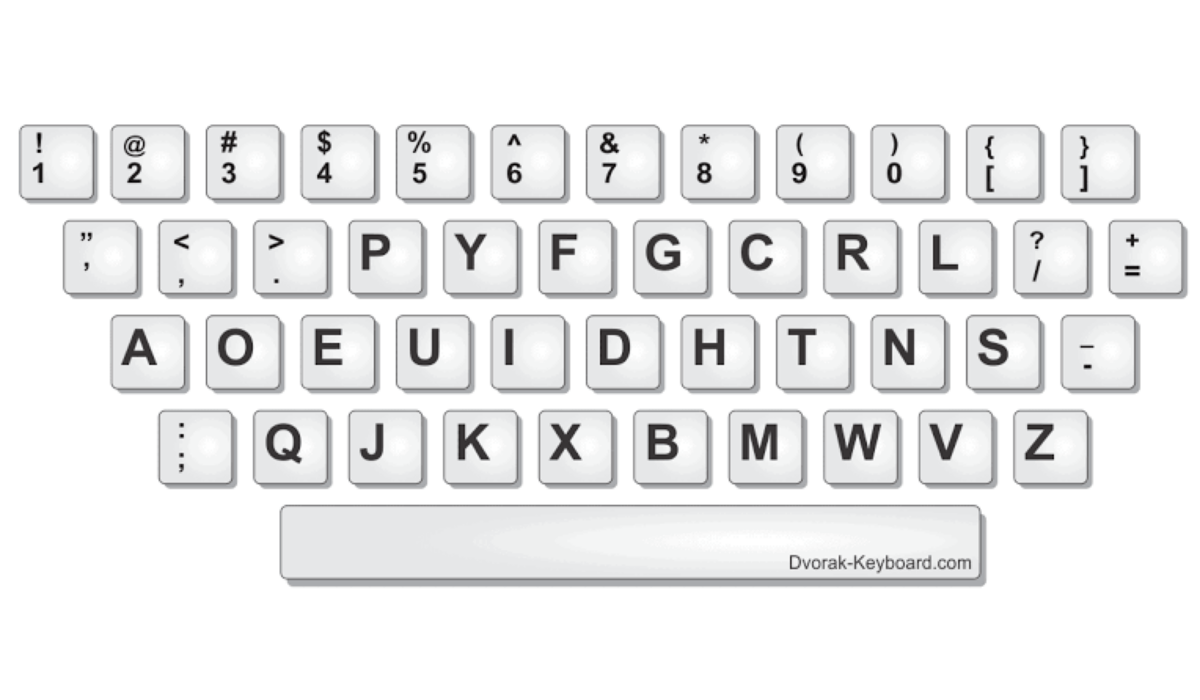
There are reports and counter-reports, arguments and counter-arguments as to whether typing with Dvorak is really faster than typing with QWERTY. One US Navy study “found that it took an average of only 52 hours of training for those typists’ speeds on the Dvorak keyboard to reach their average speeds on the qwerty keyboard. By the end of the study their Dvorak speeds were 74 percent faster than their qwerty speeds, and their accuracies had increased by 68 percent.”[2]
The study has been contested though. Others who have actually used Dvorak say it is fast but for different reasons. A The Verge contributor who has used Dvorak for over 10 years says QWERTY users are not missing much.[3]
what is not in contest is that the QWERTY keyboard has stood the test of time and continues to march on. In the smartphone world, we have mostly ditched hardware keyboards for on-screen typing. But we have stayed with the almighty QWERTY keyboard.
References
- The Atlantic ( link )
- MIT ( link )
- The Verge ( link )
Author:Mister Mobility
Digital Skills and Communication Coach | Mobile Phone Connoisseur since 2001 | Tech Blogging since 2004
Add MobilityArena as a preferred source on Google

Leading industry research analysts along with global experts in the field of optical imaging technology have shed light on what the smartphone industry can expect in 2022 with respect to mobile cameras, during a webinar titled “ Global Mobile Camera Trends 2022: Innovation Talk ”.
Discussions focused on how camera systems are evolving, and how they have become critical for OEMs as consumers place increasing importance on image capture. Innovations such as the combination of quality image sensors and advanced software algorithms, light sensitivity, image and video stabilization, and continuous lossless zoom have been highlighted by these industry players as Mobile camera trends to continue in the coming year.
The webinar was organized by leading technology research firm Counterpoint, and included were guest speakers from TECNO, a global smartphone brand focusing on rapid-growth in emerging markets, Samsung Electronics, a global leader in semiconductor, telecommunication, digital media and digital convergence technologies, and DXOMARK, an internationally renowned testing agency specializing in cameras, audio, displays, and batteries for consumer electronics.
Hosted by Counterpoint Research’s Peter Richardson, VP of Research, speakers Tarun Pathak, Hervé Macudzinski, Pan Xuebao, and Jimmy Hsu shared their insights on camera innovation, market trends, and the latest developments in imaging technology.
Tarun Pathak, research director for smartphones at Counterpoint, highlighted that burgeoning mid-end smartphones across both developed and emerging markets like Africa, Latin America and India will help form factors of quad-cameras and above to dominate. Mr. Pathak also sees “the combination of quality image sensors and advanced software algorithms allowing brands to deliver great imaging experiences across all smartphone price points.”
DXOMARK’s Hervé Macudzinski, Image Science Director and Product Owner of DXOMARK observed that smartphones today help bring DSLR capture quality and pro photographer’s skills into the hands of consumers. Further, he sees low-light imaging as a priority for devices in the highly competitive $400-$600 price bands – where significant improvements can be made.
Samsung Electronics’ VP and Head of R&D, Pan Xuebao, believes “We’re close to the point where smartphone brands can now deliver DSLR-grade photography in the hands of customers.”
He mentioned Samsung’s Tetra and Nona technology is bringing great performance across both bright and low light conditions by providing a bigger canvas to capture more light, while allowing smaller pixels for higher definition. Speed is also prioritized, with ISOCELL bringing faster autofocus capabilities. ”
Jimmy Hsu, Senior Product Manager of TECNO Image Technology, mentioned that demand for more diverse features and personalization could drive demand for ToF (time of flight) and DVS (dynamic vision sensor), which would help smartphone cameras rivals and outperform specialized cameras.
TECNO already focuses on personalization, with advances in dark complexion imaging aimed at users across key markets in Africa, India and other regions, with Hsu highlighting recent achievements and breakthroughs regarding light sensitivity, image and video stabilization, zoom and high-resolution – powered by technologies such as RGBW and G+P, Sensor Shift and telescopic lenses.
He promised some of these new technologies are slated for TECNO’s new products in 2022. Hsu also emphasized that “TECNO always aims to provide an excellent photo and video experience through constant innovation and a deep understanding of consumers’ needs.”
Media representatives and industry players from Africa, Southeast Asia, Europe, and the US also participated in the webinar, sharing their questions with the speakers on topics that interest tech-savvy mobile users and photo enthusiasts globally.
The webinar highlighted future mobile camera imaging technology trends and set expectations of the application of these imaging technologies for global markets and consumers, paving the way for further long-term smartphone imaging developments.
