Add MobilityArena as a preferred source on Google
While you all had your eyese on the premium smartphone market, the big boys were re-strategizing to tackle the budget smartphone market. It was pretty obvious that it would happen though.
A few years ago when every smartphone brand was scrambling for the premium market, I insisted that the long-term battle would not be won at the top but at the bottom of the pyramid. This was articlulated in my article, The battle for mobile will be won and lost at the low end . Here is an excerpt from that article:
Brands can do well in the market by focusing elsewhere, no doubt, and many play that game well. However, the revolution is at the bottom. This is even more pertinent in emerging markets where this revolution is happening as we speak. Are you looking at investing in the mobile market in Nigeria or Africa in general? Or in South America and Asia? Explore the bottom of the pyramid, because that is where all the action is. Forget the prejudices; there is a lot of money to be made there. The battle for mobile will be won and lost at the bottom of the pyramid.
But talk and projection is cheap. The question is whether or not the market has gone in that direction. I am happy to tell you that things have. Let’s have a look at the facts that point to a new focus on the budget smartphone market globally.
Apple has since then released a “budget” iPhone. The iPhone XR was an instant hit. It was the hottest iPhone model in the USA in 2018 , and it is selling like hot cake everywhere else.
Xiaomi has a reputation for delivering smartphones with great value at the best prices, but they never really looked at the entry-level market. This year, this vibrant Chinese smartphone brand has released an Android Go smartphone, the Redmi Go .
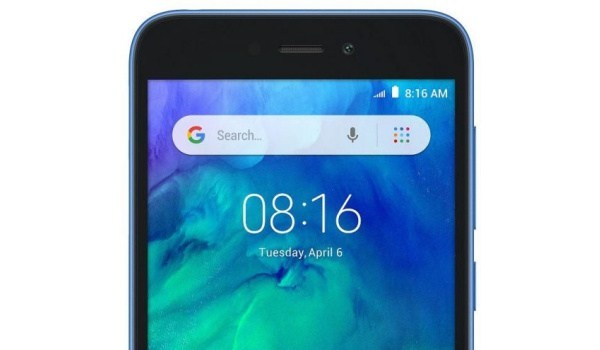
The Redmi Go smartphone is a new effort by Xiaomi at tackling the budget smartphone market.
I have had hands-on time with the Redmi Go and it is a revolution at the entry-level: this 1 GB RAM Android Go Edition smartphone feels so premium that it is almost unbelievable. We are talking about a $65 (₦22,000) smartphone here.
Now, Google has launched mid-range Pixel phones, the Pixel 3a and Pixel 3a XL . They are not rock bottom budget phones, but they are a distinct departure from Google’s strictly premium outlook. They are a shift and a new focus on the budget end of the smartphone market. What is even more interesting is that Google has said that they have plans to keep on producing cheaper Pixel phones[1].
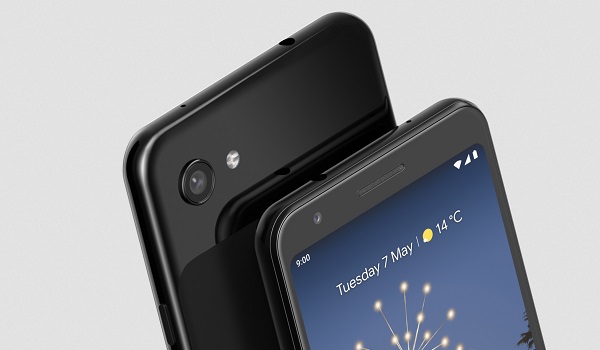
The Pixel 3a and 3a XL are part of Google’s strategy to tackle the budget smartphone market.
Why Is The Budget Smartphone Market The Next Frontier?
There are reasons why the budget smartphone market is the next frontier of conquest for mobile manufacturers.
For one, the premium market is saturated and everyone is struuffling there. Even Apple, king of premium, is struggling to sell more iPhones. Samsung is struggling there too. Every mobile brand is. The top of the pyramid is a very pointed, limited space. There is only so much you can squeeze out of it.
Also, the price of premium smartphones have kept rising over the years. How the market has responded is that consumers now hold on to their premium devices much longer – many for two years instead of the typical one year uprade cycle that used to exist.
This means that many Samsung Galaxy S8 owners did not upgrade to the S9 and would then pick up a Galaxy S10 two years down the road.
It is also important to note that the budget segment is huge, spanning all the way from sub-$100 entry-level Android Go smartphones to Snapdragon 660 devices that cost hundreds of dollars. That covers billions of people from every continent.
This Is Sparta! The Battle For Budget Smartphone Markets

With Europe and North America (and to a certain extent China) now saturated, brands look to put a lock on other regions where there are available opportunities. Those regions include countries like india, Pakistan, Bangladesh, Brazil, Nigeria, and many others where purchasing power is not as high as in the matured markets. These are budget smartphone markets.
And it is to these markets that all the big boys and girls are now turning their sights. Huawei, OPPO, Xiaomi, Apple, Samsung, and others. Apple is opening factories in India. Samsung has created a new A series lineup that is clearly a response to the threat of Chinese brands in budget markets. OPPO and Xiaomi are launching African operations. Huawei Mobile is pushing again in key African countries, as they are on the Indian sub-continent.
The scramble for the bottom of the pyramid is well under way and this new focus on the budget smartphone market will eventually become a torrent. Buckle up, people. This is going to be Sparta.
References
- Google plans to build multiple generations of affordable Pixel phones .
- Don’t miss our reviews .
- Join our WhatsApp Group , to be notified of the most important articles and deals,
- Follow us on Instagram , Facebook , Twitter , and YouTube .
Author:Mister Mobility
Digital Skills and Communication Coach | Mobile Phone Connoisseur since 2001 | Tech Blogging since 2004
Add MobilityArena as a preferred source on Google
This Mi Bluetooth Headset mini earbud looks like something from a pack of Redmi AirDots or Mi Airdots. But it uses Bluetooth 4.1 instead of 5.0, has only one earpiece instead of two, and there is no charging case. Instead of the $15 and $29 price tags that the respective Airdots cost, the Xiaomi Mini In-Ear Single Bluetooth earbud costs just about $10.

The Xiaomi Mini In-Ear Single Bluetooth earbud is same as Mi Airdots and Redmi Airdots
Xiaomi seems set on selling its Airdots earbuds at every price point possible in the budget market. Whatever your budget, there is a Xiaomi Airdots earbud for you.
It is time to have a look at the gadget itself. The Xiaomi Mini In-Ear Single Bluetooth earbud arrived in this simple pack, with the model name, LYEJ05LM, listed on the back side of the case.

Xiaomi Mini In-Ear Single Bluetooth earbud quick specs
Here are the key specifications and features of the Mi Bluetooth Headset mini earbud:
- Model LYEJ05LM.
- Bluetooth Standard: 4.1
- Bluetooth Profiles: HFP, A2DP, HSP, AVRCP
- Battery Type and Capacity: Li-ion 40 mAh battery
- Charging time: 1 hour
- Operating Range: 10 metres.
- IPX4 water resistance.
In The Box
- the Mi Bluetooth Headset mini earbud.
- charging dock.
- user manual
- two soft eartips

After taking the earphone out of the pack, I inserted it into the charging dock, which I plugged into a wall socket to charge. The charging dock is magnetic: when you insert the earphone into its slot there, it stays put and won’t fall out. Which is cool. It turned out that I had no need to charge it. The battery was already fully charged, and the headset was ready for use.
Xiaomi Mini In-Ear Single Bluetooth earbud in use
This mini earphone is as versatile as any Bluetooth headset can be. It supports music playback from your smartphone. Not like I use my Bluetooth headsets for that much, but it is nice to have the feature.
The Mi Bluetooth Headset mini earbud has only one button on it, and that is the controller for everything you want to do – pair, answer call, reject call, end call, skip music tracks, etc. Because it supports all four Bluetooth profiles (HFP, A2DP, HSP, and AVRCP), you have no need to worry about what it is capable of. It has everything covered.
I pressed and held the button to power it and held it till the LED light began to flash. On my smartphone, I scanned for and found it. It was labelled “Mi Bluetooth Headset mini”. A tap, and pairing was quick and done. It displayed a notice that says, “Connected for calls and audio, 100% battery remaining.”
I slid it into my ear and it was a perfect fit. Checking myself out in a mirror, it did not seem like I had a headset on. It is quite compact and fits into the ear without a fuss. Here is how the Xiaomi Mini In-Ear Single Bluetooth earbud compares in size with the Jabra Talk5 BT2406 :

At the end of the day, audio and call quality override every other factor when it comes to Bluetooth headsets. So how does this Airdots mini fare?
It performs very well. Audio quality is solid, with adequate bass to ensure that calls come in clear and crisp and music playback is enjoyable. During calls, the persons at the other end could hear one well, suggesting that the microphone is solid as well.
I haven’t put the IPX4 water resistance to the test. An IPX4 rating means that a gadget is protected from water splashes and drops. In this case, sweat would qualify. So, you can wear the earbud during your workout without fear that it will get damaged. At least, that is what the manufacturer says. Do not quote me just yet. Like I said, I haven’t put that to test.
The Mi Bluetooth Headset mini earbud is easy to like: it is sleek, compact, comfortable, and performs well. Battery life is good too, though Bluetooth 5 would have given it even greater longevity. But then, everything comes at a cost. For the price, this is a good deal.
Price and Where To Buy
- Don’t miss our reviews .
- Follow our news on Google News .
- Join our WhatsApp Group , to be notified of the most important articles and deals,
- Follow us on Instagram , Facebook , Twitter , and YouTube .
Author:Mister Mobility
Digital Skills and Communication Coach | Mobile Phone Connoisseur since 2001 | Tech Blogging since 2004
