Add MobilityArena as a preferred source on Google
A car phone is a mobile radio telephone specifically designed for and fitted into a motor car. Car phones were the ancestors of the mobile phone. How do I mean? The very first attempts to make telephones mobile resulted in the emergence of the first car phone in 1946, developed by Motorola. It weighed a whopping 80 pounds (about 36 kilos).
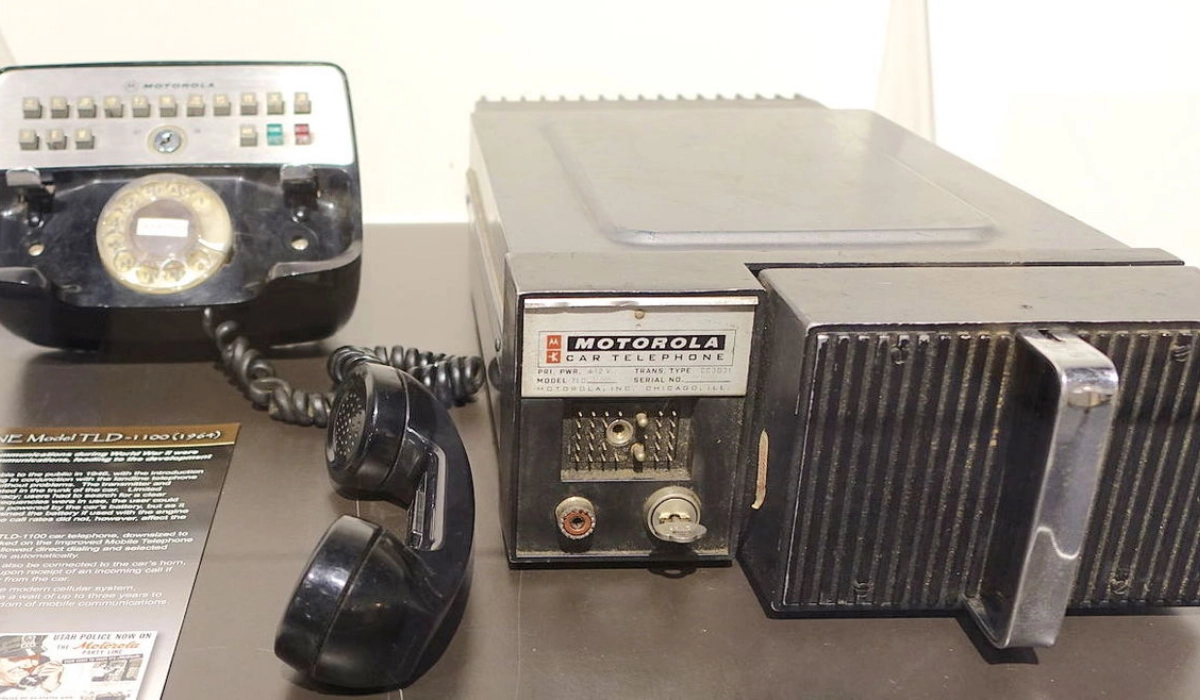
Motorola Car Telephone Model TLD-1100 was an early car phone.
Motorola, the company that eventually developed the first truly mobile handheld phone, was originally called Galvin Manufacturing Corporation. It later changed its name to Motorola, a word coined from the fusion of two words – motor from “motorcar” and olla from “Victrola”, a popular brand of phonographs). Why this name change? Because the company was reknown for making car phones. That’s why. They wanted a brand name that reflected their persona.
It wasn’t only Motorola that caught the car phone bug. For example, Ericsson which was one of the pioneers of mobile and cellular technologies, designed what was their very first mobile phone in 1956. It weighed 40 kilos and was about the size of a suitcase. How do you drag that around? In order for it to be mobile, the logical place to put it was in a car. And so, they did too.

An early car phone by Ericsson in use in Saudi Arabia.
The first car phones were, understandably, expensive. Almost all new technologies are initially expensive and when the economies of scale kicks in, the prices start to drop. Before phones that an individual could carry around became a thing, car phones were the cutting edge telecommunications tools.
If you have ever wondered why a retailer called Carphone Warehouse (in the United Kingdom) sells mobile phones, hopefully, you get the picture now. The journey to mobile phones started with putting those hefty early telephones inside of cars. And the miniaturisation continued till finally in 1973, a properly mobile handheld was demonstrated to the world using a prototype Dyna TAC phone. And so, the handheld mobile phone was born. An exciting new era of mobile telecommunications had arrived.
In the 1980s, cell phone manners continued to work to make their products handier and more portable, and more user friendlier. By the 1990s, mobile phones were fully portable and more advanced networks and technologies began to appear in those devices.
But that wasn’t the end of the journey. As modern smartphones developed, connectivity systems that paired cell phones with cars began to be developed and implemented. And soon enough, car brands began to integrate some of those smart features found in mobile phones in their vehicles.
It started with mobile entertainment systems, then extended to navigation systems. The integration keeps getting deeper and deeper. Today, most modern cars are effectively mobile computers on wheels, with advanced chips, sensors, display, and all sorts of capabilities built into them out of the factory. Today’s motor cars even get software updates and security patches, just like smartphones do.
The arrival of autonomous driving systems in cars was made possible by using many of the technologies that already existed inside smartphones. And so, we have come full circle from car phones to mobile phones and back to cars.
And for the first time, we even have a mobile phone company, Xiaomi, investing in developing a car from the ground up. This is happening right now in 2024.
What does the future hold for these two industries that are constantly mixing and interacting? Predicting the future is not always a straightforward thing. All it takes is for a new, unprecedented technology to show up, and things can go in an entirely unseen direction. However it goes, it promises to be exhilarating.
Author:InfoDesk
Add MobilityArena as a preferred source on Google
Google Pixel 9 Pro is a premium flagship grade smartphone. It is a compact smartphone in terms of display size, which it shares with the Pixel 9. It shares most other specs with the Pixel 9, but has more RAM, bigger storage, and adds a periscope telephoto lens to its rear camera configuration.
Key specs include a 6.3-inch OLED display protected by Gorilla Glass Victus 2, IP68 dust/water resistance, the Tensor G4 chipset, eSIM support, aptX HD support, a 4700mAh battery, 27W fast charging, 21W wireless charging, and reverse wireless charging. The fingerprint scanner is an ultrasonic under-display unit, which is more accurate and faster than an optical option.
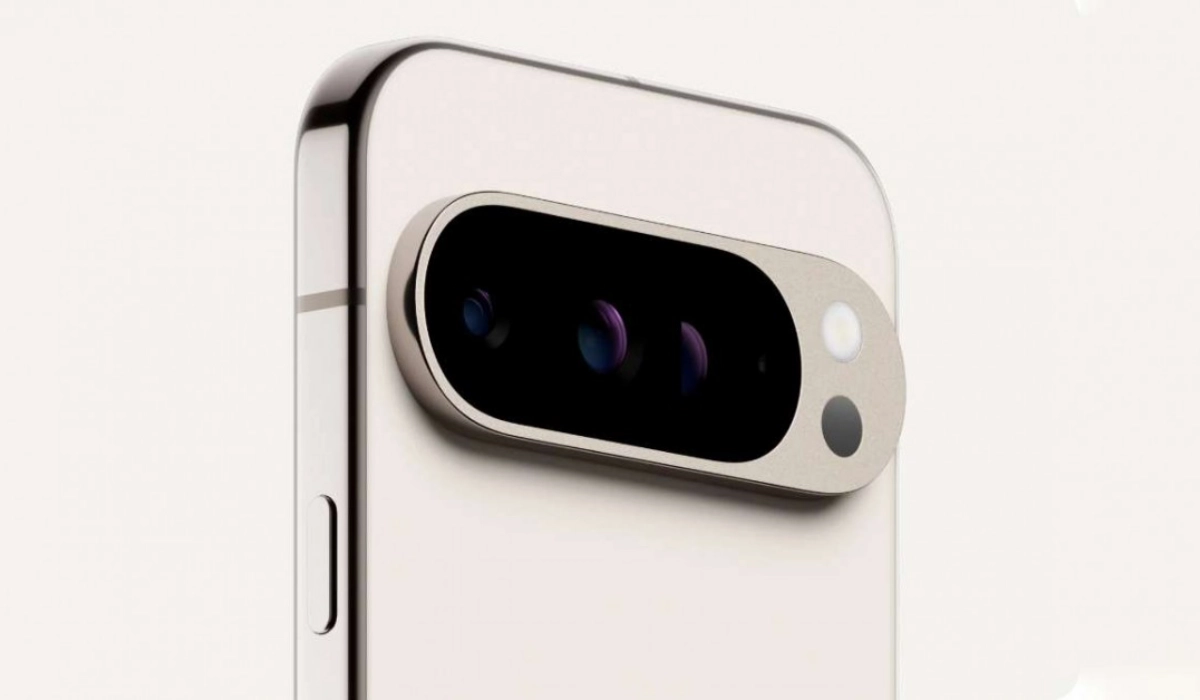
Google Pixel 9 Pro
- Google Pixel 9 Pro Specs
- Google Pixel 9 Pro: Software Updates
- Google Pixel 9 Pro Availability
- Google Pixel 9 Pro: Price and How to Buy
- Frequently Asked Questions about Google Pixel 9 Pro Is Google Pixel 9 Pro waterproof? How much does the Pixel 9 Pro phone weigh?
- Buyer’s Guide Verdict
- Alternatives And Competition
Google Pixel 9 Pro Specs
- 2G mobile network bands : GSM, GPRS, EDGE 850 / 900 / 1800 / 1900 MHz.
- 3G mobile network bands : UMTS, WCDMA, HSDPA 800 / 850 / 900 / 1700(AWS) / 1900 / 2100 MHz.
- 4G mobile network bands : LTE 1, 2, 3, 4, 5, 7, 8, 12, 13, 14, 17, 18, 19, 20, 25, 26, 28, 29, 30, 38, 40, 41, 48, 66, 71
- 5G mobile network bands : 1, 2, 3, 5, 7, 8, 12, 14, 20, 25, 26, 28, 29, 30, 38, 40, 41, 48, 66, 70, 71, 77, 78, 258, 260, 261 SA/NSA/Sub6/mmWave
- SIM Card Type : Dual Nano SIM Card. eSIM.
- Dimensions: 6.02 x 2.83 x 9.33 inches (152.8 x 72 x 8.5 mm)
- Weight: 199 g
- OS: Android 14
- Display: 6.3 inches , 1280 × 2856 pixels, LTPO OLED, 120Hz refresh rate, HDR10+, Gorilla Glass Victus 2 protection
- Build : Aluminum frame. IP68 water and dust resistance.
- Colors : Obsidian, Hazel, Rose Quartz, and Porcelain
- CPU: Google Tensor G4 Octa-Core 1.92 GHz – 3.2 GHz
- GPS : Mali-G715 MC7
- RAM Memory: 16GB
- Extended RAM :
- ROM/Storage Memory (UFS): 128GB. 256GB. 512GB.
- Micro SD: No
- Rear Camera: 50MP Main Camera, dual pixel PDAF, Laser AF, OIS + 48MP ultrawide, dual pixel PDAF + 48MP periscope telephoto, dual pixel PDAF, OIS, 5x optical zoom camera
- Front Camera: 42MP, PDAF, Auto-HDR, panorama, 4k video, 1080p
- Sensors: Fingerprint (ultrasonic in-display), G-Sensor, Gyroscope, Proximity, Ambient Light Sensor, Compass, Baroceptor
- Facial Recognition: Yes
- Infrared Port: No
- USB: USB Type-C 3.2
- Programmable Key:
- Loudspeaker: Stereo speakers
- 3.5mm Headphone Jack: No
- FM Radio: No
- NFC : Yes
- Wi-Fi: WLAN 802.11 a/b/g/n/ac/6e/7 tri-band
- Bluetooth: Bluetooth 5.3 A2DP, LE
- Bluetooth Codecs: aptX HD
- GPS: GPS + GLONASS + BeiDou + Galileo + QZSS + NavIC
- Battery: Non-Removable 4700mAh
- Wired Charging : 27W fast charging
- Wireless Charging : 21W with the Pixel Stand. 12W with Qi compatible chargers
- Reverse Wireless Charging : Yes
Google Pixel 9 Pro: Software Updates
Pixel 9 Pro will receive up to 7 major Android software updates and security patches.
Google Pixel 9 Pro Availability
The Pixel Pro 9 is available from September 4, 2024, in the USA, from carriers and independent retailers. It is also available in Canada, UK, the European Union, Japan, the UAE, and other select markets that same month.
Google Pixel 9 Pro: Price and How to Buy
In the UK, Pixel 9 Pro costs Google Pixel 9 Pro starts from £999 for the 128GB model, and £1,099 for the 256GB model.
In European Union markets like Germany, Norway, the Netherlands, and others, it costs €1,099 for the 128GB model, €1,199 for the 256GB model, and €1,329 for the 512GB model.
Here are a few commonly asked questions about the Google Pixel 9 Pro.
Is Google Pixel 9 Pro waterproof?
Yes, the Pixel 9 Pro is waterproof. It has an IP68 ingress rating, meaning that it can survive being dunked in water of up to 1 and half meters for up to 30 minutes.
How much does the Pixel 9 Pro phone weigh?
Google Pixel 9 Pro is quite a heavy smartphone, weighing in at 199 grams.
Buyer’s Guide Verdict
The Pixel 9 Pro is attractive for being a compact smartphone with premium flagship specs that include a periscope telephoto lens, which is the main difference between it and the Pixel 9. Charging speeds have never been the suite of Google Pixel devices and again, we have a standard that does not keep up with the competition.
The Pixel 9 Pro actually is the same device as the Pixel 9 Pro XL, but without the bigger screen, bigger battery and higher price. Pixel lovers who want the Pixel grade photography without being saddled with the burden of a bigger display will buy the Pixel 9 Pro for the periscope telephoto lens.
Our Buyer’s Guide Verdict is a recommendation based on the specs of the device and a general guide to help you understand how much value a device offers for its price. It is not an endorsement of the device. Ask questions and use your judgement when buying any device; MobilityArena takes no responsibility for your buying decisions .
Alternatives And Competition
The most direct competitors to the Pixel 9 Pro are the iPhone 15 Pro, Samsung Galaxy S24, and OnePlus 12.
The iPhone 15 Pro has a slightly smaller display, and its 12MP telephoto camera offers only 3x optical zoom. It also has a smaller battery and slower charging. Where the iPhone has the clear edge is the much more powerful processor. The iPhone 15 Pro is also significantly lighter than the Pixel 9 Pro, and also more compact. It costs pretty much the same as the Pixel 9 Pro, too.
Samsung Galaxy S24 offers a slightly smaller but significantly slimmer size (and we wish the Pixel 9 Pro was slimmer than it is). It has a heavily customized Android skin, in contrast to the vanilla look of Android that is used in Pixel phones. The 10MP telephoto camera offers 3x optical zoom. And the price starts from around $640, making it a more affordable option.
OnePlus 12 brings a 64MP periscope telephoto camera with 3x optical zoom to this battle. It shines with its bigger 5400mAh battery and super-fast 100W charging. There is also 50W wireless charging and 10W reverse wireless charging in the mix. The under-display fingerprint scanner is optical, though. And unlike the Pixel 9 Pro, this is a big phone, having a 6.82-inch display and larger dimensions and weight. But with a starting price of $699, it costs less than the Pixel 9 Pro.
