Add MobilityArena as a preferred source on Google
There is a reason why different cars suffer varying levels of damage in an accident. Small cars generally get squashed to an ugly mess, while vehicles like trucks, SUVs and buses are seldom totally crushed. The reason for this is the vehicle chassis.
This is the rigid metallic frame or skeleton of the vehicle to which all the mechanical parts are attached. The chassis is the backbone of the vehicle, thus it gives strength and stability to the vehicle.
TYPES OF VEHICLE CHASSIS
There are two main types of vehicle chassis, which are described below.
BODY-ON-FRAME CHASSIS
This is also known as the conventional chassis or the frame-full chassis. In this type of vehicle chassis, the body is made as a separate unit, then joined with a ladder frame. It is used in trucks, SUVs and bigger vehicles. This chassis is often built so solidly that it sustains little or no damage in an accident.
ADVANTAGES
- Higher load capacity and strength
- Easier to repair after accidents
- The detachable bodywork allows for quicker, easier repairs
- Easier to design, build and modify
DISADVANTAGES
- The body tends to vibrate easily, and the overall vehicle handling and refinement is lower
- Performance figures are low and fuel consumption is higher due to the weight.
UNIBODY CHASSIS
This is also known as integral chassis, frameless chassis, monocoque chassis, unit-body chassis and nonconventional chassis. In this type of vehicle chassis, the ladder frame is absent. Instead, the body itself acts as the frame for the vehicle. It supports all the vehicle systems. This type of chassis is mostly used in hatchbacks and sedan/saloon cars.
ADVANTAGES
- Less rattles and squeaks
- Handling is better due to the higher body rigidity and weight
- Better fuel efficiency
DISADVANTAGES
- The load-bearing capacity is much lower
- It suffers greatly in accidents
The unibody chassis is mostly used in modern vehicle types and is more suited for everyday, luxury and sort-oriented vehicles.
On the other hand, the body-on-frame chassis is better suited for commercial and heavy-duty vehicles, pickup trucks, SUVs. The BMW i3 and i8 are rare examples of small cars with a separate body and frame.
- Don’t miss our reviews .
- Join our WhatsApp Group , to be notified of the most important articles and deals,
- Follow us on Instagram , Facebook , Twitter , and YouTube .
Author:EmmyCN
Add MobilityArena as a preferred source on Google
Google Glass was supposed to become everyone’s next portable computer. However, the device didn’t quite catch on. But now, a version of the product has been tested and deployed across many factories in the United States by companies such as Boeing, GE and DHL. This edition is known as Google Glass Enterprise Edition (EE).
Google Glass Enterprise Edition is a wearable technology device developed by Google, specifically designed for business and industrial use. It is a hands-free, head-mounted display that allows users to access information, take photos or videos, make calls, and perform other tasks using voice commands and gestures. The device features an augmented reality display and can be customized with software applications to meet the needs of different industries such as healthcare, manufacturing, and logistics. The Enterprise Edition is an upgraded version of the original Google Glass, with improved hardware and software, longer battery life, and enhanced security features.
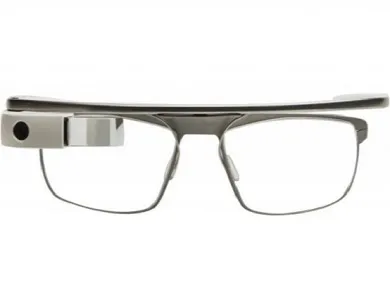
There have been quite some upgrades to the Enterprise Edition. It has a better camera, extended battery life, faster Wi-Fi and processor and a new red light that turns on when recording video. The electronics of the Glass have also been made modular in the shape of a Glass Pod, which can be detached and reattached to Glass-compatible frames. These include things like safety goggles and prescription glasses.
Right now, the scale of the Google Glass Enterprise Edition rollout is quite small, though. Wired reports that sales have been in the hundreds, and most of the biggest customers buying the product are only doing so on a trial basis. However, Google’s parent company Alphabet remains optimistic about the project. In fact, feedback from workers and companies have been positive, with the device providing assistive information on the work floor and improving productivity.
However, the approach and direction with the Google Glass Enterprise Edition are more cautious. The chief of Alphabet’s experimental X division, Astro Teller, says:
“We’re not going to prejudge exactly what that path is. We’ll focus on the places that are actually getting value out of that and go through the journey with them, being open minded about where it’s going to go.”
Recently, Alphabet lifted its non-disclosure agreement on its Glass EE partners. Now, the company is opening up the program for other businesses to participate. It certainly appears that Google’s failure in making the original Google Glass a mass market product might bring about success for Alphabet’s workplace-focused assistive device.
Benefits of Google Glass Enterprise Edition
Google Glass Enterprise Edition offers several benefits for businesses and industries, including:
- Hands-free operation: The device is worn on the head, allowing users to operate it without using their hands. This can be especially useful in industries where workers need to use both hands for tasks such as manufacturing or healthcare.
- Augmented reality display: The device features a heads-up display that overlays digital information onto the user’s view of the real world. This can be used to display instructions, checklists, or other information that can improve productivity and accuracy.
- Voice commands: Google Glass Enterprise Edition can be controlled using voice commands, making it easy to access information or perform tasks without the need to use a keyboard or touch screen.
- Customizable software: The device can be customized with software applications to meet the needs of different industries. For example, healthcare providers can use the device to access patient records or monitor vital signs.
- Improved safety: Google Glass Enterprise Edition can help improve safety in industries such as manufacturing or logistics by providing workers with real-time information or alerts about potential hazards.
- Enhanced productivity: By providing workers with instant access to information or tools, the device can help improve productivity and efficiency in various industries.
