Add MobilityArena as a preferred source on Google
On the 23rd of Sept. 2024, CNN’s Anna Stewart explores how the future of Quantum Computing could change our world. Imagine a world where we can simulate complex molecules to create life-saving drugs in a fraction of the time it takes today. Think of a future where we can optimize global supply chains to eliminate waste and reduce our carbon footprint. Envision a reality where we can crack the most challenging problems in physics, potentially unlocking the secrets of the universe itself. This isn’t science fiction, my friends. This is the promise of quantum computing, and it’s closer to reality than you might think. Let me take you on a journey through the fascinating world of quantum computing, where the rules of classical physics no longer apply, and the impossible becomes possible.

- The Birth of a Quantum Dream
- Qubits: The Building Blocks of Quantum Computing Power
- The Quantum Race is On
- The Promise and the Perils
- The Road Ahead
The Birth of a Quantum Dream
Let’s delve into a bit of history. It all began in the early 1980s when a brilliant physicist named Richard Feynman had a wild idea. He proposed that we could harness the strange and counterintuitive properties of quantum mechanics to create a new kind of computer – one that could solve problems that would take our most powerful classical computers millennia to crack. For decades, this remained just a tantalizing and a fantasizing dream. But in recent years, something incredible has happened. Thanks to relentless innovation and billions of dollars in investment, we’re now on the cusp of making Feynman’s vision a reality.
Qubits: The Building Blocks of Quantum Computing Power

At the heart of this quantum revolution are qubits – the quantum equivalent of classical bits. But here’s where things get weird and wonderful. Unlike classical bits, which can only be in a state of 0 or 1, qubits can exist in a superposition of both states simultaneously, sounds amazing right? It’s like having a coin that’s both heads and tails at the same time! This mind-bending property allows quantum computers to perform multiple calculations at once, giving them the potential to solve complex problems at speeds that would make even our most advanced supercomputers look like abacuses in comparison.
The Quantum Race is On

The excitement around quantum computing is palpable. Tech giants like IBM, Google, and Microsoft are pouring resources into developing quantum hardware and software. Startups are sprouting up like quantum mushrooms, each vying to be the one to achieve “quantum supremacy” – the point at which a quantum computer can solve a problem that no classical computer can solve in any feasible amount of time. In 2019, Google claimed to have reached this milestone, performing a calculation in 200 seconds that would have taken the world’s most powerful supercomputer 10,000 years. While there’s debate about the practical significance of this achievement, it’s clear that we’re making rapid progress.
The Promise and the Perils

The potential applications of quantum computing are mind-boggling. From revolutionizing drug discovery to optimizing financial portfolios, from enhancing artificial intelligence to simulating complex chemical reactions, quantum computers could be the key to solving some of humanity’s most pressing challenges. But with great power comes great responsibility. The same quantum computers that could crack complex scientific problems could also break the encryption that keeps our digital world secure. This has led to a race to develop “quantum-safe” cryptography before quantum computers become powerful enough to pose a threat.
The Road Ahead
While we’ve made incredible strides, we’re still in the early days of the quantum computing revolution. Challenges remain, particularly in scaling up quantum systems and reducing error rates. But the momentum is undeniable, and the future is bright. As we stand on the brink of this quantum leap, one thing is clear: the world as we know it is about to change. Quantum computing isn’t just about faster processors or more powerful machines. It’s about unlocking new realms of possibility, pushing the boundaries of what we thought was possible, and reimagining our relationship with the fundamental fabric of reality itself. So, buckle up, folks. The quantum revolution is coming, and it’s going to be one wild ride. Are you ready to quantum leap into the future?
Author:Ifeoluwa Adeleke
Add MobilityArena as a preferred source on Google
“Does the Galaxy S24 FE have IR blaster?” is a question that is on the mind of a number of cellphone users. Infra-red ports are no longer the rave they used to be years ago on mobile phones, but some manufacturers still use them. And some Samsung fans are displeased about the situation.
Back in the day, the most advanced mobile phones would have an infra-red port. It was used for data transfer, including internet sharing. Yes; those were the days before Wi-Fi became a thing. To share your phone’s internet, you used an old-school data cable or infra-red.
With the presence of Wi-Fi, the need and demand for infra-red blasters diminished. In recent years, Xiaomi has put an IR blaster in many of its phones. This time, these ports enable the phones to be used as TV controllers. Yes; mobile phones have taken over the roles of everything else; why not add TV controller to it?
It also enables the ability to control the DVD player, air conditioner, and some other household appliances. But a more accurate version of Face ID uses infra-red and, so, we are seeing an upsurge of IR ports in smartphones. So, perhaps, a new IR revolution may yet happen based on this.
I have owned or reviewed a number of phones with an infra-red blaster and enjoyed using the feature. However, I cannot say that I have missed it in all the other phones I have used that did not have it. It has never felt like an essential to me.
- Does Samsung S24 FE Have IR Blaster?
- Does Samsung Galaxy S24, S24+, and S24 Ultra Have IR Blaster?
- The Last Samsung Phones With IR Blaster
- Your Best Options For Phones With IR Blaster
- Deal-breaker?
- Specifications
- Pricing
Does Samsung S24 FE Have IR Blaster?
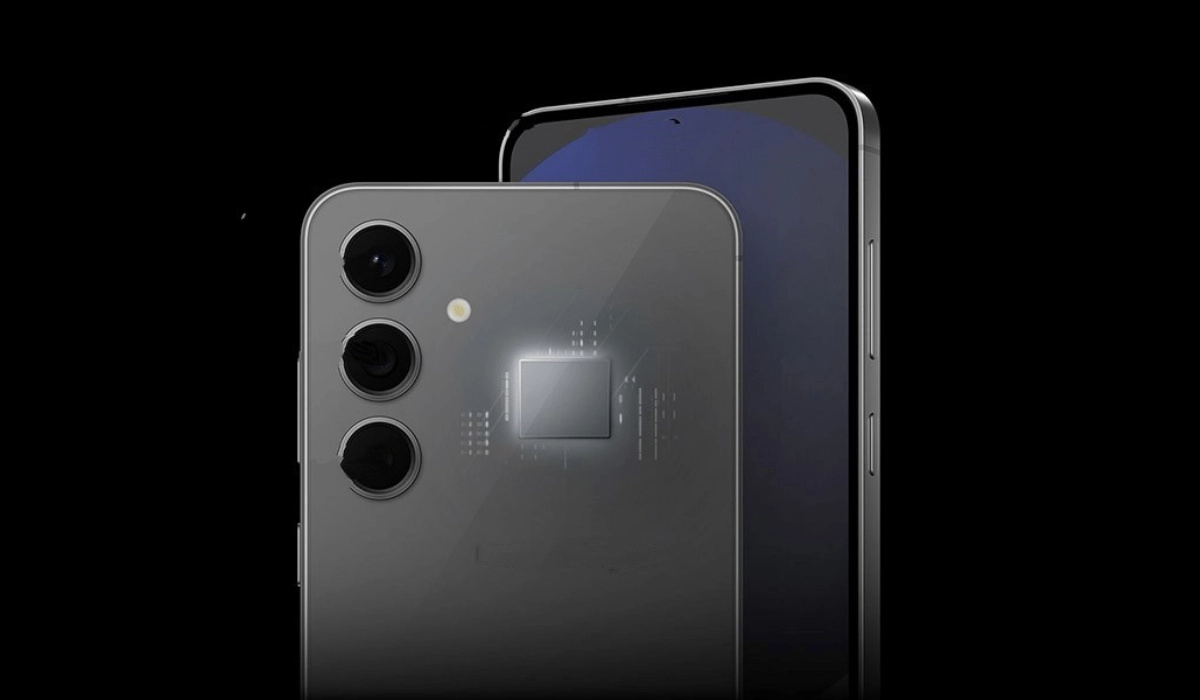
The Samsung Galaxy S24 FE is a 2024 smartphone, and it does not have the feature. Some people think that the phone would be even better if it has one. Unfortunately, it does not. Fans were disappointed that recent Galaxy flagship phones like the S23 and S24 series did not have an IR blaster, either.
Does Samsung Galaxy S24, S24+, and S24 Ultra Have IR Blaster?
Samsung S24 , S24+ , and S24 Ultra do not have an IR blaster, as well.
And some Samsung fans are bitter about this omission. Some have based their phone buying decision on this factor and moved on to other smartphone brands. Here is an example of one of such conversations on Samsung’s own community website.
There are scores of other online platforms where fans are griping about the matter. But I doubt that the answer to the simple question, “Does S24 FE have IR blaster” will have any impact on Samsung’s sales in any way. Maybe all of 150 people will refuse to buy it for that reason.
The Last Samsung Phones With IR Blaster
The last Samsung models that had an IR blaster were the Galaxy S6 and the Galaxy Note 4. Since then, Samsung has ignored infra-red. And it does not look like the S10 range of phones will have this feature.
Your Best Options For Phones With IR Blaster
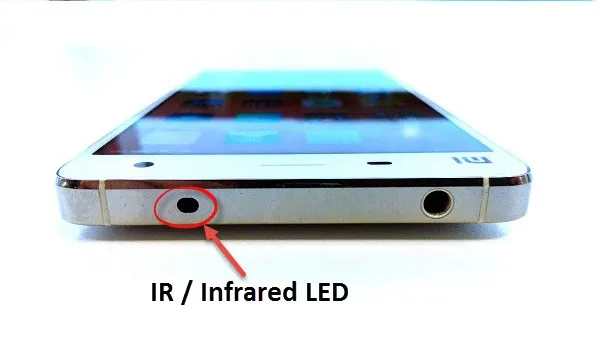
If you want a smartphone with an infra-red blaster, your best options are in the direction of Xiaomi and Huawei. The Xiaomi Redmi Note 13 Pro+ and other models in the Note 13 range are extremely popular with young people and both have IR blaster built in. Others include Xiaomi 14 series. Huawei has a number of models with an IR blaster. These include P20 Pro, Mate 10 Pro, and Honor View 10, among others.
Gionee produced a few smartphone models with infra-red blaster. It is unfortunate that the company has declared bankruptcy. Some of their phones are still available in the market though. I have reviewed a few LG smartphones and enjoyed using their IR blaster to control the TV. But it looks like LG might be dropping the feature too.
Deal-breaker?
There is a vocal enough community of smartphone enthusiasts who are put off by the S24 FE not having an Infra-red blaster. I am not sure that it is a large enough community to make a big dent in the fortunes of these products. But then, I have not conducted any scientific survey to arrive at that conclusion. Still, including an infra-red port cannot cost much if Xiaomi is putting it in their budget phones.
Who knows, part of why Xiaomi and Huawei devices are selling so well (besides pricing) might be that those brands are now on the heels of Samsung? What are the chances that having an IR blaster in key models could be a factor? After all, so many people around the world watch TV, play videos and play music on infra-red controlled home systems.
Specifications
Here are the key specifications of the Galaxy S24 FE.
- OS: Android 14
- Release Date: 2024
- Network Type: 2G/3G/4G/5G
- eSIM: Yes
- Display: 6.7-inch, 1080 x 2340 pixels resolution
- Chipset: Exynos 2400e
- Selfie Camera: 10 MP
- Rear camera: 50 MP
- RAM: up to 8 GB
- ROM: up to 256 GB
- Fingerprint Sensor: Yes; in-display.
- Headphone Jack: Yes
- Infrared/IR Blaster: No.
- Battery: 4700 mAh
- Fast Charging: 25W
- Wireless Charging: 15W.
Pricing
Samsung Galaxy S24 FE is available in the following Western markets at the corresponding prices:
United States/US : $650 (128GB), $710 (256GB).
United Kingdom/UK : £650 (128GB), £700 (256GB).
EU : €750 (128GB), €810 (256GB)
Australia : A$1,100 (128GB), A$1,200 (256GB).
Don’t miss our reviews .
Follow us on Instagram , Facebook , Twitter , and YouTube .
Author:Mister Mobility
Digital Skills and Communication Coach | Mobile Phone Connoisseur since 2001 | Tech Blogging since 2004
