Add MobilityArena as a preferred source on Google
Are you tired of walking around in uncomfortable shoes that lack support and cushioning? Investing in a good pair of walking shoes is essential for anyone who enjoys walking as a form of exercise or daily activity.
I do a fair bit of walking – sometimes covering 6.2 miles (10 km) in one stretch. I have done more than that, too, but my regular range is between 3 and 6 miles (5 and 10 km). The last thing you want is to do a lot of walking in uncomfortable shoes. You will end up with blisters, other discomforts, and possibly an injury, too.
- What are the different types of walking shoes?
- What features should I look for when buying walking shoes?
- Are there any special considerations for finding the right walking shoe for me?
- Are walking shoes suitable for running?
- How often should I replace my walking shoes?
- How to prolong the life of your walking shoes
- Examples of walking shoes
What are the different types of walking shoes?
When it comes to finding the perfect walking shoes, it’s important to consider the specific needs and preferences of your feet. There are several different types of walking shoes available, each designed to cater to different foot types and walking styles. In this blog post, we’ll explore some of the most common types of walking shoes to help you find the best fit for your feet.
Stability Shoes : Stability shoes are ideal for people who overpronate, meaning their feet roll inward excessively when walking. These shoes are built with a firm midsole and a supportive arch to help control the inward rolling motion and maintain stability.
Cushioned Shoes : If you’re looking for maximum comfort and shock absorption, cushioned shoes are the way to go. These shoes feature extra padding in the midsole and heel, providing a plush and comfortable feel while walking. Cushioned shoes are great for people with high arches or those who prefer a soft and cushioned walking experience.
Motion Control Shoes : Motion control shoes are specifically designed for individuals with severe overpronation. These shoes typically have a stiffer midsole and a reinforced heel to prevent excessive inward rolling of the feet. They offer maximum stability and control for those who need extra support.
Lightweight Shoes : If you prefer a lighter and more flexible shoe, lightweight walking shoes are a good choice. These shoes are designed to be breathable, flexible, and weigh less than traditional walking shoes. They are perfect for people who value speed and agility.
What features should I look for when buying walking shoes?
Comfort : This is the number one consideration. Comfort should always be your top priority when buying walking shoes. Look for shoes that have a cushioned insole to provide a soft and supportive feel. Additionally, choose shoes with ample toe room to avoid any discomfort or blisters.
Arch Support : Good arch support is crucial for walking shoes, especially if you have high arches or flat feet. Look for shoes that offer proper arch support to help maintain your foot’s natural alignment and prevent any strain or discomfort.
Stability : Stability is important to prevent any ankle rolling or twisting while walking. Look for shoes that have a firm and supportive heel counter, as well as a wider base to provide stability and prevent any wobbling.
Breathability : Walking can make your feet sweat, so it’s important to choose shoes that are breathable to keep your feet cool and dry. Look for shoes made from materials like mesh or other breathable fabrics.
Durability : Walking shoes should be able to withstand the demands of regular use. Look for shoes with sturdy construction and durable materials, especially in high-wear areas like the soles and toe box.
Are there any special considerations for finding the right walking shoe for me?
Yes, there are definitely special considerations when it comes to finding the right walking shoe for you. Walking shoes are designed specifically for the activity of walking, so it’s important to find a pair that meets your individual needs and preferences.
I have already mentioned stability, cushioning, and fit. In addition to these, special considerations are things that are unique to you. Everyone’s feet are unique in some way. Also, your environment is a factor. For example, if you often walk in wet or slippery conditions, look for walking shoes with a non-slip outsole for better traction. If you have any specific foot conditions or concerns, consult with a podiatrist or footwear specialist to get their recommendations on the best walking shoes for your needs.
Lastly, personal preference. By this, I mean something that doesn’t impact your ability to walk but is important to you all the same. For example, I dislike laces. I find it tedious lacing up shoes, so my preference for any types of shoes is one that does not have laces.
Are walking shoes suitable for running?
Walking shoes are generally not suitable for running. While they may provide some level of comfort and support, they lack the necessary features for high-impact activities like running. I found out this the hard way. I am a solid walker. At some point, I decided to try running and found out that my walking shoes were not exactly as good for running.
Running puts a lot more stress on your feet, ankles, and knees compared to walking. To minimize the risk of injury, it’s important to wear shoes specifically designed for running.
Running shoes are engineered to provide stability, cushioning, and support in all the right places. They typically have a firmer midsole to absorb the impact of each stride and a flexible outsole that allows for a natural range of motion.
In contrast, walking shoes are designed for a different type of motion and have a more flexible sole. They are usually lighter and less cushioned than running shoes. While they may be comfortable for walking, they lack the necessary shock absorption and stability features needed for running.
Wearing walking shoes for running could lead to discomfort, pain, and potential injuries such as shin splints, plantar fasciitis, or stress fractures. It’s important to invest in a good pair of running shoes that are specifically designed for the activity.
How often should I replace my walking shoes?
I would say, as soon as they start wearing out and giving you some discomfort. Replacing walking shoes regularly is important to ensure comfort, stability, and support during your daily walks. Here are a few tips.
Pay attention to the cushioning in your shoes. Over time, the cushioning material can break down and lose its ability to absorb shock. If you start feeling more impact during your walks or notice that your shoes no longer provide the same level of comfort, it may be time to replace them.
If the tread on the outsole of your shoes has worn down significantly or if you notice any areas of uneven wear, it can affect your stability and increase the risk of slipping or tripping.
Additionally, consider the overall condition of your shoes. If you see visible signs of wear and tear, such as holes, rips, or loose stitching, it’s a good indication that your shoes have reached their limit. Damaged shoes can compromise the support they provide and potentially lead to foot discomfort or injuries.
How to prolong the life of your walking shoes
To prolong the lifespan of your walking shoes, there are a few tips you can follow. For starters, avoid wearing them for activities other than walking. Using your walking shoes for running or other high-impact activities can accelerate wear and tear. It’s best to have a separate pair of shoes for those activities.
Secondly, try to rotate between multiple pairs of walking shoes if possible. This allows each pair to have time to “rest” and recover from the stress of walking. It can also help prevent excessive wear on one pair.
Thirdly, take care of your shoes by cleaning them regularly. Use a mild soap and warm water to clean the exterior of the shoes, and remove any dirt or debris from the outsole. This can help prevent buildup and maintain the traction of the shoes.
Lastly, store your walking shoes in a cool, dry place when you’re not wearing them. Excessive heat and moisture can degrade the materials and shorten the lifespan of the shoes.
Examples of walking shoes
When it comes to walking shoes, there are plenty of options available from various brands. Here are a few examples of walking shoe brands that are known for their stability and cushioning:
New Balance : New Balance offers a wide range of walking shoes that are designed for comfort and support. Their popular models include the New Balance 928, New Balance 577, and New Balance 411.
Skechers : Skechers is another well-known brand that offers comfortable and stylish walking shoes. Their popular models include the Skechers GOwalk series, Skechers Arch Fit, and Skechers Elite Flex. My first walking shoes were Skechers and I have stayed with the brand so far, because I found the shoes comfortable. Who knows? I might try another brand along the way.
ASICS : ASICS is known for its athletic footwear, and they also have a selection of walking shoes. Their popular models include the ASICS Gel-Quickwalk, ASICS Gel-Contend, and ASICS Gel-Venture.
Brooks : Brooks specializes in running shoes but also offers walking shoes that provide excellent cushioning and stability. Their popular models include the Brooks Addiction Walker, Brooks Dyad Walker, and Brooks Addiction Walker V-Strap.
Hoka One One : Hoka One One is a brand known for its maximalist cushioning and supportive designs. Their walking shoe options include the Hoka One One Bondi, Hoka One One Gaviota, and Hoka One One Arahi.
Nike : Nike is another popular brand that offers walking shoes in their product line. One example of a walking shoe by Nike is the Nike Revolution 5 Walking Shoe. It is designed to provide comfort and support for walking activities.
These are just a few examples of walking shoe brands that offer stability and cushioning. Of course, there are many other brands that are less prominent than these for you to buy from.
I hope this article has helped you with insightful information to picking the best walking shoes for your use. Let me know if I can answer any questions you may have.
Author:Mister Mobility
Digital Skills and Communication Coach | Mobile Phone Connoisseur since 2001 | Tech Blogging since 2004
Add MobilityArena as a preferred source on Google
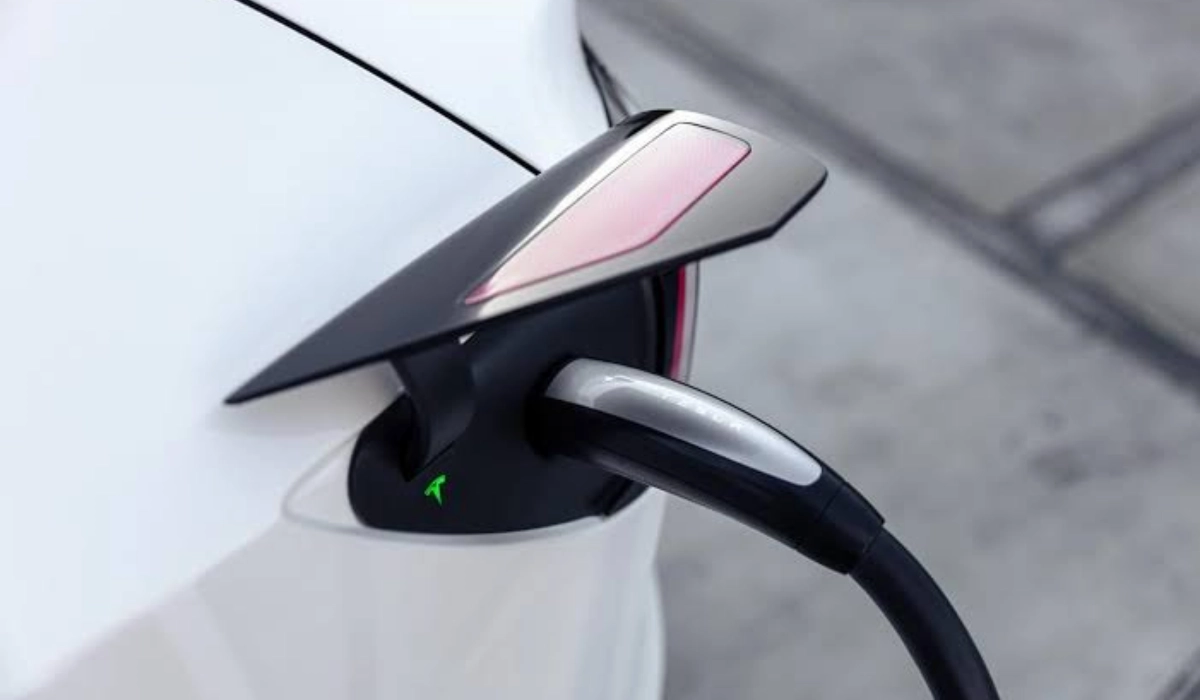
NACS is an acronym for North America Charging Standard. The NACS Charger or connector is a fast-charging system for battery electric vehicles originally developed for Tesla vehicles. And for 11 years, it remained a Tesla exclusive.
However, it has been adopted by some major automobile brands in 2023, and the Society of Automotive Engineers has announced that it will be standardized for North America, meaning that many more EV makers and charging station manufacturers will likely follow in switching to NACS.
- Types of charging connectors for fast-charging electric vehicles
- Differences between a CCS connector and a NACS connector
- Which carmakers have adopted the NACS connector?
- Which charging station makers have adopted the NACS charging system?
- History of NACS connector
Types of charging connectors for fast-charging electric vehicles
There are four major connector types for charging electric vehicles. They are:
- NACS Charger : Used by Tesla and an increasing number of others that include: Ford, GM, and Volvo.
- SAE Combined Charging System (CCS) : Popular in North America and Europe, automobile brands that use the CCS connector include BMW, Daimler, FCA, Jaguar, Groupe PSA, Honda, Hyundai, Kia, Ford, GM, Mazda, MG, Nissan, Polestar, Renault, Rivian, Tesla, Mahindra, Tata Motors, Volvo , and Volkswagen Group.
- CHArge de MOve (CHAdeMO) : Popular in Japan, and used by Honda, Mitsubishi, Hyundai, Nissan, Peugeot, Subaru, Tesla, Toyota, Mazda, Jaguar for their electric vehicles sold in that country.
- GB/T Charging System : This charging connector/standard is specific to China.
Differences between a CCS connector and a NACS connector
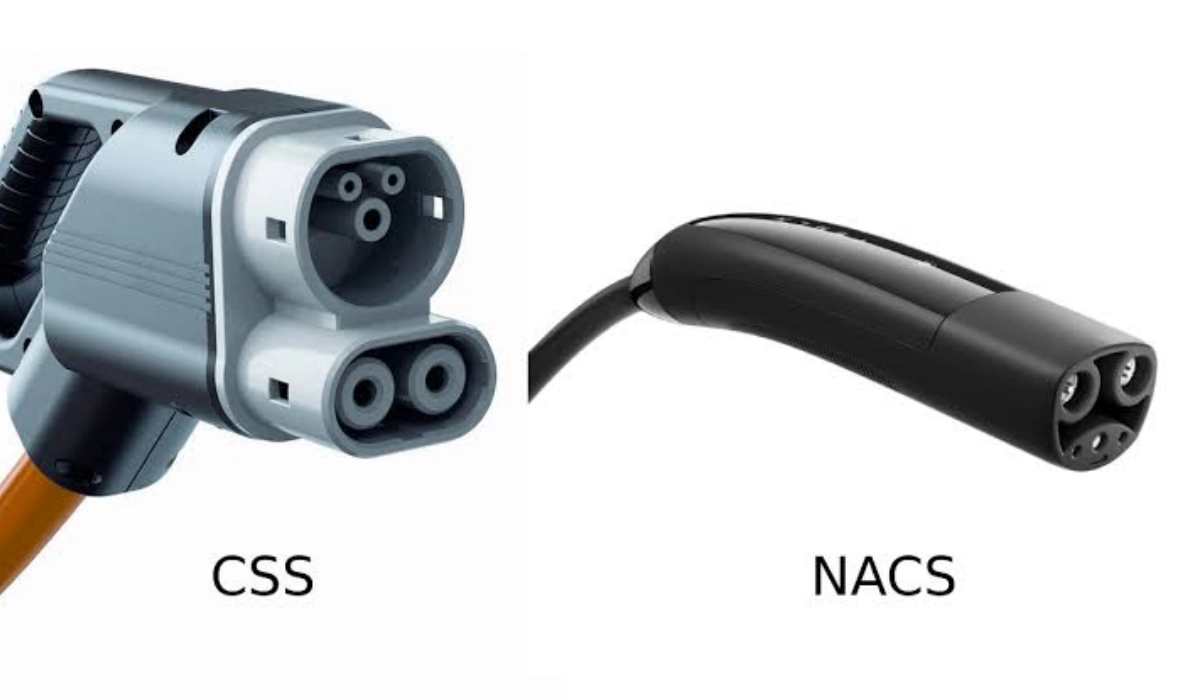
NACS charger vs CCS: CCS connector (left) and NACS connector (right)
The major difference between a NACS connector and a CCS connector is the number of pins they have. NACS charging connectors have two pins, while CCS charging connectors have seven pins. The additional pins on CCS connectors allow for faster charging, as they enable both AC and DC charging. NACS connectors, on the other hand, are limited to DC charging only.
The NACS charger is half the size of the CCS connectors. It also has no moving parts, and Telsa claims that it is twice as powerful as CCS [1]. NACS to CCS adapters (and vice versa) are available in the market for car owners who want to be able to take advantage of both systems.
Which carmakers have adopted the NACS connector?
The number of automobile makers that have thrown in their lot with the NACS charging connector keeps growing. As at press time, it includes the following:
- Tesla
- Ford
- GM (General Motors)
- Aptera
- Rivian
- Volvo
Which charging station makers have adopted the NACS charging system?
- ChargePoint,
- ABB,
- Blink Charging,
- EVgo,
- FLO,
- Tritium
- Wallbox
History of NACS connector
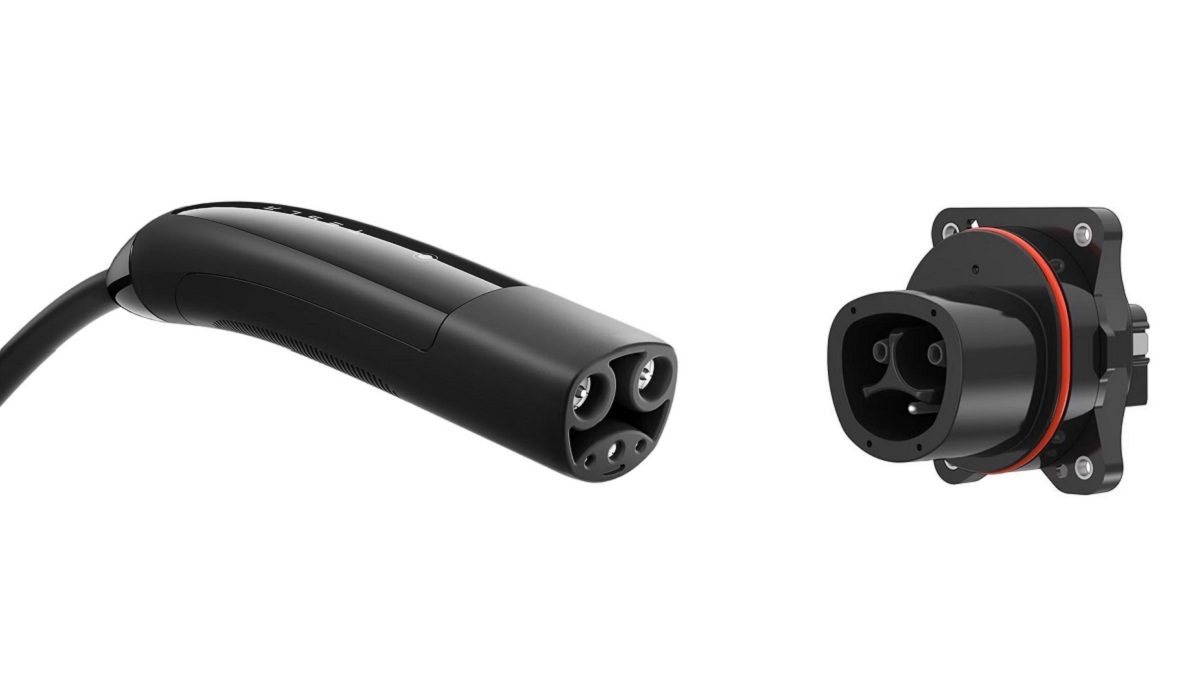
Back in 2012, the Model S sedan was the first car to be released with the new Tesla Charging Connector. A number of other EV makers went with the CCS connector, which Europe had adopted as the standard charging connector for battery-electric vehicles on that continent.
On November 11, 2022, Tesla announced that it was opening up its proprietary standard for use by non-Tesla vehicles and charging stations. The company also announced a plan to see their connector the charging standard for North America and changed its name from Tesla Charging Connector to North America Charging Standard (NACS). Note that NACS was not exactly a standard, as industry consensus is required to achieve that.
In 2022, Aptera (an EV startup) and Ford declared support for NACS. GM, Rivian, and Volvo followed suite in 2023.
In June 2023, the Society of Automotive Engineers (SAE International) announced a decision to standardize the NACS charger, meaning that any manufacturer will be able to produce NACS charging port on EVs and charging stations in North America. This was what Telsa was working towards, and this announcement meant that dream is coming true.
As at this time, there is no definite date when the SAE NACS charging standard will be ready, but it is safe to expect that it will be by 2025, when a number of major car brands intend to produce their first NACS-compliant electric vehicles.
References
- Opening The North American Charging Standard ( source )
Author:Mister Mobility
Digital Skills and Communication Coach | Mobile Phone Connoisseur since 2001 | Tech Blogging since 2004
