Add MobilityArena as a preferred source on Google
Australian mobile networks are GSM-based. However, 2G networks have been completely shut down and so are unavailable. 3G, 4G, and 5G networks are available in the country. Note that 3G networks are already being shut down too.
There are three major mobile phone networks in Australia, namely: Telstra, Optus, and Vodafone. All three of them run 3G, 4G, and 5G networks. Telstra is the largest mobile network in Australia, with about 99% coverage of the population. Optus is the second largest, with about 98% coverage. Vodafone covers 96% of the population.
But beside these three major mobile networks, there are smaller operators – mobile virtual network operators (MVNOs) – in the country who lease wireless telephone and data services from the major operators for resale to consumers.

List of Australian Mobile Virtual Network Operators
All MVNOs in Australia rely on the infrastructure of the three major operators, Telstra, Optus, and Vodafone. In non-technical terms, MVNOs are resellers of mobile services.
- Amaysim
- Southern Phone
- Yomojo
- AGL Internet
- Aldi Mobile
- Aussie Broadband
- Belong
- Boost mobile
- Catch Connect
- Circles.Life
- Coles Mobile
- Dodo
- Exetel
- Felix Mobile
- Flip COnnect
- Gomo Mobile
- Internode
- JeeNee Mobile
- Kogan Mobile & Broadband
- Lebara Mobile
- LycaMobile
- Mate Mobile
- Moose Mobile
- MyRepublic
- OVO
- Origin Broadband
- SpinTel
- Sumo Broadband
- Superloop
- TPG
- Tangerine
- TeleChoice
- Telstra
- Uniti Wireless
- Vaya Mobile
- Westnet
- Woolsworth Mobile
Mobile Frequency Bands used by Mobile Phone Networks in Australia
As already mentioned, there are no active 2G networks in Australia any more. The common 3G frequency bands in Australia are bands 850MHz, 900MHz, and 2100MHz. The common 4G frequencies are bands B1, B3, B5, B7, B7, and B28. The most commonly deployed 5G frequency is: band n78.
- Don’t miss our reviews .
- Join our WhatsApp Group , to be notified of the most important articles and deals,
- Follow us on Instagram , Facebook , Twitter , and YouTube .
Author:Mister Mobility
Digital Skills and Communication Coach | Mobile Phone Connoisseur since 2001 | Tech Blogging since 2004
Add MobilityArena as a preferred source on Google
Last December, Xiaomi launched the 12-series in China and left the rest of the world waiting till now. Thankfully, the global launch has been done and we now know how much these fine pieces of work will cost.
To start with, there are three models in the series – Xiaomi 12, Xiaomi 12 Pro, and Xiaomi 12X. The 12X is the base model, sitting below Xiaomi 12, and the Pro is the most powerful and most capable of the lot.
All of them have similar batteries – 4500mAh units for the 12X and 12, while the 12 Pro shows up with a 4600mAh unit. That’s just 100mAh extra juice to run with on the Pro.
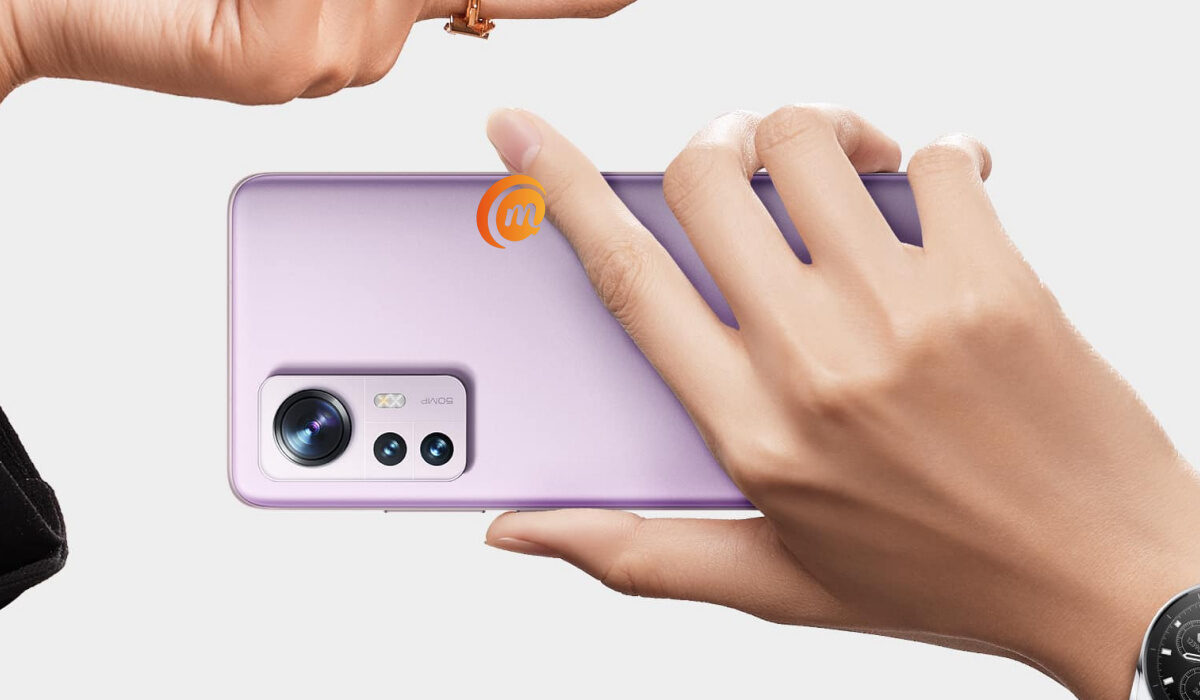
Prices of Xiaomi 12X, 12, and 12 Pro
Xiaomi 12X has a Snapdragon 870 processor instead of the Snapdragon 8 Gen 1 processor used by the 12 and 12 Pro. It two memory options: 8/128GB and 8/256GB. The base variant has a price tag of $650/€700. There is no word yet on the price of the higher storage variant. .
Xiaomi 12 has three variants, as follows: 8/128GB, 8/256GB, and 12/256GB. The base variant sells for $750/€800. There is no word yet on the price of the other two variants.
Xiaomi 12 Pro has two variants. The first one has 8 GB RAM and 128 GB storage. It has a $1,000/€1,000 price tag. The second has 12 GB RAM and 256 GB storage. In the United Kingdom, both phones are available on Three UK on a 24 month contract. In Nigeria, the 12 Pro has a ₦499,000 price tag for the 12/256 GB variant.
Xiaomi 12 Pro’s weak point
The specs of the 12 Pro are top notch, but where Xiaomi messes things up is in the battery department. The combination of Snapdragon 8 Gen 1 and a 4600mAh battery delivers poor battery life, if GSMArena’s review is anything to go by. Here’s an excerpt from the review;
Indeed, the 12 Pro posted unimpressive numbers for endurance in all disciplines. Video playback (at 60Hz) was particularly out of touch with modern realities at just over 12 hours. Web browsing (at a constant 120Hz) isn’t that bad, though at under 11 hours, it’s not going to win any comparisons. And the 19-ish hours of voice calls, if enough to last a lifetime for some users, aren’t competitive either. In the end, the Endurance rating for the Xiaomi 12 Pro worked out to 74h. Source
That’s terribly poor battery performance. For comparison, the Xiaomi Mi Note 10 Pro, which I own, has a battery endurance rating of 95h. That’s a massive difference. Pixel 4a 5G, which has great battery life, has an endurance rating of 122h. And lastly, the iPhone 13 Pro Max, which is successfully changing the narrative about iPhone battery life, has an endurance rating of 121h.
We will wait to see users’ response to Xiaomi 12’s disappointing battery life. Perhaps the impressive 120W fast charging might be enough to compensate for it.
The good news is that if you are resident in countries in Europe, Southeast Asia, Africa, the Middle East and Latin America, Xiaomi 12, 12X, and 12 Pro will be available for you to buy soon.
- Don’t miss our reviews .
- Join our WhatsApp Group , to be notified of the most important articles and deals,
- Follow us on Instagram , Facebook , Twitter , and YouTube .
Author:Mister Mobility
Digital Skills and Communication Coach | Mobile Phone Connoisseur since 2001 | Tech Blogging since 2004
