Add MobilityArena as a preferred source on Google
When you look through the specification sheet of cell phones, one of the most common features listed is the accelerometer. It is difficult to see a modern smartphone that does not have this feature in it. Even in basic, low-cost entry-level Android smartphones that cost less than $100, an accelerometer has become a staple.
What exactly is an accelerometer and what does it do in a smartphone? It is an instrument that measures acceleration – the rate at which velocity changes. In other words, it measures motion. While motion is its primary focus, it also measures basic tilt/rotation information. This is the component that makes it possible for the phone to determine whether it is being held horizontally or vertically.
- How it works
- Types of Accelerometers
- Uses in Cell Phones
- Accelerometer vs Gyroscope
- Which companies make accelerometers?
- References
How it works
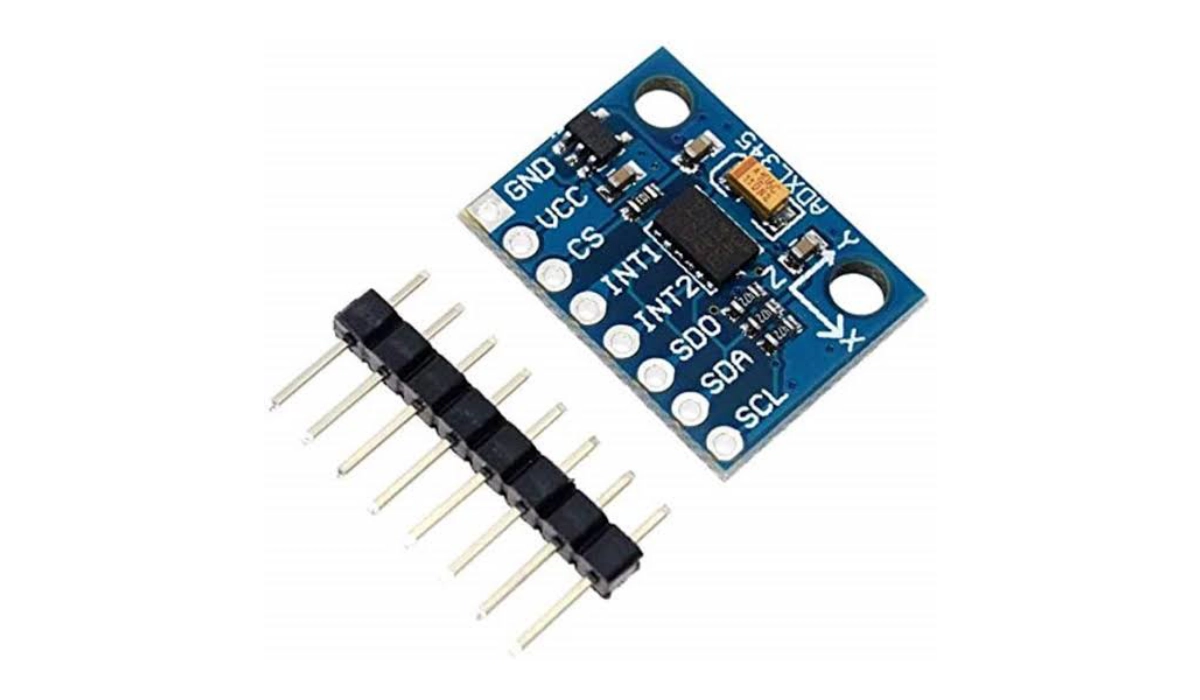
In a phone, an accelerometer is a very small electronic component that looks like a microchip, but it also has moving parts inside. Those moving parts are extremely tiny weights that are suspended on simple springs, the position and movement of which are measured by small electric fields. In addition to measuring motion or movement, the effect of gravity on these tiny weights can also be measured to get information about the angular orientation of the device. This technology is called MEMS and is only one of the different types of accelerators available.
Types of Accelerometers
There are several different types, each with its own strengths and weaknesses:
The Piezoelectric type generates a voltage when subjected to mechanical stress caused by acceleration. This type has high sensitivity, wide frequency response, and rugged construction, but may require additional conditioning circuitry to convert the generated voltage into a usable signal. As such, it isn’t quite compact.
The next type is the Piezoresistive . Slightly different from the Piezoelectric type, the Piezoresistive type works by the changing electrical resistance when mechanical stress from acceleration happens. This type has wide frequency response, good stability, and relatively low cost, but it is not as sensitive as the piezoelectric type.
Capacitive type : As the name suggests, the capacitive type measure changes in capacitance caused by the movement of a mass within a capacitor structure. This type has high sensitivity, wide frequency response, and tends to be small in size. However, it may be more susceptible to noise and temperature drift.
Servo : These accelerometers use a servo motor to maintain a proof mass in a fixed position. The force required to keep the mass stationary is proportional to the acceleration. The advantages of this type include high accuracy, wide dynamic range, and low noise. But it tends to be larger in size, have higher power consumption, and costs more.
MEMS : This is an abbreviation for Micro-Electro-Mechanical Systems and uses a combination of weights and electric fields to measure movement. They have the advantage of being really small in size, low power consumption, and relatively low cost. This combination makes them perfect for use in mobile phones. They do have the disadvantages of limited dynamic range or accuracy compared to larger, more traditional accelerometers.
Uses in Cell Phones
The information measured by an accelerometer is used for various practical applications and use cases, enhancing the functionality and user experience of these devices. Here are some of the most common applications and use cases on a day-to-day basis:
Automatic Screen Rotation : One common use in phones is to detect orientation – whether the phone is upright (portrait) or sideways (landscape), and automatically rotate the graphics on the screen accordingly. The screen auto-rotation feature is used by many smartphone owners for a more convenient viewing experience.
Step Counting and Fitness Tracking : If you use your smartphone or smartwatch to track your fitness activities, you have experienced this. Your device measures the acceleration of the smartwatch when worn on your wrist or the phone in your pocket and uses this information to count steps, estimate distance traveled, and track fitness goals.
Gaming : Provides motion-based controls for games, allowing users to tilt the phone to control characters or objects on the screen. Another common use is controlling games and other applications (such as music player) by moving or shaking the phone.
Gesture Recognition : Detects gestures like shaking, tilting, or tapping the phone, enabling features like controlling music playback, taking photos, or activating specific functions.
Augmented Reality (AR) : Helps determine the phone’s position and orientation in the real world, allowing AR apps to overlay digital content onto the physical environment.
Navigation : Can be used in conjunction with other sensors (like GPS) to improve location accuracy and provide more precise navigation directions.
Accelerometer vs Gyroscope
Similar to the accelerometer, a gyroscope can sense changes in directional motion, but in a way that relies on a change in angular momentum. This means that, while the former is great at measuring acceleration along three linear axes, a gyroscope excels at measuring rotation, or tilt angles.
Is one better than the other? Not exactly. They measure slightly different things and so complement one another. Having only one of them (usually an accelerometer) in your phone is good. Having both is even better and makes your phone more versatile at detecting changes in position.
Which companies make accelerometers?
Here is a list of ten of the top accelerometer companies. The component in your smartphone is likely manufactured by one of these companies listed below.
- Analog Devices Inc.
- Robert Bosch GmbH
- Honeywell International Inc.
- Northrop Grumman LITEF GmbH
- STMicroelectronics
- InvenSense (TDK Group company)
- Rockwell Automation Inc.
- iXblue SAS
- Kearfott Corporation (Astronautics Corporation of America)
- Al Cielo Inertial Solutions Ltd
References
- List of Accelerometer Companies – Source
Author:Mister Mobility
Digital Skills and Communication Coach | Mobile Phone Connoisseur since 2001 | Tech Blogging since 2004
Add MobilityArena as a preferred source on Google
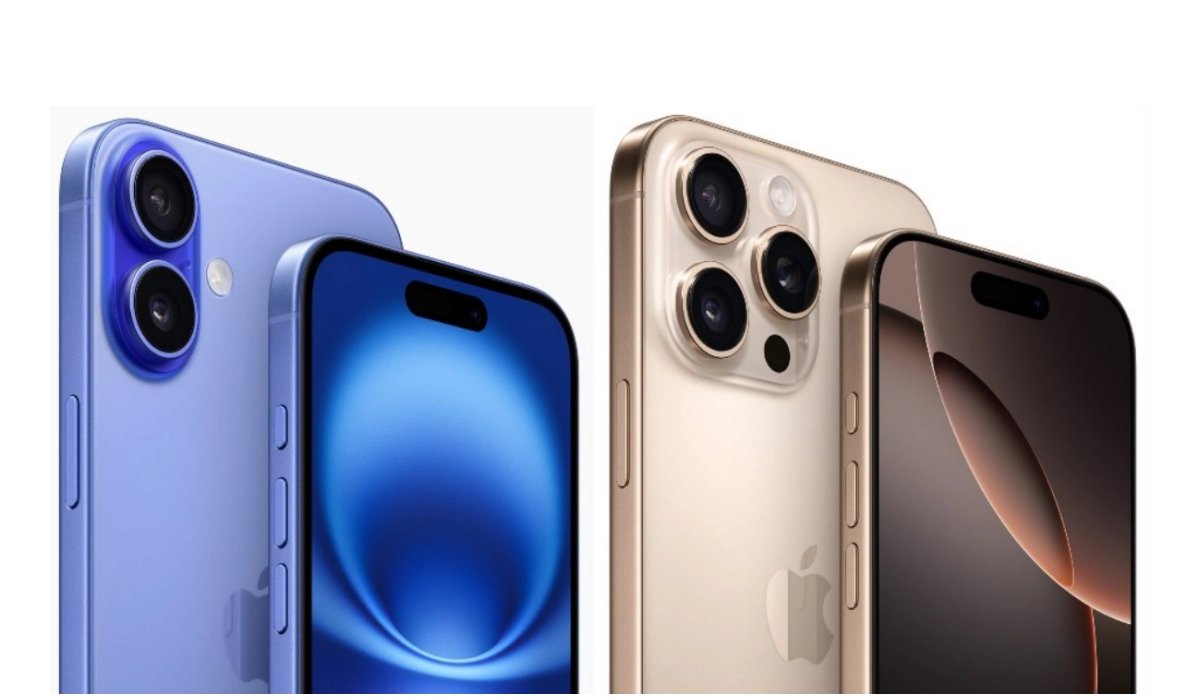
iPhone 16 prices for some of Apple’s core markets are now official. The United States, United Kingdom, Germany, Australia, and Japan, are some of the iPhone’s most successful markets, and we have compiled the list of the prices of all four iPhone 16 models in these countries.
Note that all first three iPhone 16 models have 128GB, 256GB, and 512GB storage options. The iPhone 16 Pro Max does not have a 128GB storage but has a 1TB storage.
- United States
- United Kingdom
- Germany (and the European Union)
- Japan
- Australia
United States
Apple iPhone 16 prices in the U.S. have stayed the same from last year’s prices for the 15 series, so you know what to expect.
The base iPhone 16 starts from $799 for the 128GB variant, then goes up to $899 for the 256GB, and maxed out at $999 for the 512GB variant.
The iPhone 16 Plus has a $899 price tag for the $128GB variant, $999 for the 256GB variant, and $1,099 for the 513GB variant.
The iPhone 16 Pro goes for $999 for the 128GB storage, $1,099 for the 256GB storage, and $1,199 for the 512GB storage.
And lastly, the iPhone 16 Pro Max starts from $1,199 for the 256GB storage, $1,299 for the 512GB storage, and $1,399 for the 1TB storage.
United Kingdom
In the UK, the iPhone 16 goes for £799 for the 128GB storage, £899 for the 256GB storage, and £999 for the 512GB storage.
The iPhone 16 Plus goes for £899 for the 128GB storage, £999 for the 256GB storage, and £1,099 for the 512GB storage
The iPhone 16 Pro goes for £999 for the 128GB storage, £1,099 for the 256GB storage, and £1,199 for the 512GB storage.
And lastly, the big daddy iPhone 16 Pro Max goes for £1,199 for the 256GB storage, £1,299 for the 512GB storage, and £1,399 for the 1TB storage.
Germany (and the European Union)
The iPhone 16 prices listed in this section also roughly applies to other European Union countries like Norway, Luxembourg, Finland, Denmark, Sweden, Belgium, and Austria, as much as they apply to Germany. Any variations in prices will be minor.
In the European. Union (EU), the iPhone 16 goes for €949 for the 128GB storage, €1,099 for the 256GB storage, and £1,199 for the 512GB storage.
The iPhone 16 Plus goes for €1,099 for the 128GB storage, €1,199 for the 256GB storage, and €1,299 for the 512GB storage.
Next is the iPhone 16 Pro which goes for €1,199 for the 128GB storage, €1,299 for the 256GB storage, and €1,399 for the 512GB storage.
Coming up at the rear is the iPhone 16 Pro Max which carries a price tag of €1,499 for the 256GB storage, €1,599 for the 512GB storage, and €1,699 for the 1TB storage.
Japan
Apple iPhone 16 prices in Japan start from JPY 124,800 for the 128GB base model, JPY 139,800 for the 16 Plus (128GB), JPY 159,800 for the iPhone 16 Pro (128GB), and JPY 189,800 for the iPhone 16 Pro Max (256GB).
Australia
Apple iPhone 16 prices in Australia are lower than the prices announced for the iPhone 15 series in the country last year. But who is complaining?
The standard iPhone 16 kicks things off with a price tag of $1,399 for the 128GB base storage version.
The iPhone 16 Plus starts at $1,599 for the 128GB storage variant.
The iPhone 16 Pro starts at $1,799 for the 128GB variant.
The big guy, iPhone 16 Pro Max, starts at $2,149 for the 256GB base storage.
The iPhone 16 series go on sale from September 20, 2024. If you have not pre-ordered, on that date, head out to an Apple store to pick one, or get it from an independent retailer or from your carrier.
Author:Mister Mobility
Digital Skills and Communication Coach | Mobile Phone Connoisseur since 2001 | Tech Blogging since 2004
