Add MobilityArena as a preferred source on Google
Nokia Mobile, the cell phone division of Nokia Corporation, was a juggernaut that ruled across the seven lands – Europe, North America, South America, Africa, Asia, Australa, and Antarctica. That sounds like the introduction to a thriller movie; right? Well, it is kind of a thriller. Come with me as I walk you through the fascinating story.
From the year 1998 to to the year 2008, Nokia Mobile was the undisputed largest cell phone brand in the world. You would find a Nokia phone to buy anywhere you were on earth, and you would find a catalog of options to choose from, too. Nokia had round phones, oblong phones, pen phones, square phones, transformer phones. Name it.
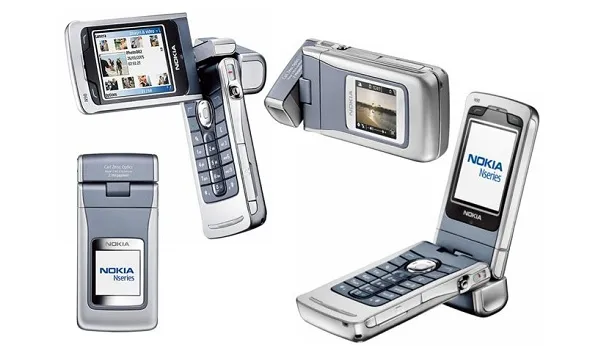
Nokia Mobile made all kinds of fascinating phones.
Nokia Mobile was a smartphone pioneer , long before BlackBerry and iPhone arrived. But soon enough, that glorious reign had to end. Nobody stays at the top forever. After over a decade of being the biggest cell phone brand in the world, Nokia Mobile was no more.
Today, the Nokia phones that you see in the market are made by a 3rd party, HMD Global, under licence from the Nokia Corporation, which was the parent company for Nokia Mobile.
HMD Global handles the design and manufacture of the devices; they just hold the right to put the Nokia name on them.
- The end of Nokia Mobile
- Meet the Nokia Corporation’s other business divisions
- The Nokia Corporation is alive and well
The end of Nokia Mobile
Nokia has not manufactured a cell phone since 2014 when it sold its mobile division to Microsoft. In 2016, HMD Global began manufacturing and selling Nokia-branded smartphones under the licensing agreement.
The question then is, now that Nokia Mobile is no more, what else is the Nokia Corporation up to? Is that it?
For most people who knew Nokia, all they knew the company for was cell phones. The name, Nokia, was synonymous with cell phones and nothing else. At least, that was true for most consumers.
In the business world, of course, the Nokia Corporation existed, and still exists, in multiple spheres of operations. Nokia Mobile was only one of multiple business divisions of the Nokia Corporation. That is died and went away did not end the operations and profitability of other business divisions in the Nokia empire. Let me walk you through what else Nokia does, till today.
Meet the Nokia Corporation’s other business divisions
Nokia has five main business divisions, as follows:
Nokia Network Infrastructure : This Nokia’s network infrastructure division and is responsible for providing various networking solutions, including:
- IP Networks: Routers, switches, and other equipment for internet connectivity.
- Optical Networks: Equipment for high-speed data transmission over fiber optic cables.
- Fixed Networks: Solutions for wireless and fixed-line broadband and other services. In other words, some of the infrastructure by the carriers and mobile networks you know are built by Nokia.
- Submarine Networks: Cable systems for undersea communication.
Nokia Technologies : This division focuses on licensing Nokia’s intellectual property, including patents related to mobile technologies and digital health. Nokia Technologies is behind the licensing agreement with HMD Global.
Nokia Bell Labs : This is the industrial research arm of the Nokia Corporation. Bell Labs is involved in cutting-edge research and development, particularly in areas like artificial intelligence, 5G, and quantum computing.
Nokia Software : This division provides software solutions for network operators, including network management, automation, and security.
Nokia Enterprise : This division offers solutions for businesses, including private wireless networks, IoT platforms, and network security.
The Nokia Corporation is alive and well
So, while Nokia Mobile is dead, Nokia continues to run a thriving business empire that remains a force to reckon with in the world.
Did you know that though Nokia Technologies, Nokia earns royalty from every cell phone that is manufactured by any brand anywhere in the world? Why?
Nokia Corporation is the creator of many of the mobile radio technologies used in dumb phones, smartphones, tablets, and more. And so, they hold the parents to those technologies.
That means Nokia Corporation earns from Apple, Samsung, Xiaomi, Huawei, Google Pixel, OnePlus, etc, etc. This is why, every now and then, you read or hear of one of those brands renewing one licensing deal or the other with Nokia. Being an innovator has benefits.
The Nokia Corporation is an even bigger juggernaut than Nokia Mobile was. But because all the other divisions serve the business or enterprise market, they are not often spoken of to consuners. Which is why many consumers suppose that Nokia the company is dead. Far from it. The Nokia Corporation remains a leader in technology innovation the world over.
Author:Mister Mobility
Digital Skills and Communication Coach | Mobile Phone Connoisseur since 2001 | Tech Blogging since 2004
Add MobilityArena as a preferred source on Google
Many different types of internal storage for cell phones have been implemented over decades. eMMC (Embedded Multi-Media Card) and UFS (Universal Flash Storage) are two types of phone storage that have become the standard for internal storage due to their speed, efficiency, and reliability. These two types of cell phone storage are similar in some ways, and also different in some ways.
Ther main common ground between the two is that they both utilize NAND flash memory but differ in their architecture and performance. A quick takeaway is that UFS is significantly faster and more efficient than eMMC, and so is preferred in high-end, high-performance devices . That is enough information for most phone users who are not technically inclined. If you are interested in more details. I try my best to present them below in as simple terms as possible.
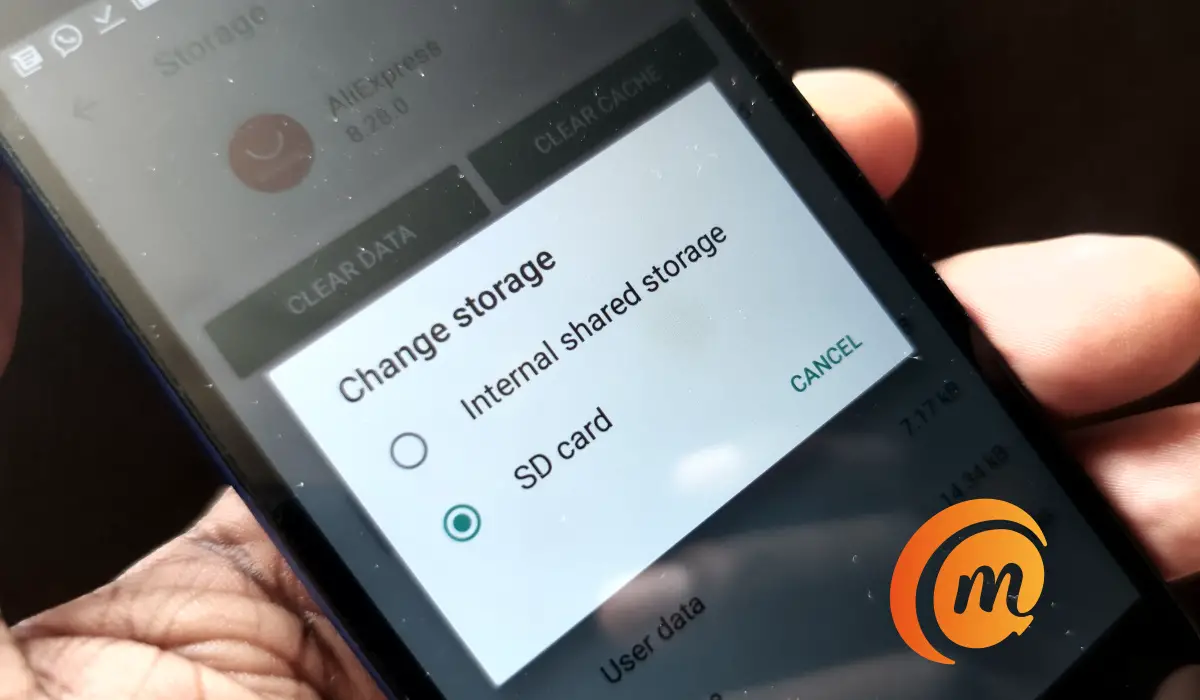
Which type of phone storage is best?
- NAND Flash Memory
- eMMC (Embedded Multi-Media Card)
- UFS (Universal Flash Storage)
- UFS vs eMMC
- UFS 4.0 vs UFS 3.1 vs UFS 2.2
- UFS vs NVMe
- Older types of cell phone storage
- Key takeaways
NAND Flash Memory
NAND Flash Memory is the underlying technology used in both eMMC and UFS. It is a type of non-volatile memory that stores data in cells. Being non-volatile means that it can store data when power is cut off. NAND was developed in 1987 and has been in use as the most predominant type of mobile phone storage.
eMMC (Embedded Multi-Media Card)
Developed in the late 1990s and built on NAND, eMMC (Embedded Multi-Media Card) arrived relatively early as the default storage type for cell phones, including early smartphones. While it was groundbreaking for its time, the needs and demands of modern smartphones meant that newer, faster storage was needed.
UFS (Universal Flash Storage)
And it is precisely because a faster form of cell phone storage was needed that UFS (Universal Flash Storage) was developed. While also built on NAND, it has a more advanced architecture with a parallel interface, allowing for higher data transfer rates. As such, UFS is significantly faster than eMMC and so is now used in high-end smartphones and devices that require high performance, such as gaming consoles.
UFS vs eMMC
What are the key differences between UFS and eMMC? UFS is significantly faster than eMMC. It is also more efficient. That makes UFS a more advanced phone storage type than eMMC.
In terms of cost, however, eMMC is generally cheaper than UFS. As such, it is commonly used in entry-level, budget, and mid-range smartphones. If you have ever wondered why your cheap smartphone is slower at saving files, eMMC is one of the reasons. It isn’t only because of the processor.
The difference in cost means that UFS has not completely replaced eMMC in modern smartphones. Rather, it has replaced eMMC in higher end smartphones where high performance and more fluid performance is required. Eventually, at some point, eMMC will likely be thrown out and not be used in mobile phones anymore, as the cost drops, thanks to economies of scale.
UFS 4.0 vs UFS 3.1 vs UFS 2.2
Different versions of UFS have been developed over the years. Some of the most recent versions include UFS 2.0, UFS 2.1, UFS 2.2, UFS 3.1, and UFS 4.0. As a rule, the more recent the version, the faster and better the performance or the more efficiency it delivers. Some improvements across versions include power management and security.
UFS 4.0 offers read speeds of 4200MBps and write speeds of 2800MBps and is optimized for power efficiency. This means that UFS 4.0 is better than UFS 3.1, which is better than UFS 2.2, and so on and so forth. When picking a smartphone, pick one with the latest possible version of UFS.
UFS vs NVMe
NVMe (Non-Volatile Memory Express) is a cell phone storage type that Apple uses in its products, including iPhones and iPads. This is in contrast to Android smartphones which use eMMC and UFS storage. NVME is generally more expensive than UFS. It also consumes more power and generates more heat than UFS.
Older types of cell phone storage
Aside from eMMC and UFS, here are a few other, less common, types of cell phone storage:
- SD Cards (Secure Digital Cards): These are removable storage options that can be inserted into a phone’s SD card slot. They’re often used to expand storage capacity for photos, videos, and other files. Types of secure digital cards include SD, SDHC, SDXC, and SDUC, with varying speeds, security, and reliability.
- PCIe (Peripheral Component Interconnect Express): While less common in smartphones, PCIe is a high-speed interface used for connecting components like storage devices. Some high-end smartphones might use PCIe-based storage for faster performance.
- Cloud Storage : This is a remote storage solution where data is stored on servers accessible via the internet. Services like OneDrive, Google Drive, iCloud, and Dropbox offer cloud storage options for smartphones.
Key takeaways
eMMC and UFS are two types of modern cell phone storage. UFS is newer, more efficient, faster, and more expensive. As such, UFS is used in more premium and high-performance smartphones and devices. The slower, less efficient eMMC is used in lower cost devices. Wherever you can, all other things being equal, pick a device that uses UFS phone storage over one that uses eMMC. And pick the latest version possible.
Author:Mister Mobility
Digital Skills and Communication Coach | Mobile Phone Connoisseur since 2001 | Tech Blogging since 2004
