Add MobilityArena as a preferred source on Google
What is Bandwidth Throttling?
Bandwidth throttling is the intentional slowing of Internet service by an Internet service provider. It is a reactive measure employed in communication networks to regulate network traffic and minimize bandwidth congestion. I lifted that definition straight out of Wikipedia. That definition is as accurate as it gets.
In other words, throttling helps preserve the stability of the network. Or the pockets of the network provider. Yes; that too. Throttling is often also a cost saving measure.

Is Bandwidth Throttling Legal?
Yes; bandwidth throttling is legal. It may be unethical if your provider does not disclose that a data plan they are offering is throttled. You might even be able to get away with using them for misleading you. But if the throttling is disclosed upfront, you have no case. You can vote with your money and go to another ISP.
How Common is the Practice?
Internet service providers and network providers all over the world throttle data for the same reason that your network does.
How To Stop Bandwidth Throttling
Perhaps the easiest way to stop internet throttling is to use a Virtual Private Network (VPN). Using a VPN encrypts your traffic. It also routes it through a remote server, preventing your carrier or service provider from tracking, monitoring and slowing down your connection. There are several VPNs available in the Google Play Store and Apple Store.
Last Words On Bandwidth Throttling
Every time you see a data plan labeled “Unlimited”, you can be almost sure that some sort of bandwidth throttling is involved. If you hit a certain threshold, your internet connection speed gets throttled. What would be ridiculous is for a provider to throttle the connection to an unusable speed. Like one Nigerian 4G LTE network that first specified 512 Kbps (they have since seen the light and repented).
But in today’s world of data guzzling smartphone and gadgets, bandwidth throttling is a practice that may be here to stay. True unlimited data plans do not exist ; users may just not have hit the limits yet. I hope that this article has helped clarify the issues involved.
- Don’t miss our mobile phone reviews .
- Follow our news on Google News .
- Join our WhatsApp Group , to be notified of the most important articles and deals,
- Follow us on Instagram , Facebook , Twitter , and YouTube .
Author:Mister Mobility
Digital Skills and Communication Coach | Mobile Phone Connoisseur since 2001 | Tech Blogging since 2004
Add MobilityArena as a preferred source on Google
Have you ever handed your smartphone to an acquaintance or colleague so they can make a quick call and found later that they had gone ahead to snoop through other areas of your phone? You have? I can guess too that you found it annoying that they would do that. If you often have to give your phone to someone but need to restrict their access, there’s an app for that. actually, there are many privacy apps out there, but Hexlock does it best.
Here is a list of what Hexlock lets you do:
- lock individual apps with a password/PIN/pattern or fingerprint so others cannot access those locked apps
- lock up videos and photos of your choice in a Media Vault.
- your locked files and apps cannot be accidentally or deliberately deleted. This is really useful for parents who have had their kids accidentally delete stuff off their phones while fiddling with it
- you can create up to 6 separate profiles for a device that is shared between multiple people. For example, this is great for a tablet shared between members of a family.
- You can setup your device to lock automatically when you are connected to a specific network or at a specific location
- Again, if you are a parent, Hexlock puts the Parental control back in your hands. You can set it up so it prevents your children from making in-app purchases or changing your personal settings when they play games on your device. Mrs. Mo certainly needs this app. The Mo kids are forever messing up things on her phone.
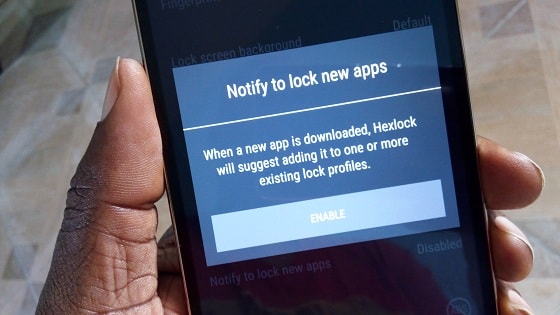
- you can also configure the app such that anytime you install a new app, it reminds you to lock it.
- Using Hexlock
- How Hexlock Helps Keep My Work Safe On The Go
- Download Hexlock
Using Hexlock
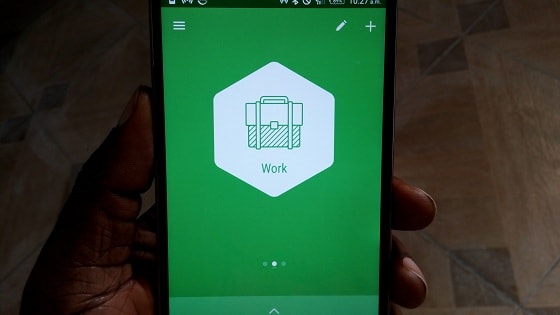
Hexlock Work profile
When you launch the app for the first time, it asks you to set a PIN or pattern lock. I noticed that I was unable to take screenshots of the app during this initial setup period and during other critical phases of configuring the app. This is good.
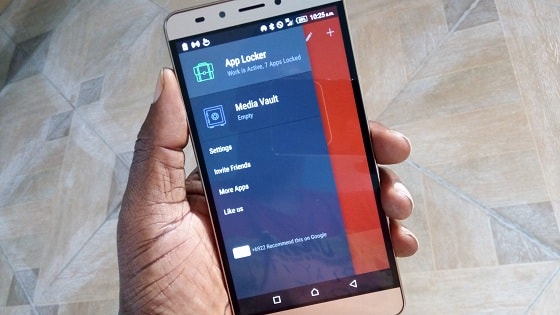
Because Hexlock secures both apps and media files, it is made up of two major sections – App locker and Media Vault . The former locks apps, while the latter locks files. You can switch between the two using the menu button in the top left corner of the app.
How Hexlock Helps Keep My Work Safe On The Go
For example, my smartphone is my mobile office. I am able to run Mobility Arena on it wherever I am as long as I have an internet connection. I am talking about tasks that include backend administration, posting, editing, financial transactions, and more. Anyone who gets access to those apps on my phone can do major damage to MobilityArena.com . With Hexlock, I am able to lock up away those business-critical apps away from unauthorised eyes and hands. Priceless.
Download Hexlock
Whether you are a parent looking to stay in control of what your children can access on your phone or shared family device, or you are an individual just wanting to keep your chats, messages and media files away from pesky snoops, or a business/technical person who uses their smartphone for mission-critical work, Hexlock is an app that you should give a try.
Download Hexlock for Android OS
Author:Mister Mobility
Digital Skills and Communication Coach | Mobile Phone Connoisseur since 2001 | Tech Blogging since 2004
