Add MobilityArena as a preferred source on Google
Web and mobile app publishers the world over use Google Adsense to monetize their websites and apps. But there is more to website monetization than Adsense. Google Ad Manager is another solution – a more advanced one – to monetize your website.
Many years back, Google had two other monetization platforms named DoubleClick for Publishers (DFP) and DoubleClick AdExchange (AdX). Both of these were eventually merged into one solution, which was named Google Ad Manager (GAM). That is the origin story.

Google Ad Manager versus Google Adsense
What separates Google Ad Manger from Adsense? For starters, Adsense is available to publishers of all sizes, including small websites. However, GAM is available to only Web publishers with monthly traffic of over 100,000. Also, it requires more technical knowledge to use than Adsense. Almost anyone can use Adsense, as mostly what is requires is to copy and paste codes. With Google Ad Manager, you need a more technical grasp of things to put it to use.
Lastly, and perhaps the real benefit of GAM, is that it allows you to take advantage of multiple ad exchanges and ad networks (including Adsense), and so can deliver much higher revenue for your website. When you use Adsense, you are relying on only one ad exchange/network, Google. With Google Ad Manager, you can earn income from multiple exchanges/networks.
Like Adsense, GAM involves inserting tags in your website’s header, as well as at locations where you want your banners to be displayed. It is recommended that you use an ad plugin for inserting your tags and codes.
While Adsense provides both responsive and fixed ad banners, ad banners from Google Ad Manager are usually in fixed sizes. As such, you will need to use an ad manager plugin to display different banners for when your website is accessed on desktop and when it is accessed on mobile devices.
While Adsense is free to use, GAM works a little differently: there is a free version named Google Ad Manager Small Business, and there is a commercial version named Google Ad Manager 360.
Again, to use Google Ad Manager, you need to have some more advanced technical skills. It isn’t as simple as copying and pasting codes as AdSense requires. It will likely be overwhelming for non-technical people.
A way out is to work with Google Partner agencies who do all the heavy lifting behind the scenes and provide you with the codes to place on your website. These partners include companies like AdPlus, Setupad, and Ezoic, among others. Signup with them and hand them your Google Ad Manager network/company.
Note that you will need a Gmail account to sign-up for both. Once signed up, the Google partner of your choice will take care of the technical details. Note also that these Partners have different requirements for acceptance on their services. For example, your website must meet a minimum traffic level that varies from Partner to Partner.
If your website is still small, it isn’t ready yet for GAM. You will need to grow it for a while. But you can use AdSense to monetise in the meantime till it is big enough to qualify for Google Ad Manager and Google Partners who will manage it for you.
Google Partners earn a small commission on the total revenue that your website generates from GAM. It is worth it though, as the work they do helps you increase your website revenue, as much as five times, and sometimes more.
- Don’t miss our reviews .
- Join our WhatsApp Group , to be notified of the most important articles and deals,
- Follow us on Instagram , Facebook , Twitter , and YouTube .
Author:InfoDesk
Add MobilityArena as a preferred source on Google
The anti-5G conspiracy theorists have moved beyond just spinning stories to actually producing merchandise that are supposed to provide protection from 5G cell towers. One would expect things like Hamzat-style suits and helmets, but alas, instead what we have are alleged 5G protection clothing, bracelets, and pendants.
A secondary school knowledge of physics and chemistry should tell anyone that there is no way such items can protect anyone or anything from any kind of electromagnetic waves (and I will dig deeper into the scientific basis later in the article). But humans can be funny.
Not only are these 5G protection clothing and items a waste of money, as 5G radio waves have not been found to have any harmful effects, but in Denmark, the authorities have found some of them to be actually radioactive.
Yes; you read that right. In a bid by conspiracies to protect themselves from harmless 5G radio, they are exposing themselves to harmful, radioactivity. Humans can be bewildering.

5G protection clothing, pendant, and bracelets are useless – and sometimes harmful
A news report[1] says the Dutch radioactive authority, ANVS, has identified a bracelet, necklace, and a sleeping mask made by a brand named Energy Armor; and a necklace, a silicone bracelet, and a “Sportboost bracelet with negative ions” made by Magnetix as containing “radioactive substances” and, as a result, they “continuously emit ionizing radiation.”
Radioactivity is harmful to living cells, and so wearing these so-called 5G protection clothing and items expose the wearers to possible health issues.
5G radio waves occupy the safe end of the electromagnetic spectrum, while radioactive rays occupy the harmful/dangerous end. It is ridiculous that in looking for protection form 5G, people are exposing themselves to the very waves that can harm or kill them.
Go to school, kids – and actually pay attention in class, to avoid doing ridiculous things like this. Before we go, let’s explore the subject of 5G protection clothing in detail.
- Do 5G Protection Clothing Really Work?
- What Is EMF Protection?
- How To Protect Yourself From EMF
Do 5G Protection Clothing Really Work?
There is no scientific evidence that proves the effectiveness of 5G Protection Clothing. However, some EMF (electromagnetic fields) protection clothing products are designed to be effective in the range of 600MHz to 6GHz, which is the range used by 5G cell towers. It is important to note that almost all EMF protection clothing does not block magnetic EMF and some products (like the ones discussed above) may actually increase radiation and other EMF to the shielded and non-shielded areas of your body.
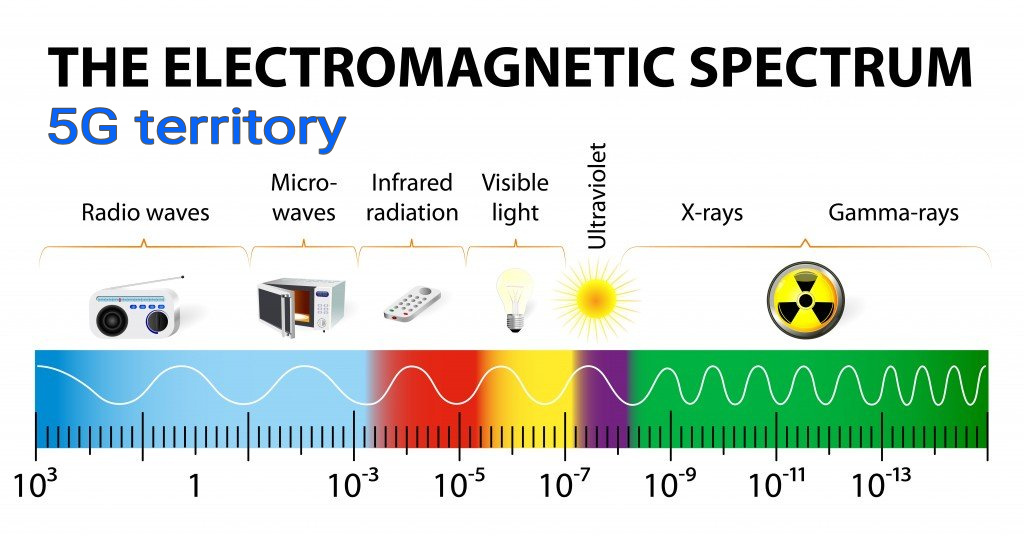
What Is EMF Protection?
EMF protection refers to the practice of reducing or shielding oneself from electromagnetic fields (EMF), which are produced by electronic devices and power lines. This can be done by using EMF protection products such as shields, clothing, and devices that claim to reduce or block EMF radiation. However, there is no scientific evidence that proves the effectiveness of these products [2].
How To Protect Yourself From EMF
Of as we have established, 5G protection clothing are not exactly an effective way of protecting yourself from EMF, what other ways can you do that? Here are a few:
- Limiting device usage: reducing the amount of time spent using electronic devices.
- Increasing distance from sources of EMF: keeping a safe distance from electronic devices, power lines, and cell towers.
- Using wired connections instead of wireless connections: using wired connections for internet and phone connections instead of wireless connections.
- Making your bedroom a low-EMF sanctuary: keeping electronic devices out of your bedroom to reduce exposure during sleep.
Until the situation changes and actual scientific progress is made to make 5G protection clothing and accessories viable, I don’t advice that you bother with them; they are largely a waste of money, not to mention that some of them are downright dangerous.
References
- New York ( source )
- source: EMF Academy
Author:Mister Mobility
Digital Skills and Communication Coach | Mobile Phone Connoisseur since 2001 | Tech Blogging since 2004
