Add MobilityArena as a preferred source on Google
Tons of new features have been introduced since the production of the first motor cars for public use. We have added seat belts, improved the engine and chassis, added nifty electronics, and now we are adding artificial intelligence, but motor cars – and indeed all road vehicles – are still fancy boxes on wheels.
Build a chassis resting on four or more wheels, add an engine, a complicated network of gears, and a steering column, put in some seats, and your motor car is ready. Change the chassis and engine, and you can have a truck or a van. That is exactly how cars have been since the first production automobile arrived over a hundred years ago.
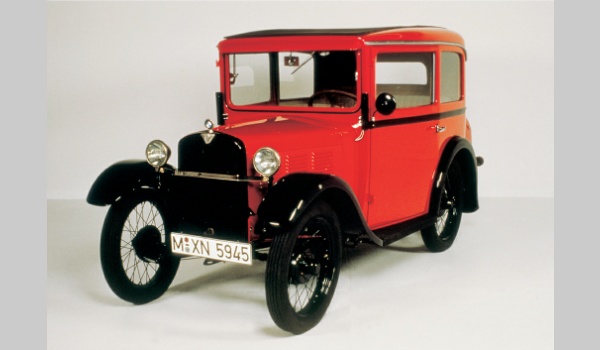
A Motor Car is still essentially a box on wheels
Decades ago, science and technology magazines played with the idea of flying cars – and they all still were designed around this basic structure. Today, we have prototype flying cars being built and demonstrated in centres across the globe. For all their advanced capabilities, these cars of the future still follow that basic configuration.
Will motor cars ever be weaned away from the concept of a chassis on wheels? Assuredly. The same way smartphones were weaned away from physical keypads, one day, a revolution will occur in the automobile industry and wheels will be done away with.
To be sure, the idea has been around for a while. Think of hovercraft, for example. These are vehicles that lift from the ground and skim over a cushion of air. But this concept has been largely applied to water vessels – and they still are not commonplace. In the future, we will have motor cars that levitate and move around without the need for wheels at all. And perhaps, eventually, we will have cars that fly.
It will be great to finally be rid of tyres. Tyres are doing a great job so far, but they are arguably the weakest link in the modern automobile. No matter how the big tyres are, at every point in time, they provide four small touchpoints that connect the vehicle with the road. All motor car motion, steering and a huge amount of passenger safety is dependent on how well these four small spots do the job.
Plus, that spinning motion in vehicle engines, gears, axles, and tyres is a huge power burner. While these have got more efficient over the years, it is still a very inefficient system in the grand scale of things. In electric vehicles , we are already seeing gears being done away with. Electric motors are just more efficient than internal combustion engines.
The biggest inefficiencies in current moto cars are found in the moving parts. To produce more efficient vehicles, as many of those must be eliminated. The motor car will have to lose its wheels for good. And when it does, for the first time, the form factor of the modern world’s most popular means of transportation will change. Whether we will have flying cars or not is a topic for discussion, but at the very least, cars will hover and not roll.
- Don’t miss our reviews .
- Follow our news on Google News .
- Join our WhatsApp Group , to be notified of the most important articles and deals,
- Follow us on Instagram , Facebook , Twitter , and YouTube .
Author:Mister Mobility
Digital Skills and Communication Coach | Mobile Phone Connoisseur since 2001 | Tech Blogging since 2004
Add MobilityArena as a preferred source on Google
Vivo X20 Plus UD is looking like it will be the first commercial smartphone with an in-display fingerprint scanner. You may recall that Vivo demonstrated the in-display technology back at CES in January. The “UD” in the name refers to “Under Display” nature of the fingerprint scanner.
Visually, Vivo X20 Plus UD is a copy of Vivo X20 Plus . Beyond that, this new model has a dual camera setup at the back featuring a 24 megapixel snapper and a 5 megapixel snapper.

Vivo X20 Plus UD with in-display fingerprint scanner
Find below the full Vivo X20 Plus UD specs, features, availability and price.
Wireless Network and Software
- 2G : GSM, GPRS, EDGE 900 / 1800 MHz
- 3G : UMTS, WCDMA, HSDPA 850 / 900 / 1900 / 2100 MHz
- 4G : LTE frequency bands 1(2100) / 2(1900) / 3(1800) / 4(1700/2100) / 5(850) / 8(900) / 38(2600) / 39(1900) / 40(2300) / 41(2500)
- SIM Type : Dual Micro-SIM
- OS : Android 7.1 Nougat + Funtouch 3.2
Design
- Dimensions : 165.2 x 80.02 x 7.35 mm
- Weight : 183.1 g
- Display : 6.43 inches, 2160 x 1080 pixels, 18:9 ratio, Super AMOLED display
- Sensors : Fingerprint (Under Display), Accelerometre, Proximity
- Build : Metal
- Colours : Matte Black, Gold, Rose Gold
Hardware
- Processor Type : 64-bit Octa-core 2.2 GHz Cortex-A53
- Processor Name : Qualcomm Snapdragon 660
- Graphics Processor : Adreno 512
- RAM : 4GB
- Internal Storage : 128GB
- External Storage : microSD, up to 256GB
Cameras
- Rear : Dual 24 megapixels + 5 megapixels, f/1.8 aperture, auto-focus, LED flash
- Video recording : 1080 @ 30fps
- Front-facing : 24 megapixels, f/2.0 aperture
Multimedia
- Music Support : MP3/WAV/eAAC+ player
- Audio :
- Loudspeaker : Mono
- Video Support : MP4/MPEG4/H.263/H.264 player
- FM Radio :
Connectivity
- Bluetooth : v5.0
- WiFi : Wi-Fi 802.11 a/b/g/n, hotspot
- GPS : Yes
- USB : microUSB v2.0, USB Type-C
Miscellaneous
Charging : 5V/4.5A Fast battery charging
Battery Type and Capacity : Non-removable Li-Ion 3800mAh
Announced : January 22, 2018
Availability : January 22, 2018
Vivo X20 Plus UD Price : Yet To Be Announced.
Don’t miss our mobile phone reviews .
Follow our news on Google News .
Join our WhatsApp Group , to be notified of the most important articles and deals,
Follow us on Instagram , Facebook , Twitter , and YouTube .
