Add MobilityArena as a preferred source on Google
Why do modern smartphones have multiple cameras? The short and simplest way to explain it is this: modern smartphones are too thin and too small to contain the complex mechanisms that allow for a single camera to handle all possible shooting scenarios. Let me now explain in layman’s terms.
Regular, standalone cameras include compiles mechanisms and parts that allow you to use them to capture a wide angle scene here, to zoom into a flower there, and then to capture a Bokeh shot there. All you have to do is adjust the lens of the camera, and it adjusts to the required length for the different shots.
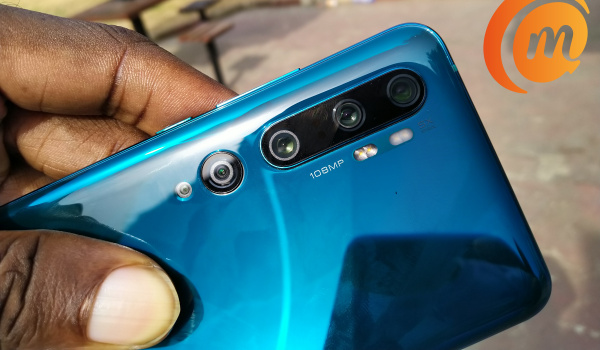
Modern phones have multiple cameras – sometimes up to 5 of them!
This is why, for example, standalone cameras have lenses that project and retract. The mechanism is required for adjusting the lens for the kind of photo you want to shoot.
Now, consider how thin the bodies of smartphones are. We all want thin and light phones that can fit in our pockets and in our hands comfortably. That comes at a cost. One of those costs is that we cannot fit those mechanisms for adjusting the lenses of a camera into a phone. What is the next best thing to do so as to have more versatile cameras in our phones? Multiple cameras.
- The Different Types Of Cameras That Phones Have Main Camera Macro Lens Depth Sensor Ultrawide Camera Telephoto Camera Periscope Camera
- Phones Have Multiple Cameras To Cover As Many Photography Needs As Possible
The Different Types Of Cameras That Phones Have
Smartphones have multiple cameras because each one is designed for a different photography scenario, so those phones can handle as many possible shooting needs as possible. Let me break them down for you, so you understand why these multiple cameras (or lenses) are there.
Main Camera
Most smartphones have a wide angle camera as their main lens. This is because it is best suited to the most common use of cameras – taking photos that capture a fair amount of people or things. When you pick a phone with multiple cameras and take a photo with the camera without selecting any options, chances are you are shooting in wide angle mode.
Macro Lens
Where phones have multiple cameras, one of the most common cameras there are macro lenses , which are used to capture small, nearby objects. Most are useless, to be honest (especially those measly 2-megapixel lenses), but some manufacturers get them right and they come in really handy.
Depth Sensor
Next, we have depth sensors , used to capture what we call Bokeh or portrait photos. These are photos that have the object in the foreground in focus, while the background is blurred off. Those photos look cool when done right.
Ultrawide Camera
Did I mention that the main lens of most smartphones are wide angle cameras? Yes; I did. But we also have ultra wide angle lenses , which allow you to capture more people and things in one photo than wide angle lenses do. You need this when you need to take a large group photo, for example, or capture an object that is rather wide. Ultra wide angle lenses capture a wider angle. The name is self-explanatory.
Telephoto Camera
One of the rarest type of camera in smartphones is the telephoto lens . This is great for zooming into far away objects. They can also be used to zoom into small, nearby objects, depending on how the lens is crafted. Telephoto lenses are specialised tools, and so are expensive, so they are not found in most smartphones have multiple cameras.
Periscope Camera
And then, we have the even more advanced periscope lens , that is usually found in only the most expensive, or photography-focused phones. They are more advanced adaptations of telephoto lenses. Consider reading, How Periscope Camera Phones Work And Why You Should Get One for a more detailed explanation.
Phones Have Multiple Cameras To Cover As Many Photography Needs As Possible
Modern smartphones have multiple cameras – a combination of two or more of the above types – so our phones can be more versatile for different photo shooting needs. This is because they are not big enough to have the typical mechanisms that allow standalone cameras to handle everything with one lens.
To take the best photos in different scenarios, you have to switch between modes in your phone’s camera. Usually, the modes are located at the bottom of the screen when you have your camera open (see the screenshot below).
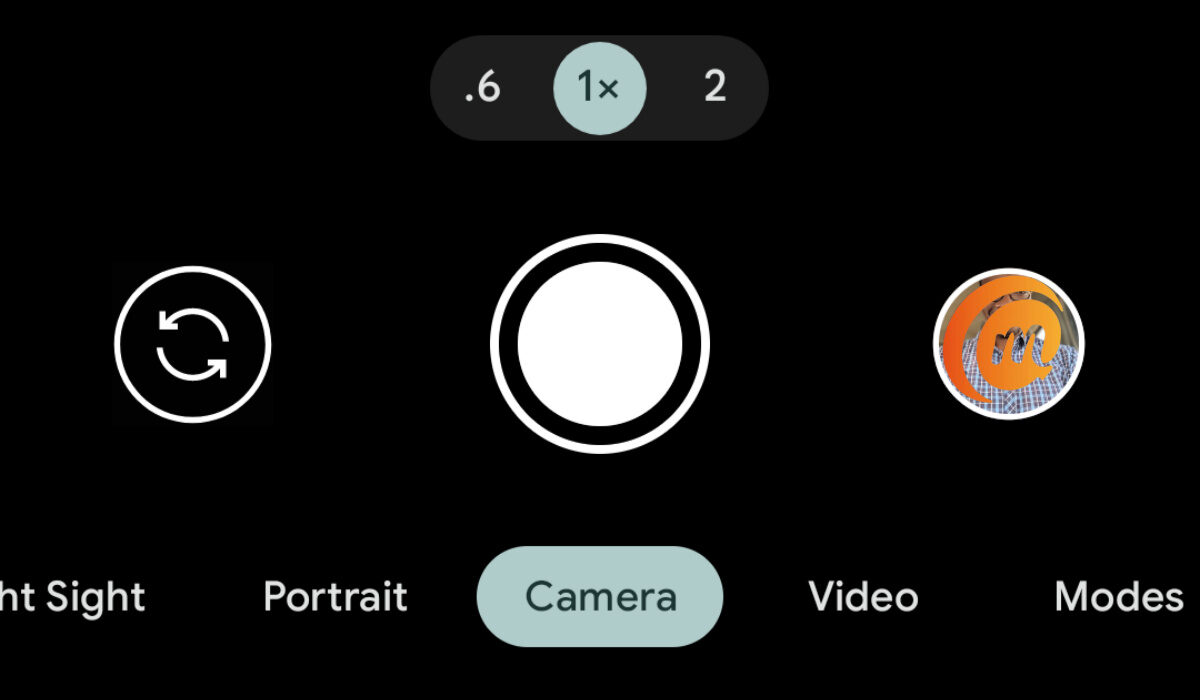
Modern smartphones have multiple cameras and you can switch between them in the camera app
Each lens works separately and is engaged when you switch modes in your phone camera. To take advantage of the fact that smartphones have multiple cameras, you have to know what each lens or camera does and switch to the right mode for the kind of photo that you want to take. Stress; right?
Yes; it is stress for most people, so they just open their camera and snap away, regardless of what kind of photo they are shooting. The default mode (usually wide angle) is what they use every time.
I can’t blame them. Unless you are a photography enthusiast or professional, it is tedious switching between multiple camera modes. I happen to be an enthusiast, so it is almost second nature to me. I pick the appropriate camera mode for the different photos I take. As such, I get much better results than most phone owners do.
The good thing is that if you have a really good camera phone, the default (wide angle mode) gets fairly good results in most scenarios anyway. But if you want the peng photos, photos that pop and standout, take everything you have read here and apply the knowledge each time you want to shoot a photo.
I am sure you understand it now. Today’s smartphones have multiple cameras to make it possible for you to capture stunning pictures that sometimes rival standalone cameras. If that intrigues you and you’d like to get some really good results, start using your phone’s camera modes for different scenarios, and snap away.
Related article: OIS vs EIS: Image Stabilization in cell phones .
Author:Mister Mobility
Digital Skills and Communication Coach | Mobile Phone Connoisseur since 2001 | Tech Blogging since 2004
Add MobilityArena as a preferred source on Google
While everyone is busy and probably not paying attention, in January 2022 alone, at least 10 Vivo smartphones have been released in various markets around the world. The very first model of the year was announced on January 1st.
That is a trait of a brand that has a goal – domination. I am so intrigued at the rate of churn out that I decided to take a closer look at what the brand is up to.
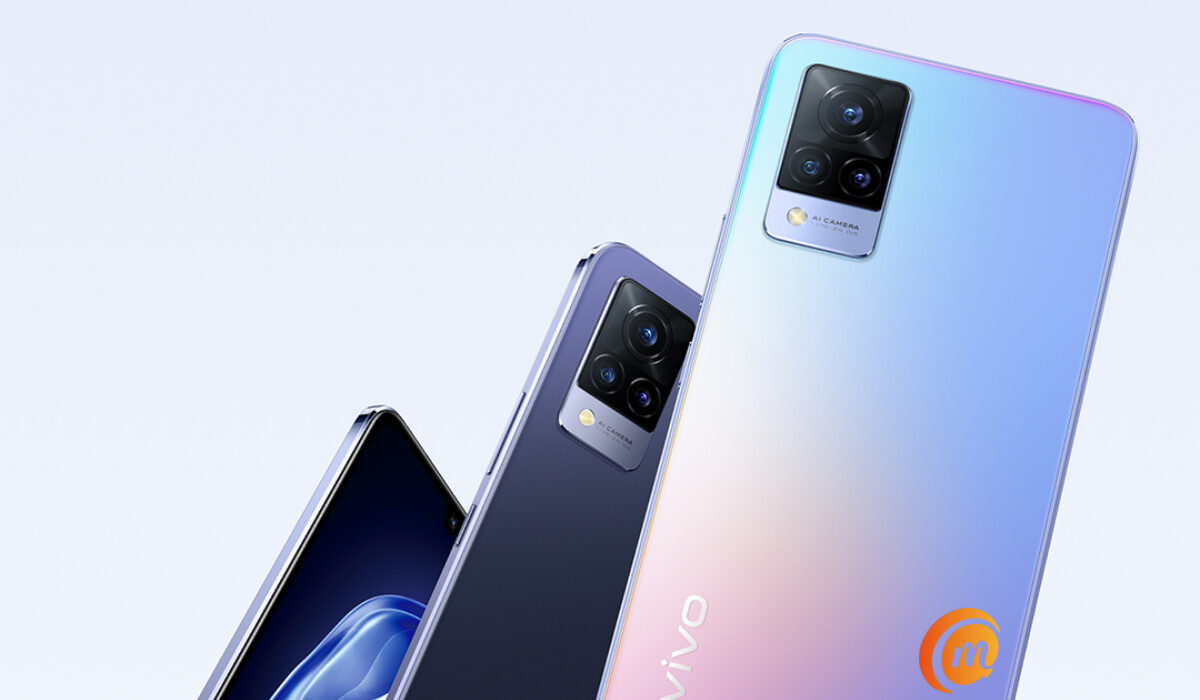
- Vivo smartphones launched in January 2022 till date
Vivo smartphones launched in January 2022 till date
Vivo Y21T went official on January 12st with a 6.51-inch LCD, matte back, Snapdragon 680 SoC, 6GB RAM, 128GB storage, 50MP triple camera, 8MP selfie camera, 5000mAh battery, and 18W fast charging. It is available in Indonesia and India for around $215.
Vivo V23 and V23 Pro soon showed up just a few days later on the 5th of January. These two phones offer an exquisite design that changes colours when exposed to sunlight for up to 6 minutes. Vampire phones.
Let’s explore the V23 first. This has a 6.44-inch AMOLED display with 90Hz refresh rate, MediaTek Dimensity 920 chipset, a 50MP dual selfie camera, and a 50MP triple camera at the back.
The battery capacity is 4200mAh and it supports up to 44W fast charging. Vivo V23 comes in two memory variants – 8/128GB and 12/256GB, selling for the equivalent of $400 and $470 respectively in India.
Vivo V23 Pro has a bigger 6.53-inch AMOLED screen with 90Hz refresh rate, MediaTek Dimensity 1200 SoC, 8GB and 12GB RAM options, 128GB and 256GB storage options, a 4300mAh battery, and up to 44W fast charging.
At the front is a 50MP dual camera for Alfie’s, and it is damn good. Behind is a 108MP triple camera setup. It is unfortunate that it does not include a telephoto lens. But it remains a respectable camera phone.
The V23 Pro sells for around $520 (8/128GB) and $590 (12/256GB) in India.
On the 11th of January, another Vivo smartphone was announced. This time, it was the Y33T . It has a 6.58-inch display, Qualcomm Snapdragon 680 SoC, 8GB RAM, and 128GB storage.
It has a 16MP selfie shooter and a 50MP triple camera at the back. Battery capacity is 5000mAh and it charges at 18W speeds. Again, this model is available in India, and for $255.
In China, Vivi’s subsidiary, iQOO, released the iQOO 9 and iQOO 9 Pro . These are top dog premium flagship phones with the latest Snapdragon 8 Gen 1 SoC.
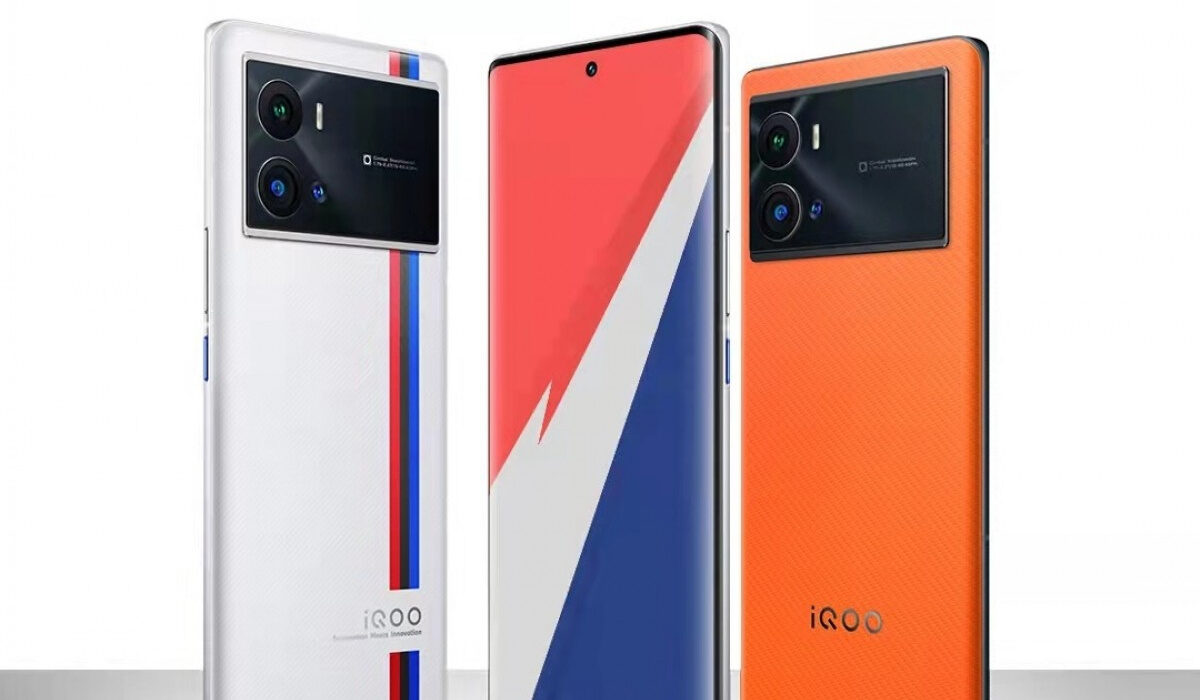
IQOO 9 and iQOO 9 Pro are premium Vivo smartphones
These two Vivo smartphones also come with 120Hz refresh rate AMOLED screens, 4700mAh battery coupled with 120W fast charging, 50W fast wireless charging, and 10W reverse wireless charging.
The iQOO 9 sells for between $630 and $760 in China, depending on memory configuration.
The 9 Pro has 8/256GB and 12/512GB memory options and costs from $790 to $950, depending on the option you pick. Both of them are likely to appear in other countries as well.
Vivo Y21e is next. What the company did is slap a 6.51-inch LCD display on a plastic frame that includes a 13MP rear camera, 8MP front camera, Snapdragon 680 SoC, 3GB of RAM, 64GB internal storage, 5000mAh battery and 18W charging. The price tag is $175 and is available in India. This makes it one of the most affordable Vivo smartphones so far launched in 2022.
And the company isn’t done yet. Vivo Y55 5G shows up on the 17th. As the name suggests, we are looking at a budget 5G phone. It has a 6.58-inch LCD, Dimensity 700 chipset, 5000mAh battery, and 18W charging. It costs $300.
Vivo is milking the Y21 series. We already had the Y21, Y21T, and Y21e. There’s no other reason why a Vivo Y21a shows up on the 22nd of January. Its specifications are identical to those of the Y21e.
What is different is the details of the 8MP selfie camera and the more RAM. Pricing is similar too.
Lastly, Vivo Y75 5G was announced on January 22nd as well. This comes with a 6.58-inch display (Vivo seems to love this screen size), Dimensity 700 SoC, 8GB RAM, 128GB storage, 5000mAh battery, and 18W charging (another Vivo favourite).
In all, Vivo has released no less than 10 smartphones in the first month of the year alone. 8 of them are in India and 2 in China. Some of these Vivo smartphones will show up in Indonesia as well, and we won’t be surprised to see them in other countries in Asia and Europe.
Vivo does not have a strong presence in the USA at this time. While also present in Nigeria and a handful of other countries in Africa, it is a tiny presence in all these locations.
The company has some exciting products. However, many of the new phone launches we have seen this year are rehashed and minor variants of already existing models. Vivo changes one or two specs and slaps a new model name on it. It is a strategy that we have seen work (with Samsung, for example). What’s to keep it from working for Vivo?
With this strategy, there is a Vivo smartphone for everyone – every need and every price point. 2022 looks promising for the brand, and it looks like it will be hard to stop Vivo from grabbing a larger share of the Indian smartphone market.
January 27, 2022 Update : The Vivo Y75 5G is announced. It has similar specs to the Y55 5G, but with more RAM and a higher selfie camera. Vivo Y75 5G improves on the Y55 5G’s 4 GB RAM and 8MP selfie with 8 GB RAM (and 4 GB Extended RAM) and a 16MP selfie camera.
It is available in two colour schemes – Starlight Black and Glowing Galaxy, and is on sale in India (again!) for INR21,990. That is about $290 or €260. India….
Author:Mister Mobility
Digital Skills and Communication Coach | Mobile Phone Connoisseur since 2001 | Tech Blogging since 2004
