Add MobilityArena as a preferred source on Google
I was fishing for information about Nothing Technology’s upcoming budget phone, the CMF Phone 1 , when I ran into one of their chargers, listed as a GaN charger . That caught my interest and I took a close look at it. Of course, that inspired this article.
You have probably seen a few mobile phone and accessories brands advertise GaN chargers and wondered what they are. The industry is developing at rapid pace, and this means that new phrases and terms show up. As such, seeing a new term means that some new technology is afoot. In this case, GaN technology is behind some of the blazing fast charging speeds in the latest smartphones.
Here are some key takeaways from this article:
- GaN is replacing silicone in newer chargers.
- GaN-based chargers are up to three times as efficient as silicone chargers.
- GaN generates less heat during fast charging.
- GaN allows for each transistor to pack in more components and features in chargers than silicone does.
- GaN offers much faster charging speeds than silicone chargers.
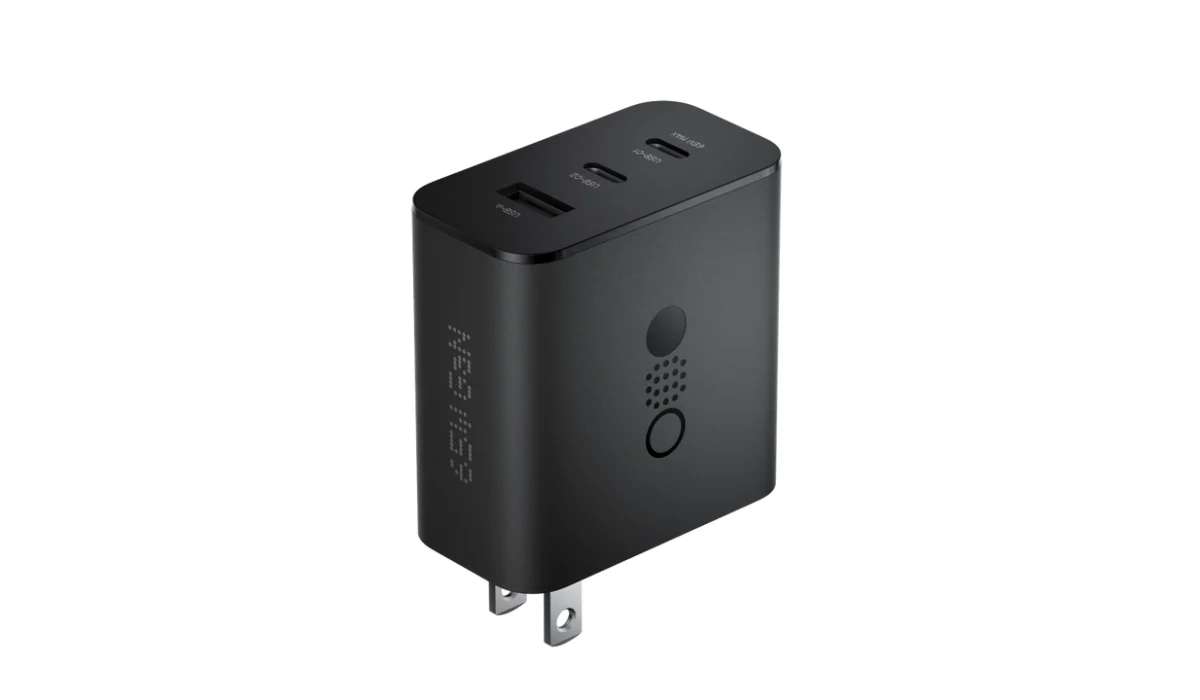
A POWER 65W GaN charger
- What is GaN?
- How are GaN chargers better than silicone chargers?
- Advantages of GaN technology
- Disadvantages of GaN technology
- How to identify GaN chargers
- The first GaN Charger ever released
- The fastest GaN charger in 2024
- Compatibility matters
What is GaN?
Gallium Nitride (GaN) is a crystal-like semiconductor material that is able to conduct much higher voltages than silicone can. It was discovered by Paul-Émile Lecoq de Boisbaudran in Paris in 1875 and has been used in LEDs since the 1990s. Its application has since spread beyond LEDs and now includes use in faster chargers for smartphones and other electrical/electronic devices.
How are GaN chargers better than silicone chargers?
Because GaN components conduct electricity at much higher voltages and at a faster rate, GaN technology is known for faster processing.
One consequence of the better conductivity of GaN technology is that there’s less heat generated. As such, GaN chargers produce less heat. Less heat means components can be closer together, so a charger can be smaller than ever before, while maintaining all the power capabilities and safety standards.
When silicone is replaced with GaN components, less space is used. This is because there is no need to keep large spaces, for cooling, between components. As such, more processing power can be packed into the same space. As a matter of fact, more processing power can be packed into smaller spaces, too. The result is that you get a more powerful, and also more compact, fast charger.
Advantages of GaN technology
- Smaller Size : GaN chargers are physically smaller than silicon chargers because they require fewer components.
- Higher Efficiency : GaN can conduct higher voltages over time than silicon, resulting in more efficient energy transfer.
- Less Heat Generation : GaN chargers lose less energy to heat, improving overall efficiency.
- Faster Charging : GaN enables higher switching frequencies, allowing faster wireless power transfer.
Disadvantages of GaN technology
- Harder to Train : GaN models require diverse data for accurate training.
- Complex Text and Speech Generation : Generating results from text or speech using GaN can be challenging.
How to identify GaN chargers
There is no way to identify a GaN charger from its look or appearance only. If you do look on the label or imprinted text, you will see it specified there. That is the easiest way to tell if a charger uses GaN technology or not.
The first GaN Charger ever released
Apple adopted GaN and released their 140W USB-C power adapter in October 2021, for the 16-inch Macbook Pro. Other technology brands have since adopted the technology. These brands include: Anker, Nothing technology, Satechi, Zendure, and Ugreen, among others.
The fastest GaN charger in 2024
The fastest GaN charger, as at June 2024, is the Ugreen Nexode 300W GaN 5-port desktop charging station. This charger works well for desktops, laptops, smartphones, and other devices.
Compatibility matters
When using a GaN charger with your phone, compatibility matters. Your smartphone has to meet certain requirements and standards to take advantage of the benefits of GaN technology.
The first is that your phone must have a USB-C port . USB-C is the standard for fast charging. This is no big deal for the majority of Android phones users who own a Samsung, Google Pixel, Nothing Phone, OnePlus, Motorola, and others. Apart from the most entry-level models, most Android phones have a USB-C port. The latest iPhone 15, 15 Plus, 15 Pro, and 15 Pro Max , all use USB-C, as well. Older iPhone models are excluded.
The next requirement is Power Delivery (PD) . GaN chargers often support Power Delivery (PD) technology and your phone will benefit from faster charging if it supports PD. Check to see if your phone supports PD.
Lastly, as applies to fast charging generally, your cell phone will not charge faster than its own specified voltage and amperage levels, even if the GaN charger in use can charge much faster than that.
Author:Mister Mobility
Digital Skills and Communication Coach | Mobile Phone Connoisseur since 2001 | Tech Blogging since 2004
Add MobilityArena as a preferred source on Google
OnePlus Nord 4 is a mid-range or budget Android smartphone powered by the Snapdragon 7+ Gen 3 SoC and having a premium metal and glass build. It does not support eSIM, 3.5mm audio jack, or wireless charging.
On the flip side, it has stereo speakers, IP65 dust and water proof rating, as well as an IR blaster. There is also support for aptX HD Bluetooth codec, NFC, and 100W wired fast charging.
OnePlus Nord 4 in brief:
- Price Range: Below €300
- OS: Android 14
- Release Date: 2024
- Network Type: 2G/3G/4G/5G
- eSIM: No
- Display: 6.74-inch, 1240 x 2772 pixels resolution
- Chipset: Snapdragon 7+ Gen 3
- Selfie Camera: 16MP
- Rear camera: 50MP
- RAM: 16GB
- ROM: 256GB / 512GB
- Fingerprint Sensor: in-display
- Headphone Jack: No
- Infrared/IR Blaster: Yes.
- Battery: 5500 mAh
- Fast Charging: 100W
- Wireless Charging: No.
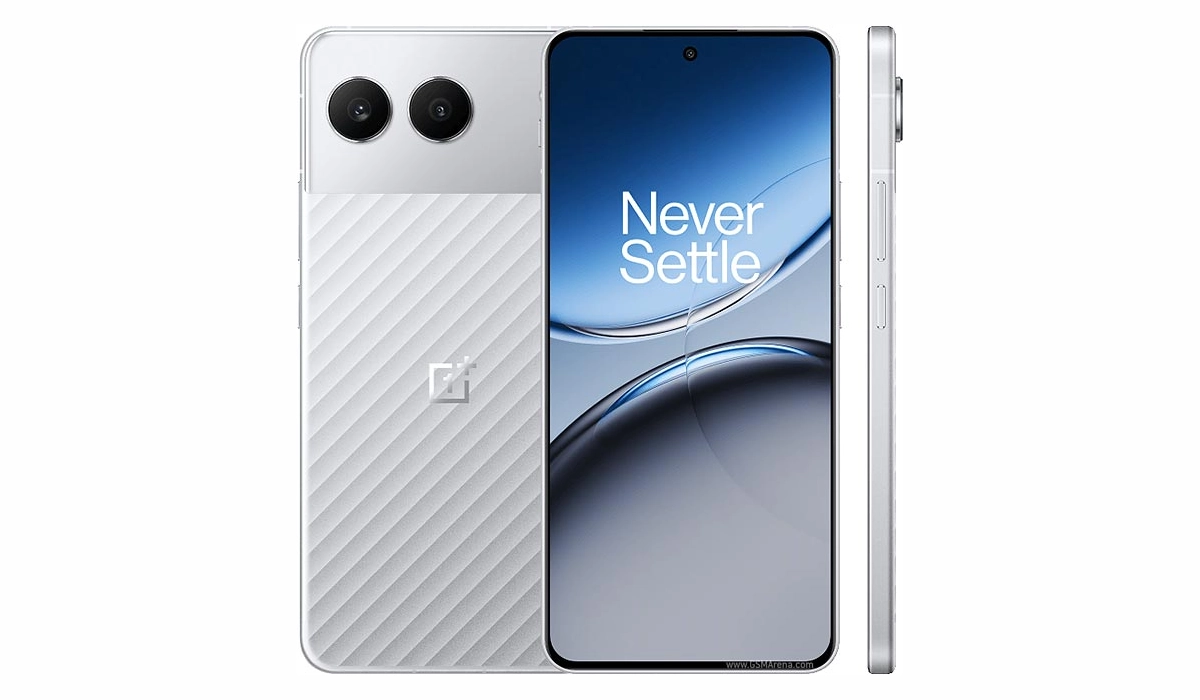
OnePlus Nord 4
For more detailed specifications of the device, have a look below.
- OnePlus Nord 4 Specs
- Prices in the USA, UK, EU, Australia
- OnePlus Nord 4 Software Updates
OnePlus Nord 4 Specs
Mobile Wireless Network and Software
- 2G mobile network bands : GSM, GPRS, EDGE 850 / 900 / 1800 / 1900 MHz.
- 3G mobile network bands : UMTS, WCDMA, HSDPA 850 / 900 / 2100 MHz
- 4G mobile network bands : LTE.
- 5G mobile network bands : NSA/SA
- SIM Type : Nano-SIM, Dual SIM
- Software / OS : Android 14
- Software Updates : Four major Android updates and six years of security patches
Design, Form Factor, Appearance
- Dimensions : 162.7 x 75.2 x 8.5 mm
- Weight : 200g
- Display Size: 6.74 inches,
- Screen Resolution : 1240 x 2772 pixels
- Refresh Rate : 120 Hz refresh rate
- Screen Type : AMOLED
- Frame : Glass front, metal unibody.
- Back/Rear Cover : metal + glass back
- Ingress Protection/IP Rating : IP65
- Colorways : Silver. Mint. Black.
Internal Hardware Specs
- Central Processor ( CPU ): 64-bit, 2.3 GHz Octa-core
- Chipset : Qualcomm Snapdragon 7+ Gen 3
- Graphics Processing Unit ( GPU ): Adreno 732
- RAM : 12GB / 16GB
- Extended/Virtual RAM :
- Internal Storage : 128GB / 256GB / 512GB
- External Storage : microSD
Photography, Video Recording
- Main Camera : 50MP main sensor + 8MP depth sensor, autofocus, LED flash, 4k video@30fps, 1080p@30fps video recording
- Front Camera : 16MP, fixed focus, Face Recognition, 1080p@30fps video capture
Audio, Video Playback
- Music Support : PCM, AAC / AAC + / eAAC + / MP3 / AMR – NB / WB / APE
- 3.5 mm audio headphone jack : No
- Loudspeaker : Stereo speakers
- Video Support : H.264/MP4/MPEG4 player
- FM Radio : Market-dependent.
Phone Sensors
- Digital Compass : Yes.
- Accelerometer : Yes.
- Proximity Sensor : Yes.
- Ambient Light Sensor : Yes.
- Barometer : No.
- Pedometer : No.
- Heart Rate Monitor : No.
- Gyroscope (G-Sensor) : Yes.
- Fingerprint Scanner : Yes; in-display.
- Face Unlock : Yes.
- Iris Scanner : No.
- Motion Sensing / Gesture Control : No.
- Voice Control : No.
- Intelligent Digital Assistant : Yes; Google Assistant.
- Infra-red/IR Blaster : Yes.
Connectivity Options
- Bluetooth Version : 5.4
- Bluetooth Profiles : A2DP, LE
- aptX Bluetooth Codecs : aptX HD
- WiFi : Wi-Fi 802.11 a/b/g/n/ac/6, hotspot
- GPS : Yes, A-GPS, GLONASS, GALILEO, BDS
- USB : microUSB v2.0. Type-C.
- NFC : Market dependent.
Miscellaneous Specs and Features
- Battery Type : Non-Removable Lithium-Polymer
- Battery Capacity : 5500 mAh
- Battery Charging : 100W fast charging
- Wireless Charging : No.
- Reverse Charging : No.
- Model Version/Number :
Launch/Release Dates and Information
- Announced : July 2024
- Release Date : July 2024
Prices in the USA, UK, EU, Australia
OnePlus Nord 4 comes in three storage variants – 12/256GB, 12/512GB, 16/512GB. Below are its prices in the US, the UK, Germany, and Australia.
- United States of America (USA) : from $429 (12GB + 256GB). $529 (16GB + 512GB)
- United Kingdom (UK) : £429 (12GB + 256GB). £529 (16GB + 512GB)
- European Union (EU) : €499 (12GB + 256GB). €599 (16GB + 512GB)
- Australia : from AUD
Note that the OnePlus Nord 4 will not likely be officially sold in the United States, but that shouldn’t stop you from buying one from one of the available online stores, if you really want it.
OnePlus Nord 4 Software Updates
OnePlus says that the Nord 4 will get four years of major Android updates and six years of security patches. That means you can expect it to be updated to Android v15 in 2025, v16 in 2026, v17 in 2027, and v18 in 2028, and get security patches up till 2030. Not bad at all.
